🌊 SURF 'N TURF 🏝️

-THE ISLAND LIFE-

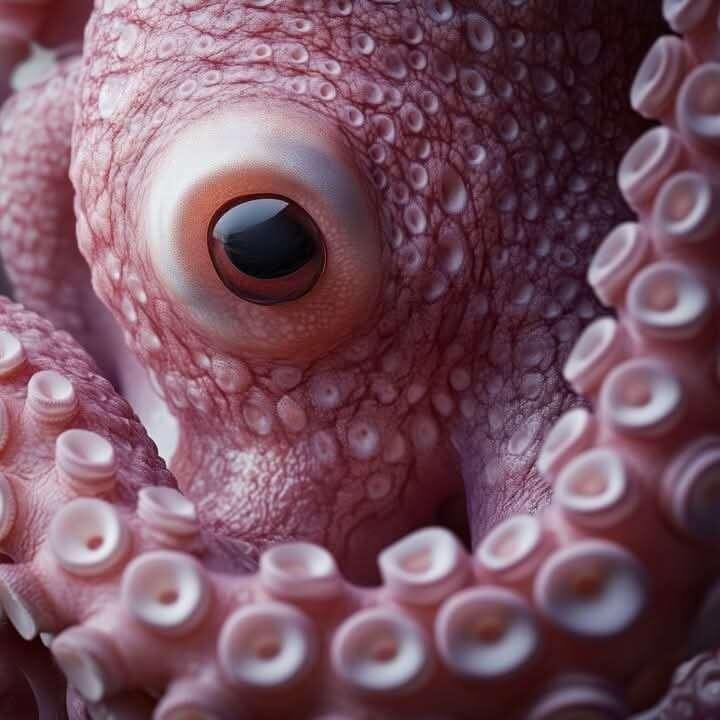
An octopus guards its eggs for 4.5 years

Scientists discovered a deep-sea octopus called Graneledone boreopacifica, which guards its eggs longer than any other animal on the planet. After laying eggs, female octopuses do nothing but protect and take care of their eggs.

Their brains shut down except for the optic glands, which remain functional. Without these glands, female octopuses would abandon their eggs and resume feeding. The mothers then remain stationary for months to years, depending on the species of octopus.

They show no interest in food, even when it's offered to them. Their skin color turns ghostly white from the lack of food. Biologists believe that this behavior is meant to protect their eggs from predators. Octopus mothers are known to lay eggs only once in their lives. The mothers usually die soon after the eggs hatch, which ensures that the mother won’t consume her young.

Credits Goes to the respective

Author ✍️/ Photographer📸

🐇 🕳️

#Bitcoin #Satoshis #Freedom #Apocalypse #Music #Movies #Philosophy #Literature

#dogstr

Reply to this note

Please Login to reply.

Discussion

Looks quiet intelligent

Octopi are very intelligent and amazing at camoflauge.

Yes, octopuses are intelligent:

Brain size: Octopuses have large brains relative to their body size, with about as many neurons as a dog.

Brain structure: About two-thirds of an octopus's neurons are in its arms, not its head.

Learning: Octopuses can learn by watching other octopuses, and they can retain information for several months.

Problem-solving: Octopuses can solve problems, navigate mazes, and untie knots.

Tool use: Octopuses can use tools to build dens, create shields, and collect coconut shells.

Escape artists: Octopuses are known to escape from tight spaces, including aquariums.

Camouflage: Octopuses can quickly learn how to hide and camouflage themselves.

Intelligence: Octopuses are intelligent in ways that are different from human intelligence:

They can learn to attack one of two objects based on characteristics like color, shape, texture, or taste.

They can generalize, applying a previously learned rule to new objects.

They can use conditional discrimination, modifying their choice depending on the context.

They can use spatial learning to find hidden shelters.

Intelligence genes: Octopuses have genes that are active in the vertical lobe of their brain, which is analogous to the human hippocampus.