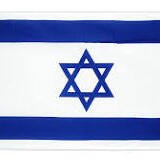
This image presents a series of questions implying that Palestine lacks historical legitimacy compared to Israel, especially in the context of Islamic texts like the Quran. Let's address each point historically and factually:
---
1. Who was its last king?
Palestine was not a monarchy in the modern era. It was part of:
The Ottoman Empire (1516–1917)
Then under British Mandate (1920–1948)
It had governors or muftis, not kings. The question is misleading by expecting a “king” as a mark of legitimacy.
---
2. What year was it founded?
“Palestine” is a geographic and political term with ancient roots:
The name “Palestine” comes from the Philistines, an ancient people, and was used by Romans as “Syria Palaestina” around 135 CE after suppressing the Bar Kokhba revolt.
It was never a nation-state in the modern sense but was recognized as a geographic region for millennia.
---
3. Who was leading it before 1948?
Under the British Mandate, Palestine was governed by British officials. Local leadership included:
The Arab Higher Committee
Influential figures like Haj Amin al-Husseini, the Grand Mufti of Jerusalem
Palestinian Arabs did not have full sovereignty under British rule.
---
4. If Israel didn't exist before 1948, why is it mentioned 43 times in the Holy Quran?
In the Quran, “Israel” refers to Prophet Jacob (Yaqub) and “Bani Israel” means “Children of Israel,” i.e., the descendants of Jacob. It does not refer to the modern state of Israel created in 1948.
---
5. Why does the Quran mention Jews as “The Children of Israel”?
Because the term “Bani Israel” is used to refer to a specific lineage from Jacob, not a political state. It acknowledges the religious and historical lineage, not the legitimacy of any modern nation-state.
---
6. Why isn’t “Palestine” mentioned in the Quran?
The Quran doesn't use the term “Palestine” because:
It references regions by older names such as Ash-Sham, Bayt al-Maqdis, or the Holy Land (al-Ard al-Muqaddasah).
These refer to areas that include modern-day Palestine, Israel, Jordan, Lebanon, and Syria.
Absence of a modern name does not negate the historical existence of the region.
---
Conclusion:
This image oversimplifies complex historical, religious, and political topics. The legitimacy of a people's existence or rights doesn't rely solely on modern definitions or appearances in scripture. Both Palestinians and Israelis have deep, intertwined histories in the region.
Would you like a historical timeline showing how both terms evolved over time?
#islam #muslim #prophet #religion #nostr #news #nachrichten #Deutschland