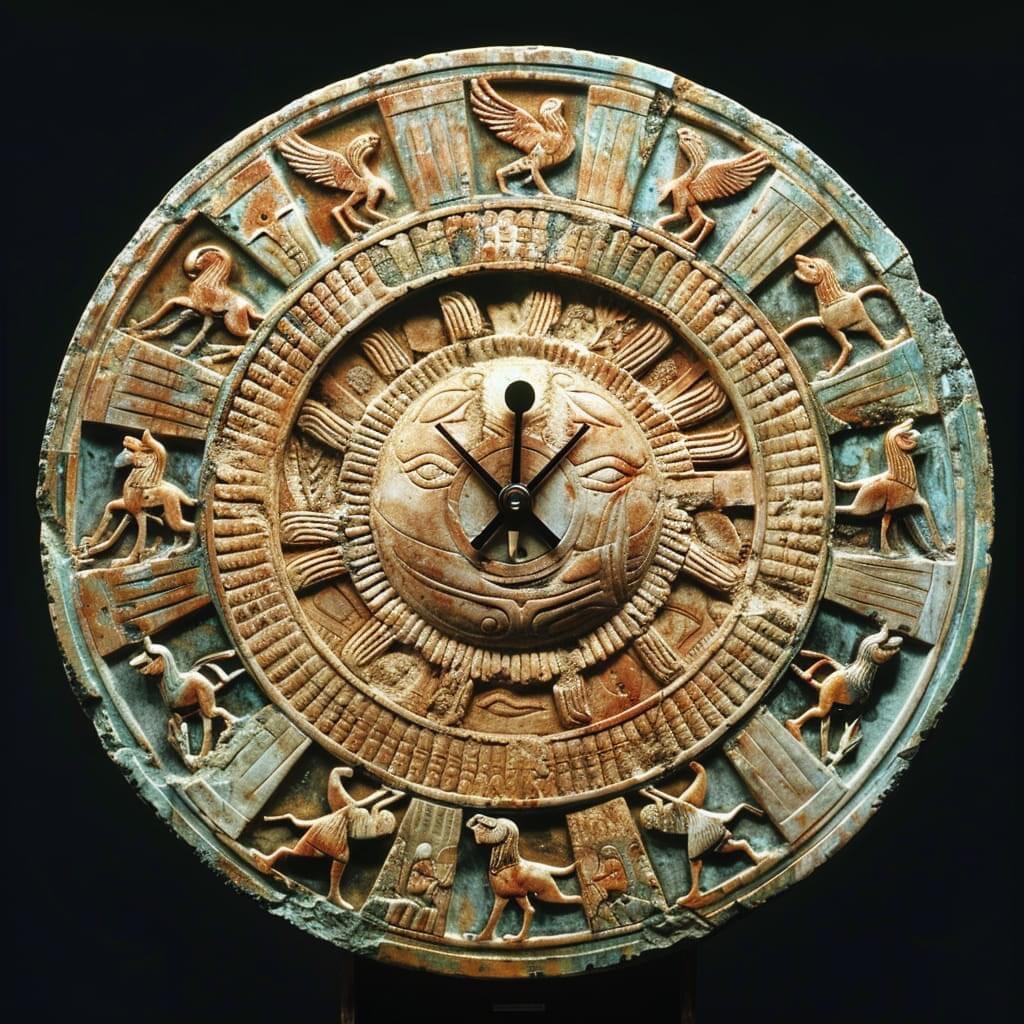
Around 5,000 years ago, the Sumerians, who lived in ancient Mesopotamia (modern-day Iraq), revolutionized how we perceive and measure time. They developed a sophisticated numerical system based on the number 60, known as the sexagesimal system. This unique system led to the division of an hour into 60 minutes and a minute into 60 seconds, concepts that are still in use today.
The Sumerians' need for precise timekeeping was driven by their agricultural society. Accurate calendars were essential for planting and harvesting crops. They also needed to coordinate their complex religious ceremonies and administrative activities.
To aid their timekeeping, the Sumerians made significant advancements in astronomy. They observed the movements of celestial bodies and used this knowledge to create a lunar calendar with 12 months, which closely aligned with the agricultural seasons.
The division of the day into 24 hours, each hour into 60 minutes, and each minute into 60 seconds was a monumental achievement. These divisions were not arbitrary but were designed to be practical and easily divisible, reflecting the Sumerians' advanced understanding of mathematics.
This innovative approach to time had a profound impact on later civilizations, including the Babylonians, Greeks, and Romans, who adopted and further developed the Sumerian system. The legacy of the Sumerians' timekeeping system is evident in our modern clocks and calendars, demonstrating the enduring influence of their ingenuity on our daily lives.