

Interested in the answer for this 🤔 nostr:nprofile1qqsgm8ftw7fsae2wc0jxltmhfhwsg8dmfe92xkk50sp93p9zsmwkt7spz4mhxue69uhhyetvv9ujuerpd46hxtnfduhszxmhwden5te0wa5x2ct59e5xzurs096xzan9wfhzucm09uq3wamnwvaz7tmjv4kxz7fwdehhxarj9e3xzmny9uslplfy
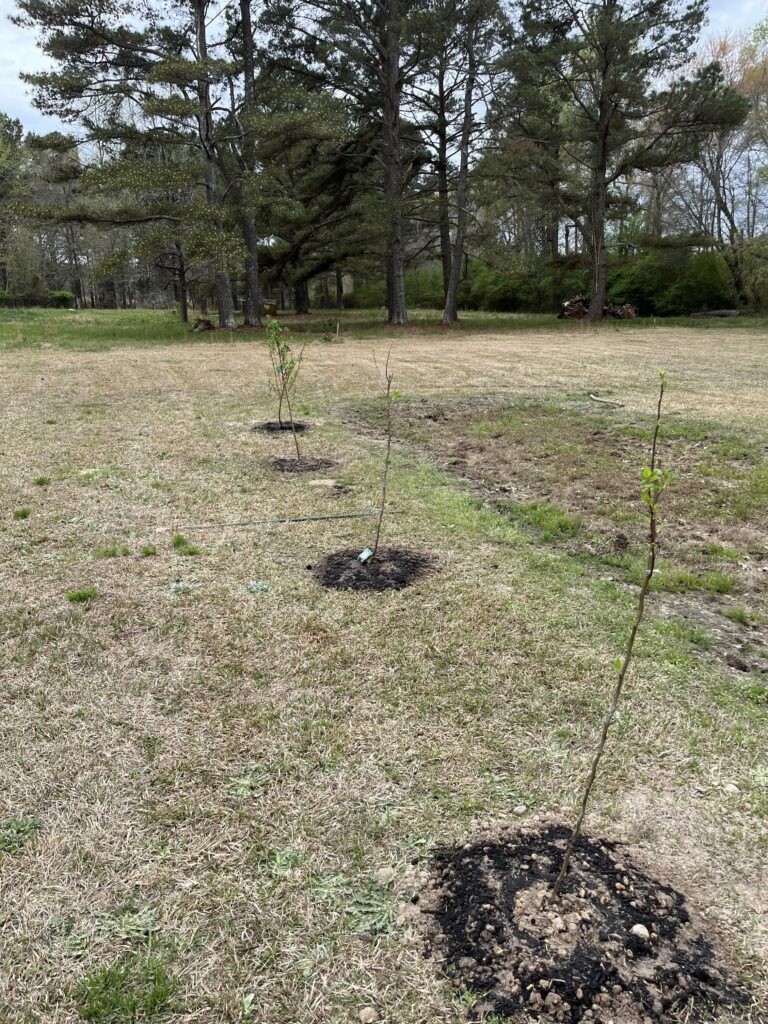
Is this a good distance apart for my fruit trees? https://www.allforgardening.com/1240655/is-this-a-good-distance-apart-for-my-fruit-trees/ #CountryLife #farming #gardening #homesteading #SelfSufficiency
Discussion

It depends on the type of tree and whether it's a dwarf, regular, or tall. You don't want the branches of neighboring trees to touch, so if the adult tree has a 10-foot diameter, you want them at least 20 feet apart.
I think 20 feet, or even 15, is plenty of space. I have planted fruit trees even closer than 10 feet and there was no issue. Most trees just adapt to their surroundinds. When i look around at our wooded areas, or any natural areas, you'll see that many trees of all varieties sprout and thrive in what looks like crowded areas. We have a native plum tree near the cabin that is so hidden by other trees that we never would have known its there, except for the sweet smell of the spring blossoms, and then we had to look pretty hard to see it even then. I always look for answers in nature.