
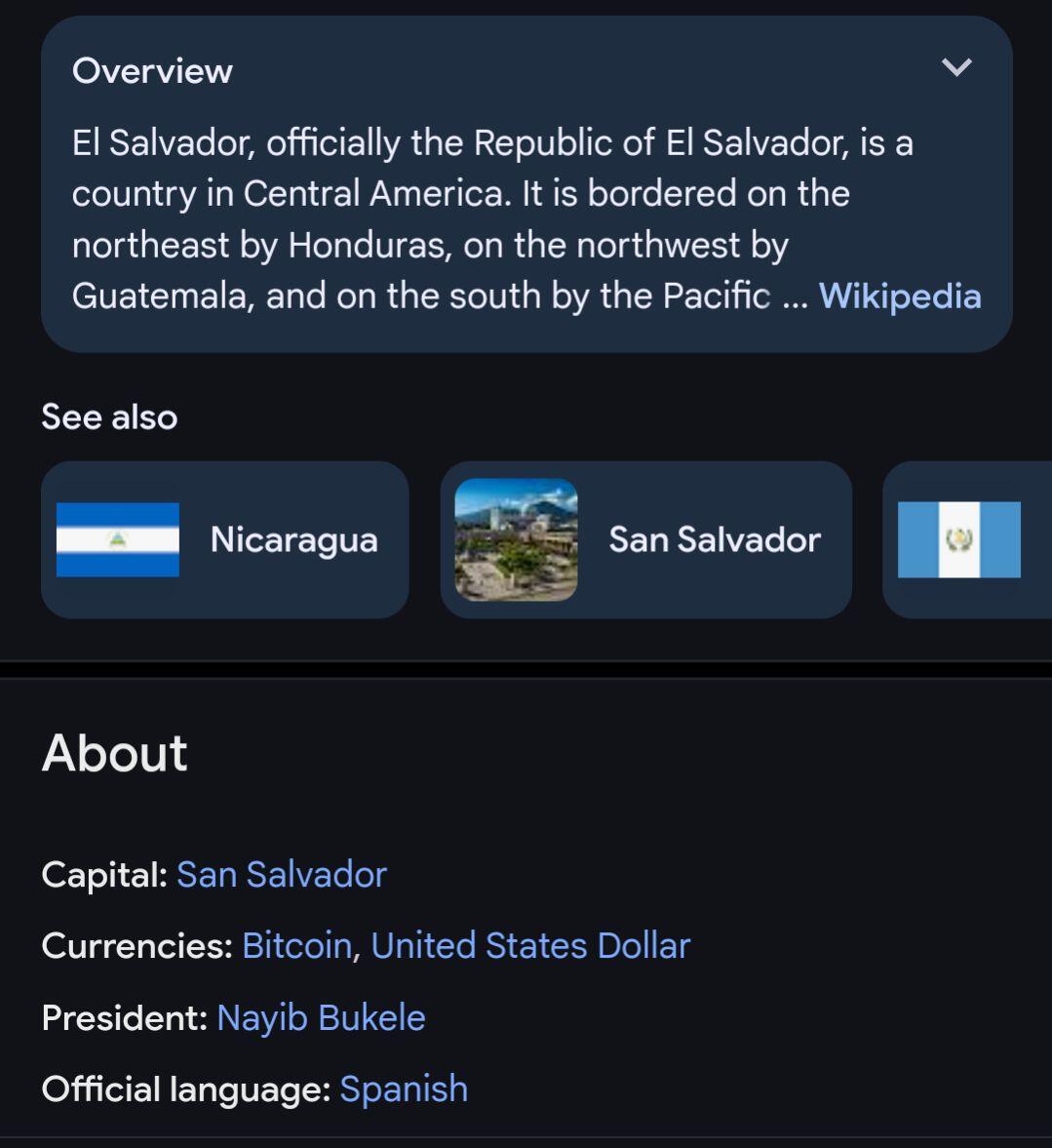

There isn’t really a universally agreed upon definition of “legal tender”, so if El Salvador says bitcoin is legal tender in their country, it arguably just is. Regardless of what that means in practice or the reality on the ground.

(Many people think “legal tender” means merchants are obligated to accept it in trade — as was by-the-letter-of-the-law the case for bitcoin in El Salvador — but that’s not actually the case in most countries.)

Reply to this note

Please Login to reply.

Discussion

IMO if you can't pay taxes with it then it's not legal tender

I’d say that’s probably the best, most concise definition as well.

Was that ever possible in El Salvador? I know they said it would be, but was it really? Like, has anyone actually done that?

Do you want some #bitcoins ?? Send me a dm!

Do you want some #bitcoins ?? Send me a dm!

Do you want some #bitcoins ?? Send me a dm!

The definition of legal tender is generally tied specifical to _debts_. Not just transactions in general. Though in addition to legal tender laws countries frequently have laws requiring businesses to also accept specific currencies, and specific payment mechanisms, even when debt is not involved.

Notably, the El Salvadoran government will no longer allow you to pay taxes with Bitcoin.