
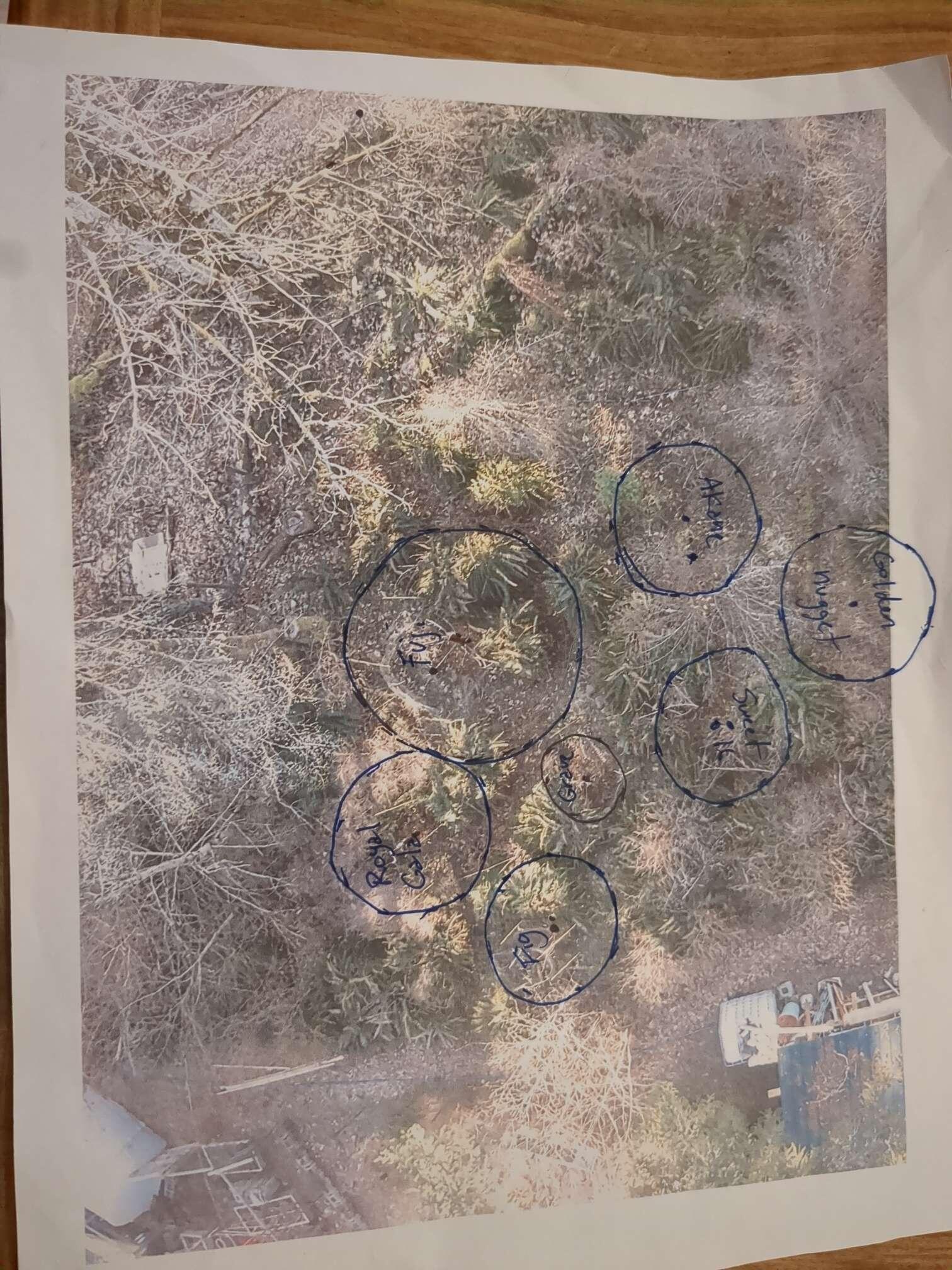

Don’t the weeds compete for nutrients with the plants? What do you do there?
Discussion

depends on the "weed" in question, most weeds are actually "pioneer plants" that add more nutrients to the soil than they take depending on how you manage them. (chop and drop vs pulling out by the roots vs leaving them alone)
groundcover also reduces moisture loss so even when weeds are competing for nutrients they may also be helping retain water in the soil.

Current understanding of soil biology and health actually rejects this old notion of competition for nutrients. Plants, bacteria, mycelia, insects, etc. all live and thrive symbiotically in nature. Soil is a living organism, and not just a whole lot of dirt and minerals. In fact, without the bacteria, the minerals are largely unavailable to the plants, and without the plants, the bacteria don't get the carbohydrates that they need.
It becomes a bit of a philosophical question: What is a weed?
Why do plants grow better de-weeded then? You maintain a garden?
Do they though? I think there are many variables in such an experiment beyond simply selecting some species over others. Are you mulching? Are you monocropping? Are you supplementing with compost? Are your preferred plants perennials or annuals? What is the long term health of your soil?
Weeds, in the invasive sense, are indicators of imbalance or compaction or some other issue.
It really easy to test, de-weeded garden bed plants grow bigger and healthier looking.
Read up on the subject. Thanks.
If you look at a forest it is difficult to find bare soil. A forest is what we try to mimic in these designs. There are 7 layers from canopy to mycillium/roots. With the right diversity they all work together in a system.
Others have left some good information on the subject. It is quite intriguing. If you are interested there is a book called Gaia's Garden that I found to be a good read.