
**The Bullet Train Epitomizes Golden State Corruption**
The Bullet Train Epitomizes Golden State Corruption
_Authored by Edward Ring via AmGreatness.com,_ (https://amgreatness.com/2023/04/18/the-bullet-train-epitomizes-golden-state-corruption/)
**_California’s failing rail project is a metaphor for a state that has turned its back on the ordinary, hardworking people who live there..._**
 ?itok=KJiDDeOx (
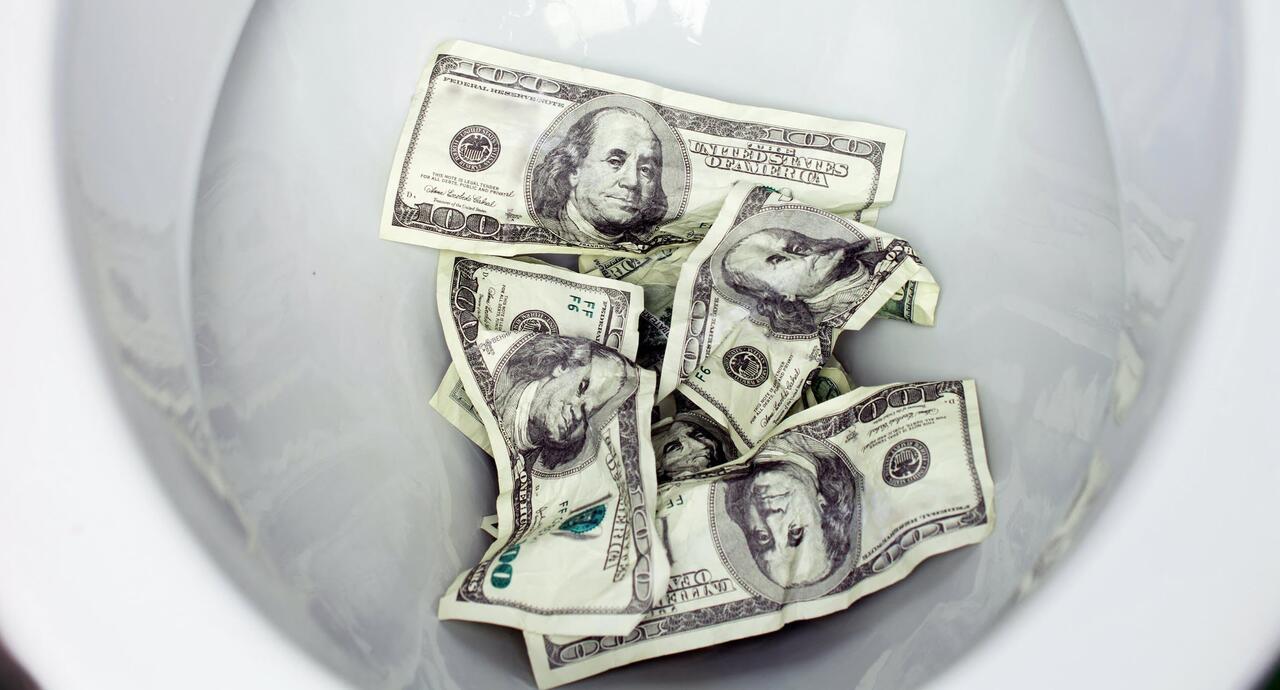 ?itok=KJiDDeOx)
**It sounded too good to be true, and it was.** Travel from downtown San Francisco to downtown Los Angeles in two hours via high-speed rail. California voters in 2008 approvedProposition 1A (https://ballotpedia.org/California_Proposition_1A,_High-Speed_Rail_Bond_Measure_(2008)), authorizing $9.95 billion in general obligation bonds to build this so-called “bullet train.” They were told not only that the total cost would only be $33 billion but also that the entire 500-mile system would be running by 2030.
Fat chance.
In March of this year, the California High-Speed Rail Authorityreleased its latest progress report (https://hsr.ca.gov/wp-content/uploads/2023/03/2023-Project-Update-Report-FINAL-022823.pdf). The project is now projected to cost _$127 billion_, and there is no longer a projected completion date. The initial stretch of track, a 171-mile segment across the sparsely populated, pancake-flat San Joaquin Valley, is projected to be done by 2030 at a cost of $35 billion.
**These are staggering numbers, a testament to a staggering waste of financial and material resources.** For this first segment of track, Californians are going to pay $206 million _per mile_, and that’s if there aren’t any more overruns. The financing alone—based on preposterously optimistic ridership projections for this segment of 6.6 million riders per year, and a 30-year-term at 5 percent annual interest—would work out to a cost of $348 _per ticket_. Not exactly an easily affordable means of travel.
**California’s high-speed rail project, in short, is a disaster.** Everything about it fails any rational cost-benefit analysis. It will be a permanent financial drain on Californians, because in order for anyone to be able to afford to use the train for a daily commute, ticket revenue won’t even pay operating costs, much less pay back the construction costs.
From an environmental perspective, the California High-Speed Rail Authority boasts that the initial segment will reduce total vehicle miles traveled in California by 183 million miles. That sounds like a lot until you take into account that Californians logged340 _billion_ vehicle miles traveled (https://www.thezebra.com/resources/driving/average-miles-driven-per-year/) in 2022. High-speed rail by 2030 expects to reduce that total by _1/20th of one percent_.
But the opportunity cost of blowing $127 billion, and counting, on a train that will not significantly alleviate either traffic congestion or “greenhouse gases” is perhaps the bitterest joke of all. For $127 billion, Californians could build infrastructure that would improve their quality of life for generations.
Even in absurdly expensive California, $127 billion goes a long way. That much money could pay toraise the height of the Shasta Dam (https://www.usbr.gov/mp/ncao/shasta-enlargement.html), buildthe proposed Sites Reservoir (https://sitesproject.org/) to its original 2 million acre-feet storage capacity,restore every aqueduct in the state (https://costa.house.gov/media/press-releases/costa-introduces-bill-restore-san-joaquin-valley-canals), build new systems toharvest and store storm runoff (https://pacinst.org/wp-content/uploads/2022/04/PI_California_Untapped_Urban_Water_Potential_2022-1.pdf), upgrade every major treatment plant in the state torecycle and reuse wastewater (https://watereuse.org/wp-content/uploads/2019/07/WateReuse-CA-Action-Plan_July-2019_r5-2.pdf), refurbish theDiablo Canyon nuclear power plant (https://www.cnbc.com/2021/12/01/diablo-canyon-open-could-save-21-billion-mit-stanford-scientists.html) to last till 2050 or longer, build twoadditional nuclear power plants (https://www.bloomberg.com/news/articles/2016-02-25/why-america-pays-more-for-nuclear-power) of the same size, and resurface and add lanes toevery major interstate freeway (https://californiapolicycenter.org/californias-transportation-future-part-four-the-common-road/).
For $127 billion, even at ridiculously inflated California prices for public works, Californians could have abundant, affordable water and power, they could have a freeway system upgraded for the 21st century, and they would still have tens of billions left.
**Corruption and Waste as a Way of Life**
The problem with spending money on rational, practical solutions that lower the cost of living and improve the quality of life for millio…
https://www.zerohedge.com/political/bullet-train-epitomizes-golden-state-corruption
