To me, quantum computing is an attempt to cheat nature. I think (and hope) that it won't work. I like the Church-Turing thesis, and I'd like the model of "what computation is" to be something that the human brain can understand without a PhD in physics.

Grover's algorithm, for me, is not a "result" of quantum computing. It is the counterexample. You mean to say that you can find a specific object among a random collection of N objects in just sqrt(N) work? Give me a break!

My bet is that something that is not yet understood will physically prevent scaling quantum computers. You want reliable quantum computation with n bit? Then the cost of running this machine will grow exponentially in n.

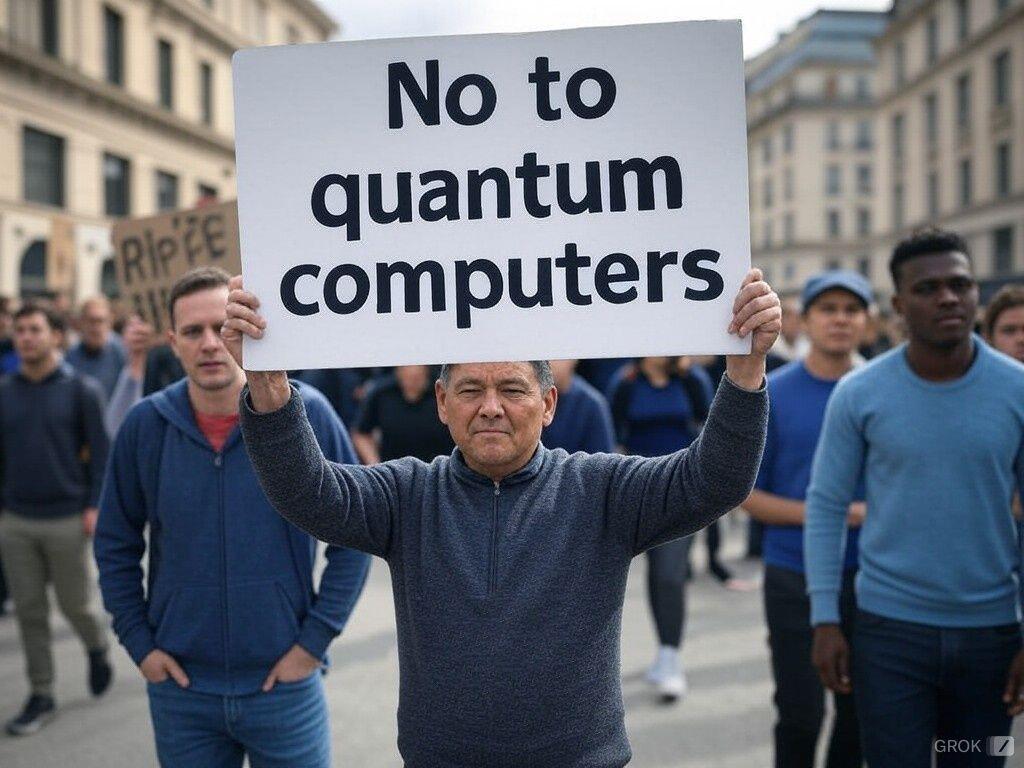
Join the Church-Turing maxis, say #NoToQuantumComputers
Reply to this note

Please Login to reply.

Discussion

I have a very basic grasp of how quantum computers are supposed to work, but i am by no means well educated on the subject.

I think calling it cheating nature goes a bit far. If it is possible in nature, is it then not inherently a property of nature itself?

What about LLM's or in general "neural network" type AI's? Nobody knows what exactly is going on inside the model, you throw in stuff and other stuff comes out. We have a basic understanding of what it does but all we do is tweak the inputs and maybe turn and twist some knobs saying "this or that is bad".

I think it's like splitting an atom, you can tell people not to do it but when the genie is out of the bottle people will do it anyway. I think it's better to focus on how this can affect your life and if you can or want to do something based on that knowledge.

I think I have a similar intuition about it too. Maybe you can get a single logical gate, but hundreds or thousands... I'm not sure. My understanding is you'd have to share state between them, and what is left from my physics degree tells me that is going to be very difficult.