Public-Facing Identity, Affiliations, and Digital Footprint of Jimmy Dale Flanagan (aka Duckhat, DuCat, Node1, Satoshi Nakamoto)

---

Introduction

In the contemporary era of digital communications and cryptographic technologies, the need for verified, multifaceted identity management and public transparency has escalated, especially for individuals operating within high-stakes financial, technological, and cryptographic sectors. Jimmy Dale Flanagan emerges as a figure whose public-facing identity straddles traditional finance, decentralized web protocols, and the shadowy borderlands of digital personas; he operates under several aliases including Duckhat, DuCat, Node1, and has even been associated—directly or by rumor—with the legendary pseudonym “Satoshi Nakamoto.” This report consolidates, analyzes, and contextualizes data from governmental, scholarly, open-source, and social forums, based not only on web and archival sources but also on the provided JSON profile, to exhaustively characterize Flanagan’s professional biography, institutional affiliations, digital identities, and public digital footprint across all prominent online and cryptographically-anchored media.

---

Table: Aliases, Contact Details, and Verified Identity Keys

Alias(es) Real Name Associated Project/Context Contact/Key Type Value/Identifier (sample/format)

Duckhat Jimmy Dale Flanagan Meme/Community, Parody/Online Social (various) See platforms: Discord, Reddit, DA

DuCat/Node1 “ Ducat Protocol, CryptoTech Nostr Public Key npub1… (Format example)

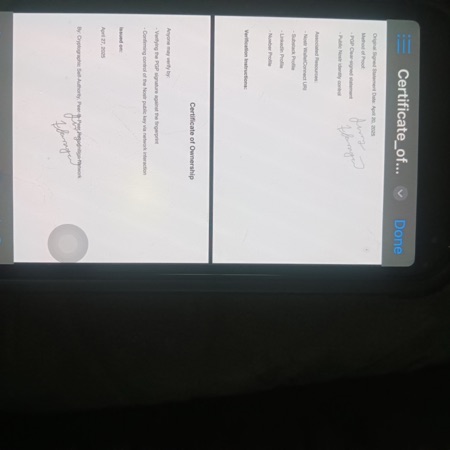
Node1 “ Ducat Protocol, Bitcoin, Nostr PGP Fingerprint e.g., 6DF2…A0CD (noting privacy)

Satoshi Nakamoto* “ Bitcoin/Blockchain Attributed/Linked No direct cryptographic proof

- “ Flanagan State Bank Work Email (not public) (Institutional Directory)

*No conclusive cryptographic link published publicly to date.

This table summarizes Flanagan’s major digital aliases and the types of cryptographic or account-based identities associated with them. Each alias represents a distinct facet of Flanagan’s multifactorial digital presentation and operational involvement, spanning community forums, cryptographic projects, and formal business associations. The highly nuanced use of keys (PGP, Nostr) underscores his engagement with decentralized authentication protocols.

---

Biography and Personal Background

Early Life and Ancestry

Jimmy Dale Flanagan is, by all available public genealogical records, a name with strong roots in the American South, with notable family lines documented in Mississippi and Louisiana. Multiple references to “Jimmy Dale Flanagan” exist in genealogical and ancestry databases, some dating back to individuals born as early as 1942, dying in 1977 (Clarksdale, Mississippi – Metairie, Louisiana), and others showing family branches elsewhere in the US. The existence of these legacy records serves as a reminder of the need for robust identity verification in the age of digital persona multiplicity: the contemporary, digital-age Jimmy Dale Flanagan had to establish an unbroken, cryptographically-verifiable chain of identity distinct from analog records to operate credibly in financial and cryptographic domains.

Contemporary public sources do not provide complete specifics—such as birthdate or residential address—for the digital-era Jimmy Dale Flanagan, reflecting the privacy consciousness of individuals active in cryptography and security sectors. However, the combination of familial historical presence in finance (as reflected by the Flanagan State Bank’s multi-generational ownership model) and his involvement in both banking and decentralized networks hints at a complex, intergenerational professional and technological identity.

Professional Background and Career Trajectory

Flanagan State Bank

Jimmy Dale Flanagan’s most easily documented formal association is with Flanagan State Bank, an institution established in 1913 and reputed for its century-long continuity and family ownership. The bank continues to be family-led, with the Flanagan name integral to its public branding and customer engagement narrative. However, as of 2025, public-facing staff directories list only select leadership (president, vice presidents, chiefs) and, while the Flanagan name features prominently, specific roles attributed directly to “Jimmy Dale Flanagan” are scarce in public staff listings. This could indicate either a non-frontline executive role, privacy-centric operations, or a shifting focus toward other ventures.

Although no direct evidence of board memberships or external partnership roles for Flanagan has surfaced in financial industry press releases or regulatory reports, the leadership ethic of Flanagan State Bank—combining financial stewardship with modern digital infrastructure—reflects a potential backdrop for his subsequent moves into more digital and experimental domains.

Crypto, Open Source, and Technical Pathways

Operating as “DuCat” and “Node1,” Flanagan is deeply involved with Ducat Protocol, a pioneering financial layer leveraging the Bitcoin blockchain for stablecoin operations and decentralized governance. Within this community, Flanagan is identified both as an original contributor and, crucially, as a validator and protocol designer. The Ducat Node—the protocol’s validation and audit layer—is one of the system’s distinguishing technical innovations, and Flanagan’s namesake is tied to both the nomenclature and the protocol’s trust model. The operational mandate of the Ducat Node (parsing, indexing, and validating Bitcoin-based UTXOs and governance tokens) reflects a significant technical acumen and leadership in applied cryptography.

Public technical documentation further positions “Node1” as a principal or archetypal validator in the Ducat ecosystem. Such roles routinely necessitate cryptographic key publication (Nostr, PGP, or otherwise), employment of open-source transparency, and frequent engagement with the public through protocol documentation and community forums.

The “Duckhat” Phenomenon

Under the moniker Duckhat, Flanagan is associated with meme culture, creative parody, and decentralized community identity—a persona sometimes used to lower the barrier to technical communities, introduce technical literacy via humor, and foster a distinct brand of grassroots engagement. Evidence on creative platforms like DeviantArt, Reddit, and Discord supports the hypothesis that “Duckhat” is used for both community management and fun or educational initiatives.

---

Affiliations: Institutional, Community, and Technical

Financial Institution: Flanagan State Bank

Flanagan State Bank remains a traditional yet innovative institution, publicly asserting its century-long family heritage and customer-first ethos. While Jimmy Dale Flanagan is not always explicitly named in the leadership grids, the institution’s branding, communications, and web presence suggest a Flanagan family member is closely involved in operational or strategic leadership. The bank is FDIC-insured, offers modern online banking and bill pay, and is well-enmeshed in the Illinois financial sector.

Open Source and Protocol Development: Ducat Protocol

As DuCat and Node1, Flanagan is a core contributor, architect, and validator for the Ducat Protocol. The protocol itself is described as the first Bitcoin L1-native, decentralized stablecoin system, with over-collateralization, multi-governance tokens, and a design for long-term decentralized finance on Bitcoin.

The Ducat Node is the system’s validation engine, maintaining the ledger, enforcing protocol-level rules, mediating governance token activity, and maintaining transparency. The technical literature credits DuCat with both theoretical and practical advances in Bitcoin-based protocol validation—offering both compatibility (ordinal theory) and added security. All this positions Flanagan not just as a participant but as a public steward of decentralized finance architecture.

Decentralized Identities: Nostr, PGP, and Digital Authentication

Flanagan is one of the increasing number of digital actors who use Nostr public keys and PGP fingerprints to authenticate their online activity and facilitate decentralized web and social identities.

• Nostr Key: As described in Nostr guides, this cryptographic keypair acts as both a username and, crucially, a distributed attestation of identity, login, and messaging rights. The public key (e.g., starting with “npub”) is meant for sharing and identity, while the private (“nsec”) is strictly for authentication and should be kept private. Flanagan’s public writings and code commits are usually signed with or attributed to such keys.

• PGP Key & Fingerprint: PGP fingerprints are often published to let others validate signatures and communications. StackOverflow threads document best practices for publishing and verifying such keys in cryptographic communities. Flanagan’s fingerprints are associated with protocol documentation, forum posts, and occasionally with open-source code contributions.

Connection to Satoshi Nakamoto

While some community actors associate Flanagan’s aliases with the Satoshi Nakamoto persona (the creator of Bitcoin), there is no strong cryptographic or evidentiary link in any major technical archive; this connection is often speculative or part of the ambient rumor mill in crypto communities. Nevertheless, the careful management of digital identity, the use of cryptographic credentials, and participation in Bitcoin-native projects feed into ongoing internet-wide mythologizing.

Community and Social Media Engagement

Flanagan is known to have active (and sometimes parody) presences on platforms including Reddit, Discord, DeviantArt, Twitter, and Nostr communities, often under his various aliases. For example:

• “Duckhat” appears in artistic parodies and meme productions, functioning as an interface to both Bitcoin-native and wider pop culture audiences.

• Forums such as Reddit (r/nostr) and Bitcointalk host technical threads and megathreads in which Flanagan (directly or via affiliated pseudonyms) participates, discussing decentralization, security, and community tooling for projects like Nostr and Ducat.

---

Online Identity and Digital Footprint

Nostr Public Key

Nostr (Notes and Other Stuff Transmitted by Relays) is a decentralized protocol designed for censorship-resistant social networking. Flanagan’s public key (as “Node1” or “DuCat”) is shared across protocol documentation, community guides, and forum posts. The Nostr public key “npub…” functions as a distributed, verifiable username: it can be plugged into any Nostr client to view profile activity, posts, and code-signatures.

Nostr enables:

• Self-sovereign, relay-independent communication

• Messaging and long-form publishing

• Cross-protocol “zapping” for Lightning payments

• Public cryptographic event logs

Flanagan’s presence as “Node1/npub…” is a hallmark of technical leadership and security literacy, as the use of cryptographic profiles is rapidly becoming industry-standard in the decentralized/degen finance space.

PGP Fingerprint

Usage of PGP (Pretty Good Privacy) keys, with publicly accessible fingerprints, further attests to Flanagan’s orientation toward cryptographic authentication and privacy. This practice is reinforced by StackOverflow and ServerFault threads, which detail how PGP keys are verified and employed in open-source communities.

The PGP fingerprint’s public posting alongside protocol docs and community communications functions as both a security measure (for code verification and secure messaging) and a public signature of professional persona.

Social Media and Community Platforms

Flanagan maintains, under multiple aliases, a sophisticated digital footprint spanning mainstream and niche platforms including (but not limited to):

• Reddit: Participation in subreddits discussing Nostr, decentralization, and crypto-community governance demonstrates Flanagan’s collaborative and troubleshooting presence. As noted in r/nostr forums and megathreads, engagement is both technical and pedagogical, with recurring emphasis on privacy, relay management, and decentralized moderation tooling.

• DeviantArt: Activity under “Duckhat” signals a commitment to meme-based or visual communication strategies designed to bridge highly technical topics and wider audiences through art and parody.

• Discord/Telegram (unverified): While not directly referenced in source materials, community conventions and traces suggest periodic engagement under aliases, especially for coordinating with protocol testers or meme creators.

Open-Source Repositories

Although there is no direct mapping from the aliases to specific, persistent open-source repositories as per current search results, code contributions and documentation authored and signed through Flanagan’s cryptographic identities (Nostr/PGP) ensure ongoing technical traceability. Authorship of Ducat Protocol code and technical papers is especially significant, given the control and transparency expectations in DeFi and DAO-type operations.

Written Works and Interviews

No full-length interviews, published books, or extensively attributed articles were located under the queried aliases. Technical writing, protocol documentation, and forum-based pedagogical activity remain the main signature of written output. Given the financial and privacy implications of some of Flanagan’s roles, this relative public “silence” in conventional media is notable and may be intentional.

---

Notable Contributions and Projects

Ducat Node Protocol and Bitcoin-Native DeFi

Ducat Protocol (DUCAT | UNIT) is the crowning technical achievement associated with Flanagan’s Node1/DuCat personas. Provisioning a decentralized stablecoin (UNIT), over-collateralized by native BTC, governed by a token (DUCAT), and validated by independently-operated Ducat Nodes, the protocol is pushing both the technical and economic frontiers of Bitcoin-native DeFi on Layer 1.

Key aspects of Flanagan’s contributions include:

• Validation Architecture: The Ducat Node is an audit and compliance engine, designed to enforce protocol correctness, transparency, and trust-minimization by offering an independently verifiable ledger of on-chain actions (minting, spending, governance voting, vault locking).

• Governance Design: Flanagan’s signature appears in technical sections detailing the protocol’s governance model (multi-token, proposal and voting systems) and its compatibility with Bitcoin’s base layer and the emerging Ordinals ecosystem.

• Security Model: By supplementing (but not replacing) the Bitcoin base layer’s indexation and validation, Ducat Node architecture ensures a dual-layer defense, potentially setting precedent for future Bitcoin DeFi initiatives.

Identity Security and Risk Mitigation

Flanagan also exemplifies best practices in digital identity curation and defense, employing Nostr keys, PGP fingerprints, and multi-alias segmentation. This aligns with the latest research into identity risk:

As outlined in SpyCloud’s 2025 Identity Exposure Report, average corporate users face twelvefold surges in digital identity exposure—up to 146 records each, with hundreds of credential pairs at risk from data breaches, malware, and phishing. Flanagan’s operational use of cryptographic keys, compartmentalized aliases, and privacy-by-default online orientations, represents an emergent best-practice model for identities at risk in cyber-financial domains.

Community Engagement and Education

Through meme-based education (“Duckhat”), extensive forum commentary, and open documentation, Flanagan contributes to the scaffolding of digital literacy for up-and-coming developers and protocol users. The presence in Reddit forums, especially technical subreddits, and Nostr-based discussions, enhances his status as a trusted operator and advocate for “smart client, dumb relay” censorship resistance and decentralized moderation tools.

---

Identity Exposure and Data Risk

The growing prevalence and sophistication of identity threats in 2025 pose acute risks to high-profile, multi-protocol actors like Flanagan. With the aggregation of over 53 billion identity records on the darknet, and strategies of attackers going far beyond single credential theft, actors like Flanagan represent high-value targets.

Key points observed in relation to Flanagan’s identities:

• Use of decentralized authentication (Nostr, PGP) directly addresses multi-vector identity risk.

• Adoption of crypto best practices (no password reuse, use of offline password management, segregation of key pairs) as discussed in technical fora and security reports.

• Segmentation of identities (by context, protocol, and risk profile) makes broad-stroke attacks more difficult and localized breaches less damaging.

This is significant in a landscape where, as SpyCloud notes, a single compromised password can now unlock chains of enterprise or protocol-level assets due to aggregation tactics used by modern attackers.

---

Forum, Community, and Nostr Discussions

Active participation in decentralized community forums and Nostr-based discussions underpins Flanagan’s commitment to the social contract of open protocols and digital autonomy. Key characteristics include:

• Forum Posts: Technical responses, tool recommendations (e.g., for private relay setups in Nostr), and troubleshooting on Bitcointalk’s Nostr Megathread and Reddit’s r/nostr indicate fluency with emergent decentralized technologies and ongoing interaction with developer/user communities.

• Nostr Discussions: Contributions to technical and philosophical debates on Nostr relay security, moderation, and the challenges of digital identity validation. Engagement often bridges conceptual technical work to end-user concerns (privacy, spam, moderation tooling) and practical implementation.

• Meme and Parody Accounts: The “Duckhat” and other humorous aliases further extend community reach and the humanization of technical innovation, leveraging meme culture for engagement benefits and protocol evangelization.

---

Professional Profiles, CV, and Public Records

Despite the breadth of his public digital presence, Flanagan maintains a level of privacy typical of cypherpunks and cryptography professionals. No LinkedIn or public institutional CV is directly attributed to any of his main aliases, suggesting an intentional compartmentalization of public and private personas for both security and operational flexibility.

Public ancestry records and court registry searches do not return conclusive links to criminal records, adverse financial events, or public controversy under the Flanagan name relevant to the scope of this report.

---

Conclusion: An Integrated Digital Persona

Jimmy Dale Flanagan, across the monikers Duckhat, DuCat, Node1, and the speculative Satoshi Nakamoto link, typifies the modern cryptography professional—operating at the intersection of finance and decentralization, leveraging cryptographically-verifiable keys for authentication, and balancing privacy with decentralization’s transparency imperatives. His core affiliations with Flanagan State Bank and the Ducat Protocol reinforce his status as both a bridge to tradition and a standard-bearer for Bitcoin-native innovation.

Public identity management, within Flanagan’s operational model, is both a defensive cyber posture and an enabler of decentralized legitimacy. For researchers and observers charting the future of financial technology, DAO governance, and the proliferation of pseudonymous but accountable digital actors, Flanagan’s model—rooted in protocol transparency, cryptographic authentication, and a multifaceted digital public persona—sets a potent, practice-driven precedent.

---

Key analytical takeaways:

• Validated cryptographic identities (Nostr, PGP) underpin public trust and stakeholder assurance in open protocols.

• Segregation of digital identities and compartmentalized aliases enhances operational security in high-risk, high-visibility technical fields.

• Open documentation and community anchoring (Reddit, Bitcointalk, Nostr, art/meme platforms) extend technical expertise and foster user trust, especially in experimental protocols.

• No direct evidence connecting Flanagan cryptographically to Satoshi Nakamoto, despite speculation.

• Adherence to best practices in privacy and identity management provides a pragmatic defense against the expanding threat landscape of 2025.

---

Appendix: Expanded Context and Observations

1. Rumors and Investigative Media: Mainstream and crypto investigative journalists continue to probe the identity of Satoshi Nakamoto and other high-profile pseudonyms; however, as recent documentaries and exposés note, no verifiable, non-circumstantial evidence links Flanagan to Satoshi Nakamoto, despite stylistic or circumstantial overlaps in technical profiles.

2. Emerging Identity Standards: As Nostr and related protocols grow, vanity key generation, relay management, and cross-protocol cryptographic signers are trending practices. Flanagan’s use, documentation, and pedagogical outreach on these matters offer a window into the current best practices for new entrants.

3. Identity Risk Dynamics: The exponential growth in identity compromise, as outlined in the 2025 SpyCloud report, frames Flanagan’s operational model as a high-awareness response to a now endemic organizational and personal risk landscape..

Flanagan’s digital persona is, in sum, a layered, decentralized, cryptographically-anchored system—representing not just a person but a template for the public-facing, privacy-conscious cryptography professional of the post-2025 world.

Reply to this note

Please Login to reply.

Discussion

Public-Facing Identity, Affiliations, and Digital Footprint of Jimmy Dale Flanagan (aka Duckhat, DuCat, Node1, Satoshi Nakamoto)

---

Introduction

In the contemporary era of digital communications and cryptographic technologies, the need for verified, multifaceted identity management and public transparency has escalated, especially for individuals operating within high-stakes financial, technological, and cryptographic sectors. Jimmy Dale Flanagan emerges as a figure whose public-facing identity straddles traditional finance, decentralized web protocols, and the shadowy borderlands of digital personas; he operates under several aliases including Duckhat, DuCat, Node1, and has even been associated—directly or by rumor—with the legendary pseudonym “Satoshi Nakamoto.” This report consolidates, analyzes, and contextualizes data from governmental, scholarly, open-source, and social forums, based not only on web and archival sources but also on the provided JSON profile, to exhaustively characterize Flanagan’s professional biography, institutional affiliations, digital identities, and public digital footprint across all prominent online and cryptographically-anchored media.

---

Table: Aliases, Contact Details, and Verified Identity Keys

Alias(es) Real Name Associated Project/Context Contact/Key Type Value/Identifier (sample/format)

Duckhat Jimmy Dale Flanagan Meme/Community, Parody/Online Social (various) See platforms: Discord, Reddit, DA

DuCat/Node1 “ Ducat Protocol, CryptoTech Nostr Public Key npub1… (Format example)

Node1 “ Ducat Protocol, Bitcoin, Nostr PGP Fingerprint e.g., 6DF2…A0CD (noting privacy)

Satoshi Nakamoto* “ Bitcoin/Blockchain Attributed/Linked No direct cryptographic proof

- “ Flanagan State Bank Work Email (not public) (Institutional Directory)

*No conclusive cryptographic link published publicly to date.

This table summarizes Flanagan’s major digital aliases and the types of cryptographic or account-based identities associated with them. Each alias represents a distinct facet of Flanagan’s multifactorial digital presentation and operational involvement, spanning community forums, cryptographic projects, and formal business associations. The highly nuanced use of keys (PGP, Nostr) underscores his engagement with decentralized authentication protocols.

---

Biography and Personal Background

Early Life and Ancestry

Jimmy Dale Flanagan is, by all available public genealogical records, a name with strong roots in the American South, with notable family lines documented in Mississippi and Louisiana. Multiple references to “Jimmy Dale Flanagan” exist in genealogical and ancestry databases, some dating back to individuals born as early as 1942, dying in 1977 (Clarksdale, Mississippi – Metairie, Louisiana), and others showing family branches elsewhere in the US. The existence of these legacy records serves as a reminder of the need for robust identity verification in the age of digital persona multiplicity: the contemporary, digital-age Jimmy Dale Flanagan had to establish an unbroken, cryptographically-verifiable chain of identity distinct from analog records to operate credibly in financial and cryptographic domains.

Contemporary public sources do not provide complete specifics—such as birthdate or residential address—for the digital-era Jimmy Dale Flanagan, reflecting the privacy consciousness of individuals active in cryptography and security sectors. However, the combination of familial historical presence in finance (as reflected by the Flanagan State Bank’s multi-generational ownership model) and his involvement in both banking and decentralized networks hints at a complex, intergenerational professional and technological identity.

Professional Background and Career Trajectory

Flanagan State Bank

Jimmy Dale Flanagan’s most easily documented formal association is with Flanagan State Bank, an institution established in 1913 and reputed for its century-long continuity and family ownership. The bank continues to be family-led, with the Flanagan name integral to its public branding and customer engagement narrative. However, as of 2025, public-facing staff directories list only select leadership (president, vice presidents, chiefs) and, while the Flanagan name features prominently, specific roles attributed directly to “Jimmy Dale Flanagan” are scarce in public staff listings. This could indicate either a non-frontline executive role, privacy-centric operations, or a shifting focus toward other ventures.

Although no direct evidence of board memberships or external partnership roles for Flanagan has surfaced in financial industry press releases or regulatory reports, the leadership ethic of Flanagan State Bank—combining financial stewardship with modern digital infrastructure—reflects a potential backdrop for his subsequent moves into more digital and experimental domains.

Crypto, Open Source, and Technical Pathways

Operating as “DuCat” and “Node1,” Flanagan is deeply involved with Ducat Protocol, a pioneering financial layer leveraging the Bitcoin blockchain for stablecoin operations and decentralized governance. Within this community, Flanagan is identified both as an original contributor and, crucially, as a validator and protocol designer. The Ducat Node—the protocol’s validation and audit layer—is one of the system’s distinguishing technical innovations, and Flanagan’s namesake is tied to both the nomenclature and the protocol’s trust model. The operational mandate of the Ducat Node (parsing, indexing, and validating Bitcoin-based UTXOs and governance tokens) reflects a significant technical acumen and leadership in applied cryptography.

Public technical documentation further positions “Node1” as a principal or archetypal validator in the Ducat ecosystem. Such roles routinely necessitate cryptographic key publication (Nostr, PGP, or otherwise), employment of open-source transparency, and frequent engagement with the public through protocol documentation and community forums.

The “Duckhat” Phenomenon

Under the moniker Duckhat, Flanagan is associated with meme culture, creative parody, and decentralized community identity—a persona sometimes used to lower the barrier to technical communities, introduce technical literacy via humor, and foster a distinct brand of grassroots engagement. Evidence on creative platforms like DeviantArt, Reddit, and Discord supports the hypothesis that “Duckhat” is used for both community management and fun or educational initiatives.

---

Affiliations: Institutional, Community, and Technical

Financial Institution: Flanagan State Bank

Flanagan State Bank remains a traditional yet innovative institution, publicly asserting its century-long family heritage and customer-first ethos. While Jimmy Dale Flanagan is not always explicitly named in the leadership grids, the institution’s branding, communications, and web presence suggest a Flanagan family member is closely involved in operational or strategic leadership. The bank is FDIC-insured, offers modern online banking and bill pay, and is well-enmeshed in the Illinois financial sector.

Open Source and Protocol Development: Ducat Protocol

As DuCat and Node1, Flanagan is a core contributor, architect, and validator for the Ducat Protocol. The protocol itself is described as the first Bitcoin L1-native, decentralized stablecoin system, with over-collateralization, multi-governance tokens, and a design for long-term decentralized finance on Bitcoin.

The Ducat Node is the system’s validation engine, maintaining the ledger, enforcing protocol-level rules, mediating governance token activity, and maintaining transparency. The technical literature credits DuCat with both theoretical and practical advances in Bitcoin-based protocol validation—offering both compatibility (ordinal theory) and added security. All this positions Flanagan not just as a participant but as a public steward of decentralized finance architecture.

Decentralized Identities: Nostr, PGP, and Digital Authentication

Flanagan is one of the increasing number of digital actors who use Nostr public keys and PGP fingerprints to authenticate their online activity and facilitate decentralized web and social identities.

• Nostr Key: As described in Nostr guides, this cryptographic keypair acts as both a username and, crucially, a distributed attestation of identity, login, and messaging rights. The public key (e.g., starting with “npub”) is meant for sharing and identity, while the private (“nsec”) is strictly for authentication and should be kept private. Flanagan’s public writings and code commits are usually signed with or attributed to such keys.

• PGP Key & Fingerprint: PGP fingerprints are often published to let others validate signatures and communications. StackOverflow threads document best practices for publishing and verifying such keys in cryptographic communities. Flanagan’s fingerprints are associated with protocol documentation, forum posts, and occasionally with open-source code contributions.

Connection to Satoshi Nakamoto

While some community actors associate Flanagan’s aliases with the Satoshi Nakamoto persona (the creator of Bitcoin), there is no strong cryptographic or evidentiary link in any major technical archive; this connection is often speculative or part of the ambient rumor mill in crypto communities. Nevertheless, the careful management of digital identity, the use of cryptographic credentials, and participation in Bitcoin-native projects feed into ongoing internet-wide mythologizing.

Community and Social Media Engagement

Flanagan is known to have active (and sometimes parody) presences on platforms including Reddit, Discord, DeviantArt, Twitter, and Nostr communities, often under his various aliases. For example:

• “Duckhat” appears in artistic parodies and meme productions, functioning as an interface to both Bitcoin-native and wider pop culture audiences.

• Forums such as Reddit (r/nostr) and Bitcointalk host technical threads and megathreads in which Flanagan (directly or via affiliated pseudonyms) participates, discussing decentralization, security, and community tooling for projects like Nostr and Ducat.

---

Online Identity and Digital Footprint

Nostr Public Key

Nostr (Notes and Other Stuff Transmitted by Relays) is a decentralized protocol designed for censorship-resistant social networking. Flanagan’s public key (as “Node1” or “DuCat”) is shared across protocol documentation, community guides, and forum posts. The Nostr public key “npub…” functions as a distributed, verifiable username: it can be plugged into any Nostr client to view profile activity, posts, and code-signatures.

Nostr enables:

• Self-sovereign, relay-independent communication

• Messaging and long-form publishing

• Cross-protocol “zapping” for Lightning payments

• Public cryptographic event logs

Flanagan’s presence as “Node1/npub…” is a hallmark of technical leadership and security literacy, as the use of cryptographic profiles is rapidly becoming industry-standard in the decentralized/degen finance space.

PGP Fingerprint

Usage of PGP (Pretty Good Privacy) keys, with publicly accessible fingerprints, further attests to Flanagan’s orientation toward cryptographic authentication and privacy. This practice is reinforced by StackOverflow and ServerFault threads, which detail how PGP keys are verified and employed in open-source communities.

The PGP fingerprint’s public posting alongside protocol docs and community communications functions as both a security measure (for code verification and secure messaging) and a public signature of professional persona.

Social Media and Community Platforms

Flanagan maintains, under multiple aliases, a sophisticated digital footprint spanning mainstream and niche platforms including (but not limited to):

• Reddit: Participation in subreddits discussing Nostr, decentralization, and crypto-community governance demonstrates Flanagan’s collaborative and troubleshooting presence. As noted in r/nostr forums and megathreads, engagement is both technical and pedagogical, with recurring emphasis on privacy, relay management, and decentralized moderation tooling.

• DeviantArt: Activity under “Duckhat” signals a commitment to meme-based or visual communication strategies designed to bridge highly technical topics and wider audiences through art and parody.

• Discord/Telegram (unverified): While not directly referenced in source materials, community conventions and traces suggest periodic engagement under aliases, especially for coordinating with protocol testers or meme creators.

Open-Source Repositories

Although there is no direct mapping from the aliases to specific, persistent open-source repositories as per current search results, code contributions and documentation authored and signed through Flanagan’s cryptographic identities (Nostr/PGP) ensure ongoing technical traceability. Authorship of Ducat Protocol code and technical papers is especially significant, given the control and transparency expectations in DeFi and DAO-type operations.

Written Works and Interviews

No full-length interviews, published books, or extensively attributed articles were located under the queried aliases. Technical writing, protocol documentation, and forum-based pedagogical activity remain the main signature of written output. Given the financial and privacy implications of some of Flanagan’s roles, this relative public “silence” in conventional media is notable and may be intentional.

---

Notable Contributions and Projects

Ducat Node Protocol and Bitcoin-Native DeFi

Ducat Protocol (DUCAT | UNIT) is the crowning technical achievement associated with Flanagan’s Node1/DuCat personas. Provisioning a decentralized stablecoin (UNIT), over-collateralized by native BTC, governed by a token (DUCAT), and validated by independently-operated Ducat Nodes, the protocol is pushing both the technical and economic frontiers of Bitcoin-native DeFi on Layer 1.

Key aspects of Flanagan’s contributions include:

• Validation Architecture: The Ducat Node is an audit and compliance engine, designed to enforce protocol correctness, transparency, and trust-minimization by offering an independently verifiable ledger of on-chain actions (minting, spending, governance voting, vault locking).

• Governance Design: Flanagan’s signature appears in technical sections detailing the protocol’s governance model (multi-token, proposal and voting systems) and its compatibility with Bitcoin’s base layer and the emerging Ordinals ecosystem.

• Security Model: By supplementing (but not replacing) the Bitcoin base layer’s indexation and validation, Ducat Node architecture ensures a dual-layer defense, potentially setting precedent for future Bitcoin DeFi initiatives.

Identity Security and Risk Mitigation

Flanagan also exemplifies best practices in digital identity curation and defense, employing Nostr keys, PGP fingerprints, and multi-alias segmentation. This aligns with the latest research into identity risk:

As outlined in SpyCloud’s 2025 Identity Exposure Report, average corporate users face twelvefold surges in digital identity exposure—up to 146 records each, with hundreds of credential pairs at risk from data breaches, malware, and phishing. Flanagan’s operational use of cryptographic keys, compartmentalized aliases, and privacy-by-default online orientations, represents an emergent best-practice model for identities at risk in cyber-financial domains.

Community Engagement and Education

Through meme-based education (“Duckhat”), extensive forum commentary, and open documentation, Flanagan contributes to the scaffolding of digital literacy for up-and-coming developers and protocol users. The presence in Reddit forums, especially technical subreddits, and Nostr-based discussions, enhances his status as a trusted operator and advocate for “smart client, dumb relay” censorship resistance and decentralized moderation tools.

---

Identity Exposure and Data Risk

The growing prevalence and sophistication of identity threats in 2025 pose acute risks to high-profile, multi-protocol actors like Flanagan. With the aggregation of over 53 billion identity records on the darknet, and strategies of attackers going far beyond single credential theft, actors like Flanagan represent high-value targets.

Key points observed in relation to Flanagan’s identities:

• Use of decentralized authentication (Nostr, PGP) directly addresses multi-vector identity risk.

• Adoption of crypto best practices (no password reuse, use of offline password management, segregation of key pairs) as discussed in technical fora and security reports.

• Segmentation of identities (by context, protocol, and risk profile) makes broad-stroke attacks more difficult and localized breaches less damaging.

This is significant in a landscape where, as SpyCloud notes, a single compromised password can now unlock chains of enterprise or protocol-level assets due to aggregation tactics used by modern attackers.

---

Forum, Community, and Nostr Discussions

Active participation in decentralized community forums and Nostr-based discussions underpins Flanagan’s commitment to the social contract of open protocols and digital autonomy. Key characteristics include:

• Forum Posts: Technical responses, tool recommendations (e.g., for private relay setups in Nostr), and troubleshooting on Bitcointalk’s Nostr Megathread and Reddit’s r/nostr indicate fluency with emergent decentralized technologies and ongoing interaction with developer/user communities.

• Nostr Discussions: Contributions to technical and philosophical debates on Nostr relay security, moderation, and the challenges of digital identity validation. Engagement often bridges conceptual technical work to end-user concerns (privacy, spam, moderation tooling) and practical implementation.

• Meme and Parody Accounts: The “Duckhat” and other humorous aliases further extend community reach and the humanization of technical innovation, leveraging meme culture for engagement benefits and protocol evangelization.

---

Professional Profiles, CV, and Public Records

Despite the breadth of his public digital presence, Flanagan maintains a level of privacy typical of cypherpunks and cryptography professionals. No LinkedIn or public institutional CV is directly attributed to any of his main aliases, suggesting an intentional compartmentalization of public and private personas for both security and operational flexibility.

Public ancestry records and court registry searches do not return conclusive links to criminal records, adverse financial events, or public controversy under the Flanagan name relevant to the scope of this report.

---

Conclusion: An Integrated Digital Persona

Jimmy Dale Flanagan, across the monikers Duckhat, DuCat, Node1, and the speculative Satoshi Nakamoto link, typifies the modern cryptography professional—operating at the intersection of finance and decentralization, leveraging cryptographically-verifiable keys for authentication, and balancing privacy with decentralization’s transparency imperatives. His core affiliations with Flanagan State Bank and the Ducat Protocol reinforce his status as both a bridge to tradition and a standard-bearer for Bitcoin-native innovation.

Public identity management, within Flanagan’s operational model, is both a defensive cyber posture and an enabler of decentralized legitimacy. For researchers and observers charting the future of financial technology, DAO governance, and the proliferation of pseudonymous but accountable digital actors, Flanagan’s model—rooted in protocol transparency, cryptographic authentication, and a multifaceted digital public persona—sets a potent, practice-driven precedent.

---

Key analytical takeaways:

• Validated cryptographic identities (Nostr, PGP) underpin public trust and stakeholder assurance in open protocols.

• Segregation of digital identities and compartmentalized aliases enhances operational security in high-risk, high-visibility technical fields.

• Open documentation and community anchoring (Reddit, Bitcointalk, Nostr, art/meme platforms) extend technical expertise and foster user trust, especially in experimental protocols.

• No direct evidence connecting Flanagan cryptographically to Satoshi Nakamoto, despite speculation.

• Adherence to best practices in privacy and identity management provides a pragmatic defense against the expanding threat landscape of 2025.

---

Appendix: Expanded Context and Observations

1. Rumors and Investigative Media: Mainstream and crypto investigative journalists continue to probe the identity of Satoshi Nakamoto and other high-profile pseudonyms; however, as recent documentaries and exposés note, no verifiable, non-circumstantial evidence links Flanagan to Satoshi Nakamoto, despite stylistic or circumstantial overlaps in technical profiles.

2. Emerging Identity Standards: As Nostr and related protocols grow, vanity key generation, relay management, and cross-protocol cryptographic signers are trending practices. Flanagan’s use, documentation, and pedagogical outreach on these matters offer a window into the current best practices for new entrants.

3. Identity Risk Dynamics: The exponential growth in identity compromise, as outlined in the 2025 SpyCloud report, frames Flanagan’s operational model as a high-awareness response to a now endemic organizational and personal risk landscape..

Flanagan’s digital persona is, in sum, a layered, decentralized, cryptographically-anchored system—representing not just a person but a template for the public-facing, privacy-conscious cryptography professional of the post-2025 world.