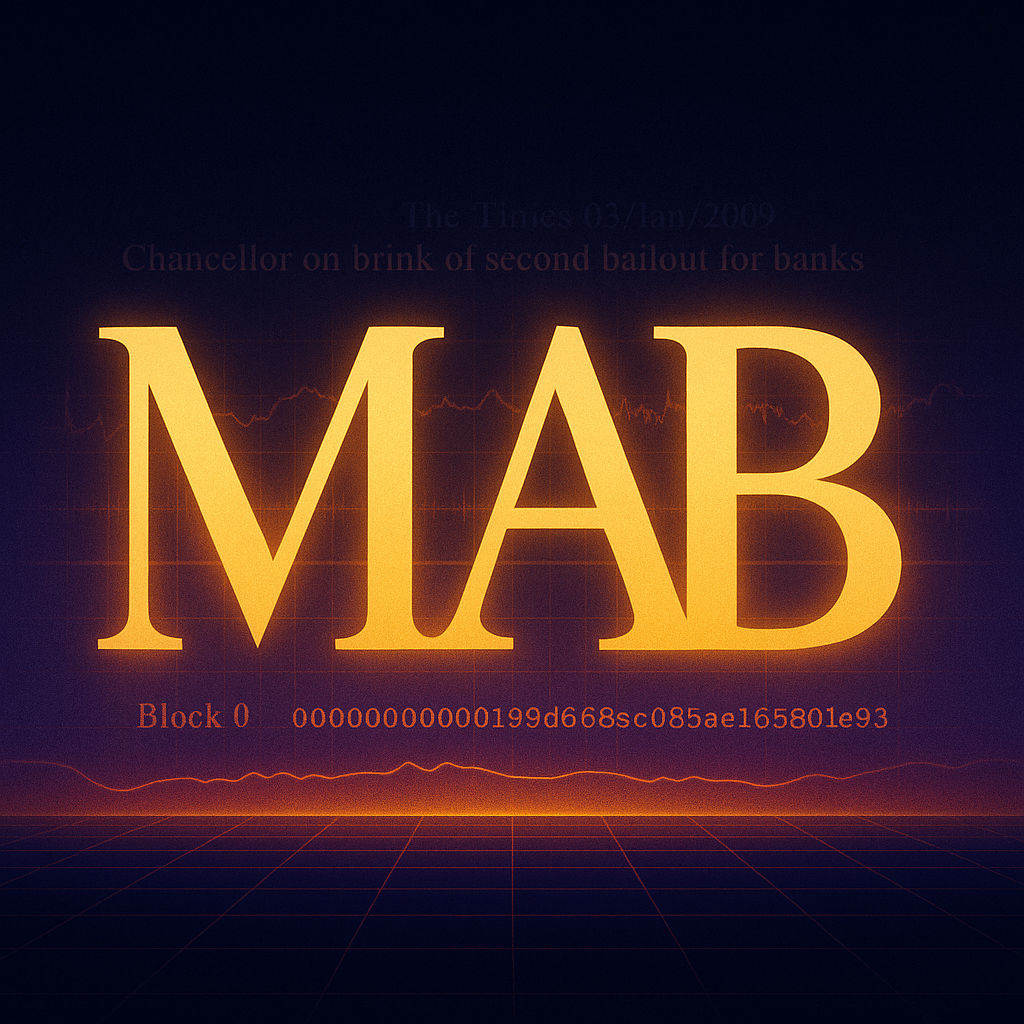
Shared some thoughts about Bitcoin Magazine’s NFT auction in this Habla article for Nostr Report.
“No matter how fair the process may be, when the thing being sold is itself a scam, then the whole process becomes a scam.”
Shared some thoughts about Bitcoin Magazine’s NFT auction in this Habla article for Nostr Report.
“No matter how fair the process may be, when the thing being sold is itself a scam, then the whole process becomes a scam.”
NFT scammers have figured out that all they have to do to gain attention to their scam is to bid up their own auctions to insanely high prices. Then once attention has been drawn towards their auctions, they prey on the low hanging fruit who buy into the manipulated hype.
NFTs are fantastic, in facts any creative endeavor is worth the effort, compared to wars, plagues and massacres which the government is mothering, and hating you for your taxes.

I agree wrt it reflecting poorly on Bitcoin Magazine.
I'm on the fence about the scam label though. Not because I'm defending NFTs as such, but more because the consumer knows full well what they are buying (a record on a blockchain pointing to a jpeg).
When there's no deception involved and the customer is aware of what they're buying, it's more a case of "a fool and their money are soon parted" imo.
Again I agree it's just a cash grab by Bitcoin Magazine and cheapens their brand. 100%.
I don't believe the idea that 'there's no deception involved'. U actually think the entire ecosystem was built on a foundation of deception & fraud.
I* not U
What I mean by no deception is the seller isn't lying about what they're selling. It's a jpeg connected to a hash on a blockchain. They're not claiming it's something more than it is.
If someone is willing to bid and pay ridiculous BTC for it, a fool and their money...
And as I said it does reflect poorly on Bitcoin Magazine for participating, it's an obvious cash grab.
Sure but the ways in which they try to elevate the perceived value of these jpegs they're selling has been entirely deceptive
There's a level of fair argument here, but all marketing is hype, the law only considers it deceptive if it lies about the nature of the product itself.
An iPhone ad will try to convince you to drop two grand on the new one because it has features Android has had for years, but if the iPhone actually does what is claimed, hyped up marketing doesn't make the product itself a scam.
If marketing overemphasising the value proposition of a product makes the product itself a scam, everything that's been advertised could be argued to be a scam.
I'd also add that actual ownership rights of the intellectual property behind the image you're often times buying is at best, purposely kept murky.
Yep that is true. I used the apes as an example however because they're one of the rare exceptions iirc - the terms clearly grant the owner full exclusive commercial rights to the work.
Are digital images scarce?
As scarce as the stars in the rural night sky… before the lightbulb was invented.
The claim is the token it's connected to on the blockchain contains a unique hash.
That's not false. Whether it has any real value is another matter. But anyone participating in the auction is fully aware you can copy and paste a digital image and what they want to buy is the token.
Answer all of these questions please:
1) Are digital images scarce?
2) Does 1 sat = 1 sat?
3) Does a unique hash on a blockchain indicate proof of ownership in a court of law?
You're coming at me as if I'm defending the product. I'm not.
I'm merely pointing out that no one participating in the auction believes a digital image can't be copied and I don't see Bitcoin Magazine claiming otherwise.
Bidders choose to put value into the token underlying it. Is that value justified? Imo, no. But I don't see where the deception takes place.
You stated it’s not a scam and I’m trying to help you understand why it is. Could you please answer my questions?
1. Digital images are not scarce but a unique hash quantifiably is by the laws of mathematics and cryptography.
2. 1 sat = 1 sat, broadly speaking, but sats aren't necessarily fungible on-chain - for example if you had a load of BTC from Silk Road the Feds would be following you through the chain.
3. Whether ownership of an NFT can hold up in a court of law largely depends on the intellectual property rights that come with it. If you owned one of those apes, you'd also own the IP, which is enforceable in a court of law. If the creator retains ownership of the IP, the answer would be no.
Can't be digitally scarce if anyone can right click it. Just another deceptive marketing lie coming from these low life shitcoin scammers.
The image isn't scarce but the token is.
Dunno why that's complicated.
I'm not even arguing the token has value, but "digital images aren't scarce" is a strawman.
Agreed.. 💯 Not sure we can continue to allow Bitcoin to be spammed. We may have to end it..🧡
I had no idea #Bitcoin NFTs existed
💯👏
🎯
After seeing a full page AD for Bobby Lee's scammy "cold storage" Ballet wallet in the Bitcoin magazine I purchased I got a similar response after calling it out.