Avatar
The Beave
0689df5847a8d3376892da29622d7c0fdc1ef1958f4bc4471d90966aa1eca9f2
I am a reptilian-donkey-MAGAtard. 🀣🀣🀣 I am chill but uncool. Not so obvious and ruthlessly odd. I am violently anti-coffee, you addict! Eshara says I'm a lovely bloke. 🫣 OceanSlim's court jester. Chronically offensive to freemymind. 😎 #weldstr #welding #beexcellent #buildthefuture #diy #solar #alexandria #gitcitadel Catch me on simplex: w3.do/F9zAICbf

My BIL's dishwasher CANNOT run a full cycle on an AFCI breaker. I would NEVER use either an AFCI or GFCI breaker for anything fridge or freezer related, either. Plus, those types of breakers are wear items and must be replaced likely every 10 years or so, which is stupid. Give me an regular SquareD QO breaker that will just do its job for decades without issue.

Bathroom GFCI should be at the end-point with a GFCI outlet, IMO.

But WTF do I know?

Offgrid Solar - distributed DC microgrid

So I was writing this as a reply to The_Beave in his offgrid thread, but realised it should probably be its own thing.

Here, I can literally go to jail for working on anything over 40v without doing a long apprenticeship first (or paying someone who has, to pretend they did the work). It almost never happens - unless someone doesn't like your politics, or a scapegoat is needed.

So while SWIM may or may not have wired up 415v 3-phase industrial machinery perfectly safely at work (where if work gets raided he can adopt a blank look and claim he doesn't know how that came to be :-p), he's not going to do that where he sleeps.

Government-subsidised solar systems here are exclusively the grid-tied kind. Grid goes down, they go down. And fairly overpriced because of the expense and bother of maintaining certification to qualify for those subsidies.

So I've started experimenting with essentially the opposite architecture to The_Beave's - building a multiple-source, multiple-load DC microgrid. The idea is to keep it legal but offload some usage to solar, both to save $$$ and to have a backup for when our grid starts failing harder. And it will keep working even if some components fail (always right at the worst possible time).

What I've done so far that works:

Sources:

- 24v 250W nominal solar panel x 4

- 24v 5A AC-to-DC power supply

Infrastructure:

- 10A and 20A twin-core DC cabling

- Rail-mounted DC circuit breakers for each source (safety first!)

- portable capacitor bank ( 6 x 4.7 uF) with three automotive sockets for inputs and outputs (this allows electric motors to spin up without the voltage sagging to zero).

- multi-socket junction boxes with internal shared busses, designed to take cables with automotive plugs. I mod the plugs with 20A ceramic fuses.

Loads:

- many DeWalt power tools, the older style with minimum electronics, modded with automotive sockets where the batteries once slotted in.

- evaporative airconditioner, all original electronics removed, 24v nominal electric gear motor now driving the fan and a 24v peristaltic pump moving the water.

- seat heaters, resistive, automotive kind

- Fans, 24v nominal, computer kind but larger

- 19v 5A step-down transformer: charges laptops and 20v nominal battery packs if the cases are opened.

- camping 12v stuff - kettle, ministove, air pumps

- automotive USB chargers, many of these, working well.

- 12v dc-to-dc power supply, runs led lighting in my shed.

Things planned:

- huge old 24v camping fridge (going to need a bigger capacitor bank!)

- little 2kg mains-voltage washing machine I purchased to convert. Going in my under-construction offgrid container cabin.

- little 24v truck air conditioner, also for cabin.

- DC ATX power supply for a desktop computer. Looks underpowered and under-filtered, previous one blew up. Going to mod it with stepped-down input and possibly a secondary 12v supply.

A friend is adamant I should have converted all the automotive plugs and sockets to Andersons.

Your thoughts?

#diy #solar #offgrid #prepping

Andersons are nice but not at all my favorite.

That's a really cool setup, and very viable! I like it a lot!

In some cases, yes. I'm really not OK with the latest NEC requirements for AFCI breakers for every circuit in a house. AFCI breakers are awful. And really stupidly expensive.

Most of my big plans are well thought out.

That's your bed, too. Kick her out to the couch since she's accusing you of some BS.

Not so much for me, but I like learning how people have their setups installed, especially on "to code" house installs since I'll eventually do that.

Right now, since my battery pack is tiny, it's not hooked up to anything directly in the trailer. However, I will be routing all power through the AIO unit and setting it to use as much solar as possible when it is available. Once I build a bigger battery bank, I'll change a few things around so that part of the battery capacity is used overnight or on cloudy days, then switch back over to the grid to run everything and charge the batteries if need be. That way, I'll have a reserve in case of emergencies but also will lower my use, and expense, of grid power.

I love the material, in general. I'm in process of figuring out if our guy that runs the sheet laser at work has profiles to cut Ti sheet for some BTC and nostr jewelry I want to sell.

You suck at math. We get it.

Also, divide 10 into whole number thirds. Can't? Then decimal sucks.

Gimme base 60,please.

I was about to ask WTF you were talking about... LOL

I forgot titanium for camping

And never, ever disposable non-stick trash or bare aluminum. Ugh.

Cast iron

Enamel coated steel

Enamel coated cast iron (particularly Dutch ovens)

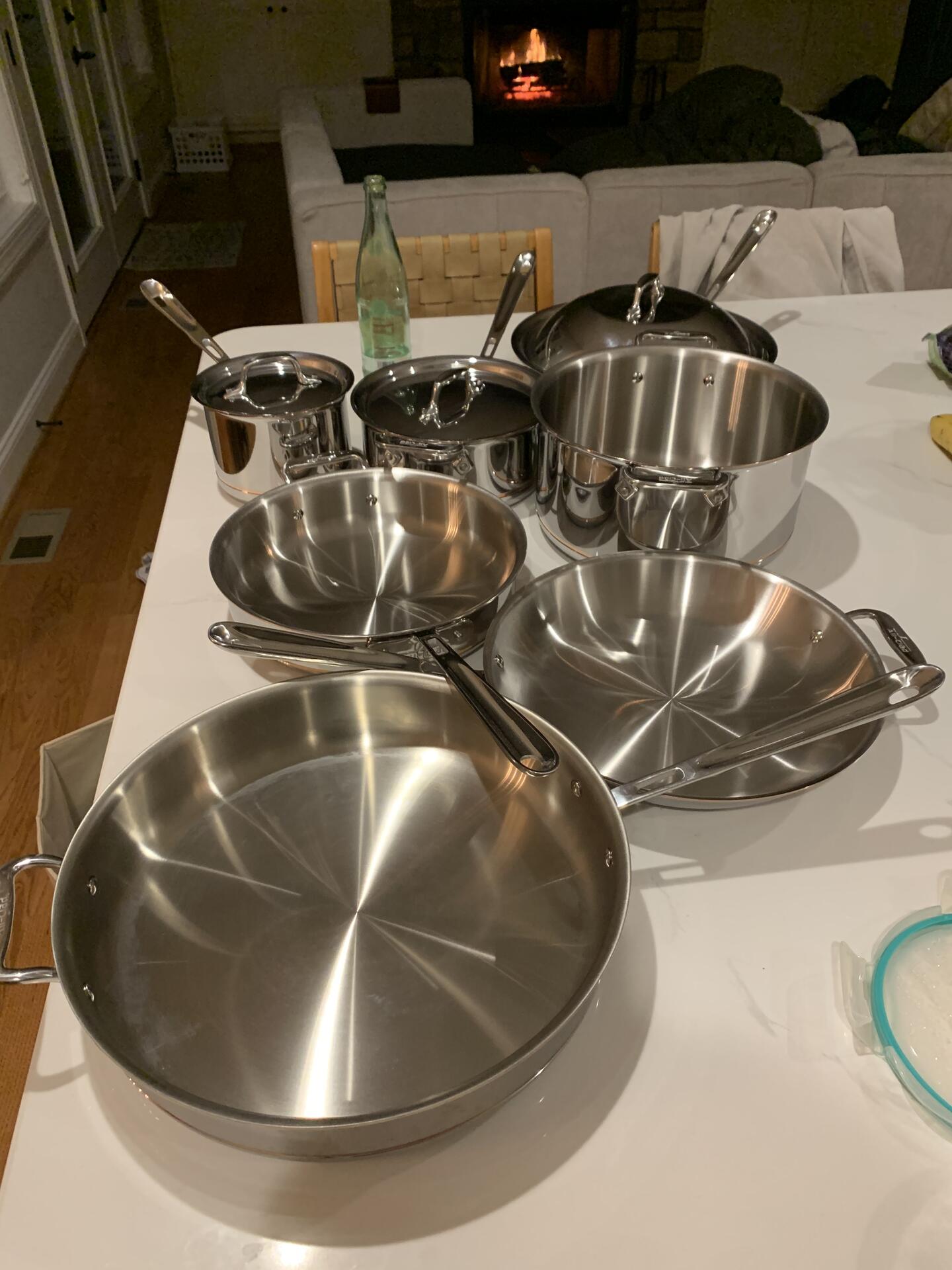
Copper core stainless

And I'm not good enough to cook on copper!