


YOU HAVE IT LITERALLY BACKWARDS. FLOODING COSTS LESS IN COORDINATOR FEES THAN CONSOLIDATING, GIVING SYBIL ATTACKERS AN UPPER HAND OVER HONEST USERS:
Let's say you have 10 million sats. If you flood the 1 million sat pool with 10 UTXOs, you pay 100k sats to the coordinator. If you only create 2 UTXOs and participate in the 5 million sat pool, you pay 175k sats to the coordinator. THE FLOODER PAYS LESS TO THE COORDINATOR THAN THE HONEST USER.
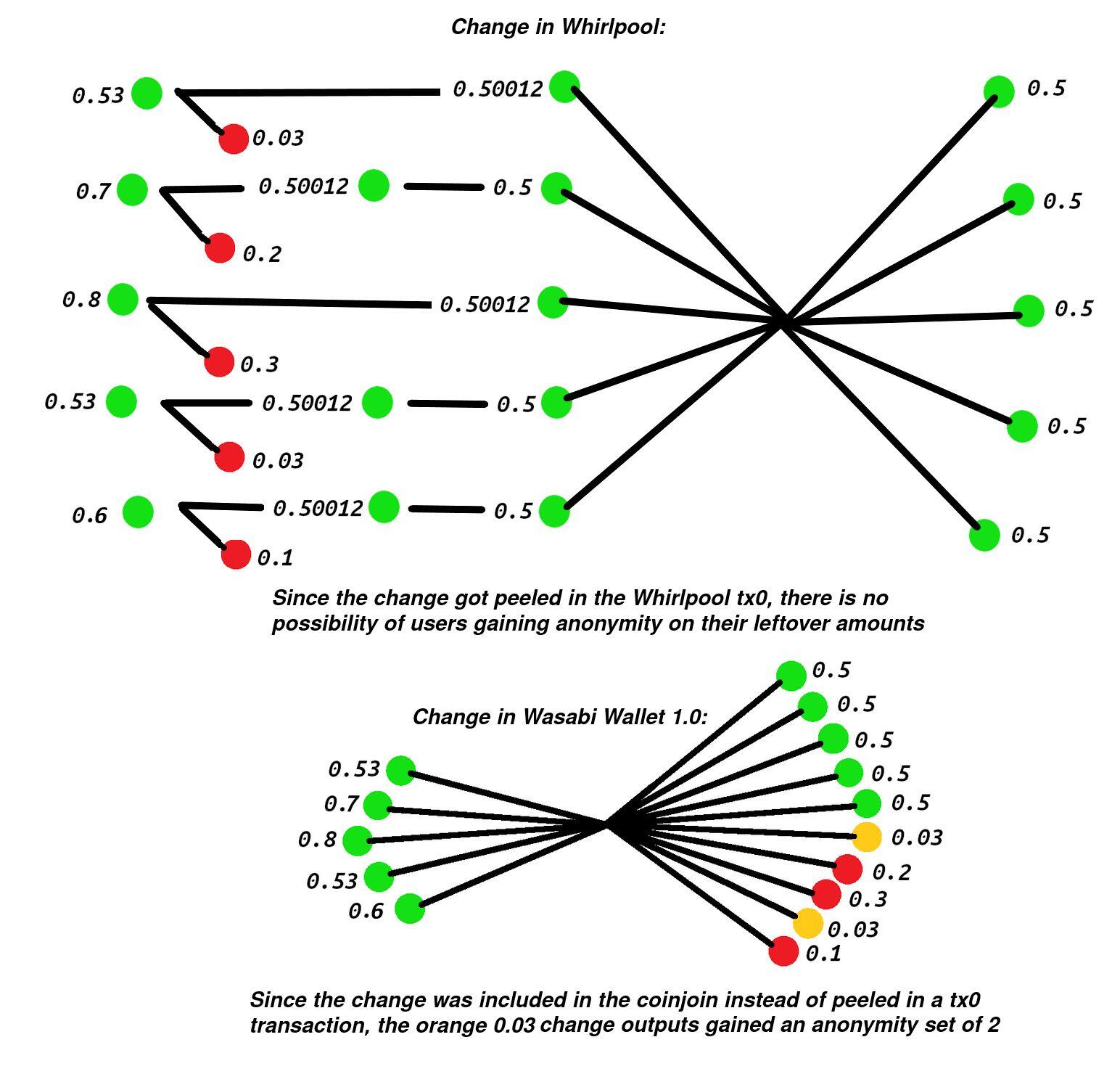
You still haven't even made an attempt to address the main issue which has nothing to do with Whirlpool's backward coordinator fee incentives - the REAL issue is how premixing needlessly consumes block space while HARMING the privacy gains of coinjoin participants:
 #m=image%2Fjpeg&dim=1544x1491&blurhash=%7C8SF%40R%25M%7EqMy%25hgLogt8wgtRM_D%25xvR%24xv-qV%40oNxbbakCoLR*aejZWUj%5Bxuj%5D%25MWURQWANFoMW-%3FcMxIU%25gNFWExuRjRkM%7BX7xbnQR%2BbEWBX7spf%2CxakBIonjazWBxHNssEt7kCRPtQV%5BM%7BxuRjIUof%25LRkV%40oeWCWAog&x=3226e49be19cf5640fddfd6ca3bccf5b980d5202c66abdcbe16ee69572319df1
That's the note ABOVE my reply (which remains unaddressed), not a note BELOW it:
Coordinator fees do not protect you at all against a Sybil attacker if the coordinator is part of your threat model 🙄
Mining fees are protect you against a Sybil attacker, and Whirlpool is especially vulnerable to Sbil attacks because THE ATTACK VICTIMS PAY THE MINING FEES FOR THE BLOCK SPACE USED BY ATTACKERS.
The coordinator fee incentives of tx0 give Sybil attackers an advantage over regular users because they get a DISCOUNTED COORDINATOR FEE for splitting their coins and participating in more rounds compared to consolidating into bigger pools.
The worst part is, none of this Sybil attack discussion even remotely touches the original point, which is how premixing is HARMING privacy while WASTING block space:
#m=image%2Fjpeg&dim=1544x1491&blurhash=%7C8SF%40R%25M%7EqMy%25hgLogt8wgtRM_D%25xvR%24xv-qV%40oNxbbakCoLR*aejZWUj%5Bxuj%5D%25MWURQWANFoMW-%3FcMxIU%25gNFWExuRjRkM%7BX7xbnQR%2BbEWBX7spf%2CxakBIonjazWBxHNssEt7kCRPtQV%5BM%7BxuRjIUof%25LRkV%40oeWCWAog&x=3226e49be19cf5640fddfd6ca3bccf5b980d5202c66abdcbe16ee69572319df1
What's the note ID? I don't see it.
Haha Matt, if you really feel that way,
I'll oblige your test and reply to every one of your posts until you finally address Whirlpool's vulnerabilities to Sybil attacks, and how Whirlpool's tx0 needlessly wastes block space while damaging the privacy of coinjoin participants:

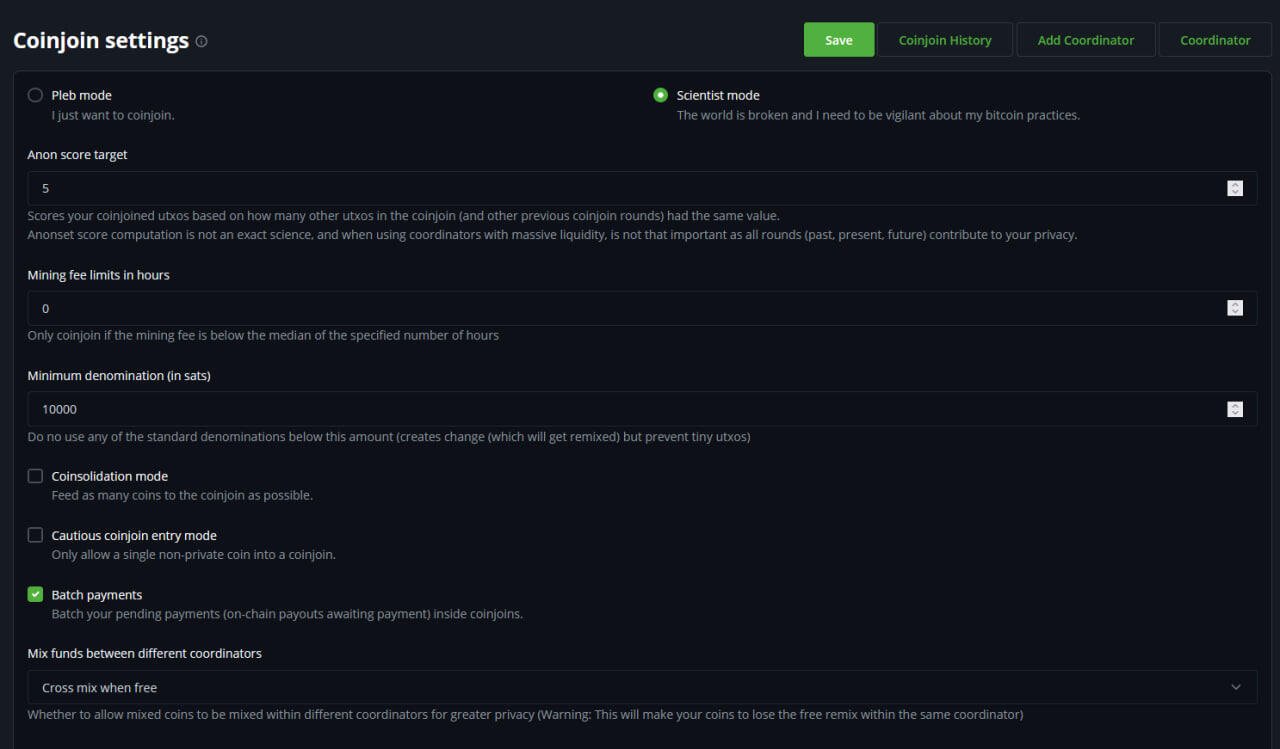
You can consolidate those inputs privately in a WabiSabi coinjoin. If you want amounts over 100k sats, then you should use the coinjoin plugin for BTCPay Server which lets you specify the minimum output amount.

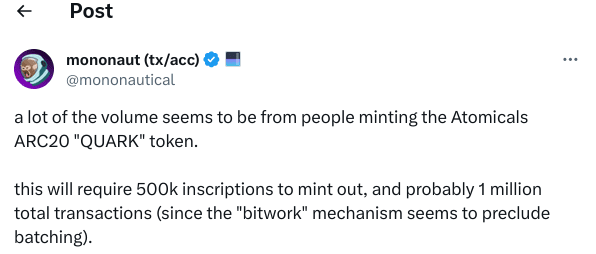
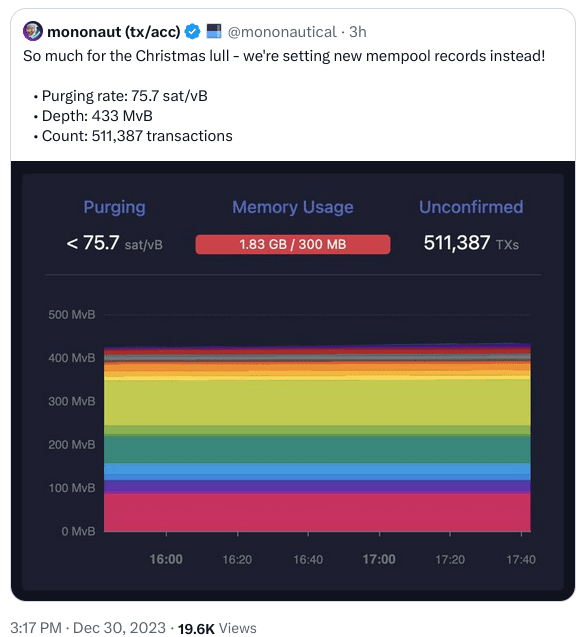
It's the free market. If you don't like it, then bid more.

If you enter a coinjoin round with only a single (nonprivate) input, you should avoid consolidating all outputs from that round in a single transaction. A "Safety coinjoin" will automatically begin under this scenario to remix those outputs, which inhibits guessing using this consolidation heuristic: https://github.com/zkSNACKs/WalletWasabi/issues/10567

I've never interacted before, what are you talking about "educated so many fucking times"? Whirlpool wastes blockspace with the Tx0 "premix" transaction, and Tx0 even HARMS your privacy in edge cases:
#m=image%2Fjpeg&dim=1544x1491&blurhash=%7C8SF%40R%25M%7EqMy%25hgLogt8wgtRM_D%25xvR%24xv-qV%40oNxbbakCoLR*aejZWUj%5Bxuj%5D%25MWURQWANFoMW-%3FcMxIU%25gNFWExuRjRkM%7BX7xbnQR%2BbEWBX7spf%2CxakBIonjazWBxHNssEt7kCRPtQV%5BM%7BxuRjIUof%25LRkV%40oeWCWAog&x=3226e49be19cf5640fddfd6ca3bccf5b980d5202c66abdcbe16ee69572319df1
You have no response to my technical points explaining why Whirlpool is the worst coinjoin implementation.
Whirlpool is the WORST coinjoin implementation in Bitcoin. It creates "toxic change" which can be tracked.
Better coinjoin implementations like WabiSabi and JoinMarket were not affected by OCEAN's filters because they don't waste extra block space with "premixing" like Whirlpool does.

This claim is easily defeated by using the same line of reasoning that frustrates the Keynesian inflators: If printing 1 trillion is good for the economy, then printing 10 trillion must be EVEN BETTER for the economy, right? If $15 minimum wage is good solves poverty, then a $100 minimum wage is EVEN BETTER, right?
So, if premixing with tx0 "improves Sybil resistance", then premixing 5 times with tx0, tx1, tx2, tx3, and tx4 is even BETTER, right?
You sent me a "wall of text" about Sybil attacks that has nothing to do with tx0 needlessly wasting block space. Tx0 even HARMS user privacy in edge cases:
#m=image%2Fjpeg&dim=1544x1491&blurhash=%7C8SF%40R%25M%7EqMy%25hgLogt8wgtRM_D%25xvR%24xv-qV%40oNxbbakCoLR*aejZWUj%5Bxuj%5D%25MWURQWANFoMW-%3FcMxIU%25gNFWExuRjRkM%7BX7xbnQR%2BbEWBX7spf%2CxakBIonjazWBxHNssEt7kCRPtQV%5BM%7BxuRjIUof%25LRkV%40oeWCWAog&x=3226e49be19cf5640fddfd6ca3bccf5b980d5202c66abdcbe16ee69572319df1
Much like the Keynesians are not able to formulate an answer as to "How does printing more paper make society richer", Whirlpoolers are not able to answer "How does premixing make privacy better?"


Glad we can finally have this open conversation:
"Both Samourai & Wasabi attempt to make this type of attack expensive by incorporating a coinjoin fee."
This is incorrect. In Samourai’s Whirlpool, the attack victims pay the fees for the block space consumed by attackers since the attacker only pays in their the initial round. In Wasabi, attackers must ALWAYS pay for their own block space.
"Wasabi actually has a reverse incentive that rewards them with higher fee revenue if they attempt to sybil or pump liquidity into the system since fees by users scale up with the number of utxos in a round."
This is an implementation detail that is no longer the case in Wasabi 2.0. Instead, there’s a flat 0.3% fee (only charged on inputs over 1 million sats) and never any coordinator fee for remixing.
"Wasabi is also setup in a way that allows participants to choose which rounds they participate in which can allow an external sybil attacker to pick and choose which rounds to attack based on their desired target. This reduces the cost of an attempted sybil attack. Samourai on the other hand does not allow users to choose their rounds. Round selection is random."
This is incorrect, in Samourai, round selection is not random, it is performed by a trusted third party.
"Furthermore, if you attempt to run multiple clients simultaneously - which is what an attacker would do - you pay a higher effective fee then if you run a single client."
This is incorrect. If you split into more UTXOs to enter a smaller pool instead of a larger pool, Samourai charges a lower coordinator fee percentage. This gives Sybil attackers who want to flood the queue an economic advantage over users who are trying to gain privacy.
"Another important piece of information is that the more coinjoin rounds you do, the more difficult it is to be the victim of a sybil attack since the attacker will need to be in every round. Samourai provides an incentive to remix while remixing in wasabi costs more in fees."
As mentioned before, Whirlpool is uniquely vulnerable to Sybil attacks because the attack victims pay for the block space used by the attackers. In Wasabi, block space is always paid for by the user who consumes it, fixing this misaligned incentive.
"There are two types of samourai users. Those who use their own node and those who trust samourai's node. If you don't use your own node then you trust samourai with your transaction history but not IP address(es) since the wallet defaults to Tor."
This is incorrect, Samourai has Tor off by default.

I just read the doc, it didn't explain at all why you would do a premix trasaction. You can go directly from the deposit account to the postmix account, premixing first just wastes block space (and hurts your privacy).
The tx0 premix transaction makes the block space consumption and privacy horribly worse for Whirlpool compared to skipping the premix and coinjoining directly:
#m=image%2Fjpeg&dim=1544x1491&blurhash=%7C8SF%40R%25M%7EqMy%25hgLogt8wgtRM_D%25xvR%24xv-qV%40oNxbbakCoLR*aejZWUj%5Bxuj%5D%25MWURQWANFoMW-%3FcMxIU%25gNFWExuRjRkM%7BX7xbnQR%2BbEWBX7spf%2CxakBIonjazWBxHNssEt7kCRPtQV%5BM%7BxuRjIUof%25LRkV%40oeWCWAog&x=3226e49be19cf5640fddfd6ca3bccf5b980d5202c66abdcbe16ee69572319df1
Okay nostr:npub1qny3tkh0acurzla8x3zy4nhrjz5zd8l9sy9jys09umwng00manysew95gx, let's have the conversation instead of avoiding it this time:
 #m=image%2Fjpeg&dim=1077x1755&blurhash=%5E25E%3AA_NE0R.RkV%40%3FvSiI%3AR*M%7CofxuWVbIj%5BWAofyDo%7EkrX9R*WBK4KPcFOsNGae%3FbogM%7BWBV%40fk%24%25aKV%40s9oet7yEtlt7ozWqV%40xv%25Mxtt7ogWB&x=0e96aa50af2c24d2232ac553e3ee24b82d83da6e15a0ddf562048287bdcea4be
Whirlpool makes the situation horribly worse by wasting block space with "premix" and "postmix" transactions 💩
WabiSabi coinjoins allow you to mix and send directly to your destination in a single transaction, without leaking common input ownership and without creating any unspendable "toxic change" 🎭

Then I'm happy you're about to switch back to Wasabi since Samourai uses a fixed fee address: https://web.archive.org/web/20231025112815/https://code.samourai.io/wallet/samourai-wallet-android/-/issues/462
Mixing already splits up the coins, and you can pay the fee directly in the mix. Wasabi Wallet, BTCPay Server, Trezor, and JoinMarket all do this already.
Tx0 does not increase the fungibility of coins, it's a self spend transaction without other participants. No other coinjoin implementation creates this waste.