
A little warm-up to start off the session.
https://blossom.primal.net/37a8bc80eec437ee360662963544735aacc2cb54055590ccba558a049a0164ca.mp4

Our Development Model is partitioned into three core programs: In-Season Development (ISD), Off-Season Development (OSD), and Pre-Season Development (PSD), each designed to complement one another in an athlete’s journey to goaltending excellence.
Skill Acquisition - Off-Season Development (OSD)
Skill Application - Pre-Season Development (PSD)
Skill Adaptation - In-Season Development (ISD):
VR Goalie Training
Part 2: A Foundational Revolution or a High-Tech Gimmick?

In Part 1, we established a framework for distinguishing between a value-creating technology and a value-diminishing gimmick. A technology, whether corporeal or incorporeal, is the practical application of knowledge to create genuine, layered value. A gimmick, in contrast, fabricates the illusion of value, often by arbitrarily increasing a task's difficulty under the guise of pseudo-science.
The central question remains: Where does VR goalie training fall on this spectrum? To answer this, we must dissect the system into its constituent parts: the corporeal VR headset and the incorporeal training software. By applying our established logic to each component, we can hopefully arrive at a clear conclusion.
The Corporeal Platform: A Foundational Layer
Let's first examine the VR headset itself, such as the Meta Quest. This is a corporeal technology, a physical device composed of screens, lenses, sensors, and processors. Does it create value? Indisputably, yes. Its purpose is to immerse a user in a virtual environment, a feat that requires the practical application of immense knowledge in fields like optics, computer engineering, and motion tracking.
However, the headset's primary value isn't intrinsic; it lies in its function as a platform. On its own, a VR headset offers limited utility, much like a smartphone without apps or a computer without an operating system. Its value is defined by the additional layers of incorporeal technology (the software) that can be built upon it. It does not arbitrarily increase the difficulty of a task; rather, it provides an entirely new medium for tasks to be performed.
Therefore, the VR headset is unequivocally a technology. It is a foundational layer, akin to the electrical grid that powers lightbulbs or the computing hardware that runs Linux or Microsoft Windows. Its proliferation is a prerequisite for the propagation of the software it hosts. A goalie purchasing a headset for 386,076 sats is not buying a training tool; they are buying access to a platform upon which training tools can operate.
The Incorporeal Software: Augmenting Reality or Falsifying It?
The real debate centers on the incorporeal software, such as SenseArena. Do these software represent a genuine technological advancement in goaltending, or is it merely a high-tech version of tying a mesh bag over one's head? Let's apply our three-point gimmick test.
1) Does it arbitrarily increase the difficulty of a task?
2) Does it require an investment?
3) Does it assert scientific credibility?
The software certainly requires a financial and time investment, and its proponents claim it is based on principles of cognitive science and skill application. The critical question, for now, is the first one. Does it arbitrarily increase difficulty?
Consider the white puck gimmick. Its method of increasing difficulty is subtractive; it removes the visual contrast that helps a goalie track the object. It strips away information, forcing the goalie to perform a familiar task with less data. This is akin to the driver turning off their headlights, the underlying skill of driving isn't being trained, only obscured.
VR training software, conversely, is additive and transformative. It does not simply make seeing the puck harder. Instead, it creates a controlled and simulated environment where specific scenarios can be replicated with a consistency that is hard to achieve on the ice. A goalie can face the exact same situation, with the same release and trajectory of the shot, one hundred times in a few minutes. This is not an arbitrary increase in difficulty; it is a controlled manipulation of variables. It doesn't remove information; it curates it.
Because, if used this way, the software does not rely on arbitrarily increasing difficulty, but rather on creating a new training context, it fails the primary test for a gimmick. It is, therefore, a technology.
VR in the Hierarchy of Goalie Tech
We have determined that both the headset and the software are technologies. But what is their place in the layered structure of goaltending development? Is VR training a foundational innovation on par with the concepts of the butterfly or Ian Clark’s Direction of Movement (DOM) theory?
The answer is no.
The DOM theory is a fundamental, first-layer technology. It is a system of logic for efficient movement that is non-negotiable for success. A goalie cannot compete at a high level without internalizing its principles. The same can be said for Forward Head Trajectory and other foundational incorporeal technologies that dictate a goalie's core approach to the position.
VR training software is not a replacement for these base layers. It is a higher-layered, or application-layered, technology. Its function is not to teach a goalie the DOM theory, but to provide a tool for practicing and perfecting the application of that theory. A goalie who steps into a VR simulation without a solid understanding of such concepts is simply reinforcing poor habits—just more efficiently. While compounding strong habits leads to meaningful progress, compounding bad reps only accelerates the development of flaws. What are the consequences when inefficiency becomes ingrained?
The value of VR software is built upon the foundation of proper coaching and fundamental theories. It serves as a potential supplement, not a substitute. It allows a goalie to take the incorporeal knowledge of theory and rehearse its physical application in thousands of simulated repetitions, forging stronger neural pathways.
A Tool, Not a Panacea
The buzz and debate surrounding VR goalie training stem from a misunderstanding of its role. Those who dismiss it as a gimmick often mistakenly view it as a proposed replacement for on-ice training and real coaching: A magic bullet to bypass the Proof of Work required. Those who hail it as a revolution may overstate its position in the hierarchy of technologies, placing it on par with the very theories it may help reinforce.
The reality, as revealed by our logical framework, is more nuanced. The VR headset is a corporeal platform technology, and the training software is a potential valid incorporeal application-layer technology. It may create value by offering accessible, repeatable, and controlled training simulations that cannot be replicated as consistently in the physical world.
However, its value is conditional. It is a layer built on top of the essential foundations of goaltending theory and on-ice practice. A goalie can reach the NHL without ever using VR, but they cannot do so without mastering proper Direction of Movement. The former is a tool for honing skills; the latter is the very language those skills are written in. VR goalie training is not a gimmick, but it is also not a first-layer revolution.
Coming in Part 3…
However, assuming the following logical framework holds true, does the current iteration of SenseArena software help goaltenders reinforce proper skill application—or does its design actually promote poor habits?
If the current use of this technology fails to develop strong fundamentals and instead reinforces flawed patterns, we must ask: why is that the case and what can be done to fix it?
While VR headsets and training software are, in principle, legitimate technologies, not gimmicks, the same cannot be assumed for every implementation. A poorly designed VR program can easily veer into gimmick territory.
Soon, we’ll examine the strengths and shortcomings of SenseArena to determine whether it stands as a genuine technological tool, or merely a gimmick disguised as innovation.
Our vote goes to the third goalie coach in the list... But we may be a little bias 😏
As a goaltender, staying on your feet usually allows for better mobility and stronger save execution. But when recovering on a rebound, getting back to your feet isn’t the priority, regaining positional integrity is. Getting up is secondary to being in position..

Congrats to Adin Hill & Logan Thompson on moving on to the second round of the playoffs.

Hillzy was phenomenal last game, earning 3rd game star honours in the 3-2 victory over the Minnesota Wilds, closing out the series 4-2 for Vegas.

LT continues to be the Washington Capitals' top player, closing out the series against the Montreal Canadiens this week, with a 4-1 victory. Logan was named first star of the game, making 29 saves.
It's NHL playoffs time!
We're excited to once again be providing our expertise to the Vegas Golden Knights, in their quest to winning the Stanley Cup for the second time!
The VGK will be facing off against the Minnesota Wild, in the first round of the playoffs, making Filip Gustavsson the subject of our first scouting report.


"There’s a difference between knowing the path and walking the path." - Morpheus
https://video.nostr.build/e5cc4eb80c87c5ab1ae60528029eb66b06c76e7e7cc1fb54a1aeb46b5a030534.mp4
As amazing as it is to be the winningest goalie in WHL history, we know this is just the beginning for you. There’s so much more ahead, and we can’t wait to witness all of it. We can already envision the accolades to come—but we also know none of it will come easy. You’ll have to earn every bit of it.
Daniel Hauser is the all-time winningest goaltender in WHL history!
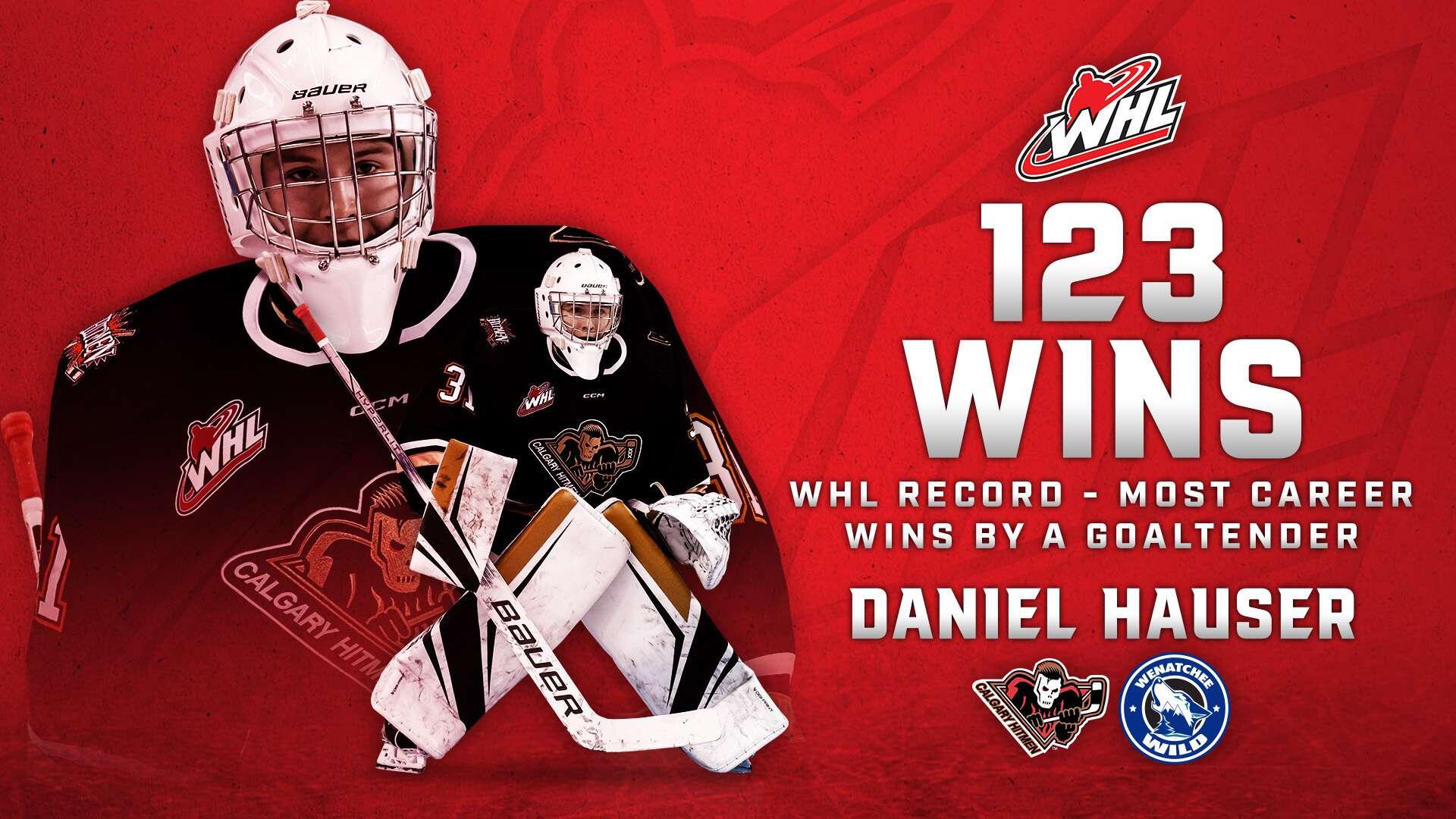
Hauser established a new WHL record for wins Wednesday evening, collecting the 123rd victory of his WHL career with a 5-1 triumph over the Red Deer Rebels.
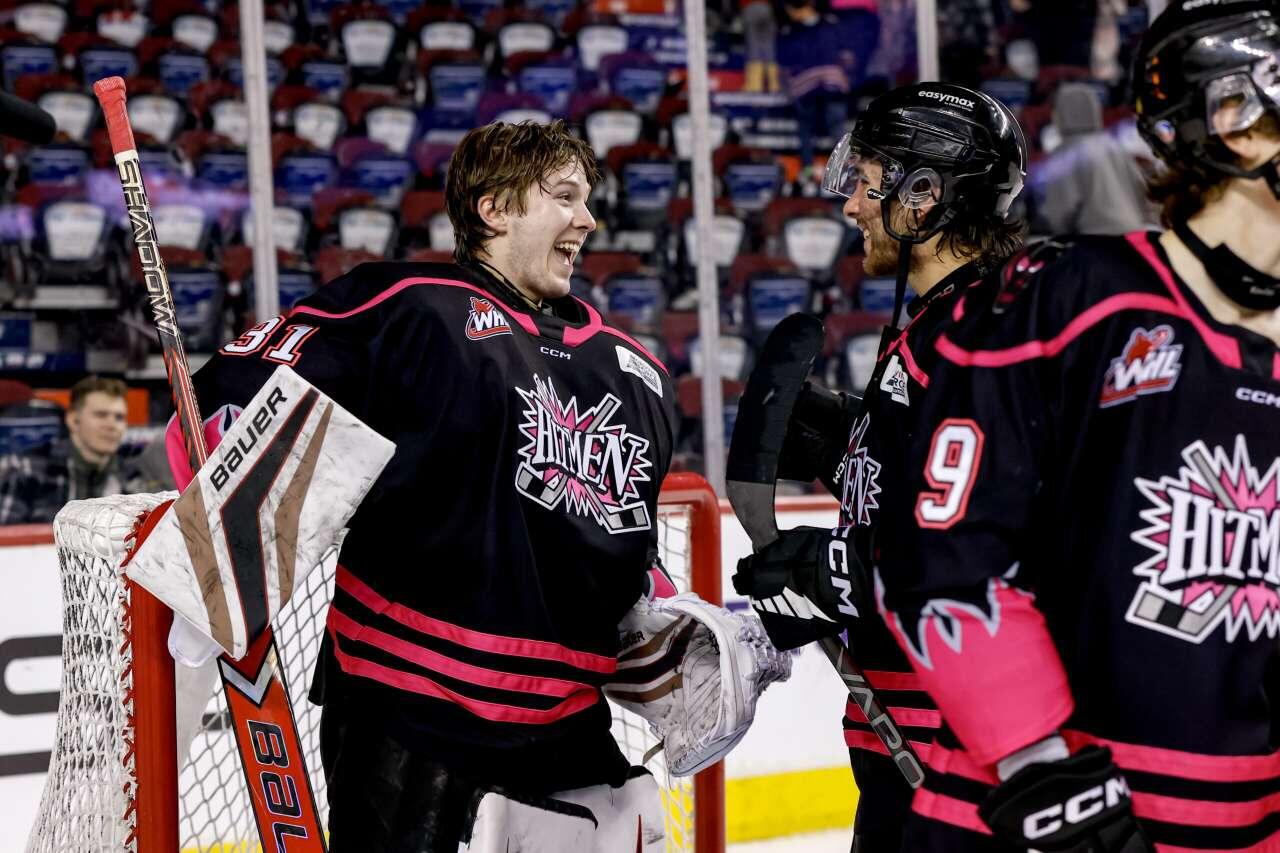
“It feels awesome,” Hauser said Wednesday night. “I could stand here for hours listing the people I can thank for putting me in this position. I’m super grateful for this team, this organization, and every team I’ve been on in the past.
“To share (the record) with this group – these guys play so well in front of me every night. They made it special for me tonight and it was awesome.”
The Pump & Dump Development Cycle
In the finance world, a pump and dump scheme involves artificially inflating the value of a stock—often through hype and misinformation—only to cash out at its peak, leaving others holding the bag. Interestingly, we’re seeing a similar pattern emerge in modern goalie development.
Thanks to the attention economy and social media algorithms, these "pump and dump" trends now play out regularly in goalie training. Gimmicks skyrocket in popularity overnight, gain traction across the goalie community, and then fade into obscurity just as quickly.
It was only a few short years ago that goalie coaches, development companies, and even national programs swore by the medicine ball. This surge came after an old video of Mitch Korn—then the goalie coach for the Washington Capitals—resurfaced online and went viral across goalie-centric social media. Overnight, nearly every goalie training account was posting clips of goalies doing movement drills while holding a medicine ball. The widespread justification? A strong core leads to stronger structure.
What was most surprising was how dogmatic the med-ball promoters became. If anyone questioned—or even gently challenged—the validity of their sacred gimmick, the response was often overly defensive. Some of the young teenage goalies we coach would ask these influencers a simple question about the purpose of the med-ball, only to be met with comically over-the-top reactions.
Back then, using a med-ball in every drill was considered revolutionary. If you weren’t doing it, you were falling behind. Don’t believe it? Go find the biggest goalie pages on Instagram and scroll back to 2018—you’ll see that the majority of videos featured goalies gripping a med-ball mid-drill. But fast forward to 2020 and beyond, and the so-called revolution quietly disappears, fading into irrelevance as if it was never meaningful in the first place.
Not long after the med-ball craze came the rise of Swivel Vision goggles—goggles designed to restrict peripheral vision during training. Almost overnight, they took over the goalie-verse. Major goalie influencers flooded social media with videos of athletes doing drills while wearing the latest “revolutionary” gimmick. If you wanted to improve your visual connection to the puck, Swivel Vision was marketed as the magic fix. And of course, if you weren’t using them in your training, you were falling behind.
Call 1-800-BUY-PUMP now—don’t miss out!!!
Then came the dump. Swivel Vision goggles vanished. Many reading this may have never even heard of them—yet for about a year, it felt like every goalie on the planet had seen or worn a pair.
These gimmicks are just like junk stocks. Each new iteration gets hyped with bold claims and flashy, eye-catching videos, making them seem like the next “revolutionary” breakthrough in goalie development.
But here’s the catch: these gimmicks don’t actually make goalies better, they’re built on hype—not substance. It’s all smoke and mirrors.
The Similarities to Pump & Dumps:
Hype Without Substance: Just like penny stocks pumped with empty promises, these training tools are heavily promoted but rarely deliver real, lasting results.
Artificial Popularity: Gimmicks are designed to go viral—short, flashy clips of goalie drills create a false sense of value.
FOMO (Fear of Missing Out): Young goalies—and their parents—start thinking, “If I’m not doing this, I’m falling behind.” That emotional pressure mirrors the psychology behind investor FOMO.
Dump and Move On: When the results don’t materialize and the hype fades, the gimmick vanishes—only to be replaced by the next “can’t-miss” trend.
Just as investors lose their hard-earned money, goalies lose something just as valuable: time. Every minute spent chasing the next flashy gimmick is time taken away from mastering the foundational skills that truly drive long-term development and game-day performance.
The Proof of Stake Illusion
At the core of the Pump & Dump Development Cycle is a shift in how goalies and parents perceives what counts as “valid” development.
In blockchain systems, there are two dominant models for verifying what’s real: Proof of Work and Proof of Stake.
Proof of Work is grounded in effort and computation. Reality is established through energy, time, and measurable output.
Proof of Stake, on the other hand, determines reality based on who holds the most stake—essentially, influence and authority, regardless of real output.
The hockey world has moved away from a Proof of Work model—where progress is built through proper consistent reps and effort of real technical details—and toward a Proof of Stake model, where reality is decided by the loudest voices and biggest audiences.
In a Proof of Stake system, truth is defined by the biggest "holders"—those with the most influence, likes, and retweets. The logic becomes circular: “Everyone’s doing this, so it must be true and work.”
This social validation feels comforting—but it’s hollow, it isn’t real. It prioritizes perception over performance, and popularity over true progress.
Proof of Work, by contrast, is harder, slower, and less glamorous. It’s applying proper Direction of Movement, understanding the Vertical Corridors, how to manipulate space, ect. It doesn’t go viral, but it works because it’s real.
The goalie coaching world is leaning dangerously toward a Proof of Stake model, where truth is decided by who has the loudest voice, the biggest follower count, or the most viral post—not by the actual development of goalies.
Certain goalie coaches and development companies act like staking pools. They band together, amplify each other’s content, and promote the latest gimmick as “the future.” It gains momentum not because it works—but because those with social capital say it does.
Meanwhile, the ones chasing real development—those grinding reps, analyzing video, building strong habits—are engaging in Proof of Work. Their progress may be slower, quieter, and less photogenic—but it’s real.
Young goalies, caught in the whirlwind of hype, often confuse popularity with effectiveness. Instead of trusting tangible progress—like rebound control, positioning, and reads—they look for quick fixes approved by the dominant “stakers.” This creates a feedback loop where what’s most seen becomes what’s most trusted, regardless of merit.
Beware of Node Centralisation
In blockchain systems, a node is a computer that participates in the network by validating transactions and maintaining the ledger. In a Proof of Stake (PoS) system, not all nodes are equal—some hold significantly more influence than others.
Unlike Proof of Work (PoW), where power is earned through energy and time, PoS blockchains assign validation power based on how much stake—usually in the form of crypto tokens—a node holds. The more stake a node has, the more say it gets in determining what counts as a valid transaction (i.e., what’s considered real or true on the ledger).
The largest nodes essentially become powerful gatekeepers of truth. They validate more transactions, earn more rewards, and in turn grow even larger—amplifying their influence over time.
This creates a feedback loop—big nodes get bigger and gradually dominate the network. While the system appears decentralized, in reality, a few major players control the decision-making process—essentially, they control the narrative.
In the goalie-verse, those dominant nodes are the influencers with the largest online followings. Their “stake” isn’t crypto—it’s likes, shares, and perceived authority. They win the attention economy not because their methods are proven, but because they’ve accumulated influence.
Their word becomes truth—not through results, but through visibility. The system tilts not toward quality, but toward whoever plays the popularity game best.
Proof of Stake systems are artificial. Proof of Work systems are real.
Constant Panic & Forking
Blockchain systems experience what are called forks—points of divergence that occur when there’s disagreement over the direction the network should take. The chain splits, and nodes must choose which version of the truth to follow.
There are two types of forks:
Soft forks, where changes are backward-compatible but still alter how the system operates.
Hard forks, where the split is permanent, and nodes must fully commit to one side or the other.
In the goalie-verse, forking happens when a coach abandons their development plan in response to external pressure—usually from a high-profile influencer or a sudden wave of hype claiming that a certain technique, tactic, or “flaw” urgently needs fixing.
Rather than staying the course and continuing to build on their goalie’s existing progress, some coaches hit the panic button:
“Henrik Lundqvist says there’s an RVH pandemic? Scrap everything—we’re switching to overlaps, starting now!”
That’s exactly what happened during last season’s playoffs. One of the biggest nodes in the goalie-verse—the King himself—declared an “RVH Pandemic,” and the ripple effect was immediate.
At the time, many minor hockey goalies had wrapped up their seasons and entered the off-season development phase. But regardless of what they were working on, once the “RVH Pandemic” was declared a national emergency, most goalie development companies on social media jumped ship and shifted their focus entirely to overlaps.
Suddenly, no one dared post videos of goalies working on RVH drills—it was radio silence.
This was the goalie coaching equivalent of a hard fork: an abrupt, sweeping shift in philosophy. Not driven by evidence or long-term trends, but triggered by a major node—in this case, a high-profile influencer—staking a public position.
But what’s the problem? If there’s a pandemic, shouldn’t it be addressed?
Loss of Continuity: Goalies lose momentum on what they were mastering. Instead of progressing, they’re constantly rebooting, never fully developing any one skill.
Confusion: When the “truth” shifts every few months, trust breaks down. Goalies start second-guessing their instincts and get stuck in a cycle of hesitation.
Influence Over Evidence: Just like in blockchain, too many forks fragment the system. Development stops being about what actually works—and starts revolving around what’s trending.
Good goaltending development is like a well-maintained blockchain: consistent, auditable, and grounded in real work. Coaches should absolutely stay open to evolution—but not at the expense of abandoning the layers of complexity they’ve spent months or even years building.
At some point, coaches have to ask themselves:
Are we evolving with purpose, or forking out of fear of being left behind?
Stability isn’t stagnation. It’s the foundation that allows real, long-term progress to take root.
Don’t Be The Bag Holder
In financial pump and dumps, someone always ends up as the exit liquidity—the person who buys in at the peak, just before the crash.
In goalie development, that’s the kid chasing every new fad, hoping for a shortcut. They’re not improving—they’re reacting. Constantly starting over. Never building anything real.
If you’re a goalie, a parent, or a coach, ask yourself:
Is your development plan built on Proof of Work—or are you just trusting the current “stakeholders” to define what’s real?
Because in the long run, only the real work compounds.
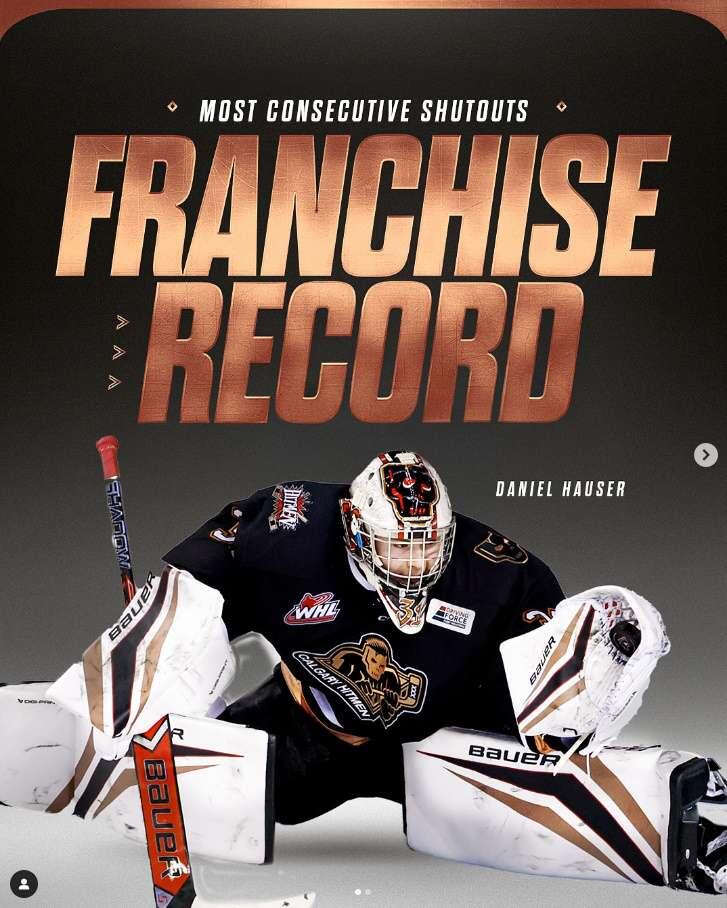
Congratulations to Daniel Hauser on earning four consecutive shutouts—the longest streak in Calgary Hitmen history!
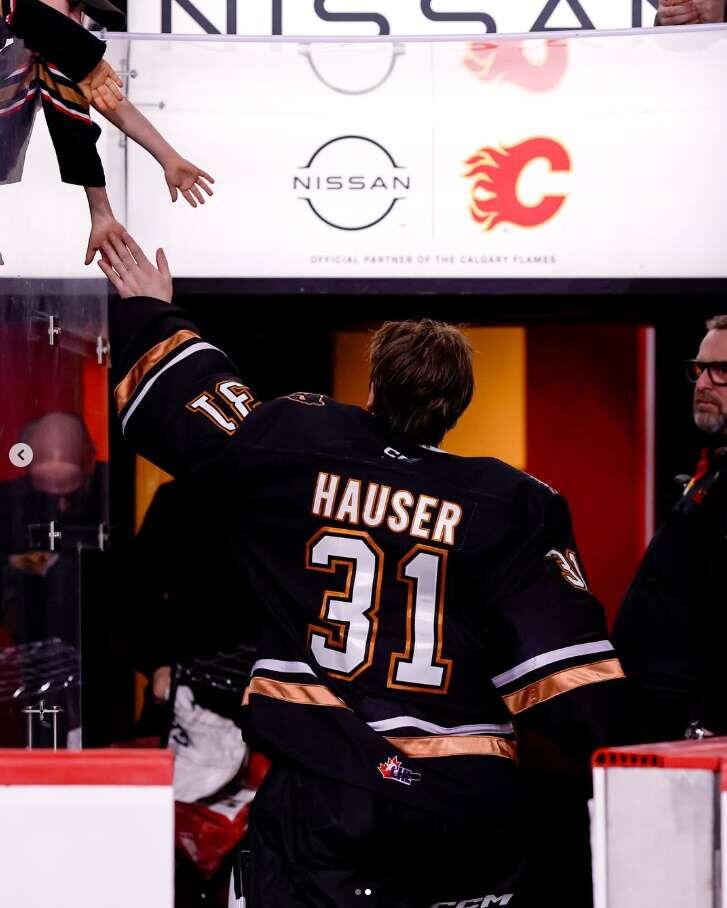
Howie now holds a 119-35-8 record. With 119 career WHL wins, he’s just three wins away from tying the all-time record, and four away from breaking it.
Washington Capitals goaltender Logan Thompson has been named the NHL’s Second Star for the month of January, the league announced yesterday.

Thompson, 27, posted an impressive 8-0-1 record in eight starts and nine appearances during the month, with a stellar 1.48 GAA, a .947 SV%, and 2 shutouts. He led the NHL in both GAA and SV% for January.
Congratulations to Daniel Hauser on earning his first shutout of the season and the 13th of his WHL career!

On his birthday, Howie and the Calgary Hitmen faced off against the Edmonton Oil Kings last Wednesday, where Hauser stopped all 25 shots he faced, securing his 110th career win.
He is now just 11 wins away from the all-time WHL record.
Adin Hill's team Canada set-up, revealed! 🍁
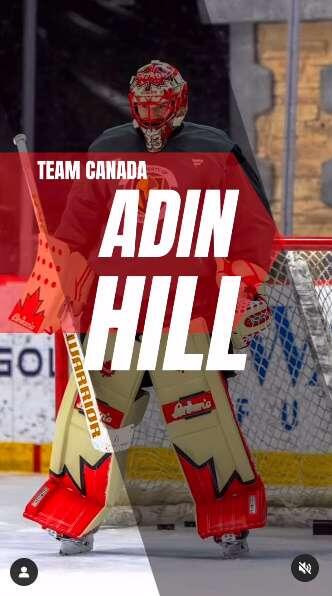
#FourNations
After missing all of November and December due to a concussion and a labrum tear, Joaquin Gutierrez has made an impressive return to the crease for the Wheatland U18 AA team. Since rejoining the lineup in January, he has played six games, and despite his team’s struggles, he has been a standout performer in net.

Over those six games, Gutierrez has faced a staggering 302 shots, allowing just 17 goals—good for an outstanding .944 save percentage and a 2.83 goals-against average. He’s secured two wins, with three of the four losses coming in one-goal games, showcasing his ability to keep his team competitive.
Highlighting his return was a dominant performance this past weekend against the league’s top-seeded Airdrie team, where he stopped 41 of 42 shots to secure the win.
Gutierrez’s resilience and strong play have been key for Wheatland, proving he’s back and better than ever!
NHL First Star of the Week

Washington Capitals goaltender Logan Thompson has been named the NHL’s First Star for the week ending Jan. 19, the league announced.
Thompson, 27, posted a perfect 3-0-0 record during the week, recording a stellar 0.33 goals-against average and a .984 save percentage, along with two shutouts. His performance helped extend the Capitals’ point streak to 10 games (7-0-3) and propelled the team to the top of the NHL standings. The 6’4”, 207-pound netminder stopped 61 of the 62 shots he faced over three starts, including back-to-back shutouts on Jan. 14 and 16. Additionally, he registered a career-long shutout streak of 198:22 from Jan. 11 to Jan. 18, the third-longest in franchise history.
Thompson is the third Capitals player to receive NHL Three Stars of the Week honors this season, joining Alex Ovechkin (First Star for the week ending Nov. 3) and Jakob Chychrun (Third Star for the week ending Dec. 1).
Through 26 games this season, Thompson boasts an impressive 21-2-3 record with a 2.09 goals-against average, a .925 save percentage, and two shutouts. Among NHL goaltenders with at least 16 games played, he ranks second in goals-against average, third in save percentage, and is tied for third in wins. His shutout victory against the Ottawa Senators on Jan. 16 tied Braden Holtby (25 GP in 2015-16) for the fewest games needed to reach 20 wins in a single season in Capitals history.
Since Nov. 1, Thompson has held opponents to two or fewer goals in 17 of his 21 starts, further solidifying his status as one of the league’s top goaltenders this season.
LT will be starting on Tuesday evening in Calgary vs the Flames.
Congratulations to Connor White of the HJHL Okotoks Bisons on earning his second shutout of the season last night against the Coaldale Copperheads!
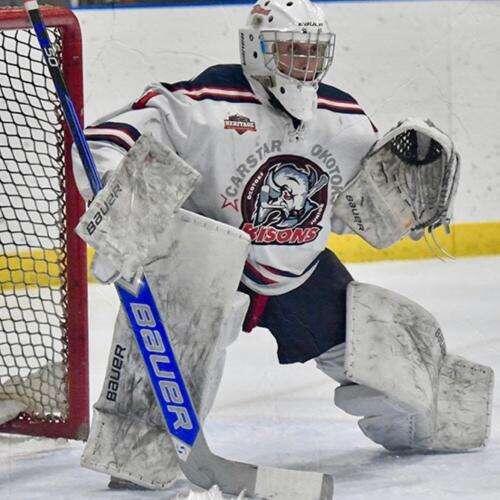
Connor currently ranks among the top five goaltenders in the Heritage Junior Hockey League in both goals-against average (GAA) and save percentage (SAV%).
Great work, Connor!
Congratulations to Daniel Hauser on reaching two major milestones!

The Chestermere native recorded his 4,000th career WHL save in a 3-2 victory over the Lethbridge Hurricanes. With this win, Howie moved into the top 10 for most wins in WHL history, surpassing Stuart Skinner, Martin Jones, Dustin Wolf, and Darcy Kuemper.
He now sits just 13 wins away from the all-time record, with 24 games remaining in the season.
Keep it going, Howie!
Congratulations to Logen Bond and the U18 AA Rangers on capturing gold in the Esso Minor Hockey Week tournament last weekend!

The team entered as underdogs but came together to defeat three of Calgary’s top teams on their way to the championship.

Well done, fellas!