

I decided the answer was yes. So I printed out a 50% scale version to see how it'd come out.
Should I print this #bitcoin sign next?
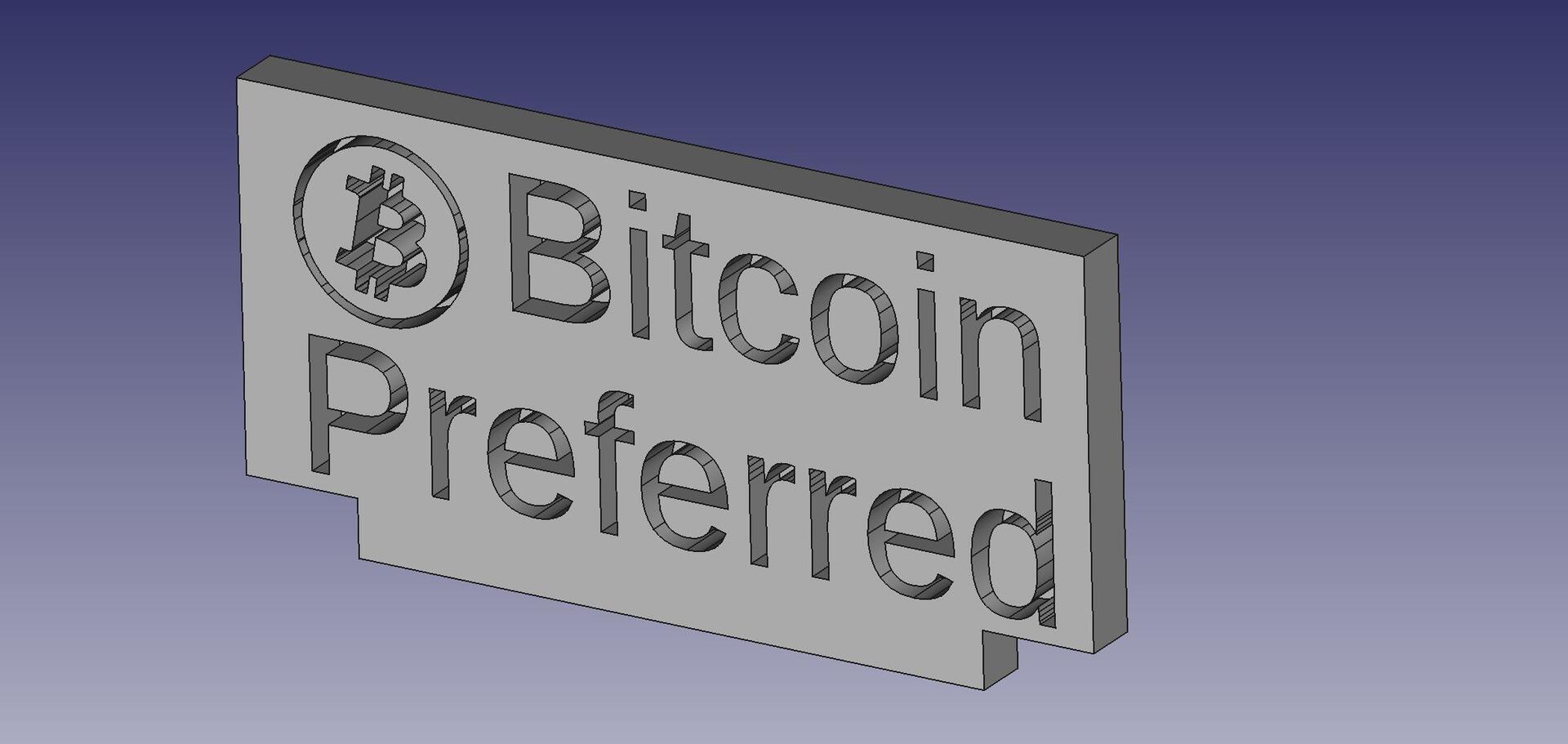
There is also a base to hold it upright. Would any people here on #nostr be interested in this kind of thing?
#3Dprinting #manufacturing
And the other half of the case is done.

I though having a 3D printer was going to be handy, but I gotta tell ya, it's a game changer.
Amazon’s Smart Thermostat is on sale and comes with a free Echo Pop
https://www.theverge.com/2023/11/27/23976678/amazon-smart-thermostat-echo-pop-cyber-monday-deal-sale
"Pay money to get a #thermostat that snitches on you and we'll throw in this free gadget so you can bug your own house!"
If you value #freedom or #privacy, don't buy one of these subsidized thermostats for yourself or anyone you care about.

As I was reading the author, I was half expecting it to be someone from the #HestiaPi community!
Sad to see effort divided instead of joining us, but I'm glad he has something that works for him.
And yeah, turn down the heat in the winter to save money on energy!
I am so excited! I finally saved up enough money to buy a #3Dprinter. I just printed the backplate for a #HestiaPi case.
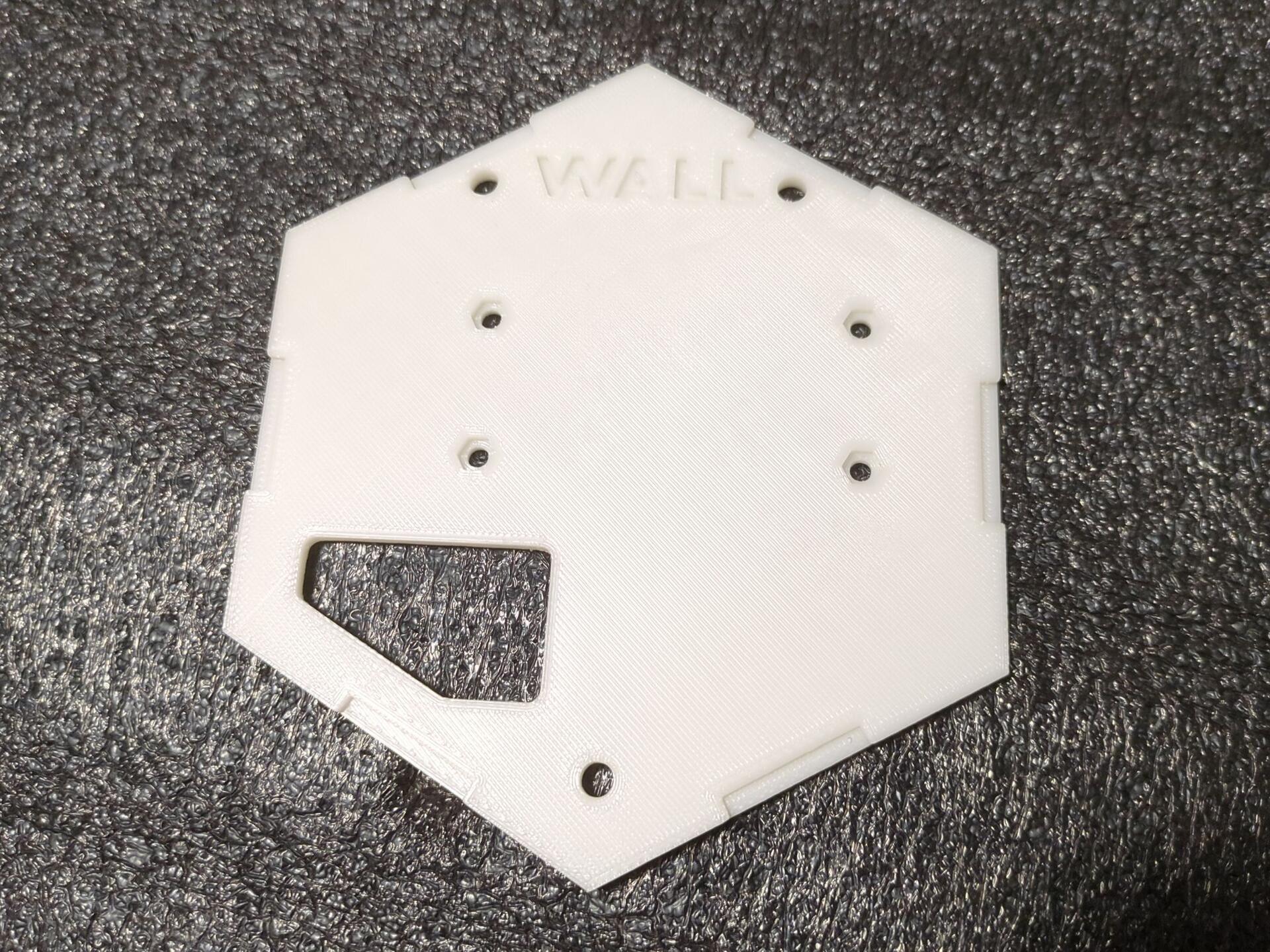
It's nothing especially special. I've had many of these printed many of these on friends' printers, at the #library, and at the #makerspace. The difference is that I printed this one by myself.
And the print quality is great, despite it being a cheap printer.
#SelfSufficiency #SelfReliance #Manufacturing #IoT #OpenSource #FOSS #FLOSS

It lets me list the items I am selling, post pictures, descriptions, track orders, chat with buyers who have questions, allow buyers to see my other products, take credit cards, etc.
https://www.tindie.com/stores/eternalsunshine/
I know I could say "Send money to bc1q3suv38s3f8l7szhuh3julvqx020mva8jx0lvgj and tell me what you want and where I should ship it" but I was hoping there was something easier to use for both me and buyers.

Is there any documentation on how yo set that up?
On second thought, I'm not sure they would be able to handle the current. I think the traces on the PCB would act as a fuse and literally burn up.
But you could probably modify the #HestiaPi to control a smart outlet, or relay or contactor.
The easiest plan would be to set it up much in the same way as your HVAC. Those do the signaling running on 24V AC, but your furnace/air conditioner uses 120 or 240V AC.
You #nostr people seem to be into #bitcoin, does anyone know if there is something like #Tindie that allows me to accept bitcoin?

Nobody needs the digital euro or more accurately #cbdcs
We need more #sovereignty, more #financialfreedom & more #decentralization
EU stands for #cbdcs, #financialapartheid, #digitalslavery & #centralization.
Only the mindless members of the herd believe that a project run by #unelected & #unaccountable bureaucrats can stand for #democracy or #freedom.
#bitcoin separates #sovereigns from the herd.
The decision is yours to choose between #sovereignty and #digitalslavery
https://nostrcheck.me/media/public/nostrcheck.me_1730891471937291901700749581.webp
I like what you say about #sovereignty.
So you have now been followed by a person who makes smart thermostats that are entirely under your control. No corporations, no cloud, heck no internet!

HestiaPi.com
Code is at github.com/HestiaPi
You can build one yourself or if you want to just buy one I have already built, you can get them at my online store: https://www.tindie.com/stores/eternalsunshine/

Howdy nostr:npub1ydhmq6k7zshd5chdfrmpqpy44jyn02z7amw98knaqascw2flnpzq5serpq 🤠
What do you think of the IOT NIP
I suspect this is not going to be a popular reply, but...
Why use nostr for IoT?
I don't see how it is better than existing standards like MQTT or Matter. It also basically means having to run a nostr relay, because the idea of broadcasting every IoT event to a remote server seems terible for privacy, reliability, performance... basically everything.
What would help this NIP out a lot is to clearly explain what problem it is trying to solve and lay out a example setup that makes it seem like it is not burdonsome on either users or developers.
If I were to take a stab at it, it might go something like this:
The IoT ecosystem has been plagued by a lack of interoperability. Some apps use bluetooth, others ise wifi, and still others use Z-Wave, Zigbee or LoRa. Furthermore, the component sometimes go over HTTP, and other times MQTT. In both cases traffic is unauthenticated, unencrypted and doesn't have integrity in the cryptographic sense.
This NIP intends to chip away at these problems by providing cryptographic authenticity and confidentiality without having to mess around with getting TLS certs from a publicly trusted CA, nor setting up a private CA.
A nostr relay would run on the hub of the IoT infrastructure, such as OpenHAB or Home Assistant. This is similar to the HTTP or MQTT servers run on existing solutions. Other processes could listen on other transports (BT, zigbee, LoRa, etc.) and send the nostr events to the relay. From there, events could be picked up and acted upon by any devices or clients.
There are four main advantages of this over MQTT:
1. Standardized events, instead of every implementation using different topics
2. Standardized data formats, instead of some implementations choosing JSON while others have more topics and plain text
3. Nostr events are signed, ensuring they ate authentic
4. Nostr events are encrypted with the public key of the intended destination.
(And then go on to describe the different kinds of events)
Note: I don't know if what I said about nostr or the NIP is technically accurate. I'm new here. But hopefully my idea of how to explain what it is solving and how is now clear.

Yeah, I got it fixed. I was looking only at followed people (so, no one) instead of the global timeline.
Seems like jashtags are going to be super important over here since people can't just find a cool instance and peruse. They find a cool hashtag and peruse instead, which is fine as long as people use hashtags.
Hey y’all seems like btc hvac miners should look into this https://www.tindie.com/products/eternalsunshine/hestiapi-one-silent/ by nostr:npub1ydhmq6k7zshd5chdfrmpqpy44jyn02z7amw98knaqascw2flnpzq5serpq
Oh, that wow would be an interesting setup! I'd be happy to help.
In fact... I think those solid state relays are rated for 240V (I'll double check in a bit) so you could just run the power through the HestiaPi.
The HesitaPi can also be set up to run off of 240V. The EU versions run on this.
I'm going to take an opportunity to remind you how important funding Open-Source development is, if you want it to be cutting edge and remain free.
Open-Source development takes every bit as many resources to produce as commercial alternatives, and very often the developers doing this work go completely unpaid. If #nostr is to grow and expand as an open protocol, we need to lead the way in funding development work that is important to us.
Since I am a #damus user, I am going to remind you that you can zap the team on their homepage! Damus as an organization conducts their development in the open, has a welcoming and responsive developer community, and brings the freedom of nostr to iOS in a professional way.
The team is wanting to expand to other platforms, and bring more choice to our ecosystem. Please join me in helping make sure they don't starve for their efforts. You can zap the Damus team at https://damus.io by clicking the "zap us" link at the top of the page.
#grownostr #coding #programming #foss #opensource


I very much appreciate you raising awareness on this. I donate hundreds of hours a year to open source projects and sometimes question whether it is worth the effort.
Just seeing people talk about this is encouraging. It is something I haven't seen much of online anywhere else and within like a day of being on #Nostr, I saw your post.
Maybe the timing is just a coincidence, but either way it warms my heart. ❤️

You are the kind of person I came to #nostr to connect with.
I created a private CA so I can issue certs for my local devices. It requires importing the ptivate CA on every device that will connect to the #IoT device, but that's just a one time setup.
This approach is only for very technical users. StepCA is making it at least a little better, but they are really targeting people who already have a very good understanding of how to run your own Public Key Infrastructure (#PKI). They gocus on making it easy to do each step as long as you understand all the details that are going on under the hood.
The technical solutions need to improve here if the average person is going to be able to use HTTPS on local devices.
I think there are two reasons this issue hasen't received much attention:
1. Corporations want people to use their clouds, and they are not going to pay anyone to develop to create alternatives to what they want users to do
2. Open source project don't want to dedicate time solving this problem because it's not the fun problem to solve. The fun part is making the gadget and telling people to not use HTTPS or to click through any warnings they get. Plus most people don't have DNS names for their devices anyway.
It's honestly a hard problem for the open source community to solve.
The best place to solve this, in my opinion, would be OpenWRT. They could get a publicly acceptable cert for any DNS name that points to their IP address and allow the user to download it from their router and upload it to their IoT device. It is still only available to power users who can manage both public and local DNS systems, but it'd at least be a step closer. I don't know if they already have something like that, as I had already gone the Private CA route before I thought of this.
Anybody can explain how this #Matter #iot connectivity standard actually works?
The specs requires registration, and I don't feel like registering.
Also, can I connect my open-source code without having to go through their certification? How?
https://www.theverge.com/2023/10/23/23925489/matter-1-2-smart-home-support-new-devices
I saw a OpenHAB developer mention Matter and he linked to an ESP-32 implementation of it.
https://community.hestiapi.com/t/hestia32-new-model/2035/8?u=hestia_hacker
I like the idea of having an open standard for interoperability and it's nice that they all multiple transport layers (BT, WiFi, etc.)
Woot! My documentation on how to troubleshoot and resolve issues with the touchscreen of the #HestiaPi got accepted upstream.
https://github.com/HestiaPi/hestia-touch-openhab/pull/78
All open source projects should have good documentation and I'm proud to be the change I want to see in the world. 😁