

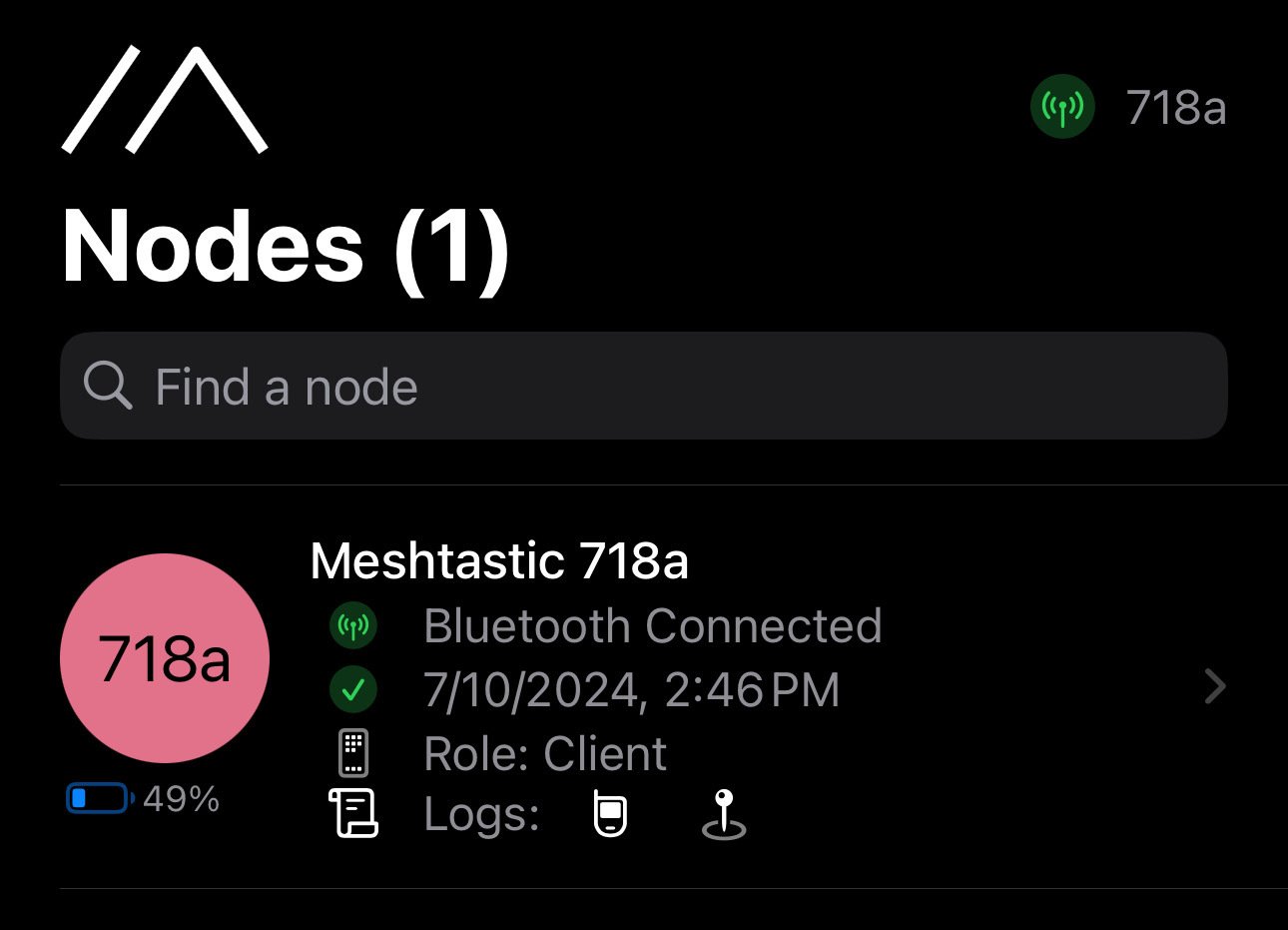
In 2 weeks, there will be a lot of mesh nodes in your city.
#mesh #lora #meshtastic #2weeks
Using SDRs on an Android Device (SDRs = Software Defined Radios)
You can run an SDR on an android device with a low cost SDR dongle such as the RTL-SDR. You can even do this on GrapheneOS with software available from the Obtainium app store.
Supplies needed:
⚡Android device
⚡SDR dongle
⚡RTL SDR Driver (from app store)
⚡RF Analyzer App (from app Store)
⚡Wire for antenna
#sdr #android #grapheneos #graphene #rtlsdr #rf #rtl #ham #hamradio #aprs #amateurradio #obtainium
How to add a gps module to a meshtastic t-deck.
#mesh #meshtastic #gps #tdeck #radio #hamradio #amateurradio #ham #hamr

You should do it & post about it on nostr.
DECODING MESHTASTIC IN REALTIME WITH AN RTL-SDR AND GNU RADIO:
Over on his YouTube channel, Aaron, creator of DragonOS and WarDragon has uploaded a video showing how it is possible to decode Meshtastic with an RTL-SDR and GNU Radio project called Meshtastic_SDR.
If you weren't aware of it, Meshtastic is software that enables off-grid mesh network based communications and can run on cheap LoRa hardware. The mesh based nature of the system means that communications can be received over long distances, without any infrastructure, as long as there are sufficient Meshtastic nodes in an area that are able to route the message to the destination node. One example application of Meshtastic is to use it as a mesh-based text messaging system. This might be useful for teams of hikers, pilots, or skiiers who operate in remote areas without cell phone coverage.
In the video, Aaron shows how to install the Meshtastic GNU Radio software on DragonOS (Linux), and how to run the GNU Radio flowgraph and Python decoder script. Later in the video Aaron shows some test text messages being received by the software.
The Meshtastic_SDR project can also be used to transmit Meshtastic messages with an appropriate TX-capable SDR.
https://www.rtl-sdr.com/decoding-meshtastic-in-realtime-with-an-rtl-sdr-and-gnu-radio/
#meshtastic #mesh #rtlsdr #sdr #gnuradio #hamradio #ham #lora #dragonos #wardragon
DECODING MESHTASTIC IN REALTIME WITH AN RTL-SDR AND GNU RADIO:
Over on his YouTube channel, Aaron, creator of DragonOS and WarDragon has uploaded a video showing how it is possible to decode Meshtastic with an RTL-SDR and GNU Radio project called Meshtastic_SDR.
If you weren't aware of it, Meshtastic is software that enables off-grid mesh network based communications and can run on cheap LoRa hardware. The mesh based nature of the system means that communications can be received over long distances, without any infrastructure, as long as there are sufficient Meshtastic nodes in an area that are able to route the message to the destination node. One example application of Meshtastic is to use it as a mesh-based text messaging system. This might be useful for teams of hikers, pilots, or skiiers who operate in remote areas without cell phone coverage.
In the video, Aaron shows how to install the Meshtastic GNU Radio software on DragonOS (Linux), and how to run the GNU Radio flowgraph and Python decoder script. Later in the video Aaron shows some test text messages being received by the software.
The Meshtastic_SDR project can also be used to transmit Meshtastic messages with an appropriate TX-capable SDR.
https://www.rtl-sdr.com/decoding-meshtastic-in-realtime-with-an-rtl-sdr-and-gnu-radio/
Software-Defined Radios (SDRs) are radio communication systems that replace traditional hardware components with software algorithms running on a computer or embedded system. They offer flexibility in signal processing, allowing reception, demodulation, and transmission across different frequencies and modulation types through software configurations.
One of the key advantages of SDRs is their cost-effectiveness. Compared to traditional radios, SDRs can be relatively inexpensive because they leverage standard computing hardware and open-source software. This makes them accessible to hobbyists and experimenters who can build or purchase SDR kits at very affordable prices.
Moreover, SDRs often rely on open-source software packages such as GNU Radio and various SDR libraries. These platforms provide a framework for developing custom radio applications and experimenting with different modulation schemes, signal processing techniques, and communication protocols. The open-source nature of these tools fosters a collaborative community of developers who contribute to improving functionality and expanding capabilities.
In summary, SDRs offer a cost-effective solution for radio enthusiasts to explore and innovate in the field of radio communication, leveraging open-source software for flexible and customizable signal processing.
GPSD GitHub: A use cheap usb dongle for getting accurate time without internet and NTP
You can use the cheapest USB GPS dongle with GPSD for accurate time in ham radio settings, especially when offline from the internet and NTP servers. GPS dongles receive precise time signals from GPS satellites, providing UTC time which is crucial for synchronized operations in ham radio.
GPSD software then interprets these signals and makes the accurate time available to your computer or device, ensuring reliable timing for radio communications without relying on internet-based services. This setup is cost-effective and robust for ensuring precise timing in remote or offline ham radio environments.
This is also a fun way to learn more about gps.
GPSD GitHub: A use cheap usb dongle for getting accurate time without internet and NTP
You can you the cheapest USB GPS dongle with GPSD for accurate time in ham radio settings, especially when offline from the internet and NTP servers, is a practical solution. GPS dongles receive precise time signals from GPS satellites, providing UTC time which is crucial for synchronized operations in ham radio. GPSD software then interprets these signals and makes the accurate time available to your computer or device, ensuring reliable timing for radio communications without relying on internet-based services. This setup is cost-effective and robust for ensuring precise timing in remote or offline ham radio environments.
This is also a fun way to learn more about gps.
If you need a reason to learn how to use packet radio…
#ham #hamradio #packet #packetradio #reticulum #devices #kiss #lora
https://markqvist.github.io/Reticulum/manual/whatis.html#interface-types-and-devices
Introduction to DMR radio: An open standard digital radio mode (not open source)
Digital Mobile Radio (DMR) is an open digital radio standard used by amateur radio enthusiasts and professional communication systems. Here's an overview of ham radio DMR:
1. What is DMR?
- Digital Mobile Radio (DMR) is a digital radio standard defined by the European Telecommunications Standards Institute (ETSI) and used worldwide.
- It is designed to provide a cost-effective, high-quality, and reliable digital communications platform.
2. Key Features:
- Digital Voice and Data: Supports both voice and data transmission, allowing for clearer communications and additional functionalities.
- Two-Slot TDMA (Time Division Multiple Access): Uses two time slots on a single 12.5 kHz channel, effectively doubling the capacity compared to analog systems.
- Error Correction: Enhances voice quality and reliability, especially in noisy environments.
- Encryption: Offers optional encryption for secure communications.
3. DMR Tiers:
- Tier I: Unlicensed, intended for consumer applications and small-scale operations with limited range.
- Tier II: Licensed conventional DMR, used by commercial and amateur radio operators. Supports repeater operations, offering extended range and coverage.
- Tier III: Licensed trunking DMR, used by large-scale commercial operations, supporting advanced functionalities like dynamic channel assignment and extensive network coverage.
4. DMR for Amateur Radio:
- Talk Groups: DMR uses talk groups, which are virtual channels that allow users to communicate with specific groups of people without others listening in. This is especially useful in amateur radio for organizing communications by interest or region.
- Code Plugs: A code plug is a file that contains all the programming information for a DMR radio, including frequencies, talk groups, and other settings. It's essential for configuring DMR radios correctly.
- DMR Networks: Various networks like BrandMeister, DMR-MARC, and TGIF provide extensive coverage and connectivity for DMR users worldwide. These networks connect repeaters, allowing global communications.
5. Advantages of DMR:
- Spectrum Efficiency: The two-slot TDMA doubles the channel capacity, making more efficient use of the available spectrum.
- Better Audio Quality: Digital audio processing provides clearer and more consistent sound quality compared to analog systems.
- Advanced Features: Supports additional functionalities like text messaging, GPS location services, and telemetry data.
- Global Connectivity: Through linked repeater networks and internet gateways, DMR users can communicate worldwide.
6. Equipment:
- Radios: Handheld and mobile radios from various manufacturers like Motorola, Hytera, TYT, and Anytone are popular among DMR users.
- Repeaters: DMR repeaters extend the range of handheld and mobile radios, enabling broader coverage and connectivity.
- Hotspots: Personal hotspots connect DMR radios to the internet, allowing users to access global networks without relying on local repeaters.
Conclusion:
DMR offers amateur radio operators a modern, versatile, and efficient means of communication. Its digital nature, combined with features like talk groups and global connectivity, makes it an attractive option for both casual and serious ham radio enthusiasts.
#ham #hamradio #amateurradio #hamr #dmr
Raspberry Pi Projects for Ham Radio:
Do you have a raspberry pi laying around? There are a lot of great ham radio projects for raspberry pi. Check out this video for a some great ideas.
#pi #raspberrypi #diy #ham #hamradio #amateurradio #aprs #winlink #hamclock #km4ack
Let’s get some eyes on this GitHub: RNode
An RNode is an open, free and unrestricted digital radio transceiver. It enables anyone to send and receive any kind of data over both short and very long distances. RNodes can be used with many different kinds of programs and systems, but they are especially well suited for use with Reticulum.
RNode is not a product, and not any one specific device in particular. It is a system that is easy to replicate across space and time, that produces highly functional communications tools, which respects user autonomy and empowers individuals and communities to protect their sovereignty, privacy and ability to communicate and exchange data and ideas freely.
An RNode made from readily available and cheap parts, in a durable 3D printed case
The RNode system is primarily software, which transforms different kinds of available hardware devices into functional, physical RNodes, which can then be used to solve a wide range of communications tasks. Such RNodes can be modified and built to suit the specific time, locale and environment they need to exist in.
#mesh #radio #rnode #reticulum
👀
⚡️🌽📻 nostr:note1xsr6eaccuxyu6wmkyqmzlh8e47yhwkj92kprmmmwvl589yc2484s4zxgn0
Sending emails over ham radio has never been easier. What are you waiting for?
Supplies needed: If you are crafty, you can do this very cheap these days.
⚡Android Device
⚡the WoAD app
⚡any handheld ham radio
⚡a digirig lite with audio cable for your radio
What is Winlink?
Winlink, also known as the Winlink Global Radio Email, is a worldwide radio messaging system that uses radio frequencies to send email and other digital communications. It was originally developed for maritime use but has since expanded to include amateur radio, emergency communications, and other applications. Winlink allows users to send and receive messages even in remote areas without internet access, using various digital modes and protocols.
Watch this step-by-step guide to learn how to do it:
Arduino Based Antenna Analyzer | RigExpert AA-30.Zero 3D Build - DIY
How to make your own antenna analyzer for ham radio.
#arduino #ham #hamradio #RigExpert #swr #diy #ametuerradio
This is a great device that you can make that will allow you to pair a bluetooth capable ham radio to an apple phone or tablet in order to do APRS, emails, sms and other ham radio digital modes over the airwaves.
#ham #hamradio #aprs #digital #tnc #bluetooth #ble #bblink #sms #radiomail #amateurradio #hamr #ios
Ham Radio License Test Preparation:
1. Use HamStudy.org: HamStudy is a free website that provides practice tests for all ham radio licenses. It can help individuals prepare for their exams and find online or in-person test sessions. www.hamstudy.org
2. Check Out W4EEY on YouTube: W4EEY on YouTube offers excellent ham radio tutorials. He has playlists covering all ham radio license levels and occasionally conducts live classes. This resource can be valuable for learning ham radio concepts. Here are the playlists for the various licenses:
• Tech Playlist: https://youtube.com/playlist?list=PLZ_9BZQ8gpziUWPBT3rOvSV6MCCeCaiK0
• General Playlist: https://youtube.com/playlist?list=PLZ_9BZQ8gpziv2a26B_IoQ1RbXbIqieP2
• Extra Playlist: https://youtube.com/playlist?list=PLZ_9BZQ8gpzh7NC1WVKwCCmOTULSj1f93
3. Explore ARRL and Local Clubs: The American Radio Relay League (ARRL) website can help individuals find local ham radio clubs. These clubs often have information about local repeaters, club meetings, and ham radio "nets" (radio meetups). It's a good way to connect with other ham radio enthusiasts in your area. (https://www.arrl.org/find-a-club)
#ham #hamradio #license #arrl #amateurradio #test #testprep #hamstudy #w4eey