
Price on the rise fees declining we like #plebchain

#newjam #plebchain
https://wavlake.com/track/1ca84e5e-19cb-46e5-a3a1-750acb61004b

my list sucks I already know
🩳 are 👨🍳 ed
First there was one now there is two #nano3 #avalon 
What do we have here? #canaan #solominer #nano3 #plebchain 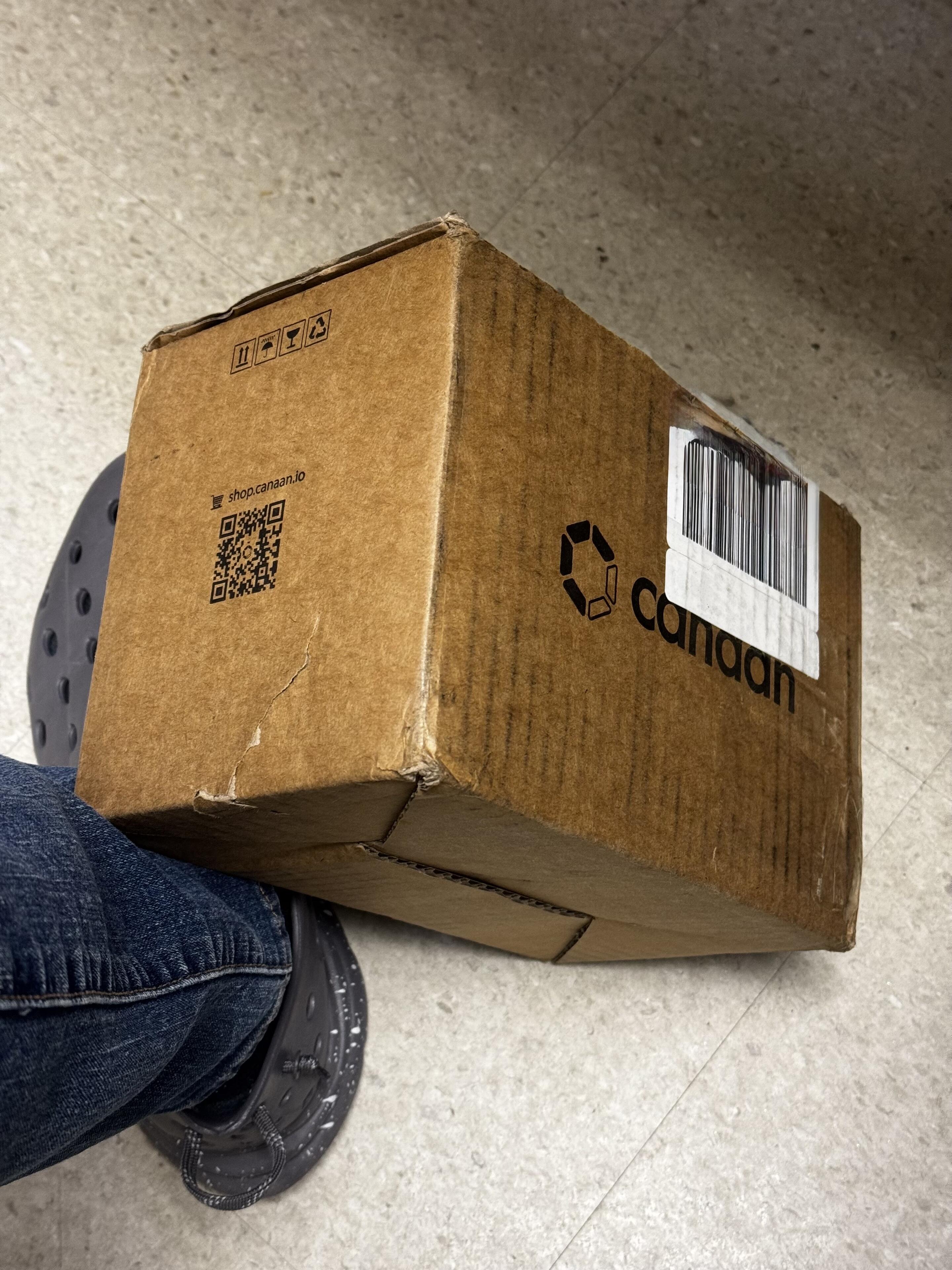
A Historical Overview of Tariffs in the United States
Tariffs, essentially taxes on imported goods, have played a significant role in the United States' economic history. They have been used as a tool for revenue generation, protectionism, and trade negotiations.
Early Years: Revenue Generation and Protectionism
Colonial Era: Tariffs were primarily used to generate revenue for the colonial government.
Post-Revolutionary War: The first federal tariff was enacted in 1789 to protect infant industries and raise revenue. This protectionist stance was championed by Alexander Hamilton.
19th Century: The Tariff as a Political Football
Nullification Crisis: The Tariff of 1828, known as the "Tariff of Abominations," led to a political crisis as South Carolina threatened secession.
Civil War: Tariffs were increased significantly during the Civil War to generate revenue and protect domestic industries.
20th Century: A Shift Towards Free Trade
Early 20th Century: Protectionist policies continued, culminating in the Smoot-Hawley Tariff Act of 1930, which is often blamed for exacerbating the Great Depression.
Post-WWII: The United States began to advocate for free trade, leading to the creation of the General Agreement on Tariffs and Trade (GATT) and eventually the World Trade Organization (WTO).
Modern Times: Tariff Negotiations and Protectionism
Recent Decades: The United States has engaged in numerous trade negotiations, often using tariffs as a bargaining tool.
Trade Wars: In recent years, the United States has engaged in trade wars with countries like China, imposing tariffs on a wide range of goods.
Key Points to Remember:
Tariffs have been used for both revenue generation and protectionism.
The role of tariffs in the U.S. economy has fluctuated over time, with periods of protectionism and free trade.
Trade wars and tariff negotiations have become increasingly common in recent decades. #plebchain #nostr #gm
In Microsoft's 2024 proxy materials, a shareholder proposal related to Bitcoin investment is presented. The context indicates a recommendation from Microsoft's board to vote against this proposal. The board's reasoning appears to stem from concerns that Bitcoin investments may not align with Microsoft's current financial strategies or risk management practices. Although Bitcoin has gained significant attention in global markets, the company does not see it as a beneficial move for its shareholders at this time.

100 years before subsidy ends
Unlocking Zero-Knowledge Proofs on Bitcoin with PIPEs and FH-MIPE
Introduction: Bitcoin's Layer 1 (L1) is known for its security and robustness but also for its limited #programmability. Unlike Ethereum, Bitcoin lacks certain key features like smart contracts or advanced cryptographic tools, which restricts the direct implementation of complex cryptographic operations, such as zero-knowledge proof (ZKP) verification. In particular, the absence of covenants and essential opcodes has been a significant barrier. However, with advancements in cryptography, it is now possible to overcome these limitations without upgrading Bitcoin’s protocol. This post explores how Bitcoin PIPEs (Polynomial Inner Product Encryption) and FH-MIPE (Function-Hiding Multi-Input Predicate Encryption) can unlock the potential of ZKPs on Bitcoin.
The ZKP Verification Challenge on Bitcoin
Zero-Knowledge Proofs (ZKPs) allow for the verification of statements without revealing the underlying data, making them a powerful tool for privacy and scalability. However, verifying ZKPs on Bitcoin’s L1 has long been considered unfeasible due to several limitations in Bitcoin’s script language. These limitations include the absence of covenants (e.g., CAT, CheckTemplateVerify (CTV)) and crucial opcodes (e.g., OP_MUL) necessary for verifying cryptographic proofs. Additionally, Bitcoin’s scripting system has a small script size limit, which restricts the implementation of sophisticated cryptographic operations like ZKP verification.
The Need for #Covenants and Opcodes
Covenants add programmability to Bitcoin by defining rules on how and where Bitcoin can be spent, which is crucial for applications requiring complex transaction structures, such as zkRollups or multi-party computations. However, Bitcoin’s L1 does not natively support these covenants due to the need for community consensus and protocol upgrades, which are notoriously slow and complex.
OpCodes like OP_CAT (concatenation), OP_MUL (multiplication), and other key operations are essential for performing advanced cryptographic tasks, including #Merkle tree verification and zero-knowledge proof arithmetization. Despite proposals like BIP-119 (CTV) and BIP-347 (CAT), these have not yet been adopted, leaving ZKP verification out of reach for Bitcoin.
Introducing Bitcoin PIPEs: A Path Forward
Instead of waiting for a protocol upgrade, the paper proposes using Bitcoin PIPEs (Polynomial Inner Product Encryption) as a way to verify ZKPs on Bitcoin’s L1. The idea is to emulate the missing covenants and opcodes through the PIPE framework, enabling advanced cryptographic operations without requiring any changes to Bitcoin’s base layer.
Bitcoin PIPEs allow for the execution of complex, application-specific covenants by leveraging a cryptographic technique called #Function-Hiding #Multi-Input #Predicate Encryption (FH-MIPE). This technique enables the creation of covenants that are conditionally valid based on the satisfaction of specific cryptographic proofs, such as those generated by a ZKP system.
How FH-MIPE Works
#FH-MIPE is a type of functional encryption that allows for computations on encrypted data while keeping both the data and the function private. In the context of Bitcoin, FH-MIPE allows the creation of a covenant that checks whether a ZKP is valid before authorizing a Bitcoin transaction. Here’s how it works in practice:
Encryption of Keys and Signatures: The FH-MIPE scheme generates unique encryption keys and signatures that are only valid if the conditions of a ZKP are met. This ensures that a transaction can only proceed if the cryptographic proof is correct.
Predicate Definition: FH-MIPE defines specific predicates (conditions) that must be satisfied for the covenant to be valid. These predicates can emulate the functionality of #covenants like CAT or CTV, which Bitcoin currently lacks.
Succinct Verification: The method uses a succinct verification process, meaning that it can efficiently verify a cryptographic proof without needing to reveal or handle large amounts of data.
ZKP Verification Using Bitcoin #PIPEs
To demonstrate how this can be applied to Bitcoin, the paper focuses on the Placeholder proof system—a ZK-SNARK (Succinct Non-Interactive Argument of Knowledge) designed for efficient verification. #ZK-SNARKs allow for the verification of complex statements without requiring interaction between the prover and verifier, making them ideal for privacy-focused applications on a public blockchain like Bitcoin.
Bitcoin PIPEs emulate the necessary cryptographic operations for verifying Placeholder proofs by introducing covenants that perform the following tasks:
Emulation of Missing OpCodes: Instead of requiring the Bitcoin network to adopt new opcodes like OP_MUL, Bitcoin PIPEs use function-hiding encryption to perform similar cryptographic operations off-chain, while still ensuring the #security of the process on-chain.
Verification of Merkle Trees and #Polynomial Commitments: ZKP systems like Placeholder often rely on Merkle tree paths and polynomial commitments to verify proofs. Bitcoin PIPEs handle these cryptographic tasks by enabling the off-chain computation of these proofs while verifying them on-chain through FH-MIPE-based covenants.
Applications Beyond ZKPs: Unlocking Bitcoin's Programmability
The use of Bitcoin PIPEs for ZKP verification opens up a new world of possibilities for Bitcoin, especially when it comes to programmable applications. Some potential use cases include:
zkRollups: With the ability to verify ZKPs on-chain, Bitcoin could support zkRollups, a layer 2 scaling solution that aggregates many transactions into a single proof, significantly increasing Bitcoin’s transaction throughput.
Complex Smart Contracts: Emulating #covenants like CAT and CTV via PIPEs could enable more sophisticated smart contracts on Bitcoin, potentially allowing Bitcoin to offer some of the functionality seen in other programmable blockchains like Ethereum.
Enhanced Privacy: Zero-knowledge proofs offer a pathway to enhanced privacy on Bitcoin, allowing users to prove ownership or the validity of a transaction without revealing any sensitive information.
Conclusion: Bitcoin's Future with PIPEs and FH-MIPE
The proposal to use Bitcoin PIPEs and FH-MIPE to verify #zero-knowledge proofs without requiring a protocol upgrade is a significant advancement in Bitcoin’s programmability. By emulating missing covenants and opcodes through a #cryptographic framework, Bitcoin can support ZKP verification and complex cryptographic applications while maintaining its core security properties. This approach not only enhances Bitcoin’s utility but also preserves its decentralized, secure nature, making it an exciting development for the future of Bitcoin.
Through innovations like Bitcoin PIPEs, the limitations of Bitcoin’s script language can be overcome, unlocking new use cases and applications for the world’s most secure blockchain. Whether it’s zkRollups, complex smart contracts, or privacy-preserving transactions, Bitcoin PIPEs open the door to a new era of Bitcoin #programmability without compromising on security.
https://www.allocin.it/uploads/placeholder-bitcoin.pdf
#plebchain
TL;DR:
Bitcoin’s script limitations prevent direct verification of zero-knowledge proofs (ZKPs) due to missing covenants and opcodes like OP_CAT and OP_MUL. This post introduces Bitcoin PIPEs (Polynomial Inner Product Encryption) and FH-MIPE (Function-Hiding Multi-Input Predicate Encryption) as solutions to emulate these missing components without needing protocol upgrades. Through these cryptographic techniques, Bitcoin can verify ZKPs, like Placeholder proofs, allowing for more advanced applications such as zkRollups, enhanced privacy, and complex smart contracts. This method unlocks Bitcoin’s programmability while maintaining its security and decentralization.
Unlocking Zero-Knowledge Proofs on Bitcoin with PIPEs and FH-MIPE
Introduction: Bitcoin's Layer 1 (L1) is known for its security and robustness but also for its limited #programmability. Unlike Ethereum, Bitcoin lacks certain key features like smart contracts or advanced cryptographic tools, which restricts the direct implementation of complex cryptographic operations, such as zero-knowledge proof (ZKP) verification. In particular, the absence of covenants and essential opcodes has been a significant barrier. However, with advancements in cryptography, it is now possible to overcome these limitations without upgrading Bitcoin’s protocol. This post explores how Bitcoin PIPEs (Polynomial Inner Product Encryption) and FH-MIPE (Function-Hiding Multi-Input Predicate Encryption) can unlock the potential of ZKPs on Bitcoin.
The ZKP Verification Challenge on Bitcoin
Zero-Knowledge Proofs (ZKPs) allow for the verification of statements without revealing the underlying data, making them a powerful tool for privacy and scalability. However, verifying ZKPs on Bitcoin’s L1 has long been considered unfeasible due to several limitations in Bitcoin’s script language. These limitations include the absence of covenants (e.g., CAT, CheckTemplateVerify (CTV)) and crucial opcodes (e.g., OP_MUL) necessary for verifying cryptographic proofs. Additionally, Bitcoin’s scripting system has a small script size limit, which restricts the implementation of sophisticated cryptographic operations like ZKP verification.
The Need for #Covenants and Opcodes
Covenants add programmability to Bitcoin by defining rules on how and where Bitcoin can be spent, which is crucial for applications requiring complex transaction structures, such as zkRollups or multi-party computations. However, Bitcoin’s L1 does not natively support these covenants due to the need for community consensus and protocol upgrades, which are notoriously slow and complex.
OpCodes like OP_CAT (concatenation), OP_MUL (multiplication), and other key operations are essential for performing advanced cryptographic tasks, including #Merkle tree verification and zero-knowledge proof arithmetization. Despite proposals like BIP-119 (CTV) and BIP-347 (CAT), these have not yet been adopted, leaving ZKP verification out of reach for Bitcoin.
Introducing Bitcoin PIPEs: A Path Forward
Instead of waiting for a protocol upgrade, the paper proposes using Bitcoin PIPEs (Polynomial Inner Product Encryption) as a way to verify ZKPs on Bitcoin’s L1. The idea is to emulate the missing covenants and opcodes through the PIPE framework, enabling advanced cryptographic operations without requiring any changes to Bitcoin’s base layer.
Bitcoin PIPEs allow for the execution of complex, application-specific covenants by leveraging a cryptographic technique called #Function-Hiding #Multi-Input #Predicate Encryption (FH-MIPE). This technique enables the creation of covenants that are conditionally valid based on the satisfaction of specific cryptographic proofs, such as those generated by a ZKP system.
How FH-MIPE Works
#FH-MIPE is a type of functional encryption that allows for computations on encrypted data while keeping both the data and the function private. In the context of Bitcoin, FH-MIPE allows the creation of a covenant that checks whether a ZKP is valid before authorizing a Bitcoin transaction. Here’s how it works in practice:
Encryption of Keys and Signatures: The FH-MIPE scheme generates unique encryption keys and signatures that are only valid if the conditions of a ZKP are met. This ensures that a transaction can only proceed if the cryptographic proof is correct.
Predicate Definition: FH-MIPE defines specific predicates (conditions) that must be satisfied for the covenant to be valid. These predicates can emulate the functionality of #covenants like CAT or CTV, which Bitcoin currently lacks.
Succinct Verification: The method uses a succinct verification process, meaning that it can efficiently verify a cryptographic proof without needing to reveal or handle large amounts of data.
ZKP Verification Using Bitcoin #PIPEs
To demonstrate how this can be applied to Bitcoin, the paper focuses on the Placeholder proof system—a ZK-SNARK (Succinct Non-Interactive Argument of Knowledge) designed for efficient verification. #ZK-SNARKs allow for the verification of complex statements without requiring interaction between the prover and verifier, making them ideal for privacy-focused applications on a public blockchain like Bitcoin.
Bitcoin PIPEs emulate the necessary cryptographic operations for verifying Placeholder proofs by introducing covenants that perform the following tasks:
Emulation of Missing OpCodes: Instead of requiring the Bitcoin network to adopt new opcodes like OP_MUL, Bitcoin PIPEs use function-hiding encryption to perform similar cryptographic operations off-chain, while still ensuring the #security of the process on-chain.
Verification of Merkle Trees and #Polynomial Commitments: ZKP systems like Placeholder often rely on Merkle tree paths and polynomial commitments to verify proofs. Bitcoin PIPEs handle these cryptographic tasks by enabling the off-chain computation of these proofs while verifying them on-chain through FH-MIPE-based covenants.
Applications Beyond ZKPs: Unlocking Bitcoin's Programmability
The use of Bitcoin PIPEs for ZKP verification opens up a new world of possibilities for Bitcoin, especially when it comes to programmable applications. Some potential use cases include:
zkRollups: With the ability to verify ZKPs on-chain, Bitcoin could support zkRollups, a layer 2 scaling solution that aggregates many transactions into a single proof, significantly increasing Bitcoin’s transaction throughput.
Complex Smart Contracts: Emulating #covenants like CAT and CTV via PIPEs could enable more sophisticated smart contracts on Bitcoin, potentially allowing Bitcoin to offer some of the functionality seen in other programmable blockchains like Ethereum.
Enhanced Privacy: Zero-knowledge proofs offer a pathway to enhanced privacy on Bitcoin, allowing users to prove ownership or the validity of a transaction without revealing any sensitive information.
Conclusion: Bitcoin's Future with PIPEs and FH-MIPE
The proposal to use Bitcoin PIPEs and FH-MIPE to verify #zero-knowledge proofs without requiring a protocol upgrade is a significant advancement in Bitcoin’s programmability. By emulating missing covenants and opcodes through a #cryptographic framework, Bitcoin can support ZKP verification and complex cryptographic applications while maintaining its core security properties. This approach not only enhances Bitcoin’s utility but also preserves its decentralized, secure nature, making it an exciting development for the future of Bitcoin.
Through innovations like Bitcoin PIPEs, the limitations of Bitcoin’s script language can be overcome, unlocking new use cases and applications for the world’s most secure blockchain. Whether it’s zkRollups, complex smart contracts, or privacy-preserving transactions, Bitcoin PIPEs open the door to a new era of Bitcoin #programmability without compromising on security.
https://www.allocin.it/uploads/placeholder-bitcoin.pdf
#plebchain
#coffeechain #miami #espresso 


#gm #nostr #plebchain #quotes

🎉 Free NerdMiner Raffle! 🎉
Win a NerdMiner Bitcoin Lottery Miner valued at $50—for FREE!
To qualify for this exciting raffle, simply submit 1000 sats (Satoshis) and you're in the draw! 🚀
🔹 US Residents Only (Free Shipping Included to 48 states—no Alaska or Hawaii, sorry!).
🔹 The NerdMiner is your gateway to exploring the world of bitcoin lottery mining.
The winner will be announced once the raffle pot covers shipping costs to the 48 US states. So, the more people enter, the faster we can announce the lucky winner! 🎟️
Submit your 1000 sats and secure your chance to win this amazing prize today! 💻💰
#nostr #giveaway #nerdminer #solominer

My problem child #bitaxe
