Avatar
ponymontana💜⚡
3d03c53608415b1d718c7786ee10bdb4e67bced32207e32880ee9e44301a19ec
drastically ungovernable taxes disrespector, ANCAP LIBER*

its the only way, I'm everytime so upset to discover that agorism is so bad understood, even from bitcoin people. They are always talking about government shit simping polititians and statists games.

you can sleep like a baby, your precious fake money wont going anywhere (and never will, it can hit 100k cause its tautologically impossible to do it)

you observe the bitcoin price cause you want to see hitting 100k, I observe the price cause I want to see how it will never reach 100k (its written in ancient mediaval almanacs, its happened already, the secret council says "its filologically impossible), we are not the same

I have 100k problems but bitcoin aint (and never will be, its BIOCHEMICALLY IMPOSSIBLE fucking bitcoin nerds)

bitcoin at 100k? I cant hear your bullshit (impossible statement, will never reach 100k) I'm swimming in the 100k gallons of crude oil I invested in (we the crude oil investors are a great community, #swiml).

bitcoin is 100k$ away from his real price (ZERO) if you all wouldnt be so retarded (will never reach 100k cause humanity is reatrded, but not at that point)

bitcoin can reach 100k absolutely 😁 (I dont want hurt your feelings, retarded)

Replying to Avatar Uno

99k

"bitcoin will never reach 100k until 100k" shitposting started 🫡

if you think is even remotely possible that could exist a universe in the multitude of nested possible interactions where bitcoin hit 100k I'm so sorry but you must be a faggot.

You better find real job in a real office where you can do real business on microsoft excel and somethimes eat mexican with your collegues in office-suits for lunch, you nerdy delusional.

being rich in fiat is just being the favourite slave of the master. He concedes you to live with benefits until you remain his slave and follow the rules.

Your statement asserts that jokes about socialism create misunderstandings and discourages critical thinking. While this is plausible, it simplifies the issue. Misunderstandings about socialism often arise from media framing, ideological bias, and historical context.

For instance: Many people's views on socialism are shaped by its association with authoritarian regimes, such as the USSR or Maoist China, rather than democratic socialist models like those in Scandinavia.

People often rely on heuristics and biases when processing information, leading to oversimplifications. For example, the availability heuristic makes individuals judge socialism by the most salient examples (e.g., Venezuela), rather than its nuanced forms.

Social structures perpetuate stereotypes through institutions like education and media. Jokes about socialism might reflect deeper cultural attitudes, but they alone don’t cause misunderstandings.

The assertion that most good governments require socialism is broadly defensible but can be refined:

Successful welfare states (e.g., Norway, Sweden) demonstrate how socialistic policies—public healthcare, education, and housing—enhance societal well-being.

Mixed economies blend socialism and capitalism, achieving balance by combining market efficiency with social equity. Nobel laureates like Amartya Sen emphasize the necessity of social welfare for human development.

Critics argue that even beneficial socialist policies can lead to inefficiencies (e.g., bureaucratic inertia) or moral hazards (e.g., dependency on welfare).

The claim that extremism in any ideology is harmful is widely supported. However, certain aspects need further exploration:

Economists like Thomas Piketty have shown that unchecked capitalism exacerbates inequality, creating conditions for social unrest.

Extreme capitalism leads to monopolies, environmental degradation, and public goods under-provision.

Sociologists like Herbert Marcuse argue that hyper-capitalism fosters consumerism and alienation, diminishing social cohesion.

The statement claims socialism is more prone to becoming extreme, which is debatable:

While socialism has sometimes led to authoritarianism, capitalist states have also enabled oligarchies (e.g., the Gilded Age).

Systems of governance, not ideology, often determine whether a state becomes extreme. A robust legal framework can prevent excesses in both socialism and capitalism.

The UAE’s example is accurate but idealized. Political scientists like Fareed Zakaria argue that benevolent autocracies can deliver rapid development but lack safeguards against abuses of power. Moreover, such systems are less adaptive to societal changes, unlike democracies.

The UK’s colonial history, framed here as a mix of capitalist aims with social responsibility, is contentious:

Scholars like Edward Said argue that colonial powers justified exploitation by highlighting infrastructure projects, ignoring the immense human and cultural costs.

Postcolonial critiques suggest that the infrastructure and social services provided by colonizers primarily served imperial interests rather than local populations.

The argument for balance resonates with psychological theories like the Goldilocks Principle (optimal levels of any variable lead to the best outcomes). However, achieving balance is complex:

People and institutions often exhibit loss aversion, favoring the status quo over balanced reform.

Social Dynamics: Polarization, driven by group identity and confirmation bias, makes balance challenging to sustain.

While the critique is primarily academic, the discussion implies some actionable insights:

Governments should combine capitalist innovation with socialist safety nets to address inequality.

Educational Reforms: Critical thinking should be emphasized to counter ideological simplifications.

Checks and Balances: All systems require institutional safeguards to prevent extremism.

socialism is the most natural thing people end with IF it is fucking CONSENSUAL and not GOVERNMENT-ENFORCED.

If keep the market adjust itself you end up with local-little-socialisms (wealthy people that care about their relatives, their friends and people they like).

I dont know exactly what could be the form but the two principles I think it should follow are:

1) intentionality and incentive-driven partecipation (noone forced to pay taxes, incentives for good actors).

2) from small to big (major of powers to individuals, a bit less to local little associations, less and less until global istitutions with minimal roles).

Its really difficult to identify the concrete steps to tend to this goals, the only trivial good action that everyone can take today is embrace bitcoin, and thats why its so good and I'm so grateful it exists.

this is really a valid question. Frankly it is a hard problem, and its why I like too much bitcoin. It permit to lower the power all the states (mostly, with large approssimations and case studies) at the same time, and empower individuals in a decentralized distributed way. So we can fight the state without risking to "kill only our state just to end to be slave of the confinant state".

Overflowing their money-printers saving in bitcoin will not end the states, but will lower by order of magnitudes their power and is a concrete step in the right direction.

An ancap weapon that works consistently in the real world!

My goal would be having a state with lower and lower powers, and end in a situation where we can "deliberately associate" and privately reform the minimal structures for global cooperation based on consensus.

Anarchy is when we deliberately cooperate and assist each others, not necessarly a continuos violent environment.

And I'm so confident in humanity that I think a anarchy environment would be mostly good to live in, even if more adversarial than what we have today in strong democratic state (thats mostly a feature).

yeah, all good properties can survive in minimal-p2p-agreements anarco-environments, and bitcoin is master and a revolution in that. The other good properties are your own body and then the owning of the spaces you can live in and enstablish your phisical presence and grab your phisical objects.

Maybe the other "properties" could not work anymore in an anarchist environment, but I dont see any problems.

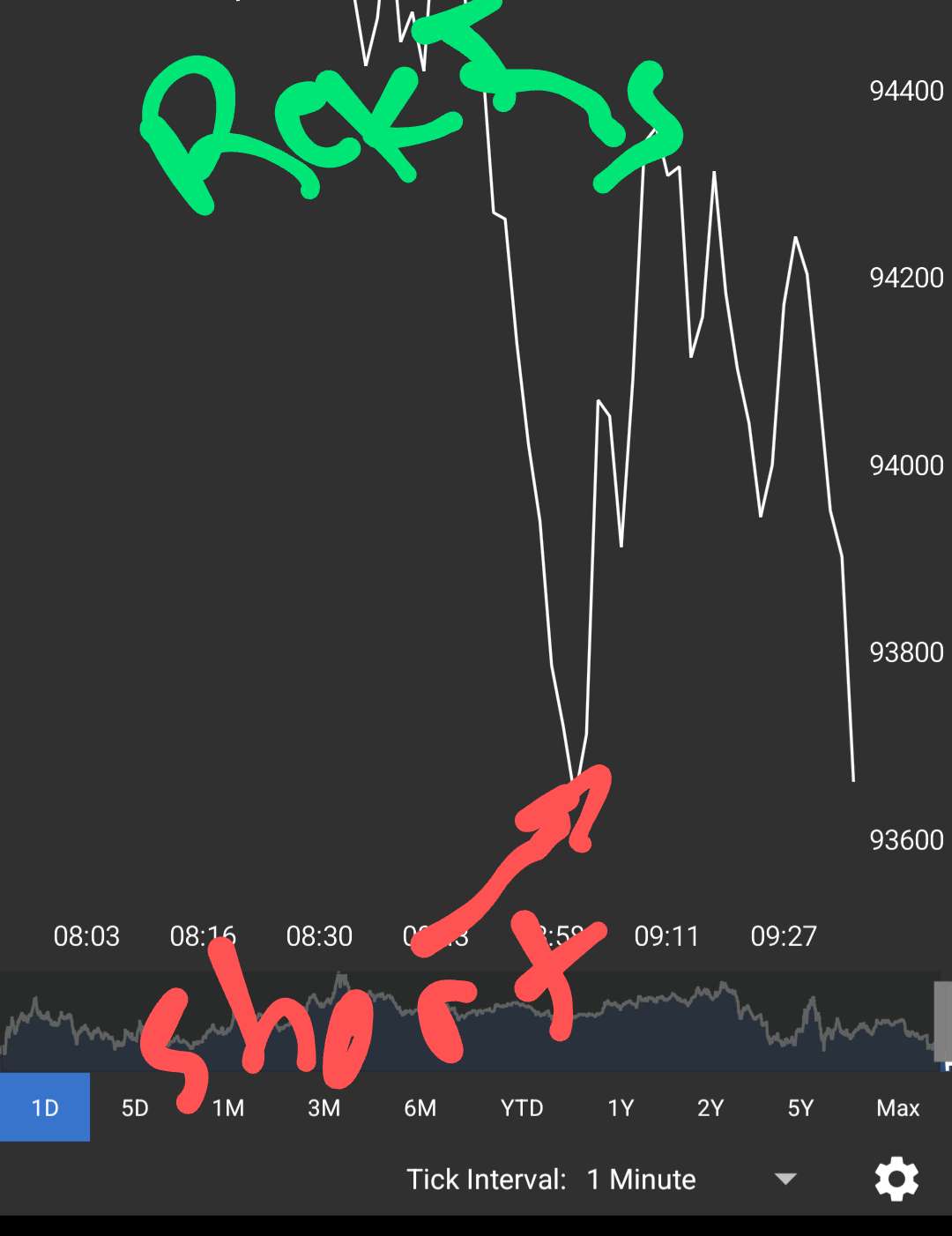
I'm too stupid to understand what are all that lines up and down