Adapter adds eSIM to any Android smartphone
Most Android phones, that contain eSIMs, are pretty expensive.
Fortunately, several companies have developed eSIM adapters that can be plugged into regular physical SIM card slots and add eSIM technology to your phone.
Among the newest providers is JMP, whose adapter was recently tested by Android Authority.
The adapter’s shape is identical to a regular physical SIM card, which lets you insert it into nearly any device with a SIM card tray or slot, including Android smartphones, tablets, and mobile Wi-Fi routers.
The only feature your smartphone must support to use the JMP eSIM adapter is the Open Mobile API (OMAPI), which is required for interfacing with the eSIM chip.
Almost every smartphone with Android 9 Pie or later comes with the feature, but there are a few exceptions — like the Nothing Phone 2a.
The downside is the cost of the adapter at $39.99 (about R716) and shipping to SA $35 (about R626) but I suppose that is cheaper than a higher end phone, and offers the versatility of an eSIM.
Interestingly, too, JMP has open-sourced its software as well.
The linked article also mentions two other alternatives to consider.
See https://mybroadband.co.za/news/cellular/561542-adapter-adds-esim-to-any-android-smartphone.html
#technology #eSIM #opensource
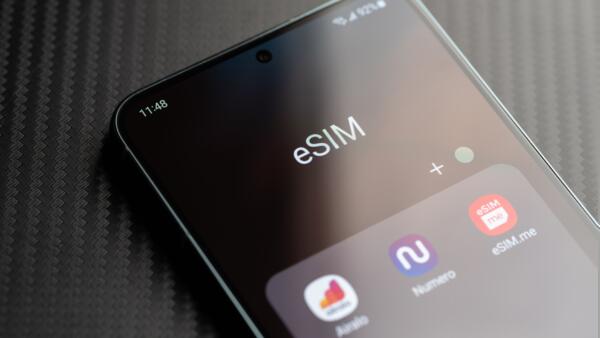
nostr:npub12rv5lskctqxxs2c8rf2zlzc7xx3qpvzs3w4etgemauy9thegr43sf485vg no I haven't got an image as it was MyBroadband who reviewed it, but it has to fit inside a physical SIM slot.
Adapter adds eSIM to any Android smartphone
Most Android phones, that contain eSIMs, are pretty expensive.
Fortunately, several companies have developed eSIM adapters that can be plugged into regular physical SIM card slots and add eSIM technology to your phone.
Among the newest providers is JMP, whose adapter was recently tested by Android Authority.
The adapter’s shape is identical to a regular physical SIM card, which lets you insert it into nearly any device with a SIM card tray or slot, including Android smartphones, tablets, and mobile Wi-Fi routers.
The only feature your smartphone must support to use the JMP eSIM adapter is the Open Mobile API (OMAPI), which is required for interfacing with the eSIM chip.
Almost every smartphone with Android 9 Pie or later comes with the feature, but there are a few exceptions — like the Nothing Phone 2a.
The downside is the cost of the adapter at $39.99 (about R716) and shipping to SA $35 (about R626) but I suppose that is cheaper than a higher end phone, and offers the versatility of an eSIM.
Interestingly, too, JMP has open-sourced its software as well.
The linked article also mentions two other alternatives to consider.
See https://mybroadband.co.za/news/cellular/561542-adapter-adds-esim-to-any-android-smartphone.html
#technology #eSIM #opensource
You can develop native apps for Android using Python
Python’s simplicity and readability make it an attractive choice for developers looking to quickly develop and deploy applications. Although Java and Kotlin are the traditional languages for Android development, Python offers a streamlined alternative that leverages Python’s rich ecosystem of libraries and frameworks. Using Python on Android can accelerate development and enable the integration of advanced functionalities like data analysis and machine learning.
Five different options are covered in the linked article:
1. Kivy
2. BeeWare
3. Chaquopy
4. PySide for Android
5. Pydroid 3
And interestingly, you can use Buildozer for Kivy, Briefcase for BeeWare, or PyQtDeploy for PySide to package your Python app into an APK as well. That makes the app distribution and installation identical to any other Android app.
See https://www.analyticsinsight.net/python-2/how-to-use-python-on-android
#technology #Python #Android

Car guards going cashless in South Africa can often double their income
Digital payment solution Street Wallet is helping car guards across South Africa to increase and sometimes even double their daily income in an increasingly cashless society, the Sunday Times reports.
Street Wallet offers customers multiple ways of paying, including Scan to Pay using a quick response (QR) code, Apple Pay, Samsung Pay, SnapScan, and Zapper.
Andre Ilunga, a car guard in the Camps Bay area in Cape Town, told the Times that everything has changed for him since he started using the app.
Because most people did not tip him due to a lack of cash, he now makes nearly double what he would typically have made in a day.
So true, I often don't have cash, or have a negligible amount as it costs money to draw cash, and I must make a special stop somewhere to get cash. Just about everything today accepts a card or online payment. I probably only draw some cash about three times a year, and that usually goes for card guards over a period of time.
Even domestic workers today, and garden services, accept EFT or other payments. We've had more than one domestic worker in our suburb get robbed of their cash at month end. It's not really safe to carry cash, and cash is actually pretty filthy to handle (hygienically-wise). I suppose some will comment that is why cash gets laundered
The app being mentioned in the article does not require the car guard to even have a bank account - they get a digital voucher that can be exchanged for cash at a bank (one hopes that they can receive their funds electronically too though as an option).
But what is of extreme concern, are some of the stats given in the linked article about how few people actually have access to the Internet from their homes, and in rural areas it is almost non-existent. This is a major stumbling block to a digital economy.
At R85 per gigabyte, mobile data prices in 2022 were three times as high as in North Africa and double the price in Western Europe, according to the report.
See https://mybroadband.co.za/news/banking/561682-car-guards-going-cashless.html
#technology #SouthAfrica #cashless #digitaleconomy

Redis has reason to be worried as Valkey 8 fork moves beyond its parent program
In March 2024, Redis announced that it was dumping the open source BSD 3-clause license for its Redis in-memory key-value database for a “source-available” Redis Source Available License (RSALv2) and Server Side Public License (SSPLv1). That made both developers and users unhappy.
So, as open-source people do, community members immediately forked the code into Valkey with the support of the Linux Foundation. The release has garnered support from major tech companies like AWS, Google Cloud, and Oracle, indicating strong industry backing for this open-source initiative.
Valkey has been one of the quickest moving forks for open source. On top of this, the new fork seems to have already surpassed the original in terms of new features and performance.
It goes to show that open source forks can actually be a very good thing.
#technology #opensource

Will your SSD lose data without power? Don't store it for long periods
There are some concerns about even the best SSDs losing data if kept without power, and people may question their feasibility for long-term storage. There's some truth to this, as SSDs use flash storage to store data, and are more susceptible to power-related issues than HDDs.
Normally, the SSD you use on your PC would stay powered down for, say, a few hours, days, or weeks, at the most. Even if your PC is turned off for months, your SSD will still work as intended when you turn your system on the next time. The real problem begins if your SSD is devoid of power for longer periods, say, well over a year or so.
Definitely worth powering up your SSDs art least every 6 months or so, to be safer.
See https://www.xda-developers.com/will-ssd-lose-data-without-power
#technology #SSD

Kelsey Hightower: If governments rely on FOSS, they should fund it
Acclaimed engineer Kelsey Hightower, who stopped coding for money in 2023, remains an influential figure in the world of software, and he's proposing something that might stir up the open source community.
Funding open source is an ongoing hot topic. During a chat at Civo's recent Navigate event, Hightower joked with us how companies were happy to spend big on cloud subscriptions but tended to skimp when it came to paying a comparatively token amount for open source.
Open source developers, however, require reimbersement, and Hightower has some interesting ideas on how that could be accomplished. "I think we have all got a little complacent," he tells The Register.
It's true that much of the open source that is used by governments, are often essential, otherwise they'd be paying an arm and a leg for some commercial cloud subscription. It's important, not only to ensure getting some support, but to also ensure that the software is kept up to date and continues to receive support into the future.
Some governments do actually contribute already if I think of some examples from France, Germany, and the EU itself. FOSS software being used is not just the glossy front-ends that users see, it is often the essential plumbing holding the wide area networks together, or keeping the storage and databases going. In many cases, I'm pretty sure that CEOs are not even aware of how much open source software is used in their organisations.
See https://www.theregister.com/2024/09/19/kelsey_hightower_civo
#technology #FOSS #opensource #government

Inside Joburg’s new lithium battery recycling plant which uses food-safe chemicals
Once collected, the batteries undergo shredding, which exposes the valuable metal-containing black mass at their core. From there, the black mass enters a proprietary hydrometallurgical process, where a blend of food-safe chemicals is used to leach out metals such as lithium, manganese, nickel and cobalt.
Unlike traditional methods that rely on pyrometallurgy and high temperatures, Cwenga Lib’s facility operates at room temperature, making it safer for operators and more feasible in the South African context.
There is going to be a growing demand for this type of recycling in future. Not only from an environmentally friendly disposal perspective, but also for recovery of these metals for re-use.
Yes, whilst the SA government is bent on extending gas extraction and the use of coal, the private sector is investing in the future business around further enhancing environmentally friendly and sustainable energy production.
See https://techcentral.co.za/joburg-lithium-battery-recycling-plant/251956
#technology #environment #recycling #SouthAfrica
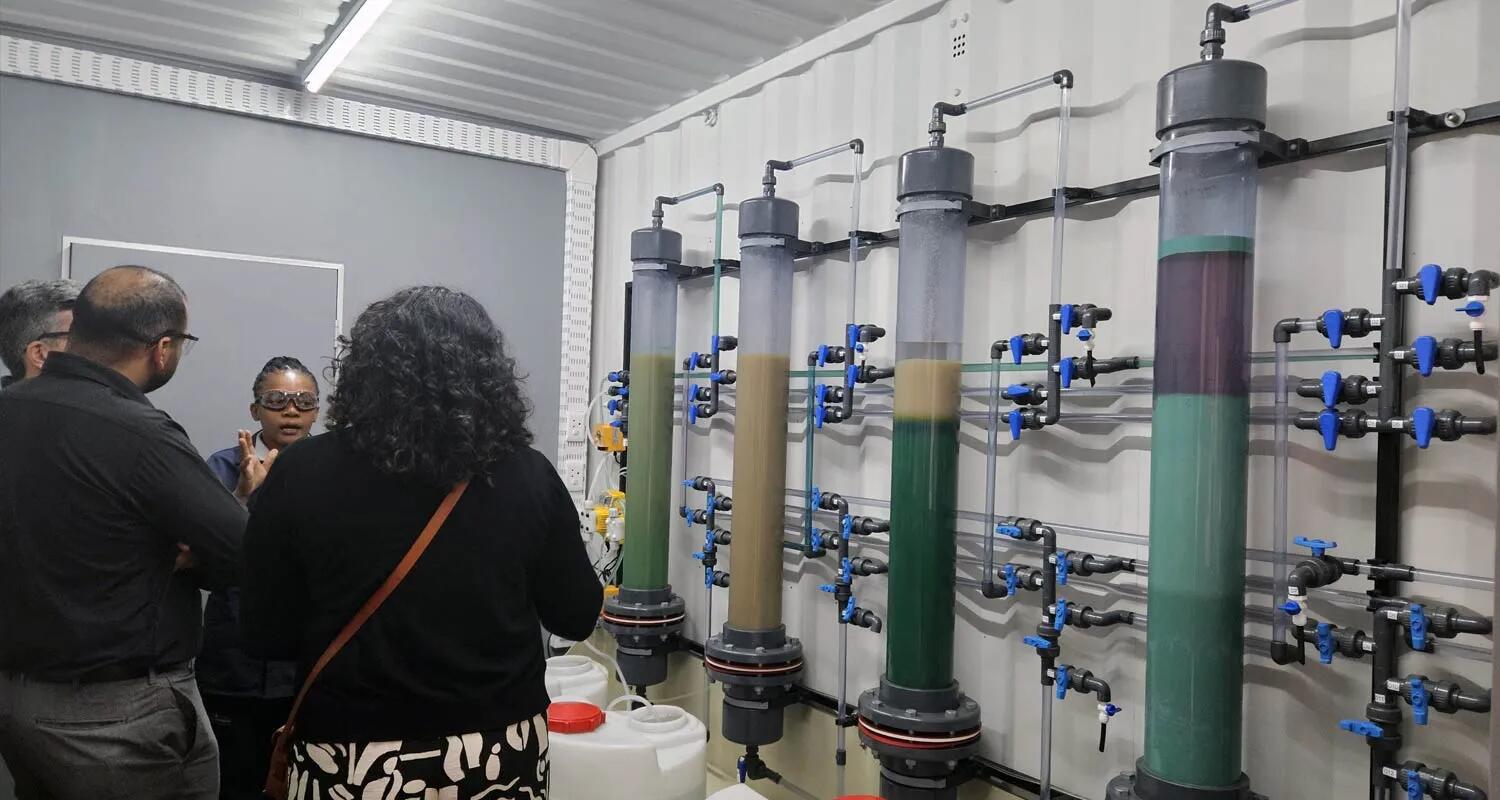
The Danger of Cheap Gadgets: The Rise Of Self-Cleaning, Cat-Killing Litter Boxes
Machines that automate the various tedious tasks that come with being a servant in a cat’s household — like feeding and cleaning Mr. Fluffles’ litter box — are generally a godsend, as they ensure a happy cat and a happy human. That is, unless said litter box-cleaning robot kills said cat. That’s the gruesome topic that [Philip Bloom], also known as the bloke of the One Man Five Cats channel on YouTube, decided to investigate after coming across a report about a certain Amazon-bought unit.
For some uses, one has to be really careful of trying to just save money. This is a good example of one such case.
See https://hackaday.com/2024/09/17/the-rise-of-self-cleaning-cat-killing-litter-boxes
#technology #gadgets #safety
Installing Docker on Raspberry Pi OS
When you combine Docker with the compact, affordable Raspberry Pi, you’ve got a powerful setup that’s perfect for both developers and hobbyists.
Whether you’re building a mini server, automating tasks, or just tinkering for fun, Docker has unlimited usage.
This guide will show you how to get Docker up and running on your Raspberry Pi in no time.
This is also a great way to experiment with Docker. I'd imagine that for anything that reads and writes data a lot, you'd certainly want to have a proper hard drive attached to your Pi. The great thing though with Docker containers, is that they are very portable, so I've easily ported them between different hosting providers when I've switched. This is way quicker than full installations.
See https://itsfoss.com/raspberry-pi-install-docker/
#technology #RaspberryPi #Docker


True, but mine started out that way, then got a hard drive, and then migrated to a bigger machine.
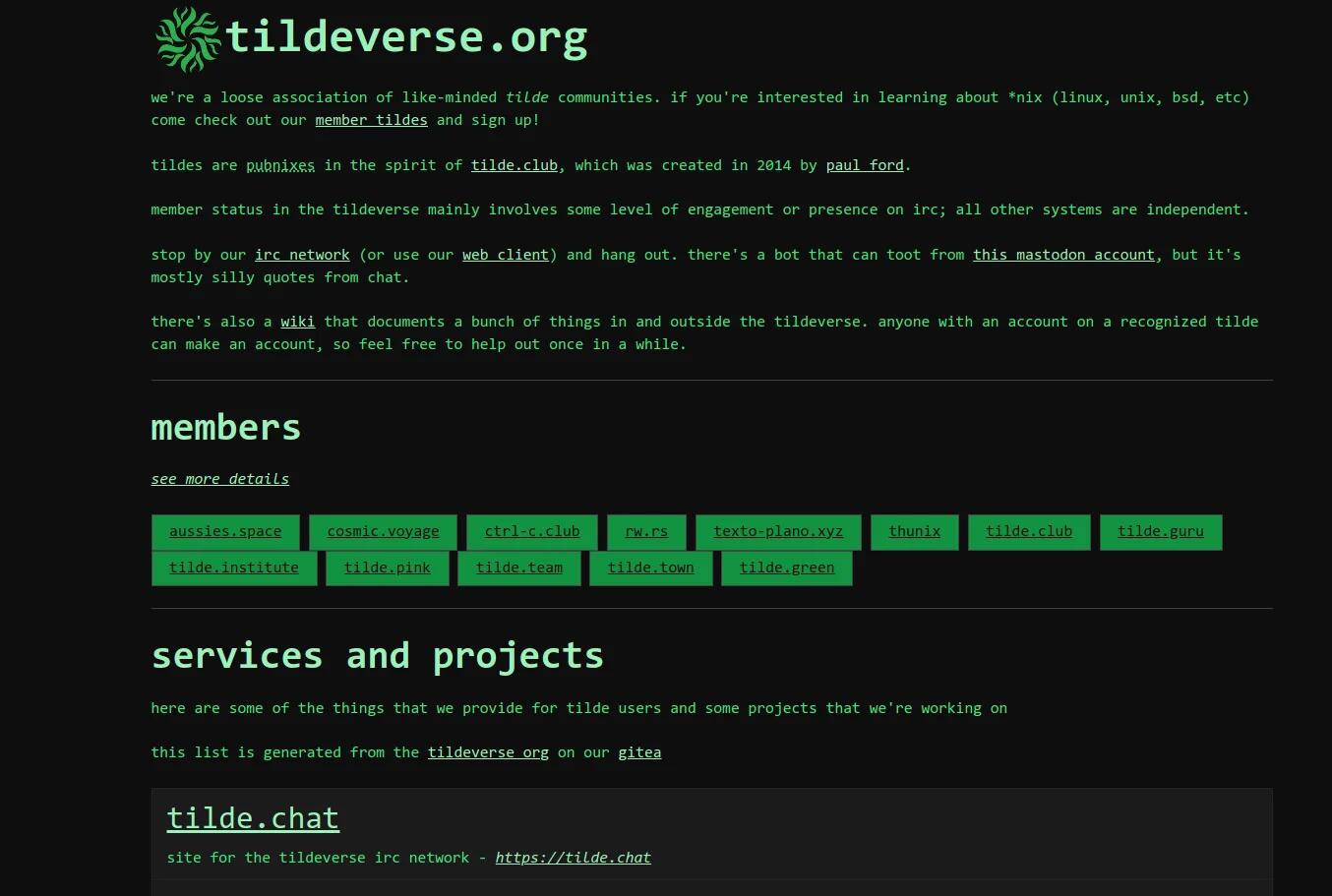
The Tildeverse is a minimalistic community-driven Internet experience without the commercial bloatware
For many of us of a particular vintage, the internet blossomed in the ’90s with the invention of the Web and just a few years of development. Back then, we had the convenience of expression on the WWW and the backup of mature services such as IRC for all that other stuff we used to get up to. Some of us still hang out there. Then something happened. Something terrible. Big-commerce took over, and it ballooned into this enormously complex mess with people tracking you every few seconds and constantly trying to bombard you with marketing messages. Enough now. Many people have had enough and have come together to create the Tildeverse, a minimalist community-driven internet experience.
Tilde, literally ‘ ~ ‘, is your home on the internet. You can work on your ideas on a shared server or run your own. Tilde emphasises the retro aesthetic by being minimal and text-orientated.
The Tildeverse also supports Gopher and the new Gemini protocol, as well as IRC (I saw over 700 active IRC users across the 9 servers), wikis, RSS, Jitsi, Cryptpad, news aggregation, a Minecraft server, a Gopher proxy, a radio service, their own Mastodon instance, and lots more. Due to its nature it is lightweight, fast and clean.
A modern web browser will work with much of it, but RSS readers, IRC chat clients, NNTP (Network News Transfer) clients, the Lynx browser, and similar lightweight clients really rule here.
The Tildeverse is the main site which has links to many of the other services available. It is very much like going back in time to a cleaner, simpler, well-meaning world. Yes, commercial entities won't be there as this is the world they tried to swamp with their banner ads, tracking, 3rd party cookies, pop-ups, and glitzy advertising. None of that works on the Tildeverse.
There are two videos at the linked post below that explain a bit more about it.
See https://hackaday.com/2024/09/14/taking-back-the-internet-with-the-tildeverse/
#technology #tildeverse #retro
7 non-SSD devices you may be able to use in your M.2 slot
The M.2 connector, formerly known as Next Generation Form Factor (NGFF) was created to replace the older mSATA and mPCIe connectors, which it successfully did. You might be familiar with the M.2 slots on your PC's motherboard that are commonly used to connect M.2 SSDs (NVMe or SATA), but they're not the only devices compatible with M.2.
The M.2 connector was meant to be flexible to accommodate a wide variety of devices. So, if you have a spare M.2 slot gathering dust on your motherboard, you might want to know the types of devices you could install on it.
What I really wonder about, is I'm pretty sure my M.2 connector said something about it being in combination with some existing SATA ports i.e. if I use the M.2 connector I lose 2 or 4 of my SATA ports. Just something to keep in mind if you have already maxed out the use of your SATA ports.
See https://www.xda-developers.com/non-ssd-devices-to-use-in-m2-slot/
#technology #hardware

You Can Now Add Family Members to Your Steam Library
This seems like Déjà Vu?
Valve added Steam Families to the Steam Beta Client in May. And now, it’s ready for prime time in the stable Steam app. With Steam Families, a parent can share games in their library with up to “six close family members.” Multiple people can play games from the shared library, which includes titles that all Steam Family members own. Steam Families also supports playing shareable games in offline mode. Of course, everyone gets to earn their achievements, save their own game progress, have access to workshop files, and more.
What appears different though is the ability to pool the use of available titles. Multiple people can play the same game simultaneously so long as the shared library has enough copies of a game to play at the same time.
It's true that for family and friends you'd not be adding and removing people all the time so I suppose the 12-month rule will also stop this being abused (to some extent).
See https://www.howtogeek.com/valve-steam-family-feature-rollout/
#technology #gaming

Want to keep getting Windows 10 updates next year? No prices yet for consumers
I bought my "new" laptop just before Windows 11 came out, so it only has TPSv1.2 and does not qualify for Windows 11. I'm certainly not going to throw away a perfectly good laptop, but luckily it will run Linux perfectly well still.
That artificially created requirement for Windows 11 is going to catch an awful lot of people, who will be forced to either buy new hardware, or to stick it out without any updates, or transition to a different OS.
But right now, due to power that consumers give to Microsoft, Microsoft gets to call the shots, and whilst these shots score them lost of profits, it's not going to change.
Apart from one laptop, I've migrated all my computers in the house years ago to Linux. They just keep on updating forever, and my gaming, media streaming, documents, etc are all working just fine.
But it is every user's choice where they want to be. Microsoft cannot dictate to us whilst we have options we can choose from. But it is up to us to act on those choices or not. The first and last thing I do every single day, is to check for software updates, so in my own case I suppose change is more excitement than a chore.
#technology #Microsoft

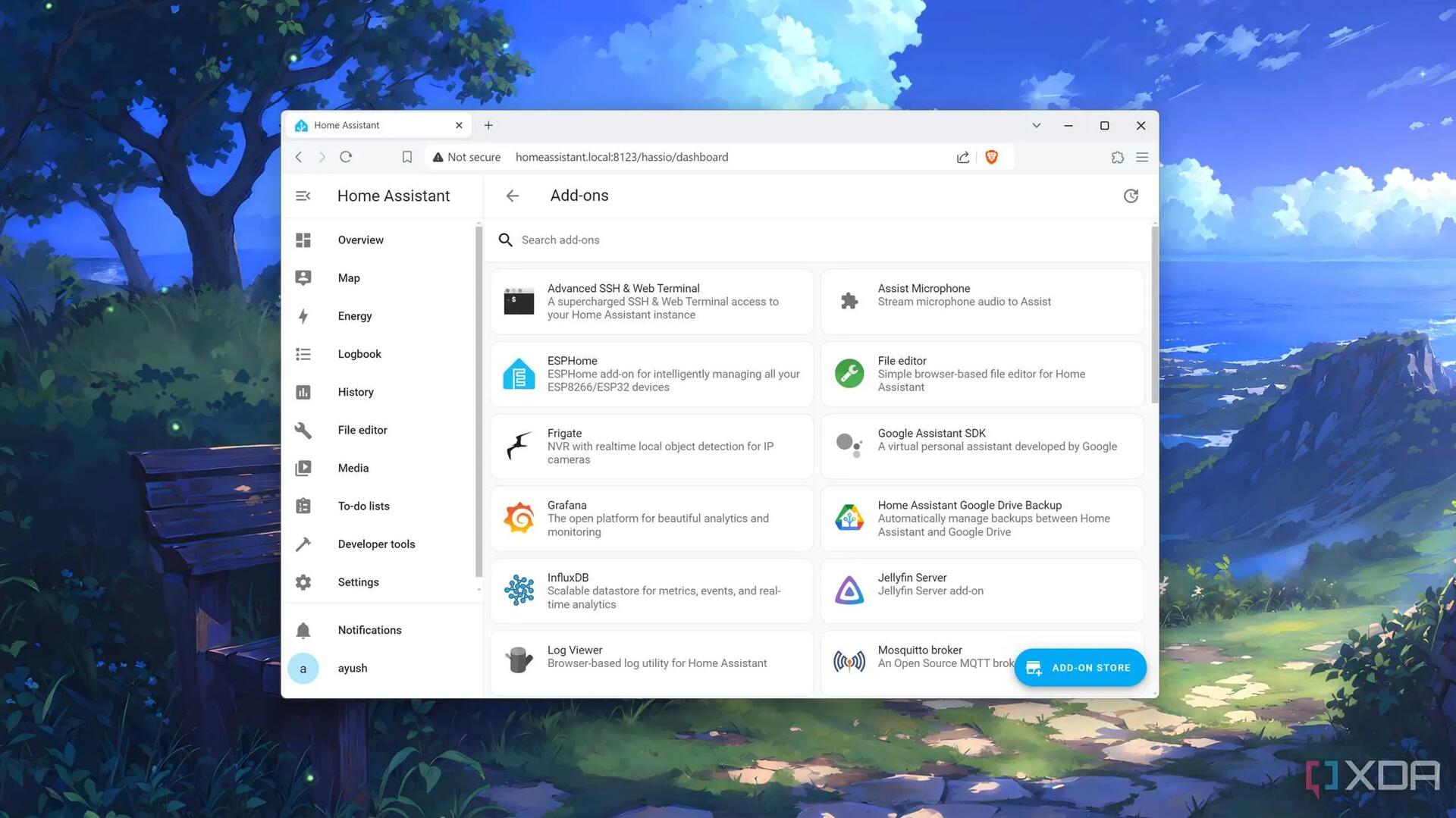
10 of the best add-ons for Home Assistant — In case your setup has stagnated a bit
Home Assistant is an incredible platform that reduces the complexity of managing all your smart appliances. From its remote monitoring features to compatibility with most smart gadgets and IoT devices, Home Assistant can turn any dull living space into an automated fortress.
What’s more, it has a robust list of integrations and add-ons, and you can even add more plugin repositories to take your smart home setup to the next level. But since it can get tough to sift through the barrage of integrations on the web, XDA Developers has compiled a list of the best plugins for most users.
There are actually a mass of plugins available for HA, especially if you include the HACS ones. HA Can be one of the more useful services in the home. There are one or two in this list that I'll also be trying out.
See https://www.xda-developers.com/best-add-ons-for-home-assistant
#technology #homeassistant #selfhosting
Bit disappointing as it seems some of that info that XDA Devs just posted, may be a bit out of date.
10 of the best add-ons for Home Assistant — In case your setup has stagnated a bit
Home Assistant is an incredible platform that reduces the complexity of managing all your smart appliances. From its remote monitoring features to compatibility with most smart gadgets and IoT devices, Home Assistant can turn any dull living space into an automated fortress.
What’s more, it has a robust list of integrations and add-ons, and you can even add more plugin repositories to take your smart home setup to the next level. But since it can get tough to sift through the barrage of integrations on the web, XDA Developers has compiled a list of the best plugins for most users.
There are actually a mass of plugins available for HA, especially if you include the HACS ones. HA Can be one of the more useful services in the home. There are one or two in this list that I'll also be trying out.
See https://www.xda-developers.com/best-add-ons-for-home-assistant
#technology #homeassistant #selfhosting
Fastfetch is the Perfect Replacement for Neofetch on Linux
When development on system info tool Neofetch was discontinued1 earlier this year a slew of forks, alternatives, and upstart projects sprung up to fill the void.
Yet the Neofetch alternative that’s gained the most traction —anecdotally, at least; I’ve not be creeping around Linux conferences to verify first-hand—is Fastfetch.
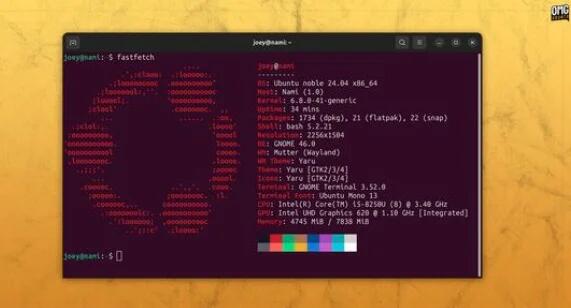
Fastfetch is similar to Neofetch in that it ‘pretty prints’ information about your OS, desktop environment, pertinent underlying technologies, and selected system hardware specs in a terminal window.
But Fastfetch is far more capable than Neofetch: it’s faster, more featured2, supports Wayland (Neofetch technically didn’t), and is actively maintained.
The other thing for people who don't like change, and still want to be up-to-date and have a supported package, is just install Fastfetch, and use it's Neofetch compatible output.
When Fastfetch is installed, and you run the generate config file, it will be found in the ~/.config/fastfetch/ folder, and called config.jsonc. All I did was to download the raw version of the file called neofetch.jsonc and copied it over the generated config file (or you could rename it to the same name as the config file). Running Fastfetch now will look just like Neofetch did, but you can still customise that file further if you wish to.
I actually have an alias set in my bashrc file called stats, so all I did was then update that alias to call Fastfetch, and everything worked as it did before.
See https://www.omgubuntu.co.uk/2024/09/fastfetch-is-the-best-neofetch-alternative
#technology #Linux #opensource #Fastfetch

StoryGraph Is Goodreads for Readers Who Don’t Like Amazon
Like Goodreads, StoryGraph (available for iPhone, Android, and web) is a service for book recommendations and tracking reading habits. The basic idea is you add the books you’ve read, give them ratings, and StoryGraph can use the information to build recommendations.
There’s a lot more to it than that, though. When you finish a book, you’re greeted with a sort of mini questionnaire. It asks about the book’s mood, pace, plot, characters, etc. You don’t have to fill this out, but StoryGraph uses it to understand better the types of books you like. It’s much more than a simple star rating.
StoryGraph also provides detailed analytics on your reading habits, displayed in—you guessed it—graphs. It breaks down your reading by genre, pacing, length, mood, and more. This data-driven approach can give you insights into your reading patterns and help you make more informed choices about what to read next.
StoryGraph allows you to import your Goodreads data, so you don't have to start from scratch. Whether you can export easily from StoryGraph one day to a different service, is another story.
Also of note is the decentralised Fediverse alternative called BookWyrm, which I've featured before.
See https://www.howtogeek.com/storygraph-is-goodreads-for-readers-who-dont-like-amazon/
#technology #reading #alternativeto #GoodReads #StoryGraph