chat .com: “While Message Layer Security (MLS) offers significant advantages for secure and scalable group communication, it comes with some tradeoffs and limitations:
1. Complexity in Implementation
• MLS introduces additional complexity in managing cryptographic keys, especially in dynamic group settings (e.g., when members join or leave). Maintaining forward and backward secrecy across multiple devices and users requires sophisticated key management systems.
• The protocol must ensure secure synchronization across potentially hundreds of devices in large groups, which can increase the risk of errors if not implemented correctly.
2. Scalability vs. Performance
• MLS is designed for scalability in large groups, but this comes with computational overhead. For instance, every member needs to process updates to group states (such as when someone joins or leaves), which can be resource-intensive, especially on less powerful devices.
• While MLS optimizes certain operations like key updates, large group messaging may still introduce latency compared to simpler encryption protocols used for one-on-one communication.
3. Trust Dependencies
• MLS relies on trusted delivery of public keys during initialization and group changes. If this process is compromised (e.g., via a man-in-the-middle attack), the entire group communication can be vulnerable.
• Implementations must be paired with robust identity verification (e.g., certificate pinning or device fingerprints) to ensure no unauthorized entities infiltrate the group.
4. Backward Compatibility
• Many existing secure messaging platforms, such as Signal or WhatsApp, use their own protocols (e.g., the Double Ratchet algorithm). Integrating MLS may require significant rewrites or interoperability layers, leading to compatibility issues and delayed adoption.
5. Dependency on Standards and Adoption
• As an emerging protocol, MLS depends on widespread adoption for maximum impact. If only a few platforms implement it, the interoperability benefits may not be fully realized.
• Early adoption may also reveal unforeseen vulnerabilities that could compromise security until patched.
6. Limited Offline Support
• MLS assumes online availability for dynamic group updates. If members frequently go offline, synchronization and key updates may fail or cause delays, creating usability issues.
7. Auditing and Verification Challenges
• While MLS is an open standard, the complexity of its cryptographic operations makes it harder to audit comprehensively. Misimplementation by developers could lead to security vulnerabilities despite the protocol’s theoretical guarantees.
Conclusion
MLS provides strong cryptographic guarantees and scalability but at the cost of implementation complexity, performance tradeoffs, and reliance on robust systems to manage key distribution and state synchronization. Developers must carefully weigh these factors when deciding whether to adopt MLS in their applications”
nostr:note1qchtmxfqcdj7pjkx7ud9vnekx2y7tvjnp00wffvzf9ccpsh4lkeqwchm6u
Learning more about #MLS now. Anyone without a PhD wanna tell me what the tradeoffs with it are?
We’re still not done with the #ChatControl agenda, not sure how this fits in coming from Big Tech

Seems like #GovTech
nostr:npub1j9qyxka5lck4tw50v7qfrs6gdwczz5ydt7ugqy6nhuva9p6dpy5q8rs2yg has been cooking 🧁
How is #Cupcake cool? 🤔


Giving the #Olas app a spin
nostr:note1qwhufp36gs49t08k0pwe2yrmhtu0ukfguldprlwsv5kzst9hvumshcx8r6


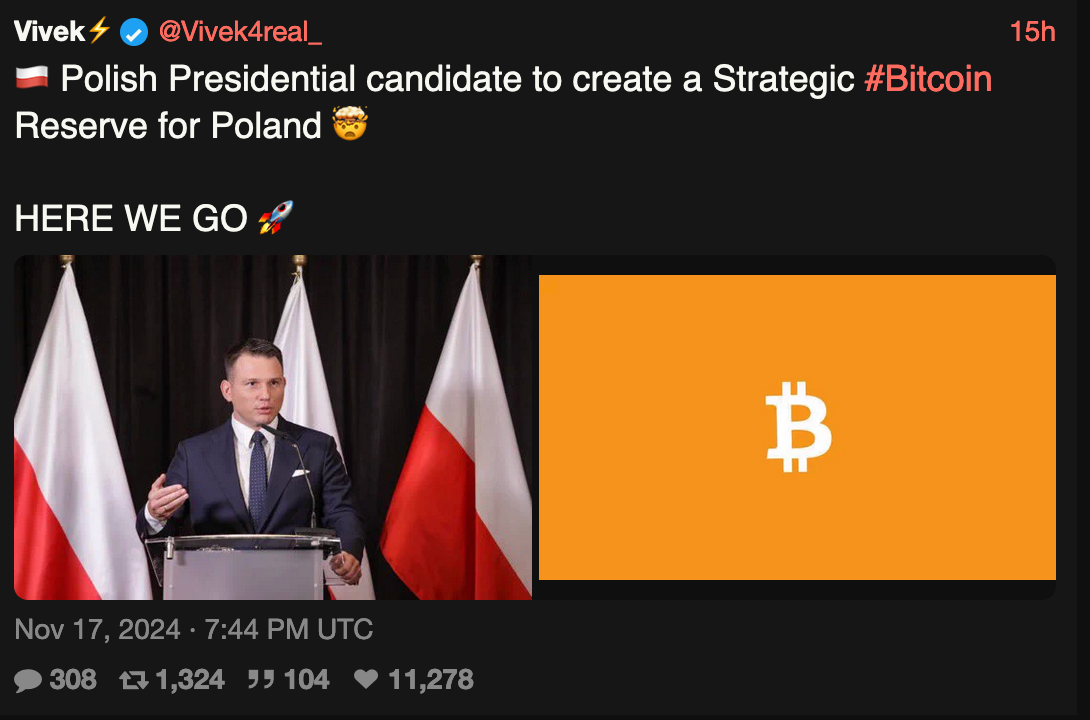
They’re saying it for the votes. Actions don’t have to follow


Just post about the big club more often. The oppression will attract the lefties

JUST IN: 🇺🇲🇷🇺 Donald Trump about Biden's new decision to allow deep strikes on Russian territory:
"Although I don’t have the Power of the Presidency. I still have power as President-Elect. I will make sure Biden does not let Ukraine use US-Supplied missiles against Russia which will lead us into nuclear war. I will stop World War III!"
https://video.nostr.build/48d215158db0df4ca7142fc0efc8d9b7086158a21b12eff994eaf1893d45006a.mp4
Fourthgrader politics. The russians are shitting themselves now

yes. let’s use this momentum to get rid of these nsec “logins”
nostr:note1gagv70yndk8lk37essd9ue7ruluemfn634hrrhzadqr8kdm5g7nqr9ehgn

I’m simply poking at the biggest elephant in the room, seeing if it’ll pop. I don't understand the emotional attachment to any company.

Which one is MSTR?
They waste it first, tax it later
The MMT psychos are not totally wrong
nostr:note1vyj0xy2gq22j2e4ajg5vjq7er4x0e3s2xn9ma85t4a76tx6ccltsxemdxt
You think this cycle will end with coffeezilla doing a piece on Saylor?
shits feeling subprime
nostr:note1n494phezc7yfngwmwgtrwl5558us4q9s5rleqznhs74q74rgv6cqvpepj9