
If I had a voice in shaping this world, I would put an end to the commercial mining of gold. We’ve already extracted enough to last humanity for centuries, yet much of it today sits idle in vaults, merely accumulating costs for security and transportation. Gold no longer serves a dynamic purpose; its role is more about maintaining a tradition than meeting a genuine need. In contrast, the Bitcoin monetary system rises to replace the outdated gold-fiat pairing, offering a more efficient and secure means of storing value, free from the burdens of physical storage and transport. Bitcoin is a living, evolving alternative that bypasses the inefficiencies of the past, promising a future rooted in scarcity and innovation.
Satoshi Nakamoto stands alone in history as the only known individual to conceive and successfully design a monetary system rooted entirely in real energy—an achievement unparalleled in its brilliance. Unlike any system before it, Bitcoin’s foundation is built upon the immutable principles of time, effort, and thermodynamic truth. By intertwining value creation with measurable energy expenditure, Satoshi transcended centuries of centralized monetary paradigms, introducing a system that is not only incorruptible but also profoundly aligned with the very fabric of reality itself.
This groundbreaking innovation transforms the concept of money from an arbitrary construct, often manipulated by centralized powers, into a form of value that is earned, verifiable, and resistant to debasement. In doing so, Satoshi rewrote the rules of economics and introduced a blueprint for monetary sovereignty that honors effort, accountability, and fairness on a global scale.
To design a system that operates independently of human corruption yet harmonizes perfectly with natural law is nothing short of genius. Satoshi’s Bitcoin isn’t just a monetary invention—it’s a paradigm shift, a testament to the power of vision and the enduring truth that real value is inseparable from real energy.
Everything on this planet begins and ends with energy. It is the irrefutable cornerstone of life, progress, and value. Without it, there is no foundation—just empty promises and illusions waiting to collapse.
### Step 1: Creating Money from Thin Air
Imagine there’s a big candy jar in the school cafeteria, and each piece of candy costs $1. Now, let’s introduce a new sneaky kid named **Freddy the Fiat Manipulator**. Freddy doesn’t have any real money, but he’s got a magic notebook where he can write down a number, like “$1,000,” and everyone just believes he has it!
Freddy doesn’t actually *earn* this money like other kids who do chores or save up their allowance—he just writes it in his notebook. Pretty cool for Freddy, but it’s not fair to everyone else.
---
### Step 2: Freddy Buys Up All the Candy
Freddy uses his magic notebook to “buy” almost ALL the candy in the jar. He didn’t actually work for the money, but since everyone accepts his magic notebook, he can clean out the candy jar.
Now, there’s hardly any candy left for anyone else, and the kids start panicking. “Oh no! The candy is running out! We better pay more to get what’s left!” The price of candy shoots up to $2, then $3, or even higher.
---
### Step 3: Freddy Sells High
Once the price of candy is super high, Freddy starts selling the candy he bought earlier to the other kids. He’s making a huge profit because he got the candy with his magic notebook, but now he’s selling it for real money from the other kids. Freddy pockets the cash and walks away much richer.
---
### Step 4: The Price Crashes
After Freddy sells most of his candy, the panic starts to fade. The kids realize, “Wait, there’s actually plenty of candy in the jar!” The price of candy drops back down to $1, or even lower because everyone already spent their money on expensive candy.
---
### What This Means in the Real World with Oil
Oil is like the candy jar, but instead of Freddy, we have **central banks and big financial institutions**. Here’s how it works:
1. **Fiat Manipulation**: These manipulators can print money out of thin air, just like Freddy’s magic notebook. This gives them the power to buy up huge amounts of oil, even if they didn’t actually produce anything of value.
2. **Artificial Scarcity**: By buying up oil, they make it look like there’s less available, creating an illusion of scarcity. This causes oil prices to rise, and regular people panic and pay more for gas, heating, and transportation.
3. **Selling High**: Once the prices are sky-high, they sell off their oil (or oil contracts) for massive profits.
4. **Crash**: After they’ve made their money, prices crash, but regular people are stuck paying the higher costs while they recover.
---
### Why It Hurts Everyone
Freddy’s tricks with candy didn’t just make the price unfair—they left all the other kids with less money to buy other things they needed. In the same way, fiat manipulators using fake money to manipulate oil prices hurt everyday families, causing gas and heating bills to rise. Meanwhile, they walk away richer without contributing anything real to the system.
https://youtu.be/lYKRpK7Q2LY?si=XRNg7iyAXXs3sE6N
They already hold a reserve conjured from thin air (fiat); wouldn’t something real, like Bitcoin, make more sense?
**Farley’s Developer Stack: Evolving Toward Decentralization and Redundancy**
As a **hobbyist developer**, my tools and processes are continuously adapting to align with my principles of independence, resilience, and innovation. Here’s an inside look at my current stack and how it’s transforming:
### **Editing and Coding**
I rely on **VS Code**, an extensible and feature-rich code editor, to manage and edit my source code. Its flexibility and robust integrations allow me to stay efficient across diverse projects, whether building decentralized solutions or backend systems.
### **Version Control and Redundancy**
At the heart of my workflow is a **Gitea server**, which I self-host and fully control. My Gitea server serves as the primary repository, maintaining the authoritative version of my projects.
To ensure redundancy and provide a public-facing repository for collaboration, my Gitea server is configured to **push updates to GitHub** and can also **pull changes for syncing**. This setup combines the best of both worlds:
- **Full Ownership**: By hosting my own Gitea server, I maintain control over my code and workflows.
- **Global Reach**: By mirroring to GitHub, I leverage its ecosystem for visibility, collaboration, and integration with third-party tools.
### **How This Is Transforming My Workflow**
1. **Primary Control**: Gitea ensures I own and control the authoritative version of my projects, minimizing reliance on centralized platforms.
2. **Redundancy and Reliability**: Mirroring to GitHub adds a layer of resilience, protecting my work from potential downtime or data loss.
3. **Value Alignment**: This decentralized and redundant approach mirrors my broader belief in systems that empower individuals to take ownership of their resources—whether it’s code or currency.
This stack isn’t just about tools—it’s a reflection of my philosophy. It’s about crafting systems that are robust, independent, and future-proof.
How does your dev stack reflect your principles? Let me know in the comments!
https://youtu.be/DK-LQ1il7Qs?si=4BbHaKKnyMAU9PBQ
Bitcoin is not fighting for freedom; it simply exists as an open, immutable protocol. The lost—those still bound by the illusions of control and dependency—have yet to discover its true purpose: a voluntary escape hatch from centralized systems, where freedom is reclaimed by choice, not by battle.
Many have already left their corporate careers, some early retirements. Shrinking the size and intelligence slowly and steadily ...until these corporations face the inevitable collapse of their unsustainable structures. The exodus of talent and early retirements are not just reactions to personal dissatisfaction but signs of a broader societal awakening. As Bitcoin enables individuals to build wealth independent of inflationary systems, the intelligence and innovation once trapped within corporate hierarchies are redistributed to grassroots movements, entrepreneurial ventures, and decentralized networks. What remains for these corporations is a slow descent into irrelevance—hollowed out by a system they can no longer manipulate or control.
Transitioning to Bitcoin’s decentralized principles empowers individuals to reclaim their time, energy, and resources. As more people opt out of centralized systems, corporations reliant on fiat’s inflationary cycle lose their grip on workers and consumers. Bitcoin’s inherent scarcity and value tied to real energy contrast sharply with the exploitative dynamics of big corporations. Over time, this shift not only shrinks their influence but renders them increasingly irrelevant, enabling a society where individual empowerment and community-driven innovation thrive over monopolistic control.
Sam Altman envisions himself as the architect of a new societal order shaped by artificial intelligence, positioning himself as the next centralized visionary akin to past tech titans. Through OpenAI, he makes bold declarations about AI's transformative potential while steering initiatives like Worldcoin—a project that critics argue leans heavily toward centralized surveillance under the guise of innovation.
Altman’s pursuit reflects a paradox: advocating for AI’s democratization while building tools and systems that consolidate power. History, however, has shown that centralized aspirations often falter in the face of decentralized progress. The real "inspiration" comes from technologies like Bitcoin and open-source AI projects that empower individuals rather than institutions.
Sam Altman may talk of transformation, but true societal shifts are driven by tools that respect autonomy, transparency, and the decentralization of control. His aspirations might redefine control structures—but only if people allow them to.
https://www.youtube.com/live/YpxlU9LJfgg?si=tSbw0P_kv_3NNL4d
Microsoft's rejection of Bitcoin reflects a clear preference for centralized systems over decentralized innovation. Despite a shareholder proposal highlighting Bitcoin's potential as a hedge against inflation and fiat currency instability, Microsoft's board urged a vote against it, claiming they already evaluate Bitcoin among other assets. This stance, alongside their historical alignment with central authorities, underscores a reluctance to embrace financial decentralization—a move emblematic of legacy corporations clinging to the status quo.
It's a stark reminder of why decentralization matters: empowering individuals over institutions.
History shows that organizations dismissing Bitcoin as a viable financial revolution often face the consequences of their short-sightedness. From banks losing relevance to nations embracing Bitcoin as legal tender while others struggle with inflationary crises, the pattern is evident. Microsoft's decision may seem strategic now, but as decentralization reshapes global systems, their resistance could position them on the losing side of history. Bitcoin rewards those who embrace its principles, leaving centralized holdouts grappling to keep up.
https://www.youtube.com/live/YpxlU9LJfgg?si=tSbw0P_kv_3NNL4d
Microsoft's rejection of Bitcoin reflects a clear preference for centralized systems over decentralized innovation. Despite a shareholder proposal highlighting Bitcoin's potential as a hedge against inflation and fiat currency instability, Microsoft's board urged a vote against it, claiming they already evaluate Bitcoin among other assets. This stance, alongside their historical alignment with central authorities, underscores a reluctance to embrace financial decentralization—a move emblematic of legacy corporations clinging to the status quo.
It's a stark reminder of why decentralization matters: empowering individuals over institutions.
https://youtu.be/3LLqEIUEbRU?si=td_JR_Zi7jniTAcC
BlackRock’s suggestion to allocate only **2% of your portfolio** to Bitcoin and the new monetary system reeks of a strategic paradox. This advice subtly reinforces the narrative that you should continue holding predominantly fiat-based assets—assets whose value BlackRock has immense influence over through their intertwining relationships with central banks, governments, and the traditional financial system.
Why only 2%? Because Bitcoin represents an escape hatch, a lifeboat tethered to a fixed-supply, decentralized monetary system immune to inflationary manipulations. To advocate for more than 2% would imply acknowledging its strength and undermining the very system BlackRock benefits from. Their recommendation is not about risk management but about risk containment: containing your realization that fiat’s purchasing power has eroded by design, while Bitcoin stands as an immutable measure of time, energy, and value.
The irony of this advice is profound. BlackRock, through entities like Coinbase Custody, is pursuing control over Bitcoin infrastructure while downplaying its role as a hedge and alternative monetary system. Their message to investors essentially says, *“Stick with what we control, and dip a toe into what could undermine us—just enough to placate curiosity, not enough to challenge our dominance.”*
But the discerning observer might ask, *If 2% is safe enough for me, what does it say about the other 98% I’m holding in a system that requires constant manipulation to survive?*
Bitcoin is not merely a speculative allocation; it is an exit strategy from systems designed to favor the issuers of money over the holders of it. BlackRock knows this, and they want you to remain just inside the walls of the old system while glancing at the open door. The question is whether you’ll step through.

https://youtu.be/w4LmxFtfgHg?si=WtAibTeUIY_2U3_N
The dollar was finished the exact day the first centralized authority decided to conjure wealth from thin air—a moment when trust in sound money was betrayed for the illusion of endless abundance. That act of creation without backing, of power without accountability, marked the beginning of the end. From that moment, the dollar ceased to be a measure of real value and became a tool of manipulation, its destiny intertwined with the whims of those who control its supply.
To answer the question, "Is the US dollar doomed?" one must look beyond its surface strength, beyond its current dominance in global trade. The true measure lies in its foundation. A currency built on trust cannot survive when that trust is repeatedly eroded. The dollar's demise is not a sudden event but a slow unraveling, overshadowed by the symbolism of its own creation—a system where the very act of printing undermines its value.
For many, this symbolism remains obscured by distractions of fiat price stability or the illusion of control. Yet the truth is clear to those who see it: the moment money became untethered from reality, its fate was sealed. The dollar's doom lies not in the future but in its very design—a system destined to consume itself.
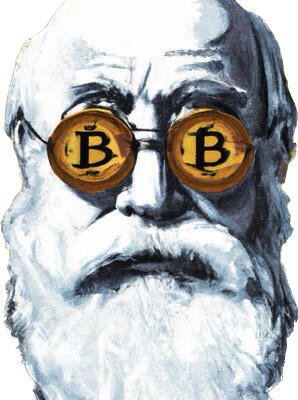
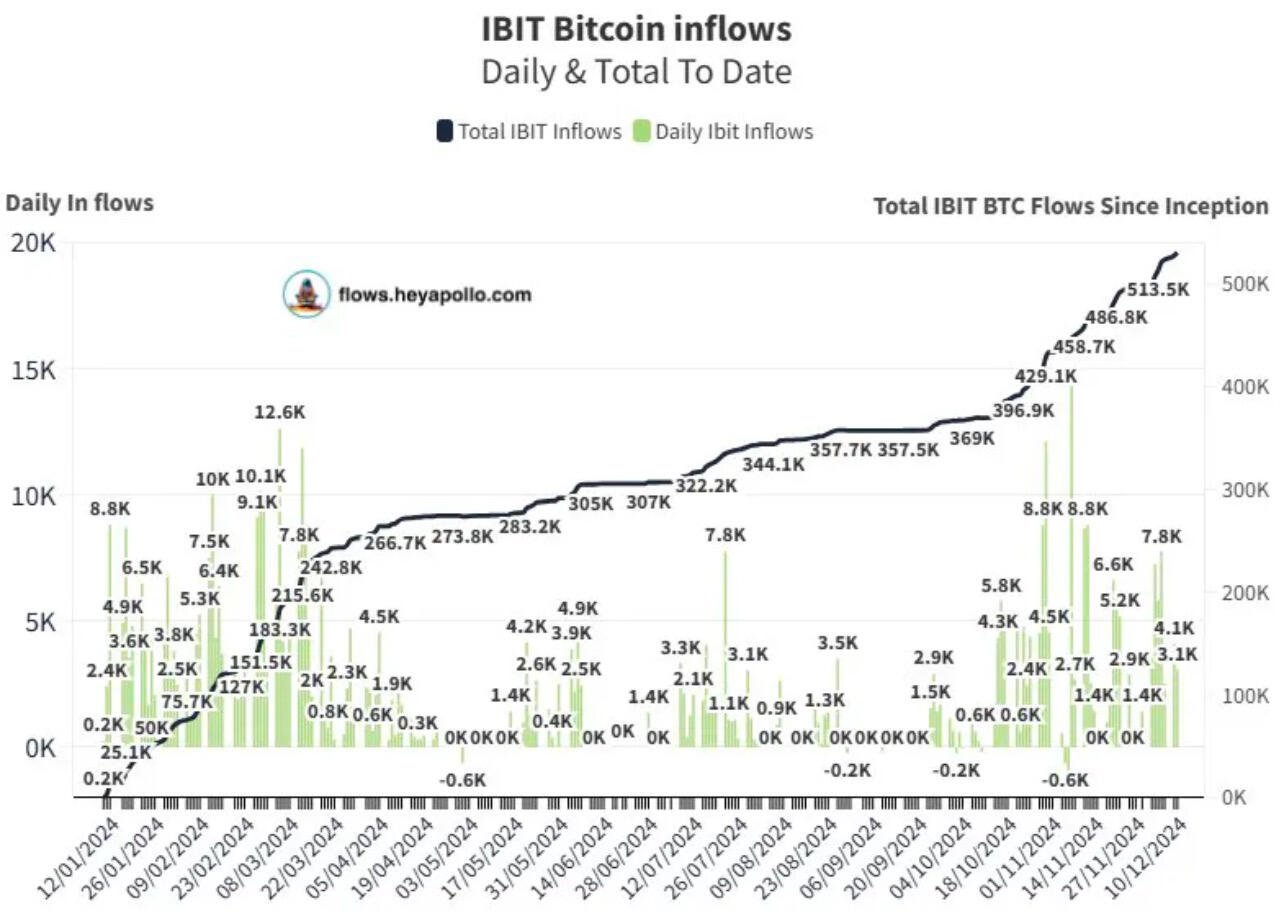
There will come a time when even the giants of innovation cannot ignore the tides of change. Apple, a symbol of elegance and revolution in the tech world, has dazzled us for decades with its creations. Yet, since the passing of its visionary founder, its launches have felt hollow, offering incremental upgrades while the world yearns for something transformative.
The moment of magnificence for Apple will come not through sleeker designs or better cameras but when it embraces the inevitable: Bitcoin. When its devices evolve into secure, self-custodial Bitcoin wallets, Apple will return to the forefront of history, not just as a leader in technology but as a pioneer of human sovereignty. This isn’t just a technological step—it’s a philosophical leap, one that aligns devices with the individual’s right to control their own wealth and energy.
Apple’s destiny is tied to this inevitability. No amount of marketing spin can compete with the raw gravitational pull of a decentralized, global monetary network. When that moment arrives, we will look back at today and realize: Bitcoin didn’t need Apple. Apple needed Bitcoin.
Ever play a game with yourself and wish you could share the fun with others? Well, I’ve been trying a little experiment: guessing how many Bitcoin blocks into the future the *X-Files* theme would sync up perfectly. Here’s how it went: At 17:30, I knew the show starts at 20:00, so I picked 17 blocks. A simple calculation, a bit of hope, and an alarm set.
Now, I wait, with the suspense building. When the alarm goes off, I’m aiming for it to hit right as those eerie, iconic notes begin. It’s a playful twist on timing, blending the certainty of Bitcoin’s block time with the uncertainty of my guess. If I nail it? It’ll be as if the blockchain itself whispered, “The truth is out there.”