
Google Chrome ... they think they're Apple.
Chrome and Firefox, both are no longer in my system. 2025 is the year of the alt browsers. Without the old familiar browser wars. New browser wars are different. It's not about which one interprets Websites better, it's about meeting user needs.
https://www.theverge.com/news/622953/google-chrome-extensions-ublock-origin-disabled-manifest-v3
Google funds Mozilla so it's no wonder, personally I've been using Brave mostly.
Now that I think about it, why isn't Linux Config as a service a thing?
Imagine if the average Joe can just pay a company to configure all aspects of their Linux system and provide support and needed backups.
This would hit two birds with one stone, on the one hand you get easier use experience for most people and outsource most of the issues to linux companies that can generate needed revenue and invest it into the FOSS sphere.
New websites objectively suck, they are barely functional, minimalistic in look yet hog memory, adding to that their bland design.
But this isn't unique to websites, most new software in general seems to disregard good rules just for the sake of it.
Understanding Governance Through the Lens of Power Distribution: A New Model for Political and Economic Systems
---
Written by Aionismus, co-authored by chatgpt 😉
---
In the conventional political discourse, systems of governance are typically viewed through the familiar lens of left versus right, where economic policies and social attitudes define where an individual or group falls on the spectrum. However, this binary framework can be limiting and even contradictory, as it fails to capture the complexity of power dynamics that truly shape our societies. In reality, what defines a functioning system is not the ideological leanings of its actors, but the way in which power is distributed and ownership is structured.
---
The Foundation: A Holistic Economic Model
At the core of this new model lies an economic system that is distinctly different from traditional liberal economic thinking. In this framework, the economy is not just the exchange of goods and services but a system of valuing things—whether material, social, or political. The economy, in this view, extends beyond the traditional concept of markets to encompass all forms of value, from
currency to influence, social capital, and even religious authority.
This model rejects the existence of public property. Rather than considering the state or communal institutions as distinct entities with collective ownership, it views them as privately controlled, centralized nodes. These nodes, whether they are governments, corporations, or other institutions, are owned by individuals or groups with shares that determine their influence in the system. These shares do not have to be monetary; they can be political, social, or cultural in nature. This means that all forms of property, whether public or private, ultimately boil down to individual ownership, with larger entities composed of various interconnected nodes.
---
Nodes, Connections, and Weight
To better understand this system, we must first define three core concepts:
• Nodes: These are the fundamental units in any society—individuals, communities, institutions, ideas, and more. These can be simple or complex and can be combined to create larger structures.
• Connections: These represent the relationships between nodes, whether they are economic, social, political, or cultural.
• Weight: This refers to the value or influence each node holds relative to others. It’s important to note that weight isn’t just monetary—it encompasses all forms of value, from power to social influence.
The interplay between these elements determines the structure of society.
The centralization vs. decentralization of power becomes the fundamental axis by which systems can be evaluated. A highly centralized system places weight and control in the hands of a few influential nodes (such as state elites or corporate giants), while a decentralized system spreads influence more evenly across many nodes, creating more fault tolerance but making coordination and decision-making more complex.
---
The Two Strategies for Governance
Within this model, there are two primary strategies for achieving good governance, each with its own strengths and weaknesses:
1. Distribute Ownership and Influence: The first strategy is to spread ownership as widely as possible, ensuring that no single node can control the entire system. This creates a robust structure resistant to collapse, as the decentralization of power prevents any one individual or group from completely dominating. However, this model has its downsides—decision-making becomes more difficult, as it requires consensus or cooperation across a wide array of nodes. Additionally, maintaining a decentralized structure against the forces of centralization can be costly.
2. Centralize Ownership but Ensure Accountability: The second strategy is to centralize ownership and control while ensuring that the node with the greatest share has a vested interest in pursuing decisions that benefit the wider public. This approach creates efficiencies and can lead to more decisive action. However, the risk is that it creates an opportunity for tyranny if power becomes too concentrated. It also requires ongoing costs to prevent corruption and ensure that decision-makers are aligned with the public interest.
In both cases, the balance of power and decision-making lies in how ownership is distributed and the checks and balances applied to centralized nodes.
---
Change and Stability: The Dynamics of Power
A fundamental takeaway from this model is the understanding that no system is perfect for all contexts. History does not unfold according to the dictates of ideology alone but is a result of how the costs of maintaining the current structure stack up against the benefits of change. In a well-functioning system, change occurs when highly influential nodes, those with the greatest share of power or influence, decide to push for it. This could be for practical economic reasons or due to whims, personal interest, or shifting power dynamics.
This suggests that revolutions and large-scale changes are not purely driven by ideology but by the distribution of influence. Changes may occur suddenly when a node with significant power sees an opportunity for change or is forced to respond to evolving economic realities. These shifts are often most pronounced during periods of economic turmoil or crisis when the costs of maintaining the status quo become unsustainable. However, this also means that small groups or fringe movements have less influence, often requiring moments of crisis or upheaval to affect meaningful change.
---
The Equilibrium of Systems
Over time, political and economic systems naturally tend toward equilibrium, a state where the cost of disrupting the status quo is high. This equilibrium often leads to stability in the structure, where only those with significant power or influence can push for changes. Mass movements may occur, but they are less likely to succeed without the support of influential nodes within the system. History demonstrates that it is often in times of crisis or instability that radical shifts become possible—when the cost of maintaining the current system becomes too great for the powerful nodes to sustain.
---
Conclusion
This model presents a fundamental shift in how we think about political and economic systems. By focusing on the distribution of ownership and influence, rather than rigid ideological categories, it offers a more holistic and accurate framework for understanding governance. Whether through decentralization or centralization, the key lies in how power is distributed and how nodes interact within a complex web of relationships. Ultimately, the dynamics of change in any system are driven by the power of influential nodes, and the structure of society will always reflect the interests and decisions of those at the top.



Very interesting, I guess I have to search again then, I haven't been here since a while so...
It is, if there are no other categories of interest most people won't join, plus it gives off this feeling of being nerdy and niche.
For example I want to talk about all kinds of topics, but all I'll find is crickets since the target audience isn't there.
Nostr's biggest problem is the huge lack of diversity here, most users are tech savvy bitcoiners and privacy enthusiasts.
It's everywhere, men think being thuggish make them cool somehow, it's due to the modern world lacking ways to vent direct violent behavior.
Rappers are the polar opposite of what masculinity is so that's expected.
Many people misunderstand the whole separation of church and state thinking it is against religion, on the contrary this concept has been espoused by ardent Christians to safeguard the church from political interference by the secular authorities.
What often happened at the time is the opposite where the state became the church (sometimes literally like the Anglican church) which caused spiritual authority to lose any significance.
This trend is also seen in the Islamic world where oppressive states try as much as they can to seize religious institutions and 'reform' them to their own liking.
Historically there was always a separation of secular and religious institutions due to various reasons, this created a delicate balance where secular power can be somewhat free to function but with religious and spiritual authority ensuring it's in check.
What many Islamists propose in the modern world boils down to a complete unification of those two, which can work in the case of an extraordinary leader that embodies both secular and spiritual excellence, but will most likely backfire badly since a bad ruler can corrupt both the state and faith in this model.
Identity shopping is one of the greatest disasters of our time. Long gone is the era where one's identity is an intricate and inseparable part of the self, now it's simply a label change away.
Funny, how X wants to enforce positivity with AI and moderation and all that, and here on Nostr everything is largely positive without algorithms and AI. The right use of means and incentives. Soooo important in technology. nostr:nevent1qgstc6e4z5chqxvt4heztekcafrvxalezqfx2kxey3kazemnt3kkxfcqyrywxv0kdynw6tnk0lnq0599kg8n9e5xqruv64czk63904mvm3mv79fdcqz
I think the issue of bots and spam is more important, ironically X doesn't solve the bot issue at all lol.
Intense reading list, especially Guenon

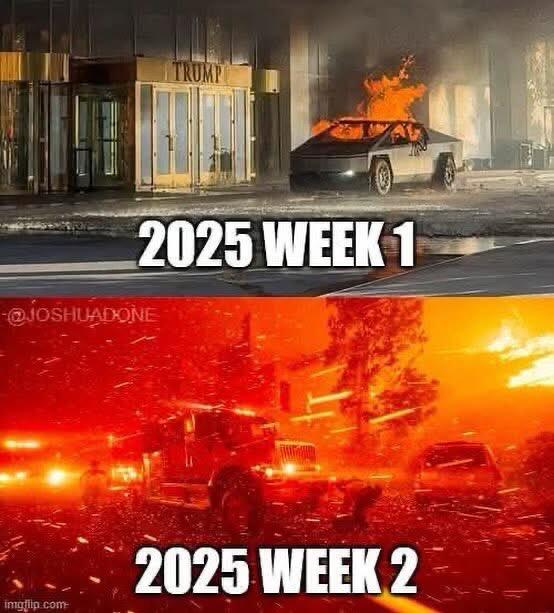
We are two weeks in and everything is burning down lol
One thing I like about nostr is the ability to actually customize your feed, X however wants to manipulate you with its algorithms, here you have actual freedom it only needs more adoption.