
Iran and the Straight of Hormuz in an Energy context
People keep talking about the Strait of Hormuz like it’s a door.
Open = normal Closed = chaos
That framing is already wrong.
Nothing has to actually close. It just has to stop feeling boring.
All you that’s needed is a tiny bit of friction. A little uncertainty. Insurance guys starting to pay attention, vessel operators starting to add some ‘just in case’ buffers and tankers slowing down because nobody wants to be the guy who ends up in the case study.
That’s it. That’s the whole mechanism in a nutshell.
On maps, Hormuz looks wide, but actually shipping gets squeezed into a couple of narrow lanes because efficiency is great. Global energy flows through something that functionally resembles a busy Costco checkout, and we act shocked when the line backs up.
Roughly 20 million barrels a day go through there, all day every day. Plus LNG. Especially LNG. Both oil and LNG go predominantly to Asia
Everyone loves the headline: “Iran closes Hormuz”, don’t they ?
Sounds decisive, it’s also mostly nonsense.
Closing Hormuz would hurt Iran fast and hard. Their own oil goes through there too and so do a lot of imports they actually need. Also, minor geographical footnote: the shipping lanes aren’t even in Iranian waters. They’re in Omani waters.
So, the real lever isn’t closure. It’s irritation.
No war needed. No blockade needed. Whispers, talks and rumours of a potential ‘closure’ or disruption event are entirely sufficient.
Problem is, commodity markets are terrible at pricing the ‘weird but not catastrophic’, situation, especially in the first few days.
Oil does have buffers (i.e. inventories, pipelines, emergency releases), but those buy time only. LNG, different story. If it doesn’t move to where it’s supposed to be, it just sits there being expensive and useless.
The moment it becomes interesting, everything else becomes more expensive. So no, the Strait doesn’t need to close.
It just needs to wobble.
Markets will panic. Then overpay. Then argue on TV about whether it was “already priced in.”
They do this every time. Most analysts still act surprised every time.
 (Source : S&P sub-service)

For foreigners wondering why Venezuelans are upset about their complaints, keep in mind that you haven't experienced anything I'm about to describe. I'll try to be as explicit as possible, including images and links. I also invite others to share their experiences and other historical events from this dictatorship. Please note that this is a summary; I certainly won't be able to cover everything.
It all began with Chávez staging a coup on February 4, 1992. The official death toll was 32. The coup failed, and all those involved were imprisoned. However, from prison, Chávez orchestrated a second coup. Planes carrying coup plotters flew over Venezuela, bombing the country and causing between 171 and 300 casualties. This second coup failed again, yet Chávez was released years later to participate in the 1998 elections and govern from 1999 onward (by then, socialists were infiltrated everywhere; that's why they staged two coups).
https://www.youtube.com/watch?v=ojVCYKkTbAM
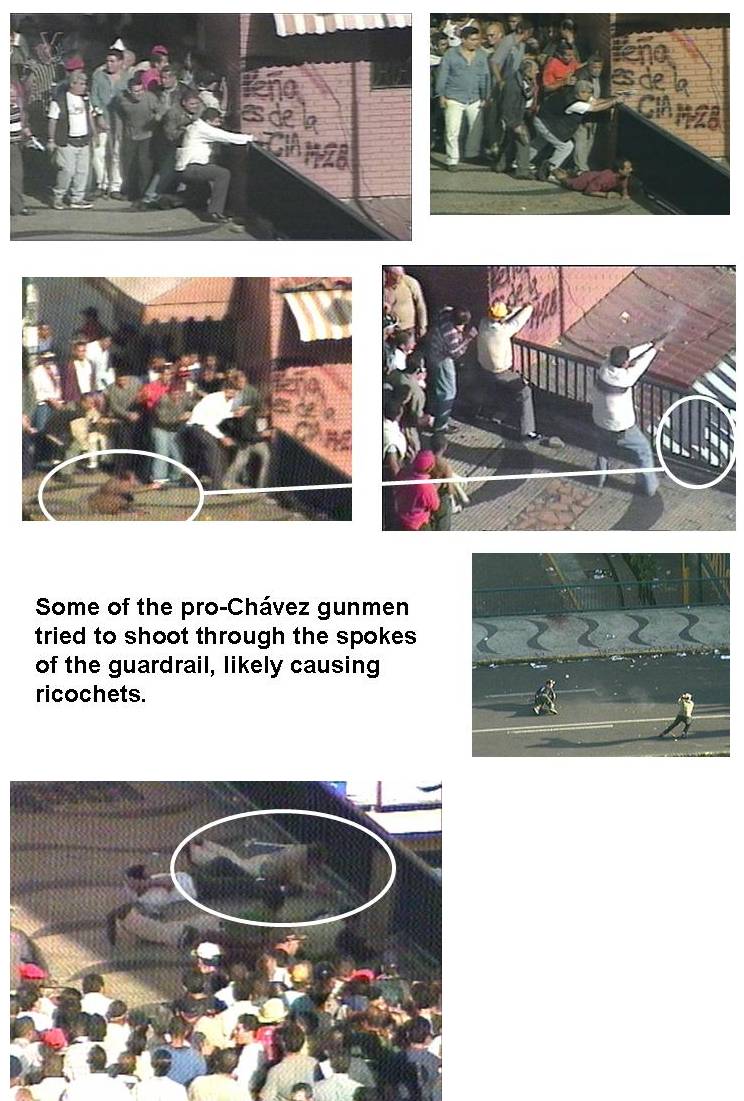
In 2001, there was widespread discontent. A general strike began on December 10, and protests continued until April. Chávez had enacted 49 laws that negatively impacted the population on April 7. In 2002, Chávez began firing some PDVSA workers. By April 11, a march had formed in Caracas, and the Chávez government deployed snipers who opened fire, resulting in what became known as the El Silencio Massacre. On April 12, soldiers rose up against Chávez and detained him at Fort Tiuna, forcing him to resign. However, the following day, sympathetic soldiers brought him back.
https://www.brianandrewnelson.com/PhotoGalleryPages/Silence_Photo_Gallery_home.htm
Between 2002 and 2003, there was an oil strike. People opposed to the Chávez government, PDVSA workers, brought the entire oil industry to a standstill, partly in response to Chávez's forced layoffs and the 49 laws. On December 6, 2002, protesters in Plaza Francia in Altamira, Caracas, were fired upon. Officially, there were 3 dead and 13 wounded. After all the protests, 15,000 PDVSA workers were laid off—yes, 15,000—many forcibly dismissed by armed soldiers who entered various facilities. From that moment on, PDVSA began to be taken over by Chavismo, leaving run by government supporters with no knowledge of the oil industry.
https://www.youtube.com/watch?v=-Mbl8t7ljUs
After the oil strike, Chávez accused RCTV, Venezuela's main television network, of participating in the coup and the protests because it lent its press coverage to document the events. Chávez continued to harass them until, in 2007, he denied them the renewal of their broadcasting license, meaning they could no longer operate. This sparked protests, and on May 27, 2007, RCTV, the leading cultural voice of Venezuelan television, was silenced by Chávez after 53 years on the air, marking the beginning of media censorship. Following this, the channel was replaced by the pro-government TVes, which remains the main source of Chavista propaganda on television.
https://www.youtube.com/watch?v=hUFp_gtQgp0
In 2009, Chávez ordered the imprisonment of Judge María Lourdes Afiuni, who had ordered the release of banker Eligio Cedeño. Cedeño had been imprisoned without evidence, and Chávez imprisoned her without a court order, using her as proof that either the justice system was on his side, or he would take action against anyone who opposed him. Afiuni was sent to a regular prison with the inmates she had previously sentenced, where she was subjected to abuse, rape, isolation, torture, and other forms of mistreatment.
https://accesoalajusticia.org/cronologia-maria-lourdes-afiuni/
In 2013, after Chávez's death, he had stipulated beforehand that Maduro would be in charge, even though he was not the vice president—that position belonged to Diosdado Cabello. Therefore, after Chávez's death, Maduro assumed power illegitimately. Elections were held in 2014, and all indications pointed to a victory for Henrique Capriles Radonski. However, by a very narrow margin, the National Electoral Council (CNE), by then controlled by Chavismo, awarded the victory to Maduro. This sparked the first protests against the Maduro regime. By that time, from the beginning of Chávez's government to the beginning of Maduro's, 206,592 civilians had been killed, either by the government or by organized crime. In these protests, the regime dropped the mask and began using torture, murder, and mass imprisonment, while simultaneously triggering an economic inflation crisis that devalued the bolívar to minuscule levels.
https://www.youtube.com/watch?v=J7DIF-oUC68
https://www.youtube.com/watch?v=16K13Wfg7JQ
https://www.youtube.com/watch?v=fVYO90Z4Jhg
In 2017, another series of protests occurred, not only because of the opposition to Chavismo, but also because of inflation, the exodus, crime and corruption, not forgetting that at that time there was already a food and health crisis, oh yes, and the regime pulled the National Constituent Assembly out of thin air. Inflation had reached around 500% in just three years of Maduro's rule. 81,334 people were victims of violent deaths. The regime employed more force than in 2014: more soldiers, snipers, more people imprisoned, more people forced into exile, and torture became commonplace.
https://www.youtube.com/watch?v=flIEjID488I
https://www.youtube.com/shorts/j-n1iYXdHkY
https://www.youtube.com/watch?v=JzO4bAQakNQ
The last mass protests occurred in 2024. The pro-CNE (National Electoral Council) committed another electoral fraud, attempting to disqualify María Corina Machado, then her alternate, and later Edmundo González Urrutia. Despite all this, despite the Venezuelan exodus and Despite the ban on many people abroad voting, and despite attempts by the military and armed civilian groups to seize control of several polling stations, and despite the fact that a significant portion of the young population was not registered with the National Electoral Council (CNE) because it was already perceived as a corrupt institution, Edmundo González Urrutia won with 70% of the votes counted. Imagine if everyone had been able to vote. Even so, the CNE proclaimed Maduro the winner. Thousands of people were imprisoned, including minors, and the so-called "Operation Tun Tun" was implemented, in which regime officials went house to house kidnapping people without warrants, under the pretext of inciting hatred or terrorism. Incidentally, Venezuela has the highest number of terrorism convictions against its own citizens. It is worth mentioning that all of these prisoners were and continue to be tortured; many are missing, and others have died in prison.
https://www.youtube.com/watch?v=-aaLKHmN1xU
www.youtube.com/watch?v=gTDa3Ui3HNE&pp=ygUbcHJvdGVzdGFzIGRlIHZlbmV6dWVsYSAyMDI0
www.youtube.com/watch?v=seWnX9d-hI4&pp=ygUbcHJvdGVzdGFzIGRlIHZlbmV6dWVsYSAyMDI0
www.youtube.com/watch?v=Emewit7opj8&pp=ygUbcHJvdGVzdGFzIGRlIHZlbmV6dWVsYSAyMDI0
We have been fighting and dying for decades.
I also want to highlight the following things, although I won't elaborate on them right now: the creation of collectives as a paramilitary apparatus, the extreme poverty that led people to eat stray animals, gang members who murdered people, like the young boys in Caracas, the sale of university degrees, the exodus on foot that claimed the lives of several people, women who were victims of human trafficking because they wanted to leave the country, broken families, the death of education, the takeover of all media outlets, internet censorship, Chavistas who betray their neighbors and relatives, prostitution within the army, the export of narcotics, the silent invasion by Cuba, Russia, and China, the privileges given to Chinese businesses, price gouging, the decline of the transportation system, the guerrillas, the illegal mining in the south of the country, the destruction of the Orinoco basin, the pollution of Lake Maracaibo, police corruption, the government's dealings with criminals, and the mega-gangs. The government's use of evangelical religion and the funding it receives, the increase in witchcraft among the population, the rise in mental illness, the high suicide rate, the miserable pensions of the elderly, and so much more, I'm not even mentioning it.
Thank you for this informative read. Do you think that 'trumps takeover' is going to result in any meaningful changes or will it be the same old same old ?
I keep seeing people say that Trump is “destroying the post–World War II global order”, which is then usually followed by outrage, panic, or psychoanalysis.
All that might actually be true, the order is definitely cracking. But the way most people are reacting to it is somwehat strange. It’s all emotion, very little curiosity.
This isn’t a defense of Trump. I don’t trust him, and neither should you. But shouting “betrayal” doesn’t tell us much about what’s actually breaking.
A lot of the outrage seems glued to worst-case interpretations that get treated as fact. Alternative explanations don’t even get a hearing most of the time.
Take vaccines. Trump cut the mandatory childhood vaccine schedule by 55 doses. At the same time, he kept pushing the COVID jab well into 2025, last time we checked. That alone should make anyone cautious about clean narratives.
Or Venezuela. Trump “kidnapped” Maduro despite promising no regime change. That criticism is fair. But when you point out that he didn’t actually install a new regime, and explicitly refused to endorse María Corina Machado, the response immediately goes psychological. Trump did it because he’s jealous of her Nobel Prize. Case closed. Evidence optional...
The problem isn’t that Trump deserves criticism. He does. The problem is the refusal to admit that nobody outside his inner circle really knows what he’s doing or why and that maybe clinging to one moralised explanation is more comforting than admitting uncertainty.
After the Caracas furore, we briefly wondered whether Trump’s move had something to do with the drug war, which has been eating the American poor and middle class for decades. Then a few days later, this shows up:
“Trump Orders U.S. Withdrawal from 66 International Organizations…”
Instant hysteria. Trump is insane. Trump is isolationist. Trump is tearing up global cooperation. Maybe. But here’s a more interesting question: which institutions are being weakened?
A huge part of the postwar global order consists of international organisations that operate with extraordinary legal immunity.
Corey Lynn documented this in her series Laundering with Immunity. She lists 76 international organisations and banks that enjoy sweeping privileges under the International Organisations Immunities Act of 1945.
Some examples:
The Bank for International Settlements.
The World Health Organization.
The World Trade Organization.
The International Organization for Migration.
The World Meteorological Organization.
GAVI.
Various other UN bodies.
The Office of the High Representative in Bosnia and Kosovo.
These entities and often their officers, contractors, and affiliates, are immune from prosecution, search and seizure, taxation, and sometimes even immigration controls.
As Lynn put it: they don’t operate above the law. They operate entirely outside of it.
That should make anyone uncomfortable. Every U.S. president since Truman expanded these protections. Trump is the first not to.
If the U.S. actually strips these organisations of their legal shields, this doesn’t mean freedom is around the corner. More likely it means chaos, selective exposure, and quiet power struggles over who gets burned and who walks.
Legal immunity attracts corruption. Removing it doesn’t clean the system, it merely destabilises it.
Whether this leads to real revelations or another Epstein-style dead end is an open question.
There are subtle signs that U.S. and Russian interests might be converging against certain supranational structures. If so, this isn’t some moral awakening, but really more of a tactical alignment between states trying to survive a changing landscape.
Nothing of this is good news though. When institutions collapse, power doesn’t vanish, it either leaves a vacuum or it reorganises.
Does any of this mean freedom for people in the U.S. or Russia? Obviously not. The fiat system is still centralised, extractive, and global. Swapping managers or redrawing alliances doesn’t change that.
At a global, macro level, we believe that Bitcoin is the only real exit from a system built on legal immunity, monetary debasement, and unaccountable power. It doesn’t care which flag you wave or which strongman you root for.
And that leads to the uncomfortable question nobody in power wants to ask out loud:
If Bitcoin keeps working… what exactly is the nation-state for anymore?
That question scares every government equally. For good reason....
Klaus Schwab, the founder and longtime head of the World Economic Forum, published an article in TIME a few weeks back (available here, https://shorturl.at/B7QxA),titled :
“The Fragile Foundations of the Intelligent Age”, in which he sheds some impressive crocodile tears over the erosion of trust in major established institutions and the rise of “misinformation and disinformation”.
It turns out, Der Schwaben Klaus thinks that truth is important. (Who would have thunk…)
In his own words :
“Truth and trust are often treated as virtues, but they function as conditions: the prerequisites for coherent societies, functional institutions, and stable international systems. Without them, even the most advanced technologies fail to deliver progress; without them, democratic debate becomes impossible; without them, economic and social life slowly lose their connective tissue.”
Yes Mr. Schwab, truth matters! So far, so good we’re in full agreement here: truth is the first of the foundational principles of our business as well.
But from there, Schwab’s prose gets a bit strange. He laments about the good old times when
* “Societies could rely on a shared understanding that truth, however contested, was worth pursuing”
* “Institutions — scientific, journalistic, judicial — created mechanisms through which facts were established, corrected and publicly recognised.”
Apparently this is no longer the case (again shockingly, right? 🤣) and, “that framework has weakened. … it is increasingly difficult for citizens to determine whether what they see and hear is authentic,” so “the very idea of a shared reality is weakening.”
In addition to truth, Schwab is also lamenting the erosion of trust, explaining that “trust is not sentimentality; it is the operating system of social and political order.”
The Great Reset has already failed spectacularly.
I, for one, would have a hard time believing that Klaus Schwab, out of all people on gods green earth, is distraught about the potential difficulty citizens encounter in establishing what’s true and what’s not. In fact, his sentiment is probably related to the fact that people no longer trust him and his affiliated henchmen in the institutions that were meant to advance his Great Reset.
The reason for that is rather simple: the Great Reset was promoted on an outrageous amount of lies, calculated to herd and mobilise the “hackable animals” to “build back better” and comply with a range of dehumanising, dystopian arrangements, that - if successfully implemented - would have stayed in place indefinitely.
Schwab and his comrades at Davos are likely upset that when they try to convince us that:
* (mRNA) vaccines are safe and effective, not everyone believes them
* Russia is our enemy and we should sacrifice for wars, most people refuse
* Sustainable agriculture and eating insects is necessary, again, most people say no (again what a shocker 🤣)
* […insert other current lies, BS narrative here…]
In fact, Schwab’s friend Ursula von der Leyen (a.k.a “Die Flinten Ushi”) said as much at the World Economic Forum while sharing the stage with him a few years back:
“For the global business community, the top concern for the next two years is… disinformation and misinformation, followed closely by the polarisation within our societies. These risks are serious because they limit our ability to tackle the big global challenges we are facing.”
That was in 2024, and the fact that Der Schwaben Klaus is still upset about the erosion of truth and trust, suggests that they are realising their fight for control of the narrative is being lost in real time. As he put it, “when global institutions lose trust, multilateral solutions become elusive.”
As things are going, in another year or two, people will be even less willing to take up injections, send their children to war, confine themselves in 15-minute cities, or eat insects.
We do need to build the future — via Bitcoin — but without a shared understanding of reality as presented by Schwab or von der Leyen, we might discard the Great Reset blueprints and build back “wrong.”
God forbid this would result in a decentralised, censorship-free world with true free markets, enabled by Bitcoin, and in the worst-case scenario even create a different world marked by actual peace and prosperity.
For Schwab & Company, that would be very unfortunate as it would deprive them of their most important asset: billions of “hackable animals” happy to own nothing, eat ze bugs, and slave away their years of their human experience as they used to do for the previous millennia.
The sources of their dreaded “disinformation and misinformation” — the internet and free, decentralised social media will, ironically, prove to be the catalyst of a new great enlightenment.
In the words of Thomas Jefferson :
“Enlighten the people generally, and tyranny and oppressions of body and mind will vanish like the evil spirits at the dawn of day.”
Klaus Schwab, the founder and longtime head of the World Economic Forum, published an article in TIME a few weeks back (available here https://shorturl.at/B7QxA), titled :
“The Fragile Foundations of the Intelligent Age”, in which he sheds some impressive crocodile tears over the erosion of trust in major established institutions and the rise of “misinformation and disinformation”.
It turns out, Der Schwaben Klaus thinks that truth is important. (Who would have thunk…)
In his own words :
“Truth and trust are often treated as virtues, but they function as conditions: the prerequisites for coherent societies, functional institutions, and stable international systems. Without them, even the most advanced technologies fail to deliver progress; without them, democratic debate becomes impossible; without them, economic and social life slowly lose their connective tissue.”
Yes Mr. Schwab, truth matters! So far, so good we’re in full agreement here: truth is the first of the foundational principles of our business as well.
But from there, Schwab’s prose gets a bit strange. He laments about the good old times when
* “Societies could rely on a shared understanding that truth, however contested, was worth pursuing”
* “Institutions — scientific, journalistic, judicial — created mechanisms through which facts were established, corrected and publicly recognised.”
Apparently this is no longer the case (again shockingly, right? 🤣) and, “that framework has weakened. … it is increasingly difficult for citizens to determine whether what they see and hear is authentic,” so “the very idea of a shared reality is weakening.”
In addition to truth, Schwab is also lamenting the erosion of trust, explaining that “trust is not sentimentality; it is the operating system of social and political order.”
The Great Reset has already failed spectacularly.
I, for one, would have a hard time believing that Klaus Schwab, out of all people on gods green earth, is distraught about the potential difficulty citizens encounter in establishing what’s true and what’s not. In fact, his sentiment is probably related to the fact that people no longer trust him and his affiliated henchmen in the institutions that were meant to advance his Great Reset.
The reason for that is rather simple: the Great Reset was promoted on an outrageous amount of lies, calculated to herd and mobilise the “hackable animals” to “build back better” and comply with a range of dehumanising, dystopian arrangements, that - if successfully implemented - would have stayed in place indefinitely.
Schwab and his comrades at Davos are likely upset that when they try to convince us that:
* (mRNA) vaccines are safe and effective, not everyone believes them
* Russia is our enemy and we should sacrifice for wars, most people refuse
* Sustainable agriculture and eating insects is necessary, again, most people say no (again what a shocker 🤣)
* […insert other current lies, BS narrative here…]
In fact, Schwab’s friend Ursula von der Leyen (a.k.a “Die Flinten Ushi”) said as much at the World Economic Forum while sharing the stage with him a few years back:
“For the global business community, the top concern for the next two years is… disinformation and misinformation, followed closely by the polarisation within our societies. These risks are serious because they limit our ability to tackle the big global challenges we are facing.”
That was in 2024, and the fact that Der Schwaben Klaus is still upset about the erosion of truth and trust, suggests that they are realising their fight for control of the narrative is being lost in real time. As he put it, “when global institutions lose trust, multilateral solutions become elusive.”
As things are going, in another year or two, people will be even less willing to take up injections, send their children to war, confine themselves in 15-minute cities, or eat insects.
We do need to build the future — via Bitcoin — but without a shared understanding of reality as presented by Schwab or von der Leyen, we might discard the Great Reset blueprints and build back “wrong.”
God forbid this would result in a decentralised, censorship-free world with true free markets, enabled by Bitcoin, and in the worst-case scenario even create a different world marked by actual peace and prosperity.
For Schwab & Company, that would be very unfortunate as it would deprive them of their most important asset: billions of “hackable animals” happy to own nothing, eat ze bugs, and slave away their years of their human experience as they used to do for the previous millennia.
The sources of their dreaded “disinformation and misinformation” — the internet and free, decentralised social media will, ironically, prove to be the catalyst of a new great enlightenment.
In the words of Thomas Jefferson :
“Enlighten the people generally, and tyranny and oppressions of body and mind will vanish like the evil spirits at the dawn of day.”
We are The Hard Energy Fund — looking at the intersection of energy, capital cycles, and long-term trends that matter. Bitcoin is central to how we think of value, sovereignty, and resilience in complex systems. Our focus is on ideas and patterns others tend to miss.
We hunt mispriced energy cash flows—oil, gas/LNG, uranium, midstream—using replacement‑cost discipline and long‑dated contracts. Report in fiat, judge in Bitcoin. Educational only; not investment advice.