

Disagree. But I may have a very different sense of expectations. I think they ultimately determine every action we take.
To your point, inflated or overly optimistic expectations are likely as you say. So just expect less!
No long thoughts from me tonight. I bought Erik Cason's book and also a book of Heidegger (Being and Time). I expect to agree more with one than the other, but I feel the need to read both.
There is a time to speak and a time to listen. I have been speaking, and now I will listen. GN.
To continue documenting my thoughts on the origins of religion, what happens when a relatively established cultural group, with their own ideas of how everything works, what is possible, not possible, etc. is visited by outsiders that have some technological superiority?
This is the idea of extraterrestrial contact, but in this context, the visitors don't have to be extraterrestrial - just technologically advanced. We have many examples of this happening, and each marked a shift in technological progress. How did the bronze age become the iron age?
Some great fiction that does a wonderful job explaining technological progress is the Discworld series by Terry Pratchett. I'm not going to develop this idea of technological shifts too much further, but when an outsider shows how the impossible is not only possible, but readily achievable, it makes a culture rethink its beliefs.
When a culture only knows their plant, or continent, or region - and believes themselves to be alone there, maybe even superior there, and a visitor from an unknown origin shows up, with vastly improved technology, including the ability to travel to that region, it is a big deal. "We are not alone."
For us humans now, with dominion over much of the planet, that visitor would likely need to from another planet, dimension, or time. For someone living in a nomadic hunting tribe with no knowledge of the world outside their region, or beyond their seas, that visitor could just as easily be from a different continent.
But I think those visitors came from much further away, and had to have come from beyond the skies. Most religious traditions observe deities that come from (or live in) the heavens. There are plenty of sun gods, for example. Star worship, building to reach into the sky to either signal or communicate with gods - all of this points to extraterrestrial visitation. It is just too prevalent to have come from elsewhere.
We do have some religions that worship nature, or a "mother earth", and I think this would be the default state of faith, pre-visitation.
I also find it curious that several of the oldest religions seems to have got their start or really taken off around 1500 BCE. Most newer religions were just split off of the older religions. Judaism, Christianity, and then Islam, for example. There was something that caused a drastic shift in faith around 1500 BCE though, followed by a lot changes in faiths and social structures.
Was this shift just a technological breakthrough, or the result of a visitation? We can look a lot more recently, and see a lot of accounts of ET phenomena in the mid 20th century CE, and here we are, living through a technological avalanche of activity, which has brought us modern computing and communication, and which may now be bringing us a radically different money. I wouldn't be the first to suggest that Satoshi Nakamoto may be ET. Whether or not is not the point, though, just part of the observation that a shift is happening, and it is causing societal structures and religious faith to be re-imagined.

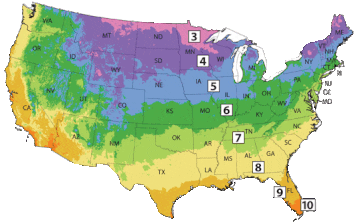
Cows grow well here. Also hays to feed them. Goats as well. Sheep are much less common. Pigs do fine, and chicken, ducks, geese. Salmon, trout, steelhead, crab, clams, mussels. I literally live in a great place for having my food grow.

Funny thing, risk of heart disease is one thing I no longer worry about now that I am meat based. Cancer is another big one. Also all the things they sell drugs for in TV commercials.
Gout is something other people worry about on my behalf, but anything I personally see as an issue.
Living this worry-free is very liberating. Now all I really worry about how my body will be able to repair all the years of abuse and toxins. So far it is doing fine at this.
I also worry about the future availability of meat. But that is a very different topic.

For conducting business, as well as for social engagement, I prefer to meet face to face, at least initially. After that, I agree that most things can be handled by email if they are not important enough to meet face to face again. All the stuff in the the middle is just annoying and a poor use of someone's time.
My thought on #onlyzaps - I quite like the likes. That just lets me know someone saw my note. I'm no inflooenzer, and I doubt I get many follows or views unless I reply to some else's note. So a like is nice for me.
I'm not here to monetize my social presence. Most of my notes are long winded bloviating on whatever topic happens to be on my mind. Sure, I could write a book, but why? If anyone cares enough about my ramblings, they can collect them and publish them however they like; I don't claim any copyright or ownership of my ideas and thoughts, and most aren't all that original. Hopefully they publish them posthumously, as I don't want to deal with the notoriety. No speaking tours, signing engagements, or answering emails accusing me of rubbish thinking. Nope.
Just posting notes, and if you see one, like it. Hopefully you read some of it too. If you want to zap it, go right ahead, but I don't check my zaps balance very often, or even see when it happens, maybe months later. And that is fine!
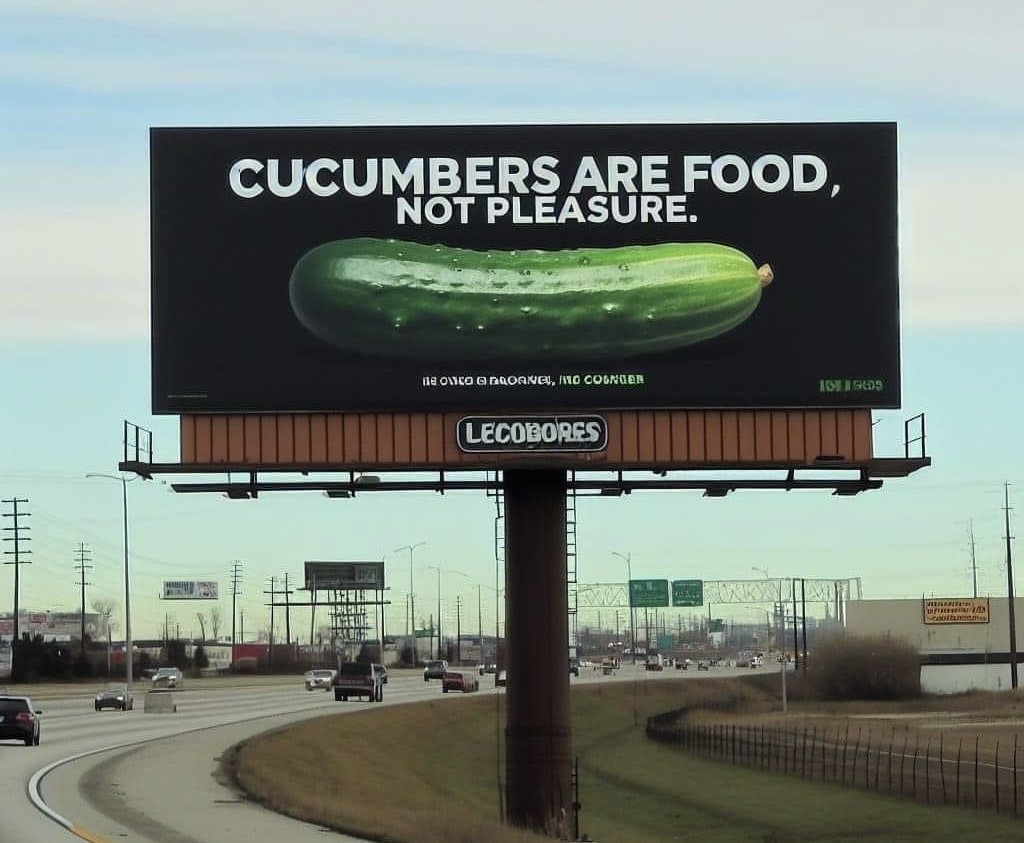
Well, not really food for humans, probably better as pleasure items.
Let's get this out of the way in one note. I've failed, but so fucking what?
I'm back on the ciggies again. As of Dec, actually. Quit for about 7 months. Will quit them again, just not today.
I'm not a strict carnivore. I eat a meat-based diet, and understand that I don't need to consume anything other than meat and water to optimize health. That said, if I am in a social or family situation, I won't turn down a meat-based option if it has a sauce on it or a few small pieces of plants stuck to it. I won't eat helpings/servings of plants, and won't prepare plants for my own meals - but I've decided to optimize social aspects of my life over health.
I also have compromised with my sugar addiction. When I do my weekly shopping, usually Sunday, I often get two donuts (usually something with chocolate icing or maybe fritters), and maybe a chocolate bar. Doing this is a long way from eating pastries every day. Does it kick me out of ketosis. Probably, idgaf.
I'm not going to claim to be carnivore, ketovore, or any of the diet cults, because strict rules are not for me. I prefer to avoid things, like plants and sugars, but only as a preference, not as a rule. I prefer to eat meat-based foods, but I am not at all strict about what that means, how it was prepared, etc. I prefer to avoid seed oils, but will not have an issue if my social meal was prepared using them. I prefer to eat meata that do not have corn syrup or similar sugers added to them (wtf?), but if there is dextrose or something similar added as part of a curing or preservative process, not a huge deal - I just will eat that in lesser amounts or less often.
I discovered I could eat too much fat. For a while I was eating steaks with butter, tallow, and bacon cooked with them in an air fryer, along with all the rendered juices in the pan. That was too much, I gained back 20 lbs or so, even when being a lot more strict with everything. I still eat the pan juices, but stopped with the bacon, kept the butter, and use tallow only occasionally on leaner cuts of meat. Lost that 20 lbs again, even with being less strict now.
I'm not optimizing to lose weight, though - I really am optimizing for social situations, and for being food-optional, where if something meat based or something I want (this week, half-and-half for my coffee, a new habit I picked up), I can go without for a meal, a day, a week or more for non-meat items. 24 or even 48 hours with absolutely no food is no big deal anymore. I'm sure I could go longer, but haven't needed or wanted to.
So that's where I'm at. I'm not leading a movement, just learning what works for me.
Ok, this may get long, (and that's saying something coming from me. I may break it into a few chunks. But I wanted to write something on my theories surrounding the origin of religions.
At first, we were nomadic small groups, providing for the group by tracking and killing animals. When the game was plentiful, we would hunt it there, until it was no longer plentiful - either because we exhausted the supply, or the animals chose to move away from us.
During this time, there was much we didn't know. We may have had a notion that thrre was something unexplained that controlled aspects of our environments - weather, sun, moon, etc. We may have done things that we hoped would help our chances of a good hunt, improve our shelter conditions. And we may have even had some superstitions around death. Most of these traditions would have been passed on orally, whether through song, or just listening and learning from others in the tribe, particularly the elders.
Here's where my theories start to diverge. I'm going with my older theory first.
At some point, a tribe was in a place long enough to begin to observe and learn some basic agriculture, like how to pick and eat from the same plants year after year, and how to transplant them, and how seeds work to grow more of them. Plants can fill you up kind of like meat, but with some interesting side effects. But tending to plants means that you must stay where your plants are growing, and not move with the meat. Well, whomever felt strongly about this needed a way to keep most of the rest of the tribe from wanting to move on. They also needed their tribe mates to work in the fields, rather then spending their days hunting.
It was likely more popular among the elders, who were physically tired of moving, and didn't have the caloric burn of movement in hunting to require the fats and proteins that hunters did, so they would be more than happy to sit around and subside on plants.
But they also needed more young active people to do the hard work associated with agriculture. How to do this?
Well, they already had some beliefs and superstitions, so one (or more) of them needed to twist these beliefs into a threat and a promise. The threat needed to be something along the lines of "if you don't do as we say, it will not go well for you." And the promise would be "as long as you do as we say, life will be better." It was pretty simple to use that unexplained notion of something else in control to appeal to, citing knowledge of how that something else works, and claiming to have some kind of direct link or influence over it.
But what about when things went wrong? Blight, drought, fire, poor crop production, flooding? Inevitably, the leaders of the agriculture change would have some explaining to do, as to why their promise was broken.
Time to pivot. Blame some bad forces, or blame some people who were not falling into line. Blame disbelievers, outsiders, whomever. Maybe even kill some of them to appease the forces of nature and get the plants growing again.
Note here that agriculture both requires and allows larger groups to form - what may have been a hunting family of 10-20 people was now growing into a community of 100 or more people, which required a lot more plants to sustain, and more people to care for and process those plants.
So the community leaders (also the ones appealing to spirituality for purposes of control over the larger community) would far more people to choose from for punishment, and could probably find someone to blame and punish that was not also their immediate family.
This is where the sickness of power takes over. What happens when punishing (even killing) some people doesn't make crops better? Well, being in control is nice, and what is the ultimate way to demonstrate that control? Demand (and execute) measures of sacrifice. Make sure the leaders are getting fed, demanding a portion of the plants (and animals still being hunted, but now also being domesticated) be given to the leaders so the leaders will be motivated to continue asking the forces of nature for positive outcomes.
It gets worse - demand children be sacrificed, or given to the leaders as aides and assistants. Or things will definitely go poorly. Obey!
(And this devolves into various perversions of child abuse, sexual abuse, paedophilia, whatever depraved act a ruling class might care to engage in)
But adults are still needed to do the labor, and do it they will... especially if their child's life may depend on it.
Here is where I will remind you, history is written (and passed down orally) by the winners, those alive to retell it - so they wouldn't care to disparage their own practices. Any religion that survives today surely has some dark history, same as any nation surviving today.
I can dig a lot deeper into what this does to the mindset of people, controlling them through fear, incentivizing them with promises that could not be always delivered, but when not, putting the blame back on the people themselves, so in addition to fear, there was also self doubt. I think I'll stop here though, on that thread anyway.
I mentioned a divergence. Well instead of all the agricultural stuff that would likely have taken centuries to go from settling in a fertile spot to enslavement and child sacrifice....
What if a charismatic sort just took all the elder's wisdom, got really weird and started freaking out a bit - and claimed to have communed with the forces of nature one-on-one? The rest of the tribe sees he's acting weird, and he claims to have some kind of divine knowledge - well, now if he gains the trust of the tribe (or already had it) we have a prophet - or a seer. I tend to think of prophets as younger charismatic males, and seers as older, well-established females, but there is no need to assume gender or age with these terms.
Does it take a wholly different path? Not necessarily, establishing a cult, creating a leadership, ruling a region, demanding sacrifices when things go poorly, it can all go the same way
One thing the charismatic leader can more easily do is convince his followers that his god is the best of all other gods, or even the only god, and all the others are fakes and weaklings. And if things happen as he says for a while, then people might get in line with that message. Besides, people are probably tired and fed up with trying to appease all the different forces or deities, so having just one simplifies things for everyone. This may be why sun god cults pop up everywhere, especially nearer the equator.
These divergent theories can both go together, as the move to agriculture would open doors to both, and a stagnant leadership can fail in the face of a charismatic leader with a new idea
Any of this sounding familiar?
But what happens to all of the above when alien intervention in thrown in? The intervention doesn't even have to be alien, really any meeting of two civilizations where technology is more developed in one than the other.
Seems like magic (or god-stuff) when unexplainable things are being done - making the people performing these unexplainable acts a little god-like themselves...
Again, sounding familiar?
But I will stop here, I will definitely write more about the religious and cultural impacts of alien intervention another time.
Until then, buenas noches - GN.

Will definitely look into it.
I have another note to write about the origins of religions, and the why and for what purpose religions were formed - but my eyes are too worn out to write it tonight.
Gn #nostr
I'm becoming very interested in Hindu origins for several reasons - first, a lot of the basics appear to be aligned with my general worldviews and philosophy. Second, because of the age of the Hindu traditions, history, and variety of cultures that developed out of the Indus valley civilizations, and their initial separation from Judaism and later Christianity and Islam, it might be possible to ascertain more about what may have been happening during possible time gaps, like the first millennia CE, and more specifically the Dark Ages. Third, the Hindu take on time, creation/destruction, and even the nature of deity is very different than what we understand through western cultural traditions. Fourth, their openness and acceptance of extraterrestrial life is very interesting, and there is a fairly good chance they have past experience with extraterrestrial life.
It is also very interesting that there was a global explosion of religious traditions dating to around 1500 BCE. This probably isn't coincidence, particularly as this seems to be the case in different regions, even different continents. Something changed then, and poof - religions were formed.
I definitely do not believe in Christianity. I'm also not looking to answer spiritual questions, or have any unresolved spiritual angst. I am curious about the history of cultures and civilizations though, and what humans may have endured in the past to get to where they are today.
I think anyone can develop a talent, if you find a thing you like doing and practice and work at it to make them better at it. You can usually determine pretty quickly what you aren't good at, and don't care to spend the effort to get better at it.
So a talent to me is kind of like a proof of work.
Any good resources/books to learn about Hindu mythology? Specifically interested in creation/existence story and time theories.
For the last few months, been having an issue with pain in my right shoulder, especially nearer the edges of its range of motion. Went to an ortho dr, they x-rayed and ensured me it was bursitis, not arthritis, calcium deposits, bone spurs, gout, or muscle damage. Because it was a doctor, they immediately shot it full of steroids, because drs want to prescribe and administer drugs.
That helped for a week, but two weeks later, doing moderate activity (hanging doors and blinds in a renovated room project I finished), I re-injured it.
I'm looking at treating it with a combination of CBD and DMSO, both things I keep around as general purpose home medicine. Any reason the combination would be an issue? I would be applying both topically, but not necessarily at the same time(s).
I'm hoping this will allow for healing, because I'm not prepared to sit around resting my shoulder and not getting shit done for weeks or months. Behind on enough projects already.
Ok, this is my final planned transmission for tonight. And I do this more to just get these thoughts written down. It helps me to solidify a lot of competing theories in my head into one (or more) cogent writings on a topic. Maybe it is my own little way to #grownostr.
So let's have a think about power. By power, I mean an organizing force. This is political power, economic power, etc., and it can be pretty easy to track over time if you zoom out a bit and look.
I think the same organizing force has been in control for at least a millennia, possibly a lot longer, especially in the western world. (Europe, Mediterranean, North and much of South America).
In a mod to my last note about aliens, I choose to think the organizing force is human, but they could really just as easily not be - but would need human or human-like proxies to coordinate with the earth's human populations.
I excluded Asia from the list of regions above. I think China has been a separate center of power for a very long time. I also excluded much of Africa, because it has been a battle ground. South America and Central Asia are likely similar battle grounds, and North America was a battle ground for some time.
However, if I take Western power and Eastern power as the two separate dominating world powers, I would be very surprised if the were not at least cooperating with each other if not coordinating between each other.
I don't know enough about Chinese and Asian history to properly treat it here, so I will focus on Western power. I am relatively sure it goes back to at least the RCC (Roman Catholic Church) (not as the seat of power, but perhaps an organization in the favor of the organizers). But it likely goes back to Rome, possibly Egypt, but more likely the tribes of Israel.
One thing power does is controls the narrative - so the histories we know about are likely the histories most central to (and most apologetic to) the power structure. Kind of that history is written by the victors thing - everything else are discoveries about civilizations that may have existed in the way they are now presented, in the frame of the current power structure, but just as likely existed much differently.
Does rooting this power theory in the tribes of Israel make it Zionist? Perhaps, but maybe not in the way that term is currently being used.
I think this power has held control for so long by allowing economic and social experiments to play out, especially so long as they enrich the organizers. The RCC may have been such an experiment. Also British and European colonialism in general. USA is an experiment, as I have said in days prior. Canada, Australia - similar iterations of experiments.
Do I put on a tin foil hat and start pointing fingers at the WEF, Bilderbergers, Rothschilds, Illuminati, or some other shadowy initialed group? Nope, I just don't see it that way. Sure, any of the groups could have done some of the work of the organizers, but they just aren't longstanding enough. I expect multi-generational organization (or conspiracy, if you see it that way) and these groups don't really have that. Maybe Freemasons or Knights Templar? Rosicrucians? Much longer histories, but still more likely to be willing accomplices to power rather than power itself.
What does this mean for us? Well, again the American experiment is coming to an end, and may take Canada with it. I'm not sure this threatens the power structure, but it signals a change. It may mean we are headed for a conflict between West and East, or maybe a consolidation. I think bitcoin will play a role in this, but way to early to see what role. Keep in mind the power structure has always seeked its own enrichment and expansion of control, so however Bitcoin can be used to that end, or as a weapon against it, will determine Bitcoin's fate.
We live in interesting times. But as always, zoom way out to try and glimpse the bigger picture.
I think I have this and one more note I want to write tonight, then maybe gn.
First, on the ancient alien theories stuff.
At the far tail end of things, I believe in some form of panspermia - and I choose to believe we were essentially engineered to exist here.
Past that, I don't think whomever put us (or found us) here ever left.
Is this a god theory? Could be, and could definitely explain a lot of our god myths, even our creation and origin stories.
Now, looking back even a few thousand years, there is ample evidence of alien involvement, if you look at the evidence with an open mind to alien involvement.
If you look back to the dark ages, the Roman Catholic Church (RCC) was very effective at suppressing any hints of alien involvement from European, Mediterranean, and later north american knowledge and histories. However, alien involvement was very observable in Middle and South America, as well as southeast Asia and Polynesia. I think the Chinese may have been also very suppressive of alien involvement in their histories. Alien involvement also didn't likely stop in North America until post-colonization by Europe, at which point, again surpressed.
The current trend seems to be more accepting of at least alien theories, so I think we may soon (in the next several generations) finally again be witness to our keepers.
There are many kinds of theories that spawn from this that I don't disparage, but who am I to know what is true?
It is also quite possible that alien involvement has not all been from the same species or civilization of aliens, and what we currently are finding is evidence of multiple waves of alien contact, with the original alien keepers (designers) now long gone.
Time plays a role in this too, as our human perceptions of time (and reality) may not be shared by our alien visitors, so what we see as intermittent may be for them constant, or even the other way around. Sequences of events for us do not necessarily interpret into sequences of events in a different perspective of time and reality. So some of what we observe is simply not applicable.
That's enough. This can lead to far too many thought paths for me to just choose one to follow.