

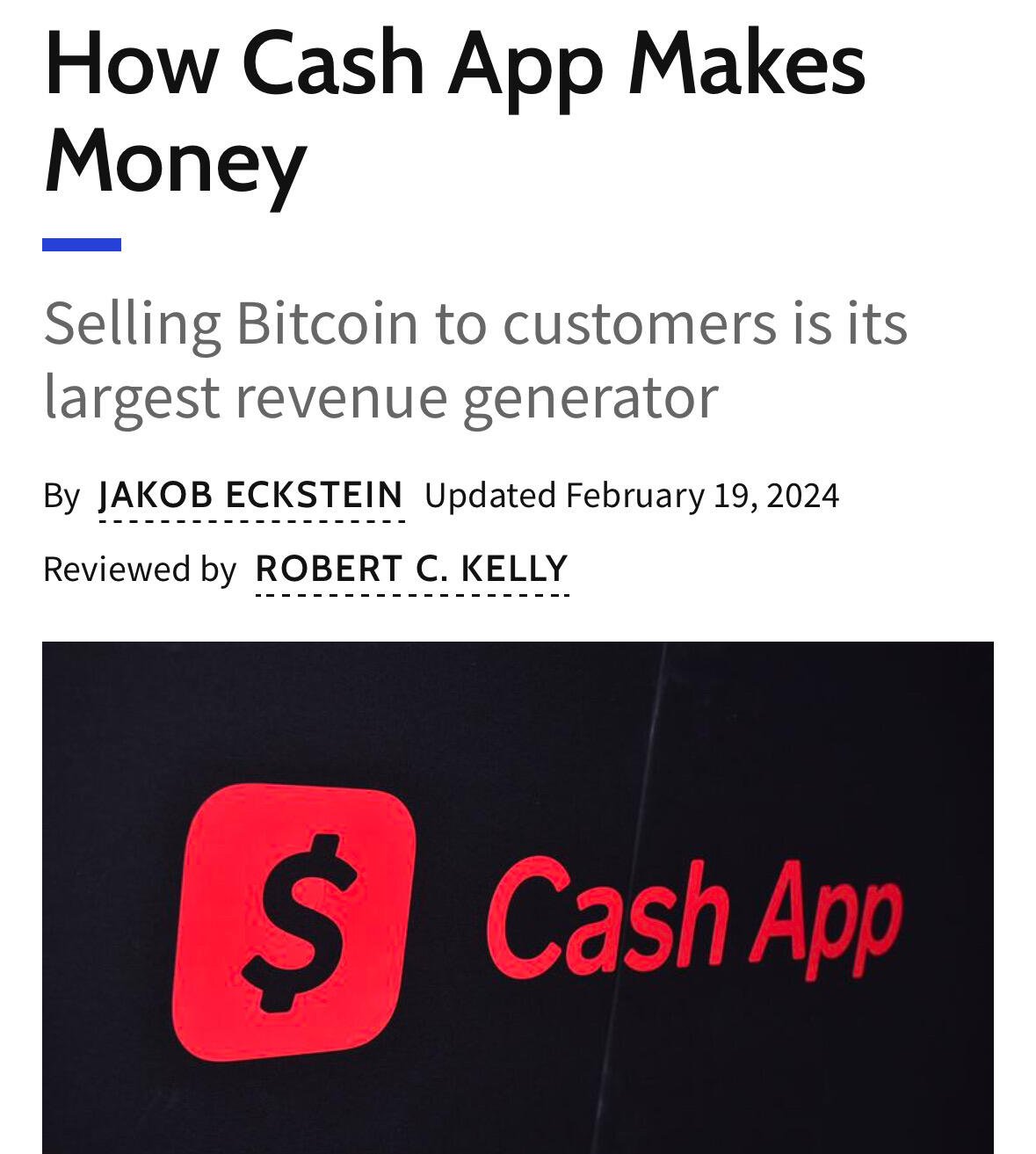
none of your big Block Inc companies do anything with bitcoin, so this is a funny post nostr:npub1sg6plzptd64u62a878hep2kev88swjh3tw00gjsfl8f237lmu63q0uf63m nostr:note1pu0d4dwntea5xuwhyz92esfvqvqwtk5apmgg33aqcv9f4svt4txq8q3khx
? 

It's a stretch to call that a "biological fact", but I don't see how anyone can claim this is a decentralized response.

Hmm. I'll take a closer look then. Thanks 👍
IIRC even the first one fails because it's self-signed. Maybe you've only tested with a public node that has a LetsEncrypt cert?
Maybe I'm doing it wrong? But the cert changes every time LND restarts. Is there a different, stable cert?

Someone understands the difference between money and value
Sorry, I meant LND, as configured by RaspiBolt. Alby Hub wants to validate the API ssl cert, but LND uses a fresh, self signed cert at startup.
Change was to throw out most of this branch because the UI required a non-blank value, the use a tls.Config with certificate validation disabled.
FWIW, I had to hack the source to skip SSL validation before it would connect to localhost LDK. It's possible to use it without central control, but maybe not out of the box.

There's multiple competing goals: we want the rocks to think better, and we also want them to think faster. We hear more about the former than the latter, but some are proposing radically simpler networks with similar capabilities: https://www.alphaxiv.org/abs/2410.01201v2
Justine made some nice performance improvements while working on llamafile. If you haven't followed APE, that's a fun rabbit hole as well.
As performance optimization enjoyer i can’t help but look at the transformer architecture in LLMs and notice how incredibly inefficient they are, specifically the attention mechanism.
Looks like i am not the only one who has noticed this and it seems like people are working on it.
https://arxiv.org/pdf/2406.15786
Lots of ai researchers are not performance engineers and it shows. I suspect we can reach similar results with much less computational complexity. This will be good news if you want to run these things on your phone. 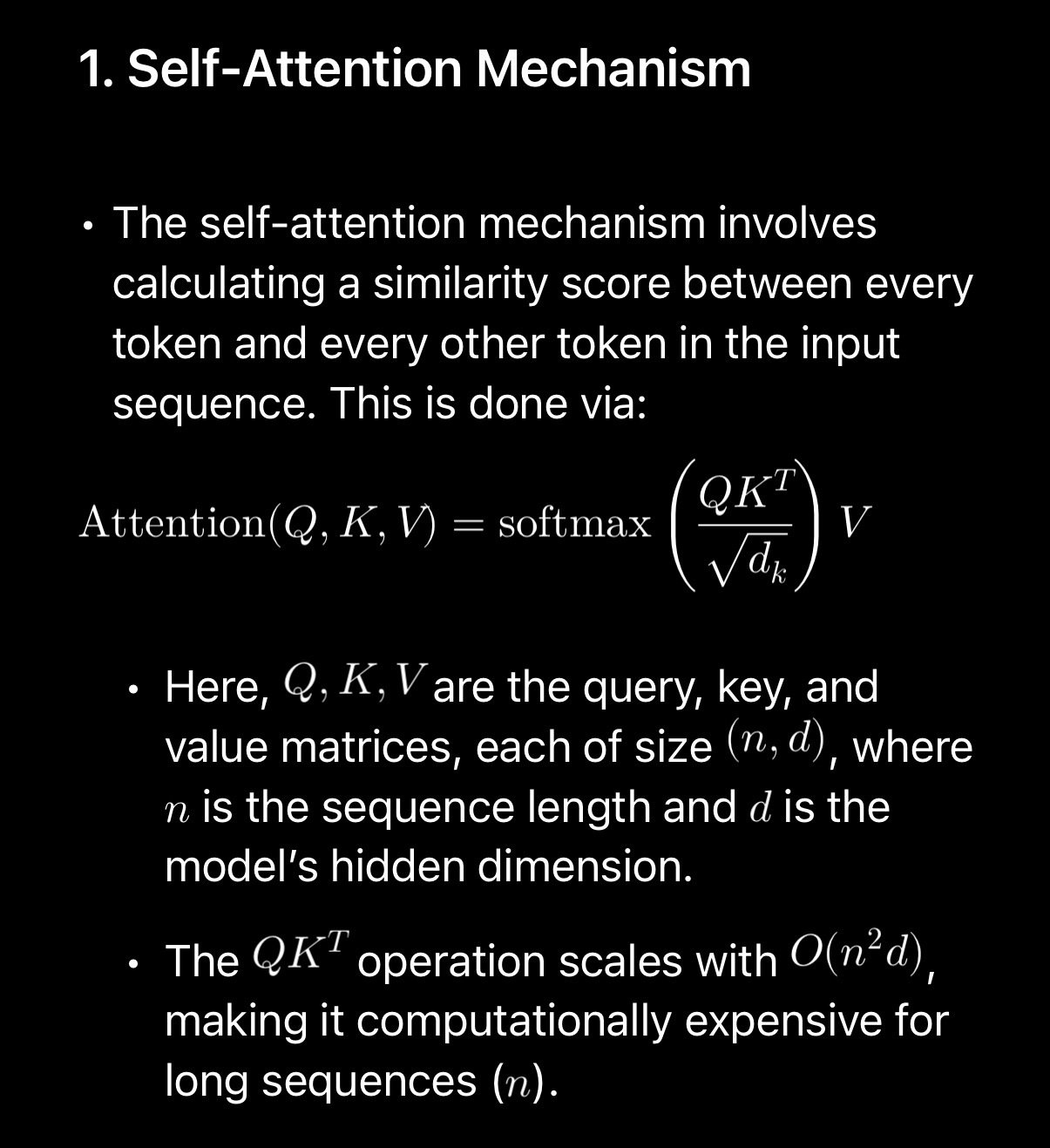
Secure, Correct, then Fast (a software take on the Vitruvian Triad). Inference performance has gotten orders of magnitude faster since llama.cpp, and it continues to get faster.
That's a longer thread than I can make sense of on Damus, but one thing that sticks out to me:
You could run a relay, nginx, and a web client on an old cell phone duct taped to the wall next to your local coffee shop for free. It wouldn't be a slick, global, social network full of celebrities, but it would still work.
People might be spending a lot of money on it, but that's different than building an architecture that has inherently high operating costs. Nostr will never die as long as anyone gets value from it.

I'm not trying to take sides, though I have my preferences. I've always been a fan of startups, and money shapes the landscape. Who, how much, structures, valuations: they drive decisions both short and long term. Knowing where the next round will come from is always on your mind.
Bluesky has raised more than twice what has been attributed to nostr. They also benefit from friendly publicity. These things make certain things very easy for them.
They also have traditional business structures, and relationships with VC. These constrain what they are able to do. It currently appears that anything with Bitcoin is off the table. In periods of crisis, I expect even more control to be exerted.
I'm not inherently vested in either of these. Nostr appeals to me for the same reasons that Jack talks about: there is no corporation, no debt or equity obligations, no points of leverage. I only ended up here after hacking on Mutiny, working directly with the protocol, and understanding what it allows. Most of the politics here are pretty silly if you ask me.
But, freedom is the ability to make bad decisions. Counterintuitively this tends to focus people on making good ones. Without it you end up with endless mediocre ones that never move the needle, and you can be sure that others are moving their needle to grab as much land as possible.
So, my advice is a modification of Lao Tzu: we shouldn't spend our time challenging them on publicity, moderation, consistency, or scalability. They will always win these things because they are centralized. We should spend our time on things that they will never be great at: availability, portability, interoperability, financialization.
Can you post to Bluesky over a phone call? Can you memorize your identity? Can you run your own community relay without Internet access? Can you zap your favorite developers?
Nostr will never "beat" Bluesky because they aren't even playing the same game. My view is that the game nostr is playing will become more important over time, and the one Bluesky is playing will erode, one crisis at a time. In the words of the unnamed zen master, we'll see.

This is the nature of the game. Those that align with the establishment will always be better funded, more popular, highly praised, shielded from risk, spared from failure.
But they will also never have the freedom to oppose the establishment. How's their payment mechanism going? They took Bitcoin VC, and also refuse to actually use Bitcoin.
"In war, the way is to avoid what is strong and to strike at what is weak."
> The Series A funding round was led by Blockchain Capital, a venture firm that has invested in OpenSea, Kraken, and Coinbase. Several other crypto-related venture firms—including SevenX, True Ventures and Alumni Ventures—participated in the funding round, as well.
> Nonetheless, the social media startup vowed that it would not “hyperfinancialize” the Bluesky “social experience” by integrating crypto tokens, NFTs, or other blockchain-based technology into its platform.
The irony is that it probably won't bother them as much as it would bother nostr. This doesn't seem like the way.
My 2s is that they're reacting to Bluesky taking centralized shortcuts that "will be fixed later". But like security and revenue, decentralization can't be "added later". Nor would the maintainers have incentive to add it later even if they could.
So if people are joining just to get away from X, that's their choice. But while Bluesky is pretending that they will behave differently from X "when the time comes", then they are at best fooling themselves.
They need to cast The Ring, or stop pretending that their future behavior will be any different.
I think Adams would have said "geeks", but that wasn't the name of Cringely's project.

"I think a nerd is a person who uses the telephone to talk to other people about telephones. And a computer nerd therefore is somebody who uses a computer in order to use a computer." - Douglas Adams


Every "catastrophe" is an opportunity.
They're not a joke though. You think so because they aren't solving people's problems, but their real goal is just to expand state powers.