



This is your brain on fiat.
Kids, don't do fiat.
Bud Light Execs CANNED | Confirmed Firings
-Eric July
ALentejo
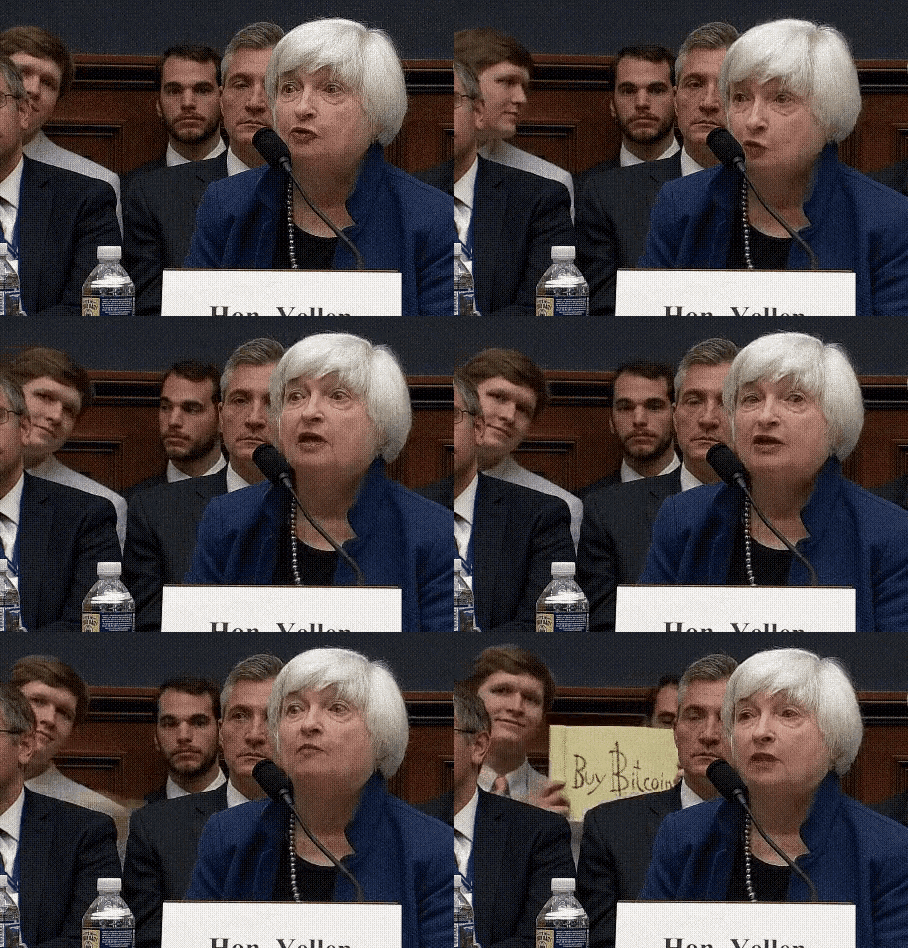
Yet another tale from the Dumbest Timeline


Nitpick:
That's like saying rising temperatures cause warming.
Printing money is inflation.

Police: Gay Man Attacks Pregnant Woman, Gets Set on Fire, Then Claims He’s a Victim of “Hate Crime”
From Infowars
Woman set the man on fire in self-defense, according to police report
Jun 27th 2023 6:07am EDT
Internet Archive Link: https://web.archive.org/web/20230627151256/https://www.infowars.com/posts/police-gay-man-attacks-pregnant-woman-gets-set-on-fire-then-claims-hes-a-victim-of-hate-crime/
Share, promote & comment with Nostr: https://dissentwatch.com/boost/?noback=1&boost_post_id=568916
If I'm on a jury, I'm acquitting any pregnant woman defending herself from any adult male.

The distinction you're making between "expenses" and "funding" is an interesting one. It's capturing something important, but I feel like most people are going to find it confusing.
Expenditure on schooling is skyrocketing, but it mostly goes to admin, so you could say education funding is not increasing rapidly. Is that the distinction? I feel like there needs to be a clearer way to express it.
Where are all these Americans welcoming the loss of public services?
As one, there's not a lot of company. Both parties perpetually increase the budgets across the board.
Even during the TEA Party movement people were waving "Keep the Government's Hands Off My Social Security Check" signs.
You might be right about the first part, though: "The pervasive dialogue ever circulating about US National Debt exists in part to prepare the public consciousness for the never-ending war against social services. Austerity measures serve the rentier class and the corporations by shifting value from the public sector into the pockets of the few."

RT @PrisonPlanet: Yes, I'm sure this is capitalism's fault and not rampant theft by 'urban youths'. https://twitter.com/commie_trucker/status/1672657256611999744
QT: https://twitter.com/commie_trucker/status/1672657256611999744
What does this commie think the store is trying to do? Taunt hungry people with inaccessible goods?
Can Decentralization Save Humanity? - Why Smaller is Better in Politics
Maybe, but we know centralization can destroy it.
In addition to what's in the video, here are a couple of ideas from an economist:
Reduce or give up unhealthy foods that you don't love first. Sure, you'll probably partially substitute other unhealthy foods, but you will also probably reduce your overall consumption and partially substitute healthy foods.
Increase the healthy foods you like the most, or that are easiest to increase. That could just be adding more greens to a sandwich or increasing the ratio of fish or beans to rice. This will naturally crowd out some of the unhealthy things you were eating.
As you do this, your metabolism and taste buds will adjust, so you can iterate this approach and keep moving towards a healthier lifestyle without making difficult sacrifices.
How to Permanently Stick to Your Weight Loss Plan Long-term
Losing weight doesn’t have to be so hard. Find out why you’ve had trouble sticking to diets in the past and what to do to finally lose weight and get healthy.
"Today, let’s talk about the top reasons why you go off track losing weight and how to stick to your healthy eating plan.
The biggest reasons people can’t stick to a diet are #1 hunger and #2 cravings.
There are two main hormones involved in hunger and cravings:
1. Ghrelin — This hormone makes you hungry, so we want to decrease it.
2. Leptin — This hormone makes you feel satisfied, so we want to increase it.
Thankfully, there are a few things you can do to balance the above hormones and help you stick to a diet.
The best ways to stick with your eating plan and lose weight:
• Get more sleep
• Decrease sugar
• Consume an adequate amount of protein
• Get plenty of fiber
• Decrease stress
• Avoid alcohol and smoking
• Keep caffeine consumption to a minimum
• Consume healthy fats
• Eat slowly
• Decrease carbohydrates
• Take l-tryptophan (for cravings during menstrual cycles)
• Consume nutrient-dense foods
• Do intermittent fasting
Gastric bypass and certain medications can also increase hunger.
One of the big tips for sticking to diets and losing weight is to eat frequent small meals. But, every time you eat, you increase insulin.
In the presence of insulin, you can’t burn fat, and if you can’t burn fat, then you can’t lose weight. This can also cause insulin resistance, which can lead to a myriad of health concerns.
Eating less frequently, also known as intermittent fasting, is one of the best things you can do to lose weight and support your overall health.
To stay satisfied between meals without eating snacks, you need to feed the cells your body fat (burn fat). But, to burn fat, you have to lower your insulin by lowering your carbohydrates and eating less frequently.
Once your body has adapted to burning fat, not only will you be able to lose weight, you will finally get rid of hunger and cravings for good. "
Bjorn Lomborg: Actions that Would Do More Good Than Wasting Trillions on Climate Change
Bjorn Lomborg studies solutions for the world’s biggest problems. He says we should spend on the “best things first.”
"I asked people on the street in New York how they’d spend money to help the world.
Fixing climate change was the most common answer.
Lomborg agrees that climate change is a problem that may threaten our kids someday.
But he also says, “if you live most other places on the planet, you’re worried about the fact that your kids might die from easily curable diseases tonight.”
Lomborg has a cheaper plan that would save millions of lives."
Money Supply Growth Falls to Depression-Era Levels for Second Month in April | Ryan McMaken
With growth now falling near or below negative 10 percent for the second month in a row, money-supply contraction is the largest we've seen since the Great Depression.
https://mises.org/wire/money-supply-growth-falls-depression-era-levels-second-month-april
True
Before you've eaten, at least.
malbec


It's more insidious than "fake experts". His point about them being invited on because they fit the narrative is the key. You'll see shows bring on real impressive experts on an issue when they align with the narrative, but bring on someone else (who might also be impressive) when they don't align.
It's analogous to a data scientist switching between datasets to produce a trendline that doesn't exist in either.
The UN Wants to Track Your Every Purchase With a New Digital ID System
-Kim Iversen Show
https://odysee.com/@KimIversen:d/the-un-wants-to-track-your-every:d
THIS HAPPENS When You Give Up Bread for 30 Days
"Is bread bad for you? I won’t tell you not to consume bread, but consider what would happen if you gave it up.
Is bread keto-friendly? No. Is bread good for you? No. Let’s talk about why.
Consuming bread raises your blood sugar levels and affects the body in many negative ways. Most bread also contains glyphosate, an herbicide that can lead to many health issues.
Another big problem with bread is that it contains gluten. Gluten is a general term for a variety of proteins. These proteins are in certain grains, especially wheat.
Our bodies can’t fully digest gluten, and it’s associated with celiac disease. The great majority of people actually have a genetic problem that causes them to be gluten-intolerant.
However, a lot of people don’t notice any symptoms even though they have a genetic problem with gluten intolerance. This could be because one specific protein that’s part of the gluten complex stimulates a person’s opioid receptors.
This can mask GI symptoms from eating gluten even though the gluten is still damaging your body. Just because you’re not experiencing GI symptoms from gluten doesn’t mean it’s not affecting your body in other ways.
Other gluten side effects can include:
• Diabetes
• Hashimoto’s
• Psoriasis
• Dermatitis
• Depression
• Anxiety
• Autism
• ADD
• Changes in the brain and brain function
• Heavy or irregular periods
• Erectile dysfunction
Consider not consuming bread or grains for just one month and see how you feel—I think you’ll notice a huge difference. "
https://odysee.com/@DrBerg:4/this-happens-when-you-give-up-bread-for:0