
Liberty is the only manner of organizing society that is compatible with human nature and human action.

At some point, Americans of all ideological stripes have to ask themselves a question: if one really believes 30 or 40 or 50 percent of the population is beyond redemption, utterly immoral, stupid, fascist, racist, or communist, what should be done? Should they be killed? Deported? Herded into camps? Re-educated against their will until they vote correctly? Forced into low-caste status, politically, socially, and economically? Tolerated, but punished in future elections?
Or should we listen to Mises, and elevate political separation, federalism, and localism to the highest political principles?
Top-down rule from DC isn't working, and in fact it's making people miserable and ready to think unthinkable thoughts about civil war. And for what? Miniscule policy differences between two parties that will never lift a finger against war, state power, entitlements, or the Fed?
It takes 70 million votes to control the White House, and the (deep) administrative state may be beyond the reach of even an overwhelming political majority. No matter where you sit ideologically, the risk of becoming a marginalized political minority grows as state power grows. It is time to stop trying to capture DC and start talking about realistic breakaway or federalist solutions, even under the umbrella of an ongoing federal state. The upcoming election won't settle our problems, but only make them worse. At least 50 or 60 million Americans, a group far larger than most countries, will be politically disenfranchised and ruled by a perceived hostile government no matter what candidates or parties prevail.
If breaking up seems unthinkable, so does civil war. Is it written in stone that 330 million people must live under one far-flung federal jurisdiction, no matter what, forever?
Jeff Deist
Democracy, far from yielding compromise and harmony, pits Americans against each other while creating a permanent bureaucratic class. All of this is understandable and predictable from a libertarian perspective. Only libertarians make the consistent case against democratic mechanisms, and consider freedom from state power as far more important than majority consensus. Freedom isn't up for a vote, as the hopeful saying goes. Liberty - properly understood as nothing more and nothing less than freedom from the state - is the highest political end.
Jeff Deist

Honestly curious to understand more from your perspective. Care to elaborate at all?


BTC147: Fiat Ruins Everything w/ Bitcoin Developer nostr:npub10vlhsqm4qar0g42p8g3plqyktmktd8hnprew45w638xzezgja95qapsp42
nostr:npub1s5yq6wadwrxde4lhfs56gn64hwzuhnfa6r9mj476r5s4hkunzgzqrs6q7z 🤙


v3 Transactions and Package Relay with glozow SLP511
nostr:npub1r8l06leee9kjlam0slmky7h8j9zme9ca32erypgqtyu6t2gnhshs3jx5dk 🤙
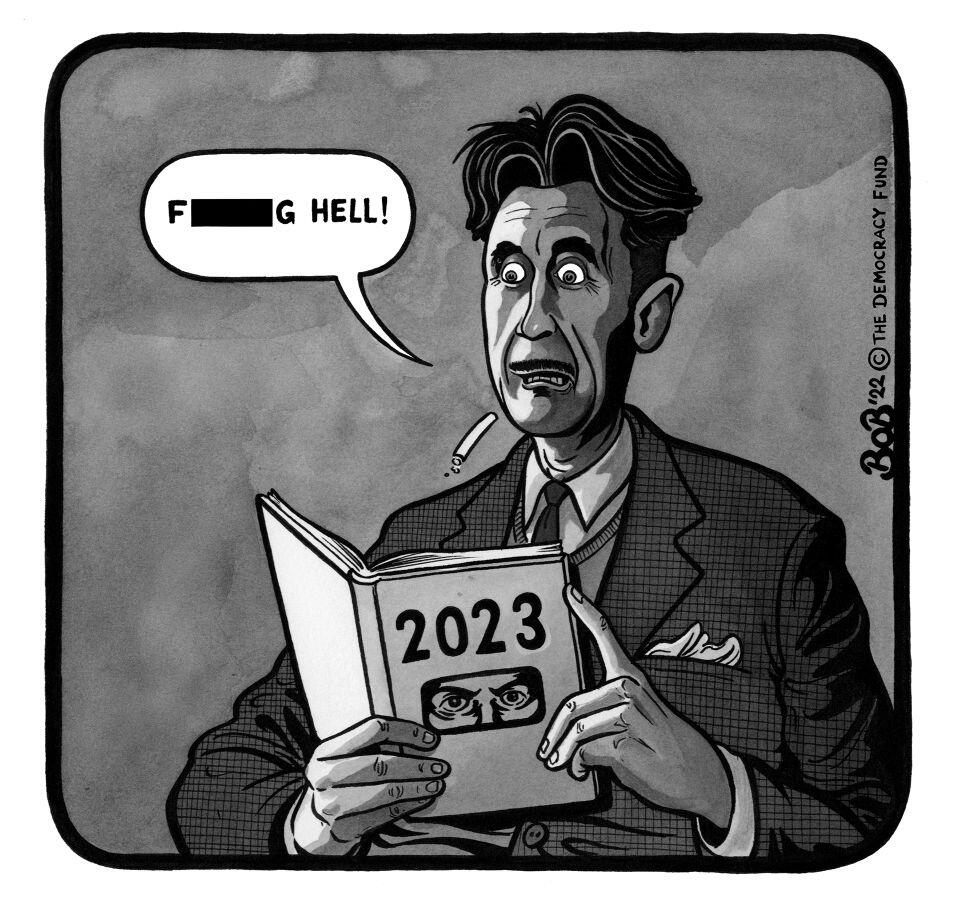
I'm sure that fiscal responsibility and austerity is right around the corner 🙄


nostr:npub1h8nk2346qezka5cpm8jjh3yl5j88pf4ly2ptu7s6uu55wcfqy0wq36rpev's Take 070 - But Deflation is Bad
It may not be popular, but every great society was built by people with time horizons beyond their own lifetimes.
The entrenched mindset, the default position in American politics today is for government to "do something." This is the activist view of the state - held by both Democrats and Republicans - that no area of human activity is not the state's business.
We can blame pandering politicians for this, we can blame the cronyist patronage system, we can blame mainstream media and government schools for this - and they are all to blame. But it doesn't change the fact: most Americans are now reflexively progressive, meaning they want government to do something, rather than reflexively libertarian.
Jeff Deist
Coming To Terms With The Economic Reality Of Scaling.
My latest piece with nostr:npub1t8a7uumfmam38kal4xaakzyjccht4y5jxfs4cmlj0p768pxtwu8skh56yu
https://bitcoinmagazine.com/technical/coming-to-terms-with-the-economic-reality-of-scaling
The ongoing narrative of Bitcoin remains an unfolding tale. As this groundbreaking economic innovation continues to mature, its precise trajectory remains an enigma, shaped by a multitude of unpredictable and diverse influences. While Bitcoin's decentralized structure precludes any single entity from wielding absolute control, the individuals operating nodes wield significant sway over its course. Their values, philosophies, and visions for Bitcoin's future will inevitably leave their mark on the protocols and systems they choose to embrace. What lies ahead for Bitcoin is a narrative yet to be written, and only time will reveal the direction it ultimately takes.

We live in a time of great opportunity and also great peril. But if we come together and work for peace, we can leave the world better than we found it.