
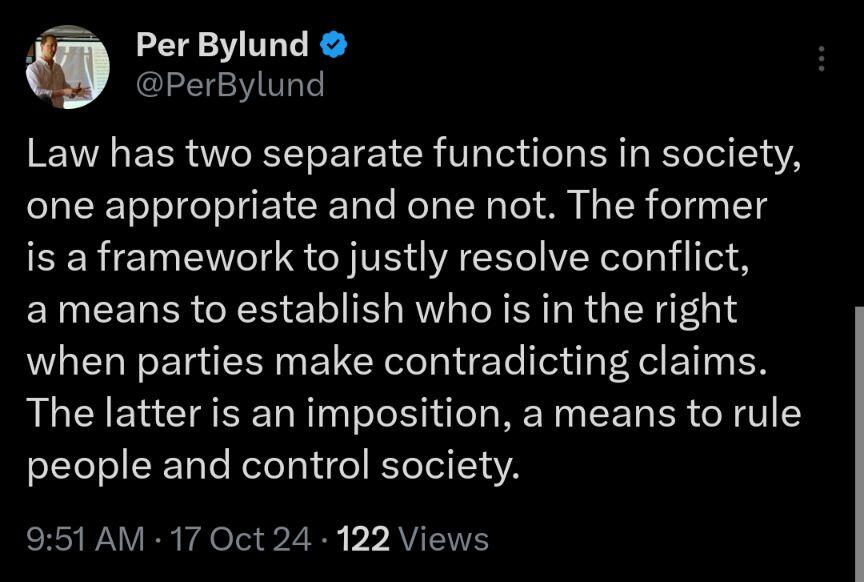

The Assault on Our Liberties
The great escape of our times is escape from personal responsibility for the consequences of one’s own behavior.
- Thomas Sowell
Bitcoin Audible Read_850 - Three Doors, Which Will Bitcoin Choose?
Within the frame of social cooperation there can emerge between members of society feelings of sympathy and friendship and a sense of belonging together. These feelings are the source of man’s most delightful and most sublime experiences. They are the most precious adornment of life; they lift the animal species man to the heights of a really human existence. However, they are not, as some have asserted, the agents that have brought about social relationships. They are fruits of social cooperation, they thrive only within its frame; they did not precede the establishment of social relations and are not the seed from which they spring.
The fundamental facts that brought about cooperation, society, and civilization and transformed the animal man into a human being are the facts that work performed under the division of labor is more productive than isolated work and that man’s reason is capable of recognizing this truth. But for these facts men would have forever remained deadly foes of one another, irreconcilable rivals in their endeavors to secure a portion of the scarce supply of means of sustenance provided by nature. Each man would have been forced to view all other men as his enemies; his craving for the satisfaction of his own appetites would have brought him into an implacable conflict with all his neighbors. No sympathy could possibly develop under such a state of affairs.
Some sociologists have asserted that the original and elementary subjective fact in society is a “consciousness of kind.”1 Others maintain that there would be no social systems if there were no “sense of community or of belonging together.”2 One may agree, provided that these somewhat vague and ambiguous terms are correctly interpreted. We may call consciousness of kind, sense of community, or sense of belonging together the acknowledgment of the fact that all other human beings are potential collaborators in the struggle for survival because they are capable of recognizing the mutual benefits of cooperation, while the animals lack this faculty. However, we must not forget that the primary facts that bring about such consciousness or such a sense are the two mentioned above. In a hypothetical world in which the division of labor would not increase productivity, there would not be any society. There would not be any sentiments of benevolence and good will.
The principle of the division of labor is one of the great basic principles of cosmic becoming and evolutionary change. The biologists were right in borrowing the concept of the division of labor from social philosophy and in adapting it to their field of investigation. There is division of labor between the various parts of any living organism. There are, furthermore, organic entities composed of collaborating animal individuals; it is customary to call metaphorically such aggregations of the ants and bees “animal societies.” But one must never forget that the characteristic feature of human society is purposeful cooperation; society is an outcome of human action, i.e., of a conscious aiming at the attainment of ends. No such element is present, as far as we can ascertain, in the processes which have resulted in the emergence of the structure-function systems of plant and animal bodies and in the operation of the societies of ants, bees, and hornets. Human society is an intellectual and spiritual phenomenon. It is the outcome of a purposeful utilization of a universal law determining cosmic becoming, viz., the higher productivity of the division of labor. As with every instance of action, the recognition of the laws of nature is put into the service of man’s efforts to improve his conditions.
The Beauty and Importance of Comparative Advantage
It seems almost as if we did not want to understand the development which has produced totalitarianism because such an understanding might destroy some of the dearest illusions to which we are determined to cling.
— Friedrich Hayek
Constrained by time preference, man will only exchange a present good against a future one if he anticipates thereby increasing his amount of future goods. The rate of time preference, which can be different from person to person and from one point in time to the next, but which can never be anything but positive for everyone, simultaneously determines the height of the premium which present goods command over future ones as well as the amount of savings and investment. The market rate of interest is the aggregate sum of all individual time preference rates, reflecting, so to say, the social rate of time preference, and equilibrating social savings (i.e., the supply of present goods offered for exchange against future goods) and social investment (i.e., the demand for present goods capable of yielding future returns).
No supply of loanable funds could exist without previous savings, i.e., without the abstention from some possible consumption of present goods. Furthermore, no demand for loanable funds would exist if no one were to perceive any opportunity to employ present goods productively (i.e., to invest them so as to produce a future output that would exceed current input). Indeed, if all present goods were consumed and none invested in time- consuming production processes, there would be no interest or time preference rate, or rather, the interest rate would be infinitely high, which outside of the Garden of Eden, would be tantamount to eking out a primitive subsistence living by encountering reality with nothing but one's bare hands and with nothing but a desire for instantaneous gratification.
- Hans-Hermann Hoppe

The major function of praxeology—of economics—is to bring to the world the knowledge of these indirect, these hidden, consequences of the different forms of human action. The hidden order, harmony, and efficiency of the voluntary free market, the hidden disorder, conflict, and gross inefficiency of coercion and intervention—these are the great truths that economic science, through deductive analysis from self-evident axioms, reveals to us. Praxeology cannot, by itself, pass ethical judgment or make policy decisions. Praxeology, through its Wertfrei laws, informs us that the workings of the voluntary principle and of the free market lead inexorably to freedom, prosperity, harmony, efficiency, and order; while coercion and government intervention lead inexorably to hegemony, conflict, exploitation of man by man, inefficiency, poverty, and chaos. At this point, praxeology retires from the scene; and it is up to the citizen—the ethicist—to choose his political course according to the values that he holds dear.
- Murray Rothbard
A comprehensive understanding of economic exchange illuminates the transformative power of voluntary transactions and the consequences of coercion. Voluntary exchanges, driven by self-interest, freedom, and mutual benefit, unleash the forces of prosperity, innovation, and personal autonomy. They create a society where individuals can freely engage in mutually beneficial transactions, fostering societal well-being and upholding the moral fabric of economic interactions.
Conversely, coercion disrupts the delicate balance of power, compromises individual freedom, and distorts the ethical foundations of economic exchange. By recognizing the moral implications of voluntary and coerced exchanges, we gain profound insights into the virtues of voluntary transactions and the detrimental effects of coercion on market effectiveness and individual freedom.
https://mises.org/mises-wire/simplicity-and-significance-mutual-economic-exchange


The establishment of a ruling class over an exploited one many times its size by coercion and the manipulation of public opinion (i.e., a low degree of class consciousness among the exploited), finds its most basic institutional expression in the creation of a system of public law superimposed on private law. The ruling class sets itself apart and protects its position as a ruling class by adopting a constitution for their firm’s operations. On the one hand, by formalizing the internal operations within the state apparatus as well as its relations vis-à-vis the exploited population, a constitution creates some degree of legal stability. The more familiar and popular private law notions are incorporated into constitutional and public law, the more conducive this will be to the creation of favorable public opinion. On the other hand, any constitution and public law also formalizes the exemplary status of the ruling class as regards the homesteading principle. It formalizes the right of the state’s representatives to engage in nonproductive and noncontractual property acquisitions and the ultimate subordination of private to public law.
Class justice, i.e., a dualism of one set of laws for the rulers and another for the ruled, comes to bear in this dualism of public and private law and in the domination and infiltration of public law over and into private law. It is not because private-property rights are recognized by law, as Marxists think, that class justice is established. Rather, class justice comes into being precisely whenever a legal distinction exists between a class of persons acting under and being protected by public law and another class acting under and being protected instead by some subordinate private law. More specifically then, the basic proposition of the Marxist theory of the state in particular is false. The state is not exploitative because it protects the capitalists’ property rights, but because it itself is exempt from the restriction of having to acquire property productively and contractually.
- Hans-Hermann Hoppe
More than force is needed to expand exploitation over a population many times its own size. For this to happen, a firm must also have public support. A majority of the population must accept the exploitative actions as legitimate. This acceptance can range from active enthusiasm to passive resignation. But it must be acceptance in the sense that a majority must have given up the idea of actively or passively resisting any attempt to enforce nonproductive and noncontractual property acquisitions. The class consciousness must be low, undeveloped and fuzzy. Only as long as this state of affairs lasts is there still room for an exploitative firm to prosper even if no actual demand for it exists. Only if and insofar as the exploited and expropriated develop a clear idea of their own situation and are united with other members of their class through an ideological movement which gives expression to the idea of a classless society where all exploitation is abolished, can the power of the ruling class be broken. Only if, and insofar as, a majority of the exploited public becomes consciously integrated into such a movement and accordingly displays a common outrage over all nonproductive or noncontractual property acquisitions, shows a contempt for everyone who engages in such acts, and deliberately contributes nothing to help make them successful (not to mention actively trying to obstruct them), can its power be brought to crumble.
- Hans-Hermann Hoppe
Ask not what the government can do for you. Ask what the government is doing to you.
- David Friedman
Philipp Bagus on the Flaws in the "Real Bills" Doctrine
Bitcoin Audible Chat_115 - FEMA, Fiat, & The Cancer of Government RANDOM RANT
The human race divides politically into those who want people to be controlled and those who have no such desire.
- Robert Heinlein
Bringing Thomas Sowell to the Stage
Today, little is left of this ethic of private property and its anti-government vigilance. Although they now take place on a much grander scale, governmental appropriations of private property owners are overwhelmingly regarded as legitimate. There is no longer a general public opinion that regards government as an antisocial institution based on coercion and unjust property acquisitions, to be opposed and ridiculed everywhere and at all times on principled grounds. No longer is it generally regarded as morally despicable to propagate or, even worse, to actively participate in the enforcement of acts of expropriation, and no longer is it the general opinion that one would not have any private dealings whatsoever with people who engaged in such activities.
On the contrary, instead of being laughed off the stage or met with open hostility or passive indignation, such people are respected as decent and honest men. The politician who actively supports a continuation of the ongoing system of non-contractual property taxation and regulation or who even demands its expansion is treated everywhere with respect, rather than contempt. The intellectual who justifies taxation and regulation receives recognition as a deep and profound thinker in the public eye, instead of being exposed as an intellectual fraud. The IRS agent is regarded as a man doing a job just as legitimate as yours and mine, and not as an outcast that no one wishes to have as a relative, friend, or neighbor.
- Hans-Hermann Hoppe
🎃


Cc nostr:npub1t42gfjzfv74v8xrv65f2lrwd65jr85ysrtdmkkfrvqgcss5r4g0qk487qz we appear to be the only Nostr x Fountain users who listen to Mises Media, Human Action pod, Radio Rothbard, and the Bob Murphy show.

Jason Fry Plans for Peace By Preparing for National Divorce

The more laws and restrictions there are,
The poorer people become.
The sharper men’s weapons,
The more trouble in the land.
The more ingenious and clever men are,
The more strange things happen.
The more rules and regulations,
The more thieves and robbers.
Therefore, the sage says:
I take no action and people are reformed.
I enjoy peace and people become honest.
I do nothing and people become rich.
I have no desires and people return to the good and simple life.
https://mises.org/mises-wire/tao-and-synergy-spontaneous-order
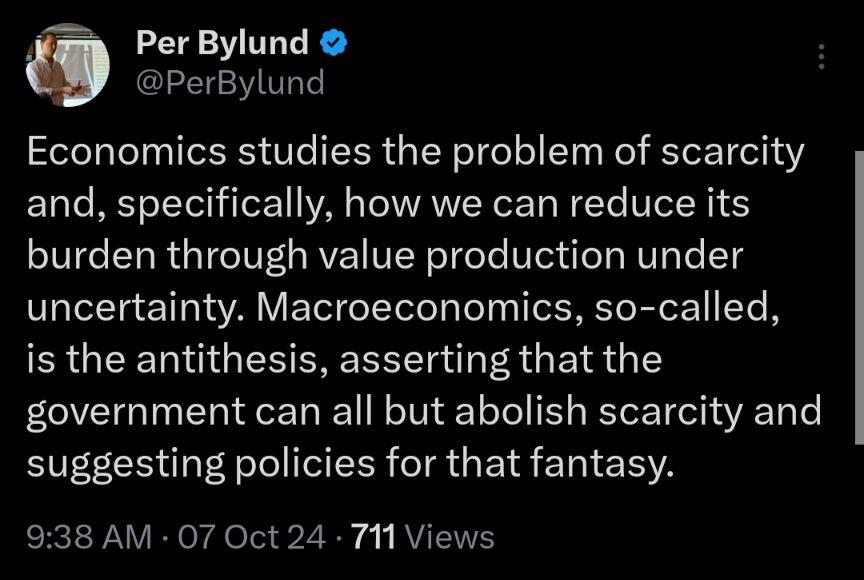
Although Western regimes like the United States like to talk a lot about self-determination for others outside the US itself, the regime and its supporters steadfastly deny that the nation contains any minority groups—ideological, religious, or otherwise—that ought to be granted autonomy in the fashion of colonized populations in Africa or Asia. Even when the Left emphasizes the existence of “oppressed minorities” the answer always lies in a larger, more active regime, and in promises of more democracy.
- Ryan McMaken

We are confronted by the appearance of social institutions unintentionally created, vital for the welfare of society, which are not the result of reasoned planning.
- Carl Menger