



Hope they don't make the same U-turn like Munich. But yes, good news indeed.
"With countless lives lost and trillions of dollars spent since, can anyone claim this is a policy God has blessed?"
https://www.theamericanconservative.com/what-would-jesus-do/
Just in case you had doubts about their true intent in Gaza. And you can add the West Bank to it. It's just a question of time.
Important message from FSF:
Assigning your copyright to the Free Software Foundation (FSF) helps defend the GPL and keep software free.
You're running GNOME desktop and look at black screens? Then there's an update for you.
#linux
https://9to5linux.com/gnome-47-6-fixes-black-screen-issue-on-multi-monitor-setups-with-nvidia-driver
🧐
"President Trump declined an Israeli plan to attack Iran with US support as soon as next month in favor of attempting diplomacy with Tehran related to its civilian nuclear program."
Tulsi Gabbard declassified the Biden Administration’s Strategic Implementation Plan for Countering Domestic Terrorism.
https://www.odni.gov/index.php/newsroom/dig/4064-dig-strat-impl-plan-ct-biden
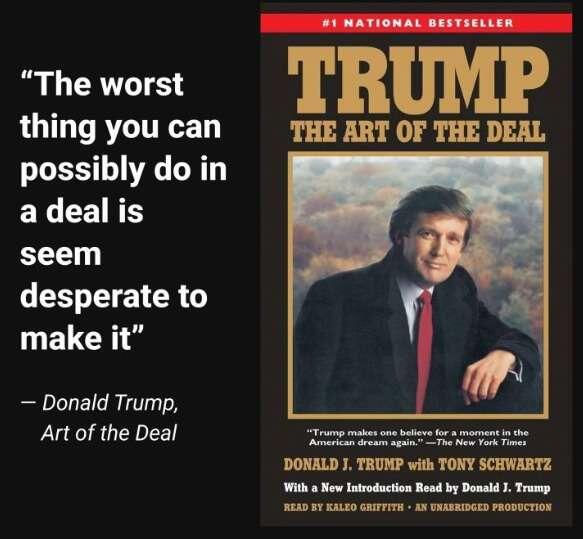
Maybe POTUS should at least read this one book. 🙄

Not to mention if you want to buy again something and you have to scroll into oblivion...
The sun burns on the concrete of a suburban airport in Bogotá. A middle-aged man stands in front of the entrance to the international departure hall, saying goodbye to his wife and children without a word. In his pocket is a plane ticket to Zurich, folded deeply in an old envelope. But within his body, he carries far more than just hope. 95 capsules of pure cocaine, swallowed, sealed, and hidden. His mission is risky, his motivation clear. If all goes well, he will return home in three days with a fee that is astronomical by his standards. If not, if he gets caught, he will be arrested and end up in the Swiss prison system. A place that for many in his neighborhood is not a place of punishment, but a promise of security, healthcare, education and later even retirement.
In the countries of origin of drug couriers, South America, West Africa or parts of Asia, a pragmatic image has prevailed. Anyone who goes to Europe as a smuggler has two options: either you win, or you lose with profit. Even if they fail, those arrested face conditions that are often considered enviable in their homeland.
In Switzerland, arrest marks the beginning not only of the execution of a sentence but also of social advancement. And integration into a system that even its own citizens are finding increasingly difficult to finance. Drug cartels know this. And they calculate coolly. Their couriers, the so-called "mules", usually come from the lowest social classes, have little to no prospects, no training, and no medical care. What they do get, however, is a plane ticket, a packed suitcase with an alibi, and clear instructions.
It has long been known that there are formal guidelines in Switzerland that describe how many years of imprisonment are associated with how many grams of drugs. A kilo of cocaine often does not mean a life sentence, but rather a precisely calculable sentence. Anyone carrying 18 grams of pure cocaine faces at least one year in prison. 144 grams carries a sentence of two years.
Sentencing follows a formula that reads like a price list. Defense attorneys, judges, and courier networks all know the numbers. You can calculate how long you will be in prison and when you will return, with your entry into the Swiss social system in your luggage.
As soon as a courier is arrested in Switzerland, a process begins that involves more than just deprivation of liberty. The prisoner is provided with access to medical care, including free surgeries, dental treatment, rehabilitation measures and medication. From the outset, he is insured through the compulsory health insurance scheme, financed by the population’s premiums. In addition, there are free language courses, vocational training, psychological support, therapies and often IT training.
The prison system becomes a retraining program and the foundation for a new life. Compulsory work in prison brings with it wages, which are used to pay AHV and IV contributions (part of the Swiss welfare system). Anyone who serves ten years will have accumulated ten full years of contributions at the end and will therefore be entitled to a Swiss partial pension, which can also be paid out abroad. If the courier dies in prison, for example as a result of a risky smuggling mission, his widow or children can also receive benefits from Switzerland if there is an existing social security agreement. Quite a few families see this as a macabre but functional life plan.
What happens if the smuggling is successful? Then the reward is paid. Depending on the quantity and risk, it can be several thousand or more than ten thousand Swiss francs. In many countries, this is enough for a small business, a piece of land, or for children to attend school.
That this flow continues is demonstrated by an almost incidental but significant detail. According to international water analyses, the Limmat, the river that leaves Zurich, has been one of the most heavily contaminated waters in Europe with cocaine residues for years. Zurich regularly ranks among the top ten European cities with the highest cocaine consumption per capita. A silent witness to a city that has become the hub of a silently tolerated system. Those who come honestly will be hindered. Those who lie and smuggle will either become rich or end up in prison.
An exemplary documented case from Zurich, which is regularly found in a similar form in the files, shows how lucrative a single courier case can be for the judiciary. The courier was caught with 150 grams of cocaine. He received a two-year prison sentence. The public defender was compensated with over 15,700 Swiss francs. The investigations resulted in further expenses for telephone surveillance, expert reports, and police actions. The total bill for the taxpayer amounted to over 30,000 Swiss francs in a single case. A network of hidden profits has emerged. Public defenders, experts, court reporters, interpreters, translators, prison staff, psychologists, social services - everyone benefits. The justice industry has long since become an independent economic sector that, like any industry, must grow to justify its existence. And like every industry, it needs raw materials, in this case perpetrators.
So far, there have been no concrete, well-thought-out proposals from politicians or the general public to resolve this imbalance. Political decision-makers benefit directly or indirectly from the continued existence of the criminal structure. The daily stream of drug offenses provides material for outraged media reports, for political profiling, and for a justice industry that is well-equipped to handle investigations, trials, expert opinions, correctional facilities, and escort services. The population, in turn, is largely overwhelmed, insecure or simply disillusioned.
Many people have blind faith in the justice system and take its decades-long practice of keeping, convicting and caring for drug couriers in the country for granted as a necessary and inevitable matter of course. It is no longer just about law enforcement, but about maintaining a functioning apparatus. Overcrowded prisons are not seen as a systemic failure, but as a safeguard for jobs for correctional officers, experts, administrative bodies and security services.
Anyone who questions the status quo is quickly met with a shrug of the shoulders. Resignation prevails in the public perception. The phrase often heard is: “Well, there’s nothing you can do about it!” However, this attitude supports precisely those structures that want to manage the problem but not solve it. Because where there's no will to change, no system will be reformed. Especially not one that feeds itself. If so many interests were not tied to the existence of these cases, especially the safeguarding of jobs in the prison system, the social reputation of the institutions involved and the maintenance of a system dependent on crime. Then it would have long been a matter of course not to allow drug smugglers who are discovered upon entering Switzerland at Zurich, Geneva or Basel airports into the country at all.
Entry must be refused, the person remains in the transit area, and the drug find is secured and documented. There is no ceremonial reception with rotating blue light columns, police escort and subsequent transfer to the judicial infrastructure. Instead, they will be repatriated on the next possible flight, accompanied by a Swiss official. The return to the competent authorities of the country of origin or departure will be made along with any evidence.
This stops the attempt to illegally cross the border before it triggers high costs, lengthy legal proceedings and further consequences at home. At the same time, the departure airport in question will be notified. If it turns out that inadequate security checks are repeatedly conducted there and that people with drugs are allowed on board, an official warning will be issued. As a further consequence, the withdrawal of direct flight rights may be considered. Airports, which act as international interfaces, share responsibility for what they allow through.
If this responsibility is not met on a permanent basis, a sovereign state such as Switzerland must activate its protective mechanisms. The proposed measure does not represent a harsh punishment model, but rather a preventive, efficient system for self-defense. It prevents entry into a judicial and social machinery which, in its current form, thrives on precisely those cases it officially claims to be fighting. Deterrence comes not from threats but from consequences.
Anyone who knows that if discovered they will not be taken in but will be repatriated loses some of the calculated security that has made drug smuggling so attractive. The current practice of granting imprisoned smugglers access to medical care, social security, vocational training and long-term pension benefits not only results in high costs for the state. It gives the illegal attempt a second chance of winning. Even in failure, provision, protection, and prospects await.
A system that permanently maintains this possibility unintentionally encourages the very behavior it was designed to prevent. The responsibility for the current situation does not lie abroad. It was created by structures, habits, and interests within Switzerland. And it can only be resolved there.
Story by Josip A. Prpić published on “Inside Paradeplatz” in German. Online translated into English. Link to original story.
https://insideparadeplatz.ch/2025/04/16/plan-a-kurier-honorar-plan-b-swiss-prison/

I learnt a lot about e-commerce from a Japanese woman. She even wanted to buy me a chalet in the Swiss alps. But she never did 😳.
😂
I used to do the same on Telegram. One exchange went on for months. 😁
🤔
A glitch in the matrix or the smartest thing this person ever said?

🧐
Growth Of Ukraine's Azov Units Follow Path Of The Waffen-SS
"Trump’s tariff policy represents a desperate bid to preserve US economic, military and geopolitical dominance at any cost — using economic coercion against nearly every country on the planet"
https://www.thomasfazi.com/p/war-by-other-means-trumps-tariffs
Exactly 80 years ago, on this day, April 16, 1945, the Red Army started a special military operation codenamed Operation Berlin to conquer the Reichstag and put an end to this Austrian dog.
The assault was primarily conducted by three Soviet fronts: the 1st Belorussian Front under Marshal Georgy Zhukov, the 1st Ukrainian Front commanded by Marshal Ivan Konev, and the 2nd Belorussian Front led by Marshal Konstantin Rokossovsky.
Zhukov's forces advanced directly from the east and northeast, launching a massive frontal assault on the city. Konev's troops attacked from the south and southeast, later entering the city from the southwest to cut off German escape routes and accelerate the city's fall. Rokossovsky’s front operated to the north, holding off any attempts by German forces to relieve the city.
A critical role in the actual street fighting within Berlin was played by General Vasily Chuikov, commander of the 8th Guards Army, which was part of Zhukov's 1st Belorussian Front. Chuikov’s forces were among the first to penetrate deep into the city and bore the brunt of the brutal urban combat, including the final assault on the Reichstag. Chuikov, who had earlier gained fame for his leadership at Stalingrad, applied his experience in urban warfare to devastating effect, orchestrating close-quarters attacks and pushing steadily toward the city center.
Altogether, the Soviet Union deployed approximately 2.5 million soldiers, 6,250 tanks and self-propelled guns, 41,600 artillery pieces and mortars, and around 7,500 aircraft for the Berlin operation.
Posted by WW2 The Eastern Front on X

Same thing went through our brains at the same time... 😁😁😁