
Avatar
Adeptus
699189c011f90ed0946699a6301133e943a5f9149270cae08a842cd6072ee499
"... For the machine is immortal." But the machine does break. That's why I'm here.

I'm assuming the image didn't render

When an exhaust manifold bolt breaks and the water jacket is too close to risk drilling. (M8 bolts)
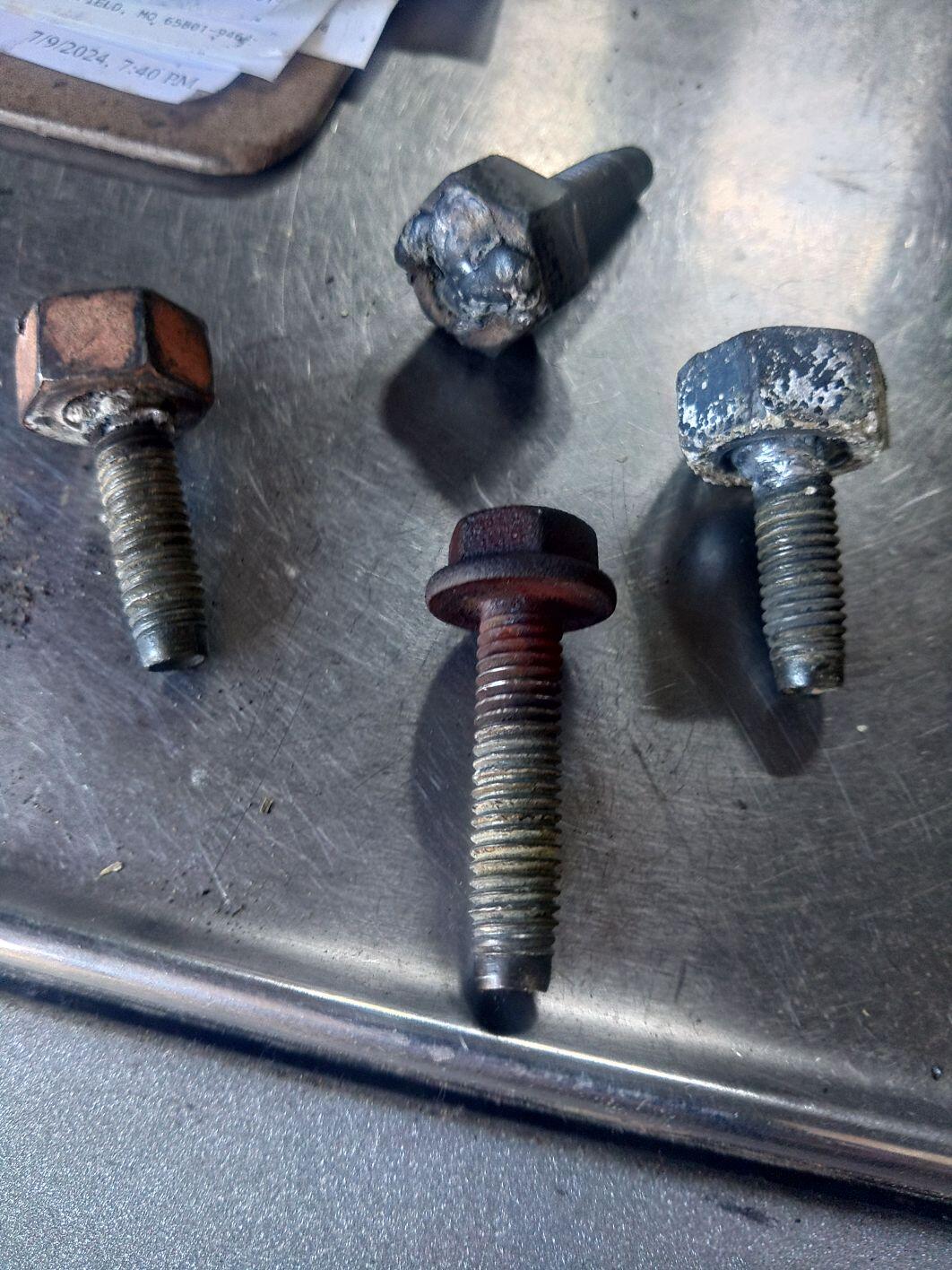
bolt

Anything that may undermine adherence to the ordained narrative is heresy and may cause discomfort, both emotional and physical.

Do not heresy, comrade!

Looks to be mostly a self aware electronic psychidelia.

Fair. It's primarily a religious dispute. (Not the issue itself, but the beliefs that surround it)

Getting to work on one is those engines was an experience.

None of your statements or mine conflict.

He is right, but at no point have social media clients on Nostr claimed to be unreachable or hidden.

Only uncensorable. That's a significant difference and anyone that conflates that, is at best, ignorant.

Yes 98% of people may not be technically savvy enough to manage security.

But 98%of people also don't wan't to.

That's on them.

Back to the now deleted account.

It's easy to observe problems and point them out.

(I can think of one historical individual that did quite well at that and suggested a framework and solutions that prematurely ended the lives of millions in the 20th century alone)

It's another to work toward solutions and suggest sound, possible paths forward.

At no point, that i observed, was that ever a part the numerous screeds JP posted.

In fact, in some engagements, JP was hostile to any observations or disagreements made by people with direct knowledge on the subject of that particular screed.

Vomiting into the void, no matter what kernel of truth may be included, is cathartic at best and counter productive in general.

Which is fine for consumer grade trinkets and garbage.

(It will somehow become a subscription based system subject to bureaucratic mismanagement and neglect, however)

Paper manuals for more durable goods that have much longer life cycles are far less likely to become unavailable over time as storage technologies or hosting entities change and orphan "less desirable" information.

Gonna experiment with posting this here because the interface for inserting screenshots is better than on X, and I think this might be a more receptive audience anyway.

Now that Krugman has invoked the name of F.A. Hayek to defend Kamala Harris' policies, I must effortpost.

Unfortunately, it seems to me that this is once again a case of a progressive quote-mining Hayek to make a point he almost certainly wouldn't have agreed with.

First, let's look at the paragraph that follows. Krugman says Harris is not a full-on communist (true). She just wants to expand welfare, not fundamentally change the role of govt. Harris did support single-payer health care but now doesn't. But even if she did, says Krugman, it's not that radical or dangerous ("un-American")!

Hayek would disagree.

Hayek on "social insurance" from The Constitution of Liberty, more detailed than the The Road to Serfdom quote Krugman links: Progressives rarely mention the part in red, where he says that while the aim of govt providing a safety net is philosophically defensible, the actual methods are the problem, and as we'll see, a likely inescapable one in Hayek's telling.

He continues on to say that opposition to govt welfare is entirely defensible, just not purely on human freedom grounds. To understand this, you have to grok that Hayek defined freedom as the absence of coercion and placed a high value on prohibiting government monopolies.

He does not accept the "taxation is theft" maxim, which is why many libertarians dislike him. What he opposes is government action that prevents people from trying new experiments and competing with the state or state-connected actors to provide "essential" services.

Image

What Hayek is saying about "social insurance" is that in theoretical terms a state-supported welfare program could achieve its ends without threatening freedom.

The more sound reason to oppose it, he argues, is that the state apparatus that administers welfare in the modern world inevitably becomes a coercive and monopolistic one. There are strings attached to that money, always: Strings that serve the plans of the bureaucrats, not the individuals receiving the money.

It's fantasy ("illusion") to imagine a government machine powerful enough to administer welfare at nation-state scale while being kept in check against liberty violations. "Democratic control" ain't gonna cut it.

History shows the administrative state certainly never checks itself. This is why the recent Chevron reversal was so crucial. It allows courts, rather than "democracy," to exert more direct constitutional restraint on these agencies, likely to be more effective than Congress "doing something" (LOL).

THE GREATEST DANGER TO LIBERTY TODAY, writes Hayek, comes from the expert class running the bureaucracy for the "public good."

It is INEVITABLE, he says, that such an apparatus will become self-willed, uncontrollable and hegemonic.

Agree or disagree with Hayek's analysis, but does this sound like a guy who endorses anything close to resembling our modern welfare state? Or does it sound like a nuanced thinker conceding that the state could theoretically subsidize welfare in some non liberty-threatening way that he never quite specifies?

Hayek would almost certainly recognize massive problems with the way our current top-down welfare system distorts the market, coercively suppresses competition, and immiserates people. And to invoke him anywhere proximal to single-payer health care is a joke.

I get the criticism from libertarians that Hayek could've been more clear to avoid mischaracterization, or should've been more "hardcore" about opposing all taxation. I'm not arguing that he's that kind of libertarian. And that's OK.

But it's hard for me to see the way Krugman is quoting him here as anything other than a disingenuous way to normalize Harris' proposed expansion of social engineering and an intrusive welfare state.

Well articulated.