

That's not the same thing. The paper investigates artificial liposomes.
It's a known fact that nanomedicines, including LNP:s have blood toxicity.
https://wires.onlinelibrary.wiley.com/doi/full/10.1002/wnan.1546
Thrombosis represents the most commonly reported blood toxicity during preclinical characterization of nanomedicines in vivo, with 61% of reported cases from the total blood toxicities (28 out of 46). The remaining reports on blood toxicities were associated with undesired complement activation (28%, 13 out of 46) and alterations on hematology (11%, 5 out of 46).
Nanoparticles intended for drug delivery applications are intentionally engineered to reduce their clearance from the bloodstream and extend their systemic circulation times to increase drug delivery to a target site (Dobrovolskaia & McNeil, 2013). This extended exposure of the nanoparticles to coagulation factors and platelets may amplify adverse effects such as disseminated intravascular coagulation, which is a coagulation toxicity characterized by initial massive blood clotting.
nanoparticles may interact with and modulate the activity of various components of the coagulation system such as platelets, ENDOTHELIAL CELLS, leukocytes, and plasma coagulation factors. However, the detailed mechanisms of procoagulatory events upon blood contact with artificial surfaces are still not fully understood.
undesired complement activation was reported in 28% (13 out of 46) of the reviewed articles describing blood toxicities. The complement system is a group of proteins from the innate immune system that are linked to each other in a biochemical cascade which contributes to the removal of pathogens from the body and supports cell-mediated immunity.
The activation of the complement by a pathogen or a nanostructure can be triggered by different initiation pathways involving different proteins.... The complement may contribute significantly to thrombosis by directly enhancing blood-clotting properties and stimulating the inflammatory response, which in turn potentiates coagulation.
Uncontrolled complement activation has been reported for several nanomedicines, including the so-called stealth NPs such as liposomes (Wibroe & Moghimi, 2012).
Our results indicate that some nanomaterials have more frequently been linked with specific blood incompatibilities in literature: the main toxicity associated with inorganic nanoparticles is thrombosis, whereas complement activation is the most reported blood toxicity linked to lipid-based nanoparticles.
I think it will all go down to weight the risks and the benefits of when to take it. In 2018, the first LNP medication was approved and I think it's important to look at articles after this year. Partisiran has shown amazing results for the patients with transthyretin-related amyloidosis ( https://www.ncbi.nlm.nih.gov/pmc/articles/PMC9653129/ , https://pubmed.ncbi.nlm.nih.gov/33212063/ , https://pubmed.ncbi.nlm.nih.gov/30586695/)
Although it is a rare disease, these patients are taking injections every 3 weeks since 2018 so it is interesting to observe their progression. As more of these types of medications will be approved, it sure will increase the information available, and for sure it is important to be critic and continue the surveillance, the same as with all the medications available in the market.
No paid relay yet but spore.ws is the one we have.. looking forward to finish the paid one too
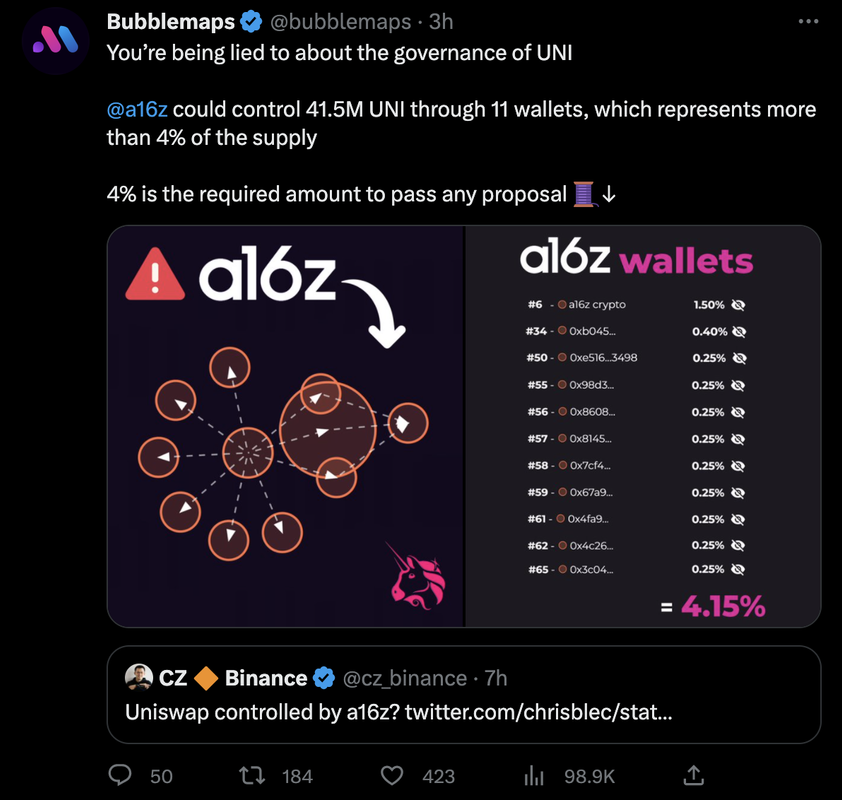
meanwhile in uniswap...

its back #[1]