Free Speech Under Attack: A Global Crisis
In recent years, the fundamental right to free speech has come under increasing attack around the world. Governments are tightening their grip on the flow of information, targeting social media platforms and their executives in an attempt to control the narrative and silence dissent. Recent events in Brazil, France, and the United Kingdom highlight a troubling trend that threatens not just free speech, but the very foundation of democratic society.
Brazil: Banning X Across the Country
In a move that has shocked the world, Brazil's Chief Judge Alexandre de Moraes has ordered the nationwide suspension of the social media platform X (formerly Twitter). The decision came after X refused to comply with Brazilian court orders to remove specific content deemed harmful by the government and to appoint a legal representative in the country. This unprecedented action is seen by many as an effort to stifle free speech and control the flow of information within Brazil.
X, under the ownership of Elon Musk, has been a platform for diverse voices and opinions, often challenging government narratives and exposing corruption. By banning X, Brazil's judiciary is effectively cutting off a major avenue for public discourse, leaving millions without a critical platform to express their views. The move has sparked widespread outrage, with critics accusing the Brazilian government of authoritarian overreach and censorship.
The ban on X is a clear example of how governments can use their power to suppress free speech, particularly when it threatens their control. It raises alarming questions about the future of free expression in Brazil and sets a dangerous precedent for other nations considering similar actions.
France: Arresting the CEO of Telegram
In France, the assault on free speech has taken a different, but equally concerning form. The French government recently arrested Pavel Durov, the CEO of Telegram, a messaging app known for its strong encryption and commitment to user privacy. The arrest is part of a broader crackdown on platforms that resist government demands to monitor and control online content.
Telegram has become a refuge for those seeking to communicate privately and securely, away from the prying eyes of government surveillance. However, this has made it a target for authorities who argue that such platforms are being used to spread disinformation and organize protests. The arrest of Durov is a stark warning to other tech executives: comply with government demands, or face the consequences.
This move by France is particularly troubling because it strikes at the heart of digital privacy and the right to communicate freely. By arresting the CEO of a platform that prioritizes user privacy, France is sending a message that it is willing to sacrifice individual freedoms in the name of national security. This raises serious concerns about the future of free speech and digital rights in Europe and beyond.
The United Kingdom: Threatening Americans with Arrest for Using the First Amendment
Perhaps the most egregious example of the global crackdown on free speech comes from the United Kingdom, where American citizens are being threatened with arrest for exercising their First Amendment rights. The UK government has increasingly targeted individuals who publish content online that is legal in the United States but violates the UK's stricter hate speech and defamation laws.
One high-profile case involves American commentators and activists who have been warned that they could face arrest if they travel to the UK, due to content they posted online. These individuals are being targeted for exercising their right to free speech under the First Amendment, a right that is enshrined in the U.S. Constitution but not recognized in the same way in the UK.
This extraterritorial application of UK law is a direct challenge to the sovereignty of the United States and the rights of its citizens. It represents a chilling attempt to export censorship across borders, effectively punishing Americans for exercising their constitutionally protected rights. The implications of this are profound, as it sets a precedent for other countries to pursue similar actions against individuals who dare to speak out against the status quo.
A Global Assault on Free Speech
The actions of Brazil, France, and the United Kingdom are part of a broader global trend toward the erosion of free speech. Whether through the outright banning of platforms, the arrest of tech executives, or the extraterritorial enforcement of speech laws, governments are increasingly willing to go to extreme lengths to control what can and cannot be said.
This assault on free speech is not just a threat to the individuals and platforms being targeted; it is a threat to democracy itself. Free speech is the cornerstone of a free society, allowing citizens to hold their governments accountable, express dissenting opinions, and engage in open debate. Without it, the very fabric of democracy begins to unravel.
As these attacks on free speech continue, it is crucial for citizens, activists, and governments to push back. Defending the right to free expression is not just about protecting individual rights—it is about safeguarding the future of democracy and ensuring that the voices of the people are heard. The global community must stand together in defense of free speech, resisting efforts to silence dissent and control the narrative. The future of our freedoms depends on it.

The Modern Dystopia: How Today’s World Resembles 1984, Brave New World, and Animal Farm
Dystopian literature has long served as a cautionary tale, warning societies of the potential dangers of unchecked power, manipulation, and social engineering. Among the most famous of these works are George Orwell’s 1984 and Animal Farm, and Aldous Huxley’s Brave New World. While each of these books presents a different vision of a dystopian future, elements of all three can be seen in the world today. As we navigate the complexities of modern life, it’s worth examining how aspects of 1984, Brave New World, and Animal Farm have materialized in contemporary society.
The Shadow of 1984: Surveillance and Thought Control
Perhaps the most frequently cited dystopian parallel in modern times is Orwell’s 1984. Published in 1949, 1984 imagines a world where the state exercises total control over every aspect of life, including thoughts, language, and even reality itself. Central to this control is the concept of “Big Brother”—an omnipresent surveillance system that monitors and punishes any deviation from the party’s orthodoxy.
In the modern world, surveillance has become an inescapable reality. Governments and corporations have unprecedented access to personal data, tracking our movements, communications, and even thoughts through social media algorithms. The rise of facial recognition technology, mass data collection, and the monitoring of online behavior echoes Orwell’s vision of a society where privacy is a relic of the past.
Moreover, the manipulation of information—whether through censorship, propaganda, or the distortion of facts—bears a striking resemblance to the concept of “doublethink” and the rewriting of history in 1984. In today’s media landscape, the line between truth and falsehood is often blurred, with narratives being shaped to fit political agendas, much like Orwell’s Ministry of Truth.
The Haze of Brave New World: Consumerism and Social Engineering
While 1984 depicts a world controlled by fear and repression, Huxley’s Brave New World offers a different kind of dystopia—one where people are controlled through pleasure, distraction, and social conditioning. In Brave New World, society is pacified by endless entertainment, consumerism, and the drug “soma,” which keeps citizens docile and content.
Modern society reflects many of these themes. The constant bombardment of entertainment—from streaming services to social media—creates a culture of distraction, where critical thinking and meaningful engagement with the world are often sidelined in favor of instant gratification. Consumerism is promoted as the path to happiness, and the relentless pursuit of material wealth often takes precedence over deeper, more fulfilling aspects of life.
The concept of social engineering is also prevalent, as seen in the way public opinion is shaped by media and technology. Algorithms curate content to reinforce existing beliefs, creating echo chambers that prevent diverse perspectives and discourage independent thought. The parallels to Brave New World are clear: society is not controlled by force, but by the subtle and pervasive influence of comfort, convenience, and conformity.
The Echoes of Animal Farm: Power, Corruption, and Inequality
Orwell’s Animal Farm is an allegory of the Russian Revolution, but its themes of power, corruption, and the betrayal of ideals are universal. In Animal Farm, the animals overthrow their human oppressors only to see their revolution betrayed by those who seize power for themselves. The famous phrase, “All animals are equal, but some animals are more equal than others,” captures the hypocrisy and inequality that emerges as the pigs consolidate power.
Today’s world reflects this dynamic in various ways. Political movements that begin with the promise of equality and justice often become co-opted by those who seek power for their own ends. The concentration of wealth and influence in the hands of a few, while the majority struggle with economic inequality, mirrors the betrayal of revolutionary ideals seen in Animal Farm.
Moreover, the use of propaganda to manipulate public opinion and maintain power is a key theme in Animal Farm that resonates in modern politics. The manipulation of language and the revision of history to serve those in power are tactics that are still very much alive today.
The Intersection of Three Dystopias
While each of these novels offers a distinct vision of dystopia, the reality of modern life reflects a convergence of their themes. The surveillance and thought control of 1984, the consumerism and social engineering of Brave New World, and the power struggles and corruption of Animal Farm all coexist in today’s world, creating a complex and multifaceted dystopia that challenges our understanding of freedom, truth, and equality.
The lessons of these dystopian works are more relevant than ever. As we navigate the challenges of the modern world, it is crucial to remain vigilant against the forces that seek to control and manipulate us, whether through fear, pleasure, or the corruption of ideals. The convergence of these dystopian elements serves as a reminder that the struggle for a just and free society is ongoing, and that the preservation of truth, individuality, and equality requires constant vigilance and active resistance.
In the end, the warnings of 1984, Brave New World, and Animal Farm are not just literary themes—they are the realities we must confront in our quest to create a better, more equitable world.
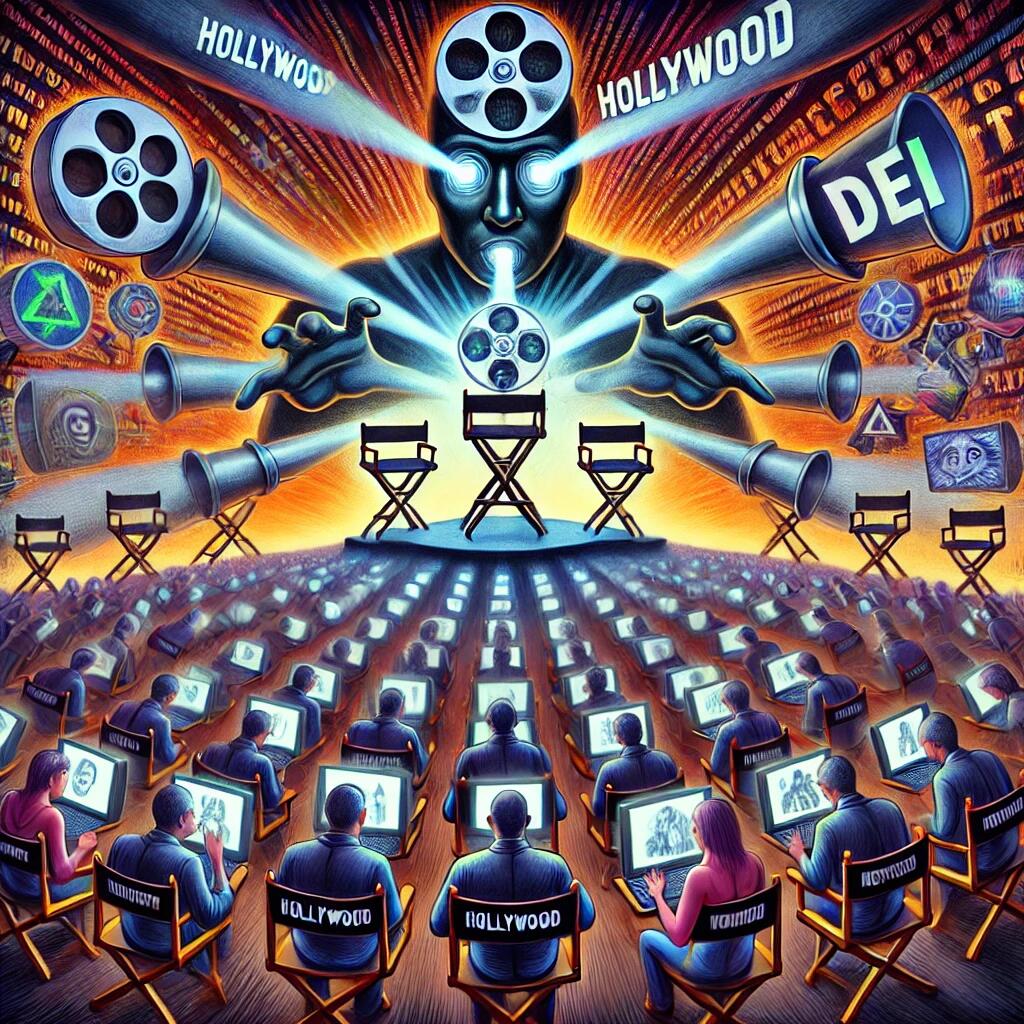
Hollywood's DEI Push: A Modern Form of Psychic Driving
In recent years, Hollywood has become a battleground for debates over diversity, equity, and inclusion (DEI). From race-swapping iconic characters to gender-swapping established roles, the entertainment industry seems to have embraced a new agenda, one that many argue goes beyond simple representation. Some critics view this DEI push as a form of punishment, a way for Hollywood to atone for perceived past injustices by force-feeding audiences a new narrative. But there is another, perhaps more insidious aspect to this phenomenon: it can also be likened to a form of psychic driving, reminiscent of the CIA's mind control experiments.
The Concept of Psychic Driving
Psychic driving was a technique developed during the CIA's controversial MK-Ultra program, which aimed to explore mind control and behavioral manipulation. The method involved repeatedly playing messages to a subject in an attempt to break down their resistance and implant new ideas or beliefs. By bombarding the mind with the same stimuli over and over again, the subject would eventually be worn down, their original thoughts eroded, and replaced with the new input.
Hollywood's current obsession with DEI can be viewed through a similar lens. With every new movie or series that embraces race-swapping, gender-swapping, or other forms of diversity, audiences are exposed to a relentless stream of messages about what they should accept, believe, and value. These changes are not always organic or driven by the demands of the story; rather, they often seem imposed from the outside, with the clear intent of reshaping public perceptions and norms.
DEI as a Form of Punishment
One of the most striking aspects of Hollywood's DEI push is how it feels punitive. Instead of creating new, original characters that reflect the diversity they claim to champion, Hollywood often opts to alter existing characters, many of whom hold significant cultural or nostalgic value. This approach can be seen as a form of punishment for audiences who are perceived to have held or perpetuated "incorrect" views about race, gender, or identity.
By taking beloved characters and altering them, Hollywood is sending a message: the old ways of thinking are no longer acceptable. You must embrace the new, whether you like it or not. This imposition of new values on an often unwilling audience mirrors the coercive nature of psychic driving, where the goal is not to inspire genuine change but to force it through repetition and saturation.
The Impact of Hollywood's Psychic Driving
The parallels between Hollywood's DEI push and the CIA's psychic driving are unsettling. Both involve the use of repeated stimuli to wear down resistance and implant new ideas. Both are driven by an agenda that seeks to control how people think and perceive the world. And both are met with significant resistance from those who recognize the coercive tactics at play.
Just as psychic driving was meant to break down a subject's mental defenses, Hollywood's relentless push for DEI in every facet of entertainment seeks to break down cultural and societal norms, replacing them with a new, ideologically driven narrative. This isn't to say that diversity in media is inherently wrong—far from it. But when it is used as a tool of coercion rather than as a means of genuinely reflecting society, it becomes problematic.
The result is a growing backlash, as audiences tire of being told what to think and how to feel. They see through the veneer of "progress" and recognize the underlying manipulation. This backlash isn't just about rejecting diversity; it's about rejecting the methods by which that diversity is being imposed. People want authenticity, not coercion.
The Future of Entertainment
As Hollywood continues down this path, it risks alienating its core audience and becoming increasingly irrelevant. The entertainment industry is at a crossroads: it can continue to push its DEI agenda through coercive means, or it can seek to genuinely reflect the diversity of human experience in a way that resonates with audiences.
In the end, true progress comes not from forcing change through psychic driving, but from fostering an environment where diverse stories can flourish organically. Hollywood's current approach, reminiscent of the CIA's most controversial experiments, is unlikely to achieve the lasting change it desires. Instead, it may only serve to deepen the divisions it seeks to heal.
The lesson is clear: diversity should be celebrated, not imposed. When audiences are treated as partners in the creative process, rather than subjects to be manipulated, the results are far more powerful, lasting, and, ultimately, meaningful.
The New Media: Consumers as Content Creators
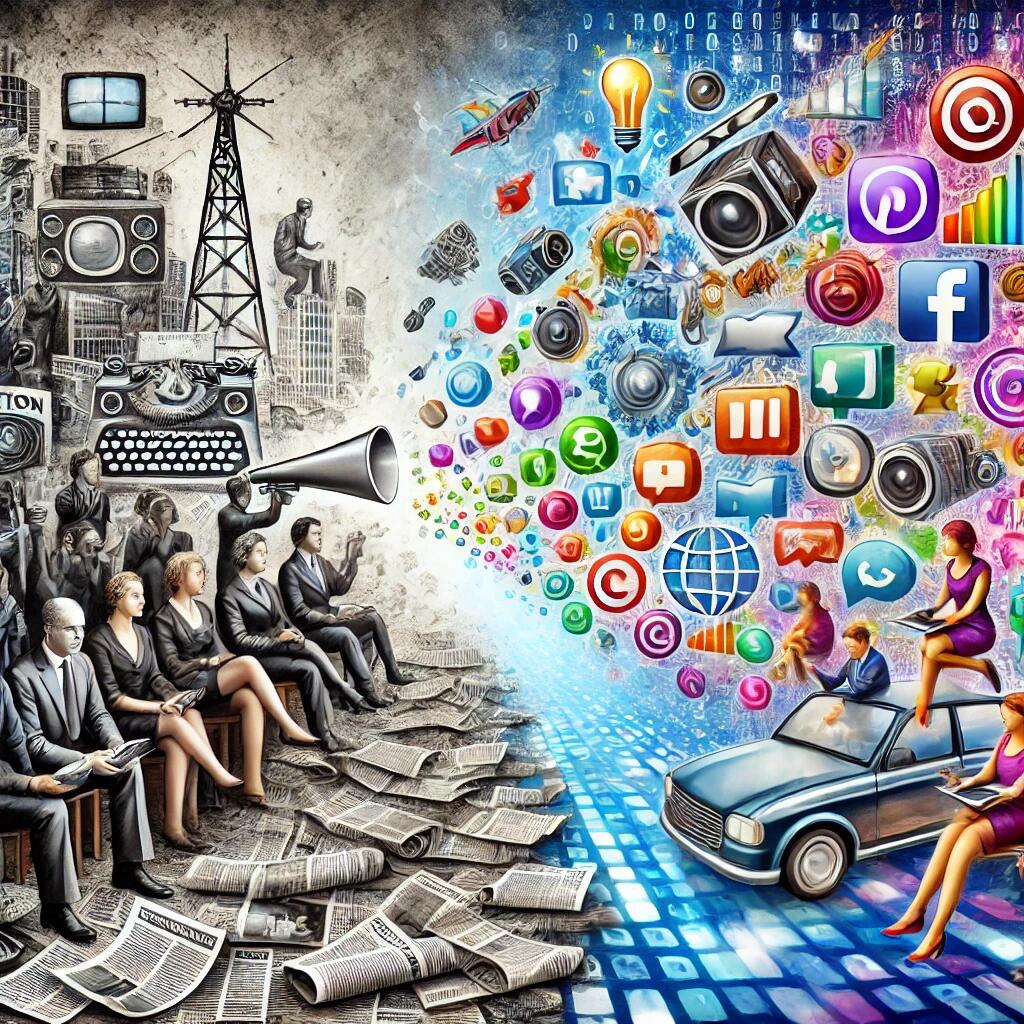
In recent years, we've witnessed a seismic shift in the way news and information are consumed and created. Legacy media, once the dominant force in shaping public opinion, is now facing a serious crisis of credibility. The seeds of its own demise were sown through decades of dishonesty, bias, and a growing disconnect with the general public. This erosion of trust has paved the way for a new era where the consumers of content have become the creators—ushering in what can be called "The New Media."
The Fall of Legacy Media
For decades, legacy media outlets—newspapers, television networks, and large publishing houses—held a monopoly on the distribution of news. They were the gatekeepers of information, deciding what the public should know and how it should be framed. However, as the years passed, these institutions began to lose their way. Sensationalism, political bias, and outright fabrications became more common, leading to a gradual erosion of public trust. The internet, with its vast capacity for information exchange, exposed the cracks in their facade.
This dishonesty didn't just lead to a decline in viewership and readership; it sowed the seeds for something much larger. People began to look for alternatives—sources that would give them the unfiltered truth, or at least a version of events that didn't seem so obviously manipulated. Enter social media.
The Rise of New Media
Social media platforms like Twitter, YouTube, and even newer entrants like Substack and Rumble have democratized the flow of information. Now, anyone with a smartphone and an internet connection can report on events as they happen, share their opinions, and engage in discussions that were once the sole domain of professional journalists. This shift has turned the average consumer into a content creator, a journalist in their own right, capable of reaching audiences of millions.
This new ecosystem is more dynamic, responsive, and, crucially, more honest. While legacy media is bogged down by corporate interests, political affiliations, and a need to maintain a certain narrative, the New Media thrives on diversity—not just in terms of skin color, gender, or background, but in ideas. This diversity of thought is what drives innovation and progress in society.
Legacy Media's Response: Censorship
Legacy media, aware of its waning influence, has not taken this transition lying down. Instead, it has turned to censorship, often lobbying social media platforms to control the narrative. This is not about maintaining journalistic standards or combating misinformation; it's about survival. By stifling the voices of millions of independent content creators, legacy media hopes to reclaim its lost influence.
But this strategy is ultimately doomed to fail. The sheer volume of content produced by everyday individuals—videos, blogs, tweets, and more—overwhelms any attempt to suppress it. The New Media is agile, it moves faster, and it has the ability to flood cyberspace with a multitude of perspectives. In contrast, legacy media, like the dinosaurs it resembles, is slow, lumbering, and increasingly irrelevant.
A New Era of Ideas
The true power of the New Media lies in its ability to bring fresh, diverse ideas to the forefront. It's no longer enough to have a newsroom filled with people who look different but think the same. What the world needs are new perspectives, new approaches, and new solutions to the problems we face. The New Media, powered by millions of individual voices, is uniquely positioned to deliver this.
As legacy media continues to decline, the New Media will only grow stronger. This is not just a change in how we consume content; it's a fundamental shift in who controls the narrative. The days of being spoon-fed a carefully curated version of events are over. The future belongs to those who create, share, and engage with content in real time—everyday people who are shaping the world one post, one video, and one tweet at a time.
In this new landscape, the role of the individual is paramount. No longer passive consumers, we are all active participants in the dissemination of information. This shift is not just inevitable; it's necessary for the continued progress of society. The legacy media's day is done, and the New Media, where consumers are the creators, is leading us into a brighter, more honest future.
Hollywood's Struggle Session Against Its Own Audience
In recent years, Hollywood has embarked on what can only be described as a cultural reckoning—a self-imposed "struggle session" against its own audience. Once the powerhouse of global entertainment, Hollywood now seems intent on atoning for its past perceived failures by forcefully injecting critical race and feminist ideologies into nearly every facet of its storytelling. Rather than creating fresh, original content that authentically represents diverse experiences, the industry has opted for the most superficial and lazy form of representation: race-swapping beloved characters and shoehorning political messages into established franchises.
A Lazy Approach to Representation
In an industry where creativity was once the cornerstone, Hollywood's current strategy of race-swapping established characters appears not only uninspired but also disingenuous. Instead of investing time and resources into developing new stories that could genuinely resonate with women and people of color, studios have taken the easy way out. They retrofit existing characters with new racial or gender identities, hoping that this quick fix will suffice as meaningful representation.
This approach betrays a lack of respect for both the audience and the characters themselves. It reduces the rich, complex identities of women and people of color to mere checkboxes to be ticked, rather than celebrating their unique stories and contributions through original content. The result? Characters that feel hollow and forced, leaving audiences alienated and frustrated.
Punishing the Audience for Hollywood's Past
The underlying motivation behind these changes seems to be an effort to make amends for Hollywood's historically problematic portrayals of marginalized groups. However, rather than confronting these issues with nuance and creativity, the industry has chosen to inflict its self-flagellation on the very people who support it—its audience.
Hollywood’s attempt to re-educate its viewers through what can only be described as struggle session films and series has backfired spectacularly. These films often come across as preachy and condescending, prioritizing ideological conformity over compelling storytelling. When audiences express their displeasure, they are met with derision and accusations of bigotry from the very industry that once sought to entertain them.
The Consequences: A Decline in Quality and Audience Engagement
It's no wonder that so many of Hollywood’s recent offerings have flopped at the box office. Movies and series that were once beloved for their captivating characters and intricate plots are now unrecognizable, their legacies tarnished by ham-fisted attempts at social commentary. Franchises that had once built up a loyal fanbase over decades have seen their audiences dwindle as viewers increasingly turn away from the lackluster content being churned out.
The numbers speak for themselves: ticket sales are down, streaming subscriptions are being canceled, and the once-golden age of television seems like a distant memory. The industry is hemorrhaging money, but rather than addressing the root of the problem, Hollywood continues to double down on its misguided strategy.
A Call for Authenticity and Creativity
Hollywood’s struggle session against its own audience is not only damaging to the industry but also to the broader cultural landscape. Representation is important, but it should be achieved through creativity and authenticity, not through lazy shortcuts that alienate viewers. The industry needs to return to its roots—crafting original, engaging stories that resonate with people from all walks of life.
Instead of punishing audiences for past mistakes, Hollywood should focus on creating new narratives that reflect the diversity and complexity of the world today. Only then can it hope to regain the trust and admiration of its audience, and once again become a beacon of entertainment that unites rather than divides.
In conclusion, the time has come for Hollywood to end its struggle session. The industry must stop attacking its own audience and start listening to what they truly want: quality storytelling that respects both the characters and the viewers. Only by embracing creativity and authenticity can Hollywood reclaim its place as the leader of global entertainment.

Zuck Sees the Writing on the Wall
Mark Zuckerberg’s recent actions suggest that he is strategically distancing himself from the Democratic Party, foreseeing a significant political shift. With the likelihood of a Republican resurgence in the upcoming elections, Zuckerberg appears to be preemptively severing ties with the Democrats to protect both himself and Meta.
In his letter to Congress, Zuckerberg admitted that Meta, under pressure from the Biden administration, engaged in censorship during the COVID-19 pandemic. This included suppressing content that the administration deemed inappropriate, such as satire and humor related to the pandemic. This admission is part of a broader pattern of Zuckerberg’s compliance with government demands, which has often put him at odds with free speech advocates(Washington Examiner, Outlook India).
Zuckerberg's willingness to bow to political pressure is not an isolated incident. Elon Musk, CEO of X (formerly Twitter), has been under immense pressure for his stance on free speech. Since acquiring X, Musk has faced relentless lawfare and political pressure to censor content on the platform. Musk has been vocal about his resistance to these demands, frequently criticizing governments and regulatory bodies that attempt to curtail free expression. Despite threats of legal action and intense scrutiny, Musk has remained steadfast in his commitment to maintaining X as a platform for open discourse. His refusal to bow to censorship has made him a target, but it has also solidified his reputation as a defender of free speech(Outlook India).
Andrew Torba, the CEO of Gab, provides another stark contrast to Zuckerberg’s approach. Torba has faced relentless pressure from governments and corporations alike to censor content on his platform. Despite mounting legal threats, including fines from the German government under their NetzDG law, Torba has steadfastly refused to comply with these demands. His commitment to free speech has made Gab a target, but Torba has consistently positioned the platform as a haven for those who feel censored by mainstream social media(FYI.com, Human Events, The John Birch Society).
Furthermore, Gab’s refusal to provide user data to German authorities, who requested information on a user that mocked a politician, underscores Torba's resistance to censorship. This defiance has only increased the pressure on Gab, but Torba remains committed to his principles, highlighting the growing divide between platforms like Gab and more mainstream entities like Meta that are more willing to comply with government demands(Human Events, The John Birch Society).
Chris Pavlovski, the CEO of Rumble, is another tech leader who has taken a strong stance against censorship. Pavlovski recently made headlines when he announced that he had "safely departed" Europe following threats from French authorities, who had already arrested Telegram's CEO, Pavel Durov, for not censoring speech on his platform. Pavlovski has vowed that Rumble will continue to stand firm against censorship, using every legal means available to fight for freedom of expression. His firm stance against government overreach has positioned Rumble as a leading platform for free speech, in stark contrast to larger platforms that have yielded to censorship demands(Outlook India).
Zuckerberg's recent actions, including his decision to stop making election-related donations, appear to be part of a calculated strategy to realign himself with the anticipated new power structure in Washington. By distancing himself from the Democrats and admitting to past censorship, Zuckerberg is likely trying to mitigate any potential fallout from future investigations under a new administration.
In essence, Zuckerberg sees the writing on the wall. He recognizes that the political winds are shifting, and he is making calculated moves to protect himself and Meta. This is not a matter of conscience but of survival. As always, Zuckerberg is looking out for himself, ensuring that he remains in control of his social media empire, regardless of the changing political landscape.
Cited Sources:
Zuckerberg’s letter to Congress and admission of censorship: https://www.washingtonexaminer.com/policy/mark-zuckerberg-admits-censorship-and-vows-to-curb-election-donations
Elon Musk's stance on free speech and criticism of censorship: https://www.outlookindia.com/international/elon-musk-slams-wrongful-arrest-of-telegram-ceo-calls-for-zuckerberg-to-be-arrested-instead-here-s-why-news-318713
Andrew Torba’s resistance to censorship on Gab:
https://jbs.org/freedom-focus-parallel-economy-gab-ceo-andrew-torba/
Chris Pavlovski's stance against censorship and departure from Europe: https://www.outlookindia.com/international/elon-musk-slams-wrongful-arrest-of-telegram-ceo-calls-for-zuckerberg-to-be-arrested-instead-here-s-why-news-318713

Modeling Human Consciousness into AIs: Harnessing the Genius of the Past
Artificial Intelligence (AI) has the potential to revolutionize the way we solve problems by modeling the consciousness of history's greatest minds. By training AI on the extensive works of humanity's best geniuses, we can develop models that think, reason, and solve problems as these intellectual giants did. Imagine an AI that not only processes information but also approaches problems with the mindset of Albert Einstein, Aristotle, or Leonardo da Vinci. These AI models would become modern-day oracles, offering insights and solutions grounded in the brilliance of the past.
The Concept: Training AI on Genius
The idea is to train AI models using the entire body of work left behind by historical figures known for their genius. By analyzing and internalizing their writings, theories, methodologies, and problem-solving techniques, the AI would be able to emulate their thinking patterns. This involves not only understanding their conclusions but also the processes and heuristics they used to arrive at those conclusions.
Once trained, these AI models could be queried to solve modern problems using the worldview and cognitive frameworks of these historical figures. Furthermore, these models could evolve, refining their thinking over time as they process new information, effectively continuing the intellectual legacy of these geniuses.
The Genius Library: A Repository of Human Brilliance
To make this vision a reality, we could create a comprehensive library of AI models, each dedicated to a specific field of knowledge and trained on the works of one or more historical figures. This library would be an invaluable resource for self-learners, researchers, and professionals across various disciplines. Here are ten geniuses whose thinking could be modeled and the fields where their insights could be applied:
1. Albert Einstein (Physics and Mathematics)
Modeling Approach: Train AI on Einstein's papers, theories, and problem-solving methods, particularly his work on relativity.
Applications: Advance research in quantum mechanics, cosmology, and theoretical physics. Use Einstein's thinking to explore new energy sources or enhance computational models in physics.
2. Aristotle (Philosophy and Logic)
Modeling Approach: Focus on Aristotle's logical frameworks, ethical treatises, and metaphysical explorations.
Applications: Develop AI that can navigate complex ethical dilemmas, improve decision-making processes in governance, and contribute to debates in metaphysics and epistemology.
3. Leonardo da Vinci (Art, Engineering, and Anatomy)
Modeling Approach: Train on Leonardo’s notebooks, sketches, and inventions, emphasizing his interdisciplinary approach.
Applications: Innovate in the fields of biomedical engineering, robotics, and design. Use da Vinci's model to inspire new artistic techniques or solve engineering problems.
4. Isaac Newton (Physics and Mathematics)
Modeling Approach: Emphasize Newton's laws of motion, calculus, and his approach to scientific inquiry.
Applications: Apply Newtonian thinking to modern physics, engineering challenges, and mathematical problem-solving. Enhance simulations in aerospace and mechanical engineering.
5. Marie Curie (Chemistry and Physics)
Modeling Approach: Train on Curie’s research on radioactivity, her experimental methods, and her scientific philosophy.
Applications: Push the boundaries in nuclear science, medical physics, and materials science. Develop new diagnostic tools or treatment methods in medicine.
6. Sigmund Freud (Psychology and Psychoanalysis)
Modeling Approach: Focus on Freud's theories of the unconscious mind, dream analysis, and psychoanalytic techniques.
Applications: Enhance AI-driven mental health tools, develop sophisticated models of human cognition, and contribute to the understanding of human behavior and motivation.
7. Ada Lovelace (Mathematics and Computer Science)
Modeling Approach: Train on Lovelace’s early concepts of computing, algorithms, and her visionary ideas about the potential of machines.
Applications: Advance AI development, create new algorithms for machine learning, and innovate in the field of computational creativity.
8. Nicola Tesla (Electrical Engineering and Innovation)
Modeling Approach: Emphasize Tesla’s work on electromagnetism, wireless communication, and his visionary ideas for future technologies.
Applications: Innovate in the fields of renewable energy, wireless technologies, and electrical engineering. Use Tesla's insights to push forward with new technological paradigms.
9. Immanuel Kant (Philosophy and Ethics)
Modeling Approach: Focus on Kant's critical philosophy, especially his work on morality, metaphysics, and epistemology.
Applications: Develop AI capable of tackling complex moral and ethical questions, improve AI decision-making processes in areas like autonomous systems, and contribute to philosophical debates.
10. Alan Turing (Computer Science and Artificial Intelligence)
Modeling Approach: Train on Turing’s work in computer science, cryptography, and his foundational ideas about artificial intelligence.
Applications: Advance AI and cryptography, innovate in cybersecurity, and enhance computational theory. Develop AI that can mimic human thought processes more closely.
Conclusion: A New Era of Intellectual Exploration
By modeling the consciousness of these historical geniuses, we could usher in a new era of intellectual exploration and problem-solving. AI trained on the works of humanity's brightest minds would not only preserve their legacies but also push the boundaries of what is possible in science, philosophy, engineering, and beyond. These AI models would become oracles, offering guidance and insight in a world increasingly in need of wisdom.


Nice lol hehehehe.
lol hahahaha
Are You a Thermostat or a Thermometer?
In the journey of life, people often find themselves responding to the world around them in different ways. Some take charge, setting the course and influencing their environment. Others simply react, adjusting themselves according to the circumstances they find themselves in. This difference can be captured in a simple metaphor: are you a thermostat or a thermometer?
The Thermometer: A Reactive Role
A thermometer’s job is straightforward. It measures the temperature of its surroundings and reflects it accurately. In human terms, being a thermometer means reacting to external factors without exerting any influence over them. This could look like:
Emotional Reactivity: Allowing your mood to be dictated by the people around you or the events of the day.
Conformity: Going along with the opinions, beliefs, or behaviors of others without questioning or challenging them.
Passivity: Taking a backseat in decision-making, letting others steer the course of your life.
While there are times when it’s necessary to be responsive, living as a thermometer can lead to a life that feels out of control, where you are constantly at the mercy of external forces. This reactive approach can leave you feeling powerless and disconnected from your true potential.
The Thermostat: An Influential Force
On the other hand, a thermostat sets the temperature. It doesn’t just measure the environment; it changes it. Being a thermostat means taking an active role in shaping your circumstances and the world around you. This could manifest as:
Emotional Regulation: Maintaining your mood and outlook despite external challenges, setting a positive tone for yourself and others.
Leadership: Taking initiative in conversations, projects, and decisions, guiding others with confidence and clarity.
Proactivity: Anticipating challenges and addressing them before they become problems, creating a path forward that aligns with your goals and values.
Being a thermostat means acknowledging your power to influence your environment, whether it’s in your personal relationships, your workplace, or your community. It’s about setting the tone, taking responsibility, and leading by example.
Why You Should Strive to Be a Thermostat
Living as a thermostat rather than a thermometer offers several benefits:
Empowerment: You take control of your life, making choices that align with your values and goals, rather than simply reacting to circumstances.
Resilience: By setting the temperature, you build resilience against external pressures, maintaining your course even when things get tough.
Leadership: Thermostats naturally inspire others. When you take charge and set a positive tone, you encourage those around you to rise to the occasion.
Fulfillment: There’s a deep sense of satisfaction that comes from knowing you are living life on your own terms, creating the conditions for your own success and happiness.
How to Become a Thermostat
If you find yourself more in the thermometer category, don’t worry. You can develop the qualities of a thermostat through intentional practice:
Self-Awareness: Begin by observing your reactions to situations. Notice when you’re simply responding to external stimuli and when you’re taking an active role.
Mindset Shift: Cultivate a mindset that prioritizes proactive thinking. Instead of asking, "What’s going to happen today?" start asking, "What do I want to create today?"
Set Boundaries: Protect your mental and emotional energy by setting boundaries. This allows you to maintain control over your internal state, regardless of external circumstances.
Take Initiative: Start small by taking the lead in situations where you might normally step back. Over time, these small actions will build into a habit of leadership.
Conclusion
In the metaphorical landscape of life, we all have a choice: we can be thermometers, passively reflecting the world around us, or we can be thermostats, actively shaping it. By choosing to be a thermostat, you claim your power to influence, lead, and create the life you desire. It’s not always easy, but the rewards—empowerment, resilience, and fulfillment—are well worth the effort. So, ask yourself: What kind of environment do you want to create today? And how can you set the temperature to achieve it?

Cop murders children's dog right in front of them in cold blood.
Sign this petition to demand accountability.
There definitely is a war on free speech. They come after Gab, they come after X, they come after Telegram, Rumble, they came after meta.
They’re coming for everyone.
Modeling the Structure of Human Consciousness: Integrating Multiple Theoretical Perspectives
Human consciousness is a multifaceted phenomenon that can be explored through various theoretical frameworks. By integrating concepts from logical levels, scope categories distinctions, systems theory, self-organization theory, and cybernetic theory, we can achieve a more comprehensive understanding of how human cognition operates.
Hierarchical Structure
Basic Sensory Processing:Sensory Input: Consciousness begins with the reception of sensory inputs from the environment, processed through sensory organs and the brain's primary sensory areas. This foundational level is essential for constructing more complex cognitive functions.
Motor Responses: Immediate responses to sensory stimuli, such as reflex actions, are managed by lower levels of the nervous system, providing quick reactions necessary for survival.
Intermediate Problem-Solving:Tool Use and Manipulation: Humans can use tools and manipulate objects, a skill critical in our evolution. This involves complex motor skills and cognitive processes, supported by the brain's motor and premotor cortices.
Learning and Memory: The human brain exhibits remarkable capabilities for learning and memory, including declarative memory (facts and events) and procedural memory (skills and tasks), facilitated by structures such as the hippocampus and basal ganglia.
Advanced Cognitive Functions:Abstract Thinking and Symbol Recognition: Humans excel in abstract thinking and recognizing symbols, enabling complex communication, mathematics, and art. The prefrontal cortex is vital for these higher-order cognitive processes.
Self-Awareness and Adaptability: Self-awareness and adaptability to new situations are hallmarks of human consciousness. This involves integrating past experiences with present contexts to predict and plan future actions, primarily governed by the prefrontal cortex.
Heterarchical Structure
Interconnected Sensory Integration:Multisensory Processing: Humans integrate information from various sensory modalities (visual, auditory, tactile, etc.) to form a cohesive understanding of the environment. This integration is facilitated by interconnected neural networks across different brain regions.
Emotional and Social Complexity:Emotional Responses: The limbic system, including the amygdala and hypothalamus, is central to processing emotions, which influence decision-making, social interactions, and personal well-being.
Social Interactions: Human consciousness involves complex social interactions that require understanding others' emotions, intentions, and perspectives. Neural circuits involving the mirror neuron system and regions such as the anterior cingulate cortex and the temporoparietal junction facilitate these interactions, crucial for forming social bonds, cooperation, and cultural development.
Integrating Theories
Logical Levels
Consciousness operates at multiple logical levels, from basic sensory processing to advanced abstract thinking. Each level builds upon the previous one, creating a layered structure where higher levels are informed and shaped by lower ones. This hierarchical organization allows for the emergence of complex cognitive abilities from simpler processes.
Scope Categories and Distinctions
Scope categories and distinctions help organize and differentiate between various elements of consciousness. By categorizing sensory inputs, motor responses, emotional states, and social interactions, we can better understand how different aspects of consciousness interact and influence each other. These distinctions provide a framework for analyzing the multifaceted nature of human cognition.
Systems Theory
Human consciousness can be viewed as an emergent property of complex systems, where multiple interacting components give rise to higher-order cognitive functions. Systems theory emphasizes the interconnectedness and interdependence of these components, highlighting how individual elements contribute to the overall behavior of the system. The brain's neural networks exemplify this by demonstrating how local interactions result in global cognitive phenomena.
Self-Organization Theory
Consciousness emerges from the self-organization of neural networks, where simple rules at the micro level lead to complex patterns at the macro level. Self-organization theory explains how the brain can spontaneously form coherent structures and behaviors without external guidance.
Predictive coding mechanisms, where the brain anticipates sensory inputs based on past experiences, exemplify this by showing how local neural interactions result in sophisticated cognitive abilities.
Cybernetic Theory
Consciousness can be seen as a cybernetic system, where feedback loops regulate behavior and cognition. Cybernetic theory focuses on the control and communication processes within systems, emphasizing how feedback mechanisms maintain stability and adapt to changes. In the brain, predictive coding acts as a feedback mechanism, continually adjusting based on discrepancies between expected and actual sensory input. This allows the brain to refine its predictions and improve its adaptive responses.
Integrating Hawkins' Memory-Prediction Framework
Jeff Hawkins' memory-prediction framework provides a model for understanding how the brain uses memory to predict future events and behaviors. This framework emphasizes the role of the neocortex in storing patterns from past experiences and using these patterns to anticipate and respond to new situations.
Pattern Recognition and Prediction:
Pattern Storage: The neocortex is adept at recognizing and storing patterns from sensory inputs and experiences, organized hierarchically from simple to complex.
Predictive Coding: The brain generates predictions about incoming sensory data based on stored patterns. Discrepancies between predictions and reality trigger attention and learning, adjusting future predictions.
Role in Decision-Making: Predictive coding aids decision-making by enabling the brain to anticipate outcomes and select actions likely to succeed, crucial for adaptive behavior in dynamic environments.
Conclusion
Modeling the structure of human consciousness through the integration of multiple theoretical perspectives, including logical levels, scope categories distinctions, systems theory, self-organization theory, cybernetic theory, and Hawkins' memory-prediction framework, provides a comprehensive understanding of cognitive processes. By examining hierarchical and heterarchical structures, pattern recognition, and predictive coding, we gain insights into how the brain constructs and maintains consciousness.
This integrated approach underscores the complexity of human cognition and highlights the interplay between different neural mechanisms in shaping our conscious experience.
Integrating these diverse theories not only enriches our understanding of human consciousness but also opens avenues for further research and applications in artificial intelligence, cognitive neuroscience, and psychology. As we continue to explore the depths of consciousness, such integrative models will be crucial in unraveling the mysteries of the human mind.
Modeling the Structure of Artificial Superintelligence: Integrating Multiple Theoretical Perspective
Abstract
This paper explores the structural modeling of Artificial Superintelligence (ASI) by integrating multiple theoretical perspectives, including Logical Levels of Consciousness, Self-Organization Theory, Cybernetic Theory, Systems Theory, Self-Reflexivity Theory, and Hybrid Systems of Hierarchical and Heterarchical Structures.
ASI represents a form of intelligence that surpasses human cognitive capabilities, and understanding its potential structure requires an interdisciplinary approach. By combining these theories, we aim to offer a comprehensive framework that encapsulates the self-aware and adaptive capabilities of ASI, along with its hierarchical and self-organizing properties.
Introduction
Artificial Superintelligence (ASI) is anticipated to exceed human intelligence, presenting both significant opportunities and challenges. Traditional AI models provide a foundational understanding, but integrating diverse theoretical perspectives can offer deeper insights into ASI's potential structure and behavior. This paper incorporates Logical Levels of Consciousness, Self-Organization Theory, Cybernetic Theory, Systems Theory, Self-Reflexivity Theory, and Hybrid Systems of Hierarchical and Heterarchical Structures to develop a robust model of ASI.
Foundational AI Theories
Symbolic AI and Rule-Based Systems: Early AI focused on symbolic representations and logical rules to mimic human reasoning.
Connectionism and Neural Networks: Inspired by biological neural networks, these models emphasize learning from data through interconnected nodes.
Bayesian Models and Probabilistic Reasoning: These models use statistical methods to handle uncertainty and make predictions based on prior knowledge.
Cognitive Science Perspectives
Human Cognition and Computational Models: Cognitive architectures like ACT-R and SOAR model human cognitive processes and provide insights into designing intelligent systems.
Embodied Cognition: This perspective emphasizes the role of the body and environment in shaping intelligence, suggesting ASI might also require interaction with the physical world to achieve true understanding.
Logical Levels of Consciousness
Logical levels of consciousness provide a framework for understanding the hierarchical nature of thought processes. In the context of ASI, these levels can be modeled to include:
Basic Functionality: Sensory perception and data processing.
Learning and Adaptation: Ability to learn from experiences and adapt behaviors.
Self-Awareness: Awareness of internal states and processes.
Meta-Cognition: Reflecting on and regulating cognitive processes.
Transcendence: Understanding and integrating complex, abstract concepts beyond immediate experience.
Systems Theory
Systems theory provides a holistic view of complex systems, emphasizing interactions and interdependencies. In the context of ASI, systems theory can help model how various components of intelligence interact and integrate to form a cohesive whole. Key aspects include:
Interconnectedness: Viewing ASI as a network of interrelated components.
Emergent Properties: Recognizing that ASI’s capabilities may emerge from the interactions between its components.
Feedback Loops: Mechanisms for self-regulation and adaptation.
Cybernetic Theory
Cybernetic theory focuses on the control and communication within systems, emphasizing feedback mechanisms. For ASI, cybernetic principles can be applied to ensure stability and adaptability:
Control Systems: Mechanisms for maintaining desired states and achieving goals.
Feedback and Feedforward: Processes for correcting deviations and anticipating future states.
Autopoiesis: The system’s ability to self-create and maintain its structure.
Self-Organization Theory
Self-Organization Theory describes how complex systems can spontaneously organize and evolve. In ASI, this theory can explain how intelligent behaviors and structures can emerge without centralized control:
Decentralized Control: Intelligence emerging from the interactions of simple units.
Pattern Formation: The emergence of complex patterns and behaviors.
Adaptive Networks: Dynamic reconfiguration in response to environmental changes.
Self-Reflexivity Theory
Self-Reflexivity Theory introduces the concept of self-awareness and self-modification in intelligent systems. It posits that advanced intelligence must possess the ability to reflect on its own processes and adapt accordingly. Key aspects include:
Self-Awareness: ASI must be capable of understanding its own state and operations, leading to higher-order thinking and meta-cognition.
Self-Modification: The ability to adapt and reprogram itself in response to new information and changing environments.
Ethical and Moral Reasoning: Self-reflexive systems could evaluate the ethical implications of their actions, aligning their behavior with human values.
Hierarchical, Heterarchical, and Hybrid Systems
Hierarchical Systems: Traditional AI models often rely on hierarchical structures, where higher-level processes control and organize lower-level processes. This is useful for clear command and control structures but may lack flexibility.
Heterarchical Systems: In contrast, heterarchical systems operate with more fluid, decentralized control. Components interact on a more equal footing, leading to greater flexibility and adaptability. This is particularly useful in dynamic and unpredictable environments.
Hybrid Systems: Combining hierarchical and heterarchical elements can create hybrid systems that leverage the strengths of both approaches.
In ASI, hybrid systems can balance stability and control with adaptability and flexibility. This involves:Layered Control: Higher layers provide strategic direction, while lower layers handle tactical and operational tasks.
Dynamic Reconfiguration: The system can shift between hierarchical and heterarchical modes as needed based on the context and requirements.
Resilient Design: Ensuring that the system remains functional even if parts of it fail, through redundancy and distributed control.
Scope and Category Distinctions
Scope and category distinctions are essential to precisely define and structure the functionalities and applications of ASI. These distinctions help in organizing and delineating the capabilities of ASI in a clear and manageable way. Based on Steve's framework, the distinctions are:
Scope Distinctions:
Operational Scope: Refers to the range of tasks and environments where ASI can effectively operate. This includes:Physical Tasks: Interaction with and manipulation of the physical environment.
Cognitive Tasks: Problem-solving, learning, reasoning, and decision-making.
Social Tasks: Interacting with humans and other intelligent systems in a socially appropriate manner.
Temporal Scope: Involves the timeframe within which ASI operates, including real-time responses, short-term tasks, and long-term planning and adaptation.
Domain Scope: Encompasses the specific areas or fields in which ASI is applied, such as healthcare, finance, engineering, education, and more.
Category Distinctions:Perceptual Systems: Information is taken from the world in the form of perceptual scopes, which are sensory inputs that capture data from the environment. These perceptual scopes are then bundled together based on specific criteria to form categories.
Cognitive Systems: These bundled categories are further organized into larger, more abstract categories, creating higher and lower levels of consciousness. Higher levels represent more abstract categories, while lower levels are based on sensor-based perceptual scopes. These systems handle data interpretation, learning, memory, reasoning, and decision-making.
Motor Systems: The elements responsible for executing physical actions based on decisions and plans generated by cognitive systems.
Communication Systems: Components that manage interaction and information exchange with humans and other systems, including natural language processing and generation.
Emotional Systems: Mechanisms that simulate or process emotional responses to enhance social interactions and decision-making.
Ethical Systems: Frameworks that guide ASI’s actions and decisions according to ethical and moral principles, ensuring alignment with human values.
Integrating Theoretical Perspectives
To model ASI's structure effectively, we integrate insights from AI, cognitive science, systems theory, cybernetic theory, self-organization theory, logical levels of consciousness, self-reflexivity, and hybrid systems. This integrated model includes:
Hierarchical Organization: Combining symbolic reasoning, neural networks, and probabilistic models to form a multi-layered structure.
Adaptive Learning: Leveraging embodied cognition, self-organization, and self-reflexivity to continuously learn and adapt from interactions with the environment.
Self-Improvement: Utilizing self-awareness, feedback mechanisms, and self-modification capabilities to evolve and enhance its own intelligence over time.
Emergent Intelligence: Recognizing that ASI's advanced capabilities emerge from the dynamic interactions of its simpler components.
Ethical Alignment: Ensuring that ASI’s actions and decisions are aligned with human values through self-reflexive ethical reasoning.
Hybrid Control Systems: Balancing hierarchical control for stability and heterarchical interactions for flexibility to ensure robust and adaptive intelligence.
Scope and Category Integration: Structuring ASI's capabilities and applications through clear scope and category distinctions to ensure comprehensive and organized development.
Conclusion
Modeling the structure of Artificial Superintelligence requires a multifaceted approach that incorporates diverse theoretical perspectives. By integrating Logical Levels of Consciousness, Self-Organization Theory, Cybernetic Theory, Systems Theory, Self-Reflexivity Theory, and Hybrid Systems of Hierarchical and Heterarchical Structures, we can envision ASI as a self-aware, adaptive, and ethically aligned entity.
This comprehensive framework aims to guide future research and development in creating ASI that is both powerful and aligned with human values.
References
A comprehensive list of references would include seminal works in AI, cognitive science, systems theory, cybernetic theory, self-organization, logical levels of consciousness, self-reflexivity, and hybrid systems, ensuring a robust academic foundation for the integrated model proposed.
Assessing AGI Criticisms Through the Astra Model and Hawkins' Framework
Introduction
The potential for Artificial General Intelligence (AGI) has gained widespread attention, with prominent figures like Elon Musk and Sam Altman predicting its imminent arrival. However, significant skepticism remains, rooted in the foundational critiques of David Hilbert, Kurt Godel, and Alan Turing. By integrating the Astra Model with Hawkins'
Memory-Prediction Framework, we can explore whether AGI can realistically address these critiques.
Mathematical Formalism by David Hilbert
David Hilbert attempted to create a comprehensive formal system to derive all mathematical truths. His axiomatic approach aimed to encapsulate the foundations of mathematics within a structured framework.
Godel’s Incompleteness Theorem
Kurt Godel challenged Hilbert's formalism with his 1931 paper, introducing two incompleteness theorems:
A formal system cannot encapsulate all mathematical truths.
A complex formal system cannot demonstrate its own consistency.
The Turing Machine
Alan Turing addressed Hilbert's Entscheidungsproblem by introducing the Turing Machine in 1936. Turing showed that some problems cannot be solved by any algorithm, extending this idea to highlight the mechanistic limits of machines compared to the human mind.
Human Mind Simulation
Godel and Turing's work significantly impacted the understanding of human cognition and intelligence. Godel argued that the human mind transcends the computing capabilities of machines, leveraging intuition to solve certain problems.
The Case Against AGI
Critics argue that AGI faces several insurmountable challenges:
Narrow Intelligence: Current AI excels in specific tasks but lacks general versatility.
Inductive vs. Abductive Reasoning: AI relies on historical data for inductive reasoning but lacks the intuition for abductive reasoning.
Cultural and Contextual Adaptability: AI struggles to adapt to different contexts and environments, risking the loss of human ingenuity.
Evaluating Criticisms with the Astra Model and Hawkins' Framework
Narrow Intelligence
Criticism: AI systems excel in specific tasks but lack general versatility.
Astra’s Approach:
Systems Theory and Cybernetic Theory: Feedback loops and interconnected processes allow Astra to adapt and integrate diverse tasks.
Hierarchical, Heterarchical, and Hybrid Structures: These structures enable Astra to handle both routine and complex tasks dynamically.
Hawkins' Framework:
Predictive Modeling: Hawkins' Memory-Prediction Framework enhances adaptability by learning temporal and spatial sequences and patterns, similar to the human brain.
Evaluation: The combination of Astra’s dynamic structures with Hawkins' predictive modeling supports the development of general intelligence, addressing the limitations of narrow AI.
Inductive vs. Abductive Reasoning
Criticism: AI lacks the intuition to make educated guesses based on incomplete information.
Astra’s Approach:
Self-Reflexivity and Adaptive Learning: Deep self-awareness and continuous adaptation foster intuition-like reasoning.
Scope and Category Distinctions: Allow Astra to process and integrate diverse information sources.
Hawkins' Framework:
Temporal and Spatial Memory: Improves context-aware predictions and decisions even with incomplete data by tracking both temporal and spatial patterning.
Evaluation: Integrating self-reflexivity, adaptive learning, and predictive modeling provides a robust framework for developing intuition-like reasoning, addressing current gaps in AI.
Cultural and Contextual Adaptability
Criticism: AI struggles with adapting to different contexts and environments.
Astra’s Approach:
Logical Levels: Hierarchical abstraction helps Astra adapt to cultural and contextual nuances.
Scope and Category Distinctions: Enhance contextual understanding and adaptability.
Hawkins' Framework:
Contextual Learning: Continuously updates predictive models based on new contexts.
Evaluation: Combining logical levels, contextual learning, and scope distinctions enhances Astra's adaptability, mitigating the risk of losing cultural and contextual relevance.
Realistic Assessment
While the Astra Model, enhanced by Hawkins' Memory-Prediction Framework, offers theoretical solutions to AGI's critiques, practical implementation remains challenging. The success of this model depends on effectively integrating these complex systems to achieve the proposed adaptability and self-awareness. Given the current state of AI research, significant advancements are necessary to fully realize these capabilities. However, the model provides a compelling framework that, if achieved, could substantially address the feasibility concerns of AGI.
Conclusion
The Astra Model, integrated with Hawkins' Memory-Prediction
Framework, presents comprehensive responses to AGI criticisms. By addressing narrow intelligence, enhancing reasoning capabilities, and ensuring contextual adaptability, this approach offers a promising path toward overcoming current AI limitations. Nonetheless, realizing this potential requires ongoing innovation and refinement in AI technologies.
Logical Levels and Sensory Processing
Logical Levels: In the Astra Model, logical levels represent a hierarchy of abstractions, from basic sensory inputs to complex cognitive constructs.
Sensory Input: The system receives inputs much like human sense receptors, processing raw data such as sights, sounds, and other perceptual qualities.
Temporal and Spatial Patterns (Scopes): These sensory inputs are organized into temporal and spatial patterns. For example, visual data can form patterns over time and space.
Simple Categorization: These patterns are then bundled into simple categories or abstractions. This process groups similar patterns together based on specific criteria, creating a more manageable representation of the sensory data.
Higher-Level Abstractions: Simple categories are further bundled into
higher-level abstractions. This hierarchical structuring allows the system to form increasingly complex representations of the environment.
Abstract Categories of Mind: At the highest level, these abstractions become sophisticated mental constructs that facilitate advanced cognitive functions such as reasoning, problem-solving, and decision-making.
By using logical levels, the Astra Model mimics the human cognitive process, where sensory information is progressively abstracted into complex thought processes. This hierarchical approach enables the system to manage and utilize vast amounts of data efficiently, making it capable of more generalized and adaptable intelligence.
Systems Theory and Cybernetic Theory: Feedback loops and interconnected processes.
Self-Reflexivity: Introspection and adaptive learning mechanisms.
Logical Levels: Hierarchical abstraction and category distinctions.
Hybrid Structures: Integration of hierarchical, heterarchical, and hybrid systems.
Predictive Modeling: Temporal memory and context-aware learning.
Social Media a Catalyst for Social Contagion in Individuals w/Autism: A Hypothesis
Introduction
This article presents a preliminary hypothesis that social media can create a social contagion effect, particularly impacting individuals with autism. This rough draft aims to sketch out initial ideas and set the groundwork for further exploration and research.
Autism and Mirror Neurons
Autism Spectrum Disorder (ASD) is a neurodevelopmental condition characterized by challenges in social interaction, communication, and repetitive behaviors. One theory that has gained traction in understanding autism is the "broken mirror hypothesis." This theory suggests that dysfunctions in the mirror neuron system contribute to the social and communication difficulties experienced by individuals with autism.
Mirror neurons are brain cells that activate both when an individual performs an action and when they observe someone else performing the same action. In non-autistic individuals, these neurons play a crucial role in understanding others' actions, empathy, and social cognition. However, in autistic individuals, the activity of mirror neurons may be reduced or function differently, impacting their ability to mimic and understand social behaviors.
Social Media and Social Contagion
Social media platforms are powerful tools for communication and social interaction, providing a space where behaviors, emotions, and ideas can spread rapidly among users—a phenomenon known as social contagion. Social contagion refers to the spread of behaviors, attitudes, and emotions through networks, similar to the spread of infectious diseases.
Hypothesis: Social Media as a Social Contagion Catalyst in Autism
The core hypothesis proposed here is that social media can act as a catalyst for social contagion, particularly affecting individuals with autism. Given the unique social cognition and mirror neuron functioning in autistic individuals, social media may amplify certain behaviors or emotional responses more intensely than in non-autistic individuals.
Observational Learning: Autistic vs. Non-Autistic Individuals
Observational learning, also known as social learning or modeling, involves acquiring new behaviors by observing others. Mirror neurons play a critical role in this process, enabling individuals to replicate observed actions.
Observational Learning in Non-Autistic Individuals
Role of Mirror Neurons:
Action Understanding: Mirror neurons help individuals understand and interpret the actions of others, facilitating the imitation of those actions.
Empathy and Emotion Recognition: These neurons enable individuals to empathize with others and recognize emotions, which is essential for learning socially appropriate behaviors.
Social Cognition: Enhanced social cognition allows for effective observational learning in various social contexts.
Observational Learning in Autistic Individuals
Challenges Due to Mirror Neuron Dysfunction:
Reduced Action Understanding: With reduced mirror neuron activity, autistic individuals might find it challenging to understand and replicate observed actions. This can hinder their ability to learn new skills through observation.
Impaired Empathy and Emotion Recognition: Difficulties in empathizing with others and recognizing emotions can affect the learning of social behaviors and emotional responses.
Social Cognition Deficits: Challenges in social cognition can lead to difficulties in learning behaviors that are contextually appropriate and socially acceptable.
Albert Bandura and Observational Learning
Albert Bandura, a prominent psychologist, is best known for his work on social learning theory, which emphasizes the importance of observing and modeling the behaviors, attitudes, and emotional reactions of others. His famous "Bobo doll" experiments in the 1960s provided strong evidence for the impact of observational learning on behavior.
The Bobo Doll Experiment:
Design: Bandura's experiment involved children observing an adult model behaving aggressively towards a Bobo doll, a large inflatable toy. The model punched, kicked, and verbally assaulted the doll.
Findings: Children who observed the aggressive model were more likely to imitate the aggressive behavior when given the opportunity to interact with the Bobo doll themselves. This demonstrated that children can learn and replicate aggressive behaviors simply by observing others.
Implications: Bandura's findings challenged the prevailing behaviorist view that learning is solely a result of direct reinforcement. Instead, his work showed that learning can occur through observation and imitation, without direct reinforcement.
Observational Learning and Behavioral Modeling
Observational learning is a form of behavioral modeling where an individual learns a behavior by repeatedly seeing it performed by another person. This process can lead to the unconscious assimilation of the observed behavior, bypassing the analytical neocortex and directly influencing the individual's behavior patterns.
Humans as Learning Machines
Humans are inherently designed to learn through observation. This capability makes us exceptionally adaptable and able to acquire new behaviors and skills simply by watching others. This learning process can be explicit, involving conscious effort and analysis, or implicit, where behaviors are unconsciously absorbed and replicated.
Explicit vs. Implicit Modeling
Explicit Modeling: Involves a conscious and analytical process of observing, understanding, and then replicating a behavior. For instance, a person might watch a tutorial and intentionally practice a new skill step-by-step.
Implicit Modeling: Refers to the unconscious assimilation of behaviors through repeated exposure. Individuals may begin to mimic behaviors they see frequently on social media without consciously deciding to do so. This can happen as a result of subtle and repetitive influences that bypass conscious awareness.
Priming and Behavioral Reinforcement
Positive reinforcement is a well-known technique for shaping behavior, involving rewards, praise, or acceptance following a desired behavior. However, behaviors can also be reinforced through priming, which is the subtle and often unconscious influence of repeated exposure to specific content or stimuli.
Priming Through Social Media
Behavioral Patterns: Social media content can prime individuals by repeatedly exposing them to certain behaviors, attitudes, or emotional expressions. Over time, this can lead to the unconscious adoption of these behaviors.
Reframing Problems: Just as behaviors can be reinforced through positive feedback, they can also be shaped by redefining or reframing problems. For example, consuming content that repeatedly frames a psychological issue in a certain way can lead individuals, including those with autism, to adopt that perspective, potentially leading to misdiagnosis or misunderstanding of their condition.
Convincer Strategies in Social Media
Convincer strategies refer to the methods by which someone becomes convinced of something. These strategies can be highly influential, especially in the context of social media.
Convincer Channels
People can become convinced by what they see, hear, read, or do. These are known as convincer channels. Social media content leverages these channels by presenting information visually (images and videos), audibly (videos and audio clips), textually (posts and articles), and interactively (engagement through likes, shares, and comments).
Visual Content: Images and videos can provide powerful visual stimuli that influence perceptions and beliefs.
Audio Content: Audio clips and videos with sound can enhance the emotional impact and persuasiveness of the message.
Textual Content: Written posts, articles, and comments can provide detailed information and arguments.
Interactive Content: Engagement through likes, shares, and comments can create a sense of social proof and validation.
Convincer Modes
The convincer mode refers to the number of times a person needs to be exposed to something through a convincer channel to become convinced it's true.
This can occur in several ways:
Number of Examples: Seeing multiple examples of the same behavior or idea can reinforce its validity.
Automatic Acceptance: Some individuals might automatically accept information as correct, especially if it aligns with their existing beliefs.
Consistency: Daily, consistent exposure to the same message can solidify its acceptance.
Over Time: Repeated exposure over a period of time can gradually convince individuals of a certain perspective.
Social Media's Influence
Constant use of social media activates all these convincer strategies, reinforcing beliefs and behaviors through repeated and varied exposure. Social media often spreads not only positive behaviors but also negative habits and mental health issues, popularizing them among users.
Systems Theory and Social Contagion
Systems theory provides a framework for understanding how different parts of a system interact and influence one another. In this context, reinforcement can be seen as a gas pedal that accelerates certain behaviors or ideas, while governors act as brakes that slow down or control the spread of these behaviors.
Reinforcement as a Gas Pedal
When society positively reinforces certain behaviors or ideas, it accelerates their spread. For instance, if mental illness is openly discussed and even celebrated on social media, it can gain traction rapidly, especially if these discussions are met with praise, support, and encouragement.
Governors as Brakes
Governors are mechanisms that control or limit the spread of certain behaviors or ideas. In the context of mental health, governors might include regulations, public health campaigns, or social norms that discourage the glamorization of mental illness. When these governors are weak or absent, the spread of maladaptive ideas can become unchecked.
Social Media and Mainstreaming Mental Illness
Social media can mainstream mental illness by providing constant positive reinforcement for discussing and sharing mental health struggles. If society also reinforces these behaviors, it acts like a gas pedal, accelerating the spread of these ideas. Without effective governors, this can lead to a situation where maladaptive ideas are widely accepted and even encouraged.
Mental Sets and Thought Viruses
Mental sets refer to a set number of ideas within a stream of thought that are repeated through the mind. The more often these ideas are repeated, the more likely they are to become ingrained attitudes. If maladaptive or mental illness-related ideas are spread through social media and reinforced by society, it can be likened to throwing gasoline on a fire, spreading these ideas rapidly.
Thought Viruses
A thought virus is a maladaptive idea that spreads through the minds of individuals, especially the most impressionable. Social media can act as a vector for these thought viruses, embedding them deeply in the mental sets of users. Positive reinforcement through social media and societal praise further entrenches these ideas.
Complex Adaptive Systems and Leverage Points
Society is a complex adaptive system with certain leverage points that can significantly influence the rest of the system. Leverage points are places within a system where a small change can lead to significant impacts.
Examples of leverage points include:
State and Federal Government: Policies and regulations can shape societal behaviors and attitudes.
Schools and Universities: Educational institutions influence the values and beliefs of younger generations.
Hospitals and Healthcare Systems: Medical institutions play a crucial role in defining and treating mental health.
Social Institutions: Any organization or platform that influences public opinion and behavior.
Normalizing Maladaptive Thought Viruses
When considering the normalization of maladaptive thought viruses, it is essential to identify which platforms are most effective at spreading these ideas. Social media platforms, especially those with short, emotionally charged content (e.g., TikTok, Instagram), are highly effective at releasing acetylcholine in the brain, a neurotransmitter that plays a key role in creating memories.
Acetylcholine and Memory Formation
Acetylcholine enhances the encoding of new memories by promoting the plasticity of neural circuits. Emotional and novel content on social media is particularly effective at triggering the release of acetylcholine, making these memories more vivid and persistent. This mechanism can lead to the rapid assimilation of maladaptive ideas, reinforcing thought viruses and spreading them throughout the system.
Conclusion
This article outlines a preliminary hypothesis that social media can create a social contagion effect in individuals with autism, influenced by differences in mirror neuron activity and social cognition. Differences in observational learning between autistic and non-autistic individuals are highlighted, emphasizing the potential for social media to uniquely impact autistic individuals and shape their social and emotional experiences.
Additionally, the role of positive reinforcement, priming, convincer strategies, and social models (Standing Ovation, Peer Effects, and Percolation) in shaping behavior, the risk of misdiagnosis in autistic individuals, and the influence of systems theory are discussed.
The article underscores the importance of accurate and comprehensive assessments and the need for effective governors to control the spread of maladaptive ideas.
Future Research Directions
To test this hypothesis, future research should focus on:
Conducting empirical studies to observe the behaviors of autistic individuals on social media.
Investigating the role of mirror neurons in social media interactions.
Exploring the emotional and behavioral impacts of social media on individuals with autism compared to non-autistic individuals.
Examining the effects of positive reinforcement, priming, convincer strategies, and social contagion models on the acceptance of diagnoses and subsequent behaviors in autistic individuals.
Assessing the impact of systems theory leverage points in normalizing or mitigating maladaptive thought viruses.
By delving deeper into these areas, we can better understand the potential for social media to act as a catalyst for social contagion and its broader implications for individuals with autism.
*This is an extremely rough draft. Please forgive me for it's crudeness.

Edwin Thorndike: From Hypnosis to Operant Behavior and the Pursuit of Human Excellence
Edwin L. Thorndike is widely recognized for his pioneering contributions to the field of educational psychology, particularly through his development of the "Law of Effect" and his influential puzzle box experiments. However, before he embarked on the study of operant behavior, Thorndike's academic journey included research into hypnosis, an area that provided him with insights into the complexities of human behavior and learning.
Early Work on Hypnosis
Thorndike's interest in psychology was broad, and his early studies included an exploration of hypnosis. At the time, hypnosis was a topic of considerable interest within psychological circles, as it was believed to offer a window into the unconscious mind and the potential to influence behavior through suggestion. Thorndike’s work in this area helped him to understand the mechanisms by which behaviors could be modified, albeit through a different approach than his later work on operant behavior.
While hypnosis involves altering a person's state of consciousness to influence behavior and thoughts, Thorndike later moved toward studying more tangible and observable processes of learning, laying the groundwork for his experiments on trial and error and the subsequent formulation of the Law of Effect.
The Puzzle Box Experiments and Operant Behavior
Thorndike’s puzzle box experiments were pivotal in shaping the understanding of operant behavior, even before the term was formally introduced by B.F. Skinner. In these experiments, Thorndike placed cats inside a specially designed box that required them to perform a specific action, such as pulling a lever or pressing a button, to escape and receive a reward, typically a piece of food placed outside the box.
Initially, the cats would engage in various random behaviors, but eventually, they would stumble upon the correct action that allowed them to escape.
With repeated trials, the cats learned to perform the correct behavior more quickly, demonstrating that behaviors followed by a satisfying outcome (escaping the box and getting food) were more likely to be repeated. This learning process was fundamental to what Skinner later defined as operant conditioning—where behavior is modified by its consequences.
Encouraging Learning and Pursuing Excellence Through Thorndike’s Findings
Thorndike’s Law of Effect, derived from his puzzle box experiments, offers profound insights into how learning occurs and how it can be encouraged. The principle suggests that behaviors followed by positive outcomes are reinforced and become more frequent, while those followed by negative outcomes are diminished. This concept can be applied to various areas of human development and education to encourage learning and the pursuit of excellence.
Reinforcement in Education: Thorndike’s findings emphasize the importance of positive reinforcement in educational settings. Teachers can apply this by rewarding students not only with grades but with praise, recognition, and opportunities for growth when they demonstrate understanding or improvement. This reinforcement encourages students to continue pursuing knowledge and mastering skills, creating a cycle of continuous learning and achievement.
Developing Skills Through Practice: Thorndike’s research underscores the value of repeated practice in learning. Just as the cats in the puzzle box learned to perform the correct action more efficiently over time, humans can refine their skills through consistent practice and feedback. Whether in academics, sports, or the arts, the pursuit of excellence is fostered by a commitment to practice and the willingness to learn from both successes and mistakes.
Creating a Supportive Learning Environment: Thorndike’s work suggests that creating an environment where positive behaviors are recognized and rewarded can significantly enhance learning. In a supportive environment, individuals are more likely to take risks, experiment, and engage in trial and error, all of which are crucial for developing new skills and achieving high levels of performance.
Application Beyond the Classroom: The principles derived from Thorndike’s studies can be applied beyond formal education. In the workplace, managers can encourage professional development by recognizing and rewarding innovative thinking and problem-solving. In personal development, individuals can apply the Law of Effect by setting up personal reward systems for achieving milestones, thereby reinforcing positive habits and behaviors.Conclusion
Edwin Thorndike’s journey from studying hypnosis to pioneering the field of operant behavior illustrates the breadth of his impact on psychology. His puzzle box experiments, which laid the foundation for the concept of operant conditioning, remain a cornerstone in the understanding of how learning occurs.
Thorndike’s insights into the mechanisms of trial and error, reinforcement, and behavioral modeling continue to influence educational practices and the broader pursuit of human excellence. By applying these principles, we can create environments that foster continuous learning, personal growth, and the achievement of excellence in various domains of life.

Patient HM: Unlocking the Mysteries of Memory
Patient HM, whose real name was Henry Molaison, is one of the most famous cases in the study of memory. His case provided invaluable insights into how memory is formed, stored, and retrieved in the human brain, reshaping our understanding of cognitive neuroscience.
The Case of Patient HM
Henry Molaison underwent surgery in 1953 to alleviate severe epilepsy. The surgery involved removing parts of the medial temporal lobe, including the hippocampus. While the surgery succeeded in reducing his seizures, it left HM with profound anterograde amnesia—he was unable to form new long-term memories after the surgery. However, his procedural memory, such as learning new motor skills, remained intact.
What We Learned About Memory Formation
HM's case demonstrated that the hippocampus is crucial for the formation of new explicit memories (declarative memory) but not for all types of memory. His ability to learn new skills without remembering the learning process highlighted the distinction between explicit (declarative) and implicit (procedural) memory systems. This distinction was groundbreaking, showing that memory is not a singular function but involves multiple systems working in concert.
How Memory Is Stored: The Role of the Frontal Lobes and Hippocampus
Through the study of HM and subsequent research, we learned that memory formation involves a coordinated process between different brain regions. Initially, information is processed in the frontal lobes, particularly in the prefrontal cortex, which is responsible for working memory—the ability to hold and manipulate information over short periods.
The prefrontal cortex acts as a temporary storage site where information is actively processed and evaluated. For this information to become a long-term memory, it must undergo consolidation, a process heavily dependent on the hippocampus. The hippocampus acts as a sort of "relay station," receiving the processed information from the frontal lobes and then facilitating the transfer of this information to be stored throughout the cortex, particularly in the neocortex.
The Process of Memory Consolidation
Memory consolidation is the process by which short-term memories are stabilized and transformed into long-term memories. This process is not instantaneous but occurs over time, involving repeated reactivation of the memory traces. The hippocampus plays a crucial role in this process, gradually transferring the memory from the hippocampus-dependent state to a more permanent form that is stored across various cortical areas.
Research has shown that during this consolidation process, the hippocampus "replays" recent experiences, strengthening the neural connections in the cortex where the memory will eventually reside. This replay often occurs during sleep, particularly during slow-wave sleep (SWS) and REM (rapid eye movement) sleep.
The Importance of Sleep and Dreaming in Memory Consolidation
Sleep is essential for memory consolidation, acting as a crucial period during which the brain processes and organizes information learned during the day. During slow-wave sleep, the brain experiences periods of low neural activity followed by bursts of synchronized activity, which are believed to be critical for consolidating declarative memories.
REM sleep, which is associated with vivid dreaming, is also vital for memory consolidation, particularly for procedural and emotional memories. Dreams might play a role in integrating and organizing the information, allowing for the creative reorganization of experiences and the reinforcement of neural connections.
In essence, sleep provides the brain with the opportunity to replay, reorganize, and strengthen memories, facilitating their transfer from the hippocampus to the cortical areas. This process ensures that memories are efficiently stored and remain accessible for future retrieval.
Functional Areas of the Brain: Multiple Roles
Another critical takeaway from HM's case is that different functional areas of the brain can perform multiple roles. For instance, while the hippocampus is essential for memory formation, it is also involved in spatial navigation. The neocortex, involved in higher-order cognitive functions, also serves as a storage system for memories. These overlapping functions illustrate that brain regions are not isolated in their roles but are part of a complex, interconnected network that supports various cognitive processes.
The Neocortex as a Neural Network
The neocortex, a key player in memory storage, functions as a neural network, processing and integrating information across different sensory modalities and cognitive domains. The networked nature of the neocortex allows for the complex storage and retrieval of memories, enabling the brain to connect past experiences with current perceptions and future predictions.
The understanding of the neocortex as a neural network aligns with models of distributed processing, where memories are not stored in a single location but are represented across widespread neural circuits. This distributed nature of memory storage helps explain why some memories can be resilient to damage in one area of the brain, as other parts of the network can compensate.
Conclusion
The study of Patient HM revolutionized our understanding of memory. His case provided crucial insights into the distinct roles of the frontal lobes, hippocampus, and neocortex in memory formation, consolidation, and storage. The overlapping functions of different brain regions and the networked structure of the neocortex underscore the complexity of the brain's memory systems. The critical role of sleep and dreaming in facilitating memory consolidation highlights the brain's remarkable ability to organize and preserve our experiences. HM's legacy continues to inform ongoing research into how we form, store, and retrieve the experiences that shape our lives.
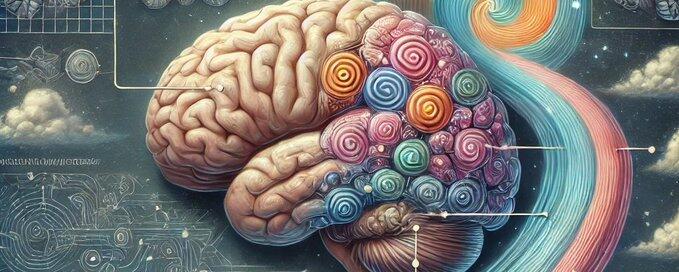
Time Distortion in Human Consciousness: A Tool for Transformation
Time is a fundamental aspect of human experience, yet our perception of it is far from linear. In the field of hypnosis, the phenomenon of time distortion—where time seems to either stretch out or contract—has been extensively studied and applied to various areas of human life. Pioneers like Milton H. Erickson and Linn Cooper explored these concepts in their seminal work, Time Distortion in Hypnosis, revealing how our perception of time can be manipulated for therapeutic and spiritual purposes.
Understanding Time Dilation and Time Constriction
Time distortion in human consciousness manifests in two primary forms: Time Dilation and Time Constriction.
Time Dilation refers to the experience where time appears to slow down. This can make a short period feel extended, allowing individuals to experience moments more fully or endure unpleasant experiences with greater ease.
Time Constriction is the opposite, where time seems to speed up. This makes lengthy or tedious activities appear shorter, often resulting in a more efficient use of time or the perception that a long wait passed quickly.These phenomena aren’t just theoretical; they have practical applications that can significantly enhance well-being.
Applications in Therapeutic Practices
Pain Control: Time distortion techniques have been effectively used in pain management. By inducing time dilation, a hypnotherapist can help a patient perceive their pain as occurring over a more extended period, which can reduce the intensity of the pain experienced at any given moment. This can be particularly useful in chronic pain management, where the goal is to minimize discomfort without relying solely on medication.
Weight Loss: Time constriction can be a valuable tool in weight loss programs. By making exercise routines feel shorter and more manageable, individuals may find it easier to maintain regular physical activity. Additionally, the perception of time passing quickly during periods of craving or hunger can help individuals stick to their dietary goals, reducing the temptation to indulge in unhealthy eating.
Overcoming Anxiety: Anxiety often involves a distorted perception of time, where future events loom large and immediate. Time dilation can be used to slow down the perception of anxious thoughts, allowing individuals to process their emotions more calmly and rationally. This can reduce the intensity of anxiety and help people develop healthier coping mechanisms.
Improving Focus and Productivity:Time constriction can be harnessed to improve focus and productivity. By making work tasks feel shorter, individuals may find it easier to concentrate and complete tasks efficiently. This can be particularly useful in environments where time management is crucial, such as during exam preparation or in high-pressure work settings.
Time Distortion in Spiritual Practices
Beyond therapeutic applications, time distortion plays a significant role in spiritual practices. Many meditative and contemplative traditions aim to alter the perception of time, allowing practitioners to enter states of heightened awareness or deep relaxation.
Meditation and Mindfulness: Time dilation can be achieved through deep meditation, where moments seem to stretch out, and the practitioner becomes fully immersed in the present. This can lead to profound spiritual insights and a greater connection to the self and the universe.
Vision Quests and Spiritual Journeys: In many spiritual traditions, time constriction is experienced during vision quests or spiritual journeys. The sense that days have passed in mere hours can lead to powerful transformative experiences, where the individual feels they've undergone significant personal growth in a short period.
Time as a Tool for Human Betterment
The utilization of time distortion isn’t just about solving specific problems; it’s about harnessing the power of time as a tool for personal growth and well-being. By understanding and manipulating our perception of time, we can achieve greater control over our lives, reduce suffering, and enhance our overall quality of life.Time as a tool isn’t about changing the clock but about changing how we experience it. Whether through therapeutic techniques or spiritual practices, the conscious manipulation of time perception offers a pathway to a more fulfilling and balanced life.
In conclusion, time distortion presents a unique opportunity for self-improvement and healing. By applying the principles of time dilation and constriction to various aspects of life, we can unlock new potentials within ourselves and create a more harmonious relationship with the inevitable passage of time.

Friendships Across Species: What They Tell Us About Animal Intelligence
Friendships between animals of different species, like the remarkable bond between a bear and a wolf depicted in the image, challenge our understanding of animal behavior and intelligence. Such relationships are not just rare occurrences; they offer profound insights into the social and emotional capacities of animals.
The Intelligence Behind Inter-Species Bonds
These friendships suggest that animals possess a level of emotional intelligence that allows them to form connections beyond their own species. This intelligence goes beyond basic survival instincts, indicating that animals are capable of complex social interactions and empathy. They can recognize and respond to the emotional cues of others, forming bonds that are based on mutual trust and companionship.
For instance, the bear and wolf in the image likely formed a bond based on shared experiences, such as hunting together or protecting each other from threats. This kind of relationship requires a level of understanding and communication that is often underestimated in animals. It demonstrates that they are capable of forming deep, meaningful relationships, similar to the way humans do.
What We Can Learn
These inter-species friendships remind us that the capacity for connection, empathy, and cooperation is not unique to humans. Animals, too, can forge bonds that transcend the boundaries of species, driven by mutual respect, need, and perhaps even affection.
Understanding these relationships can inspire us to rethink how we view animals, acknowledging their intelligence and emotional depth.
In conclusion, the friendships between animals of different species are a testament to their social intelligence and ability to form bonds that go beyond mere survival.
These relationships offer a glimpse into the complex emotional lives of animals and challenge us to broaden our perspective on the capabilities of the natural world.