
https://x.com/elonmusk/status/1875813534510280828?s=46
Tommy Robinson interview
https://thespectator.com/topic/real-adrian-dittmann-not-elon-musk-x-account-fiji/
Adrian Dittma is not Elon Musk?
The Age of Engagement Media and the Future of Information Wars
We are living in the Age of Engagement Media, a time when the battle for hearts and minds takes place not on physical battlefields but across digital landscapes. Social media platforms have become the epicenter of this phenomenon, allowing people to be both creators and consumers in a never-ending stream of data. This dual role amplifies the impact of engagement media, as users continuously generate, share, and react to content, creating an environment where information is not just consumed but engineered to provoke specific reactions. This era has profound implications for psychological health, societal cohesion, and the future of governance. Understanding how media affects us is essential to navigating this complex landscape.
The Environment Shapes the Mind
Every element in our environment exerts an influence, consciously or unconsciously. The colors, sounds, and even the structure of the spaces we inhabit can shape our thoughts and behaviors. In the digital age, our mental environment is dominated by the constant stream of content on social media platforms. These platforms are uniquely powerful because they blend personal expression with mass communication, enabling users to influence and be influenced on an unprecedented scale. This digital noise doesn’t just inform us; it primes us.
Psychological priming occurs when exposure to a stimulus influences our response to subsequent stimuli. For example, reading headlines about economic collapse might unconsciously affect how we perceive a neutral article about job growth. Priming taps into our mental associations and emotions, altering our decisions and reactions without our awareness.
Media as a Tool of Influence
When engaging with social media, it is crucial to observe how it makes you feel. Platforms like X, Facebook, and TikTok are not neutral spaces; they are designed to maximize engagement by provoking emotional responses. Some content is designed to inform, while other material seeks to embolden, inspire, or manipulate. There are messages meant to give you confidence and hope—but also those designed to divide and demoralize.
Consider the psychological tactics employed during pivotal events like presidential elections. Polls predicting a candidate’s imminent loss, for instance, may not simply report public opinion but aim to demoralize voters and suppress turnout. These tactics reveal the layered intentions behind much of what we consume.
Some media blends truth and lies to create confusion, splitting public opinion and sowing uncertainty. Social media platforms are particularly adept at this because their algorithms prioritize divisive and sensational content. To protect yourself, you must develop media literacy—the ability to analyze and question the purpose behind the information you encounter. Ask yourself:
What is the intention behind this message?
Is it trying to destabilize, frighten, or confuse me?
Does it inspire hope and action, or does it breed division and despair?
Taking your “temperature”—assessing your emotional state—before and after consuming media is an excellent way to gauge its impact on you. Recognize how your mood shifts and what triggers these changes.
A New Era of Collaboration and Progress
Despite the challenges of navigating this information battlefield, there is hope. We are on the brink of an illuminated renaissance—a golden age of collaboration and problem-solving. Humanity’s ability to confront challenges and innovate will lead us to a brighter future. Yes, there will be obstacles to overcome, but these struggles are necessary to forge a stronger, more unified global community.
The illuminated renaissance will be marked by:
Ethical Media Practices: Greater accountability for how information is disseminated and consumed.
Collaboration Across Divides: A focus on solving shared problems through collective intelligence.
Empowered Individuals: Media-literate citizens who can critically engage with content and resist manipulation.
The future is so promising that, as the saying goes, we’ll need shades to face its brilliance. Together, we will overcome uncertainty, fear, and division, building a world where engagement media empowers rather than enslaves. By understanding the intentions behind the messages we consume, we can reclaim control of our mental environment and contribute to a brighter, more unified society.


I hate this crap from X. It makes their platform almost unusable. The only way I know around it is using the mobile app.
The Biden-Harris Administration's Foreign Policy Failures and Attempts to Steal Credit for Trump's Abraham Accords
The Biden-Harris administration has faced numerous foreign policy challenges since taking office in January 2021. However, their handling of these issues has been marked by a series of missteps, blunders, and outright failures. As their tenure progresses, it becomes increasingly clear that the administration lacks a coherent and effective foreign policy strategy. In an attempt to salvage their reputation on the international stage, the Biden-Harris administration has sought to take credit for the success of the Abraham Accords, a significant diplomatic achievement brokered by the previous Trump administration.
One of the most notable foreign policy failures of the Biden-Harris administration has been their handling of the withdrawal from Afghanistan. The hasty and ill-planned evacuation led to chaos, loss of life, and a significant blow to America's credibility among its allies. The administration's failure to anticipate the rapid collapse of the Afghan government and the Taliban's swift takeover has had far-reaching consequences, including the resurgence of terrorist groups in the region.
Another area where the Biden-Harris administration has struggled is in its approach to China. Despite rhetoric about standing up to Beijing's aggressive behavior, the administration has failed to take decisive action to counter China's influence in the Indo-Pacific region. This has led to increased tensions and uncertainty among U.S. allies in the region, who are looking for strong leadership from Washington. The administration's handling of the Iran nuclear deal negotiations has also been a source of frustration for many observers. Rather than taking a firm stance against Iran's nuclear ambitions, the Biden-Harris team has pursued a policy of appeasement, offering concessions to Tehran without securing meaningful commitments in return.
This approach has alienated U.S. allies in the Middle East, particularly Israel and Saudi Arabia, who view Iran as a significant threat to regional stability. In an attempt to offset these foreign policy failures, the Biden-Harris administration has sought to claim credit for the Abraham Accords, a series of normalization agreements between Israel and several Arab nations brokered by the Trump administration.
While the Biden-Harris team has expressed support for the Accords, their attempts to take credit for this diplomatic breakthrough are disingenuous and undermine the significant role played by the previous administration. In conclusion, the Biden-Harris administration's foreign policy record is marked by a series of failures and missteps, demonstrating a lack of strategic vision and leadership on the international stage.
As they struggle to address pressing global challenges, their attempts to steal credit for the Abraham Accords, a major accomplishment of the Trump administration, further erode their credibility and undermine their ability to effectively navigate the complex world of international diplomacy.
I'm going to try to post here more often sometimes when I clear my browser it knocks out my key and it's a pain to put it back in to log in.


Maybe they do have it but it's just speaking so softly that they aren't listening to it.
The Challenge of Returning Home: A Message to Military Veterans
Returning from war is never easy. The transition from the intensity of combat to the seemingly mundane pace of civilian life can be jarring, leaving many veterans feeling out of place and disconnected. It’s a common struggle, and while it’s entirely natural to feel this way, it’s crucial to remember that the skills, discipline, and experience you gained in the military can still be applied in meaningful and fulfilling ways back home.
The Reality of Civilian Life
Civilian life is different, undeniably so. The pace is slower, the challenges are different, and the sense of purpose that military life provides can feel diluted in the day-to-day routines of the civilian world. But this difference doesn’t have to be a burden; it can be an opportunity. Adjusting to this new pace takes time, and it’s important to give yourself that time. The initial frustration is understandable, but remember that this phase is about reintegration, not rejection of who you were or what you’ve accomplished.
Exploring New Avenues
If the rhythm of civilian life doesn’t appeal to you, there are ways to stay engaged with the kind of high-stakes environments you’re used to. One option is taking up overseas jobs as a contractor. These roles often involve working in security or logistics in challenging environments, providing a continuation of the mission-focused work you thrived on during your military career.
Another avenue is embracing dangerous sports or extreme activities. These can offer an adrenaline rush similar to what you experienced in the military, while also allowing you to stay physically and mentally sharp. Go ahead, take all the risks you want—just make sure you do it in responsible ways. Whether it’s scaling a mountain, racing cars, or engaging in extreme sports, channel that energy into activities that challenge you without endangering yourself or others unnecessarily.
If you prefer to remain stateside, consider setting up your own military training school. This not only keeps you connected to your military roots but also allows you to pass on your knowledge and experience to others. With the right approach, you can secure government contracts, turning your military expertise into a viable business.
A Call to Responsibility
Whatever path you choose, it’s essential to approach it with responsibility. The skills and mindset you developed in the military are powerful, but they must be applied with care and consideration in the civilian world. Misuse of these skills can cause harm not just to yourself but to the community you are now a part of. As much as you may miss the intensity of combat, don’t let it drive you to actions that could "fuck it up" for the rest of us who depend on stability and order.
Understand that winding down after a deployment is a process. It’s okay to miss the camaraderie and the clear sense of purpose that came with military life, but it’s equally important to find new ways to channel your strengths. Remember, your experience doesn’t have to end when you hang up your uniform. It’s just the beginning of a new chapter where your discipline, skills, and leadership can continue to make a difference.
In the end, the goal is to find balance—between honoring the person you became in the military and adapting to the person you need to be in civilian life. It’s a tough road, but with the right mindset and support, you can navigate it successfully. And when you do, you’ll find that the qualities that made you a great soldier will also make you a valuable and respected member of the civilian world.

Mastering Control: Applying Control Theory to Navigate Life’s Environments
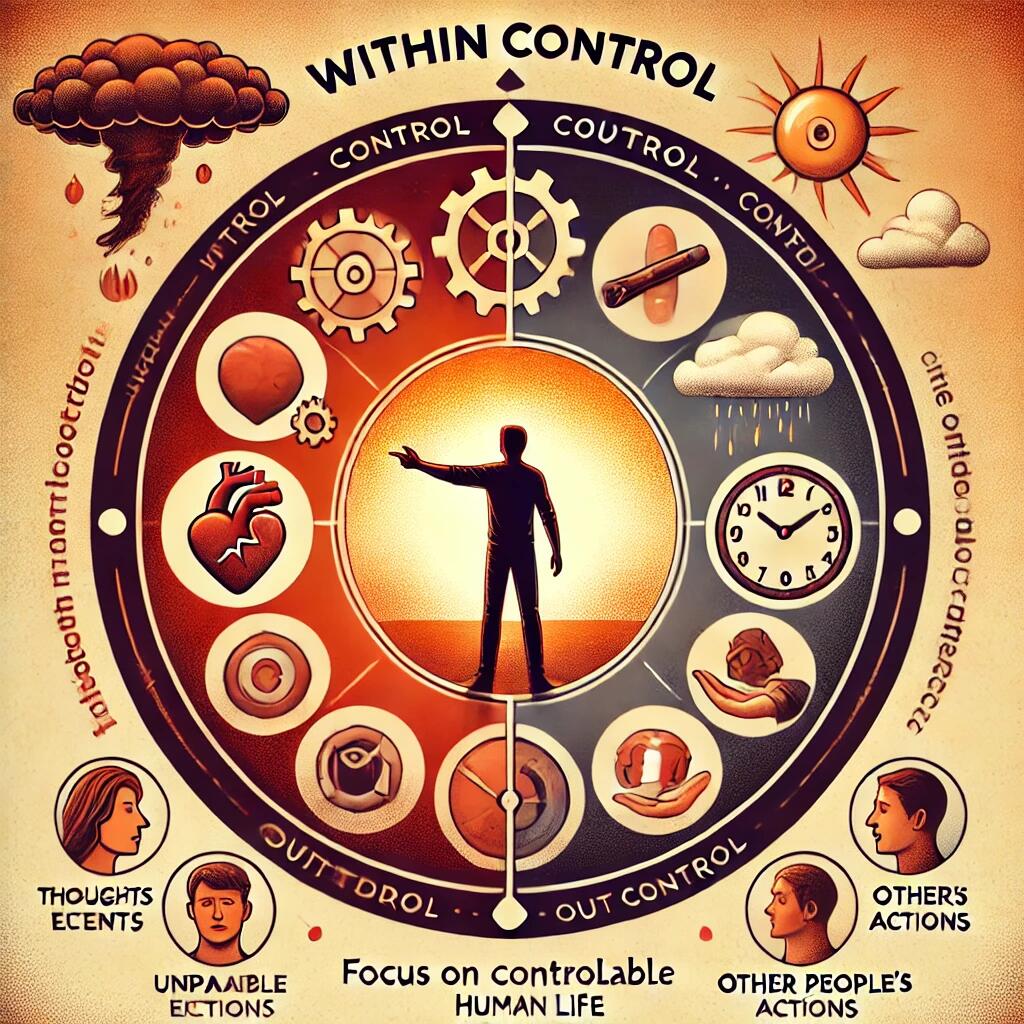
Control theory, originally developed in engineering and systems science, provides a powerful framework for understanding how we interact with our environments. The core insight from control theory is that every system, including human behavior and psychology, consists of elements within our control and elements outside of our control. The primary problem people face is that they often mislabel these elements—mistaking what they can control for what they can't, and vice versa. As someone who works with others to foster change, your role is to help them correct these misunderstandings and apply control theory to their lives.
The Essence of Control Theory
Control theory is based on the idea that systems regulate themselves to maintain stability or achieve desired outcomes. In the context of human behavior, this involves understanding how we can influence certain variables within our environment to achieve specific goals, while recognizing the limits of our influence.
In practical terms, control theory is concerned with:
Feedback Loops:
Control systems use feedback to adjust their behavior based on the outcomes they produce. For individuals, this means regularly assessing the impact of their actions and making necessary adjustments to stay on course. If the feedback indicates that their actions are not producing the desired results, they need to reevaluate their approach.
Error Correction:
Control theory emphasizes the importance of minimizing error, which is the difference between the desired outcome and the actual state. In life, this involves recognizing when there's a discrepancy between where we are and where we want to be and taking corrective actions. Crucially, error correction requires an accurate understanding of what is within our control.
Set Points and Goals:
Control theory involves the concept of a "set point," or a desired state that a system strives to maintain. For people, this might be a personal goal such as achieving a certain level of health, happiness, or success. Control theory teaches that while we can influence our journey towards these set points, we must also recognize the limits imposed by factors outside our control.
The Mislabeling Problem in Light of Control Theory
A major challenge people face, according to control theory, is mislabeling the elements within their environment. This mislabeling results in unnecessary stress, frustration, and ineffective actions:
Mislabeling the Controllable as Unchangeable:
People often incorrectly label things within their control as unchangeable. They might see personal habits, thought patterns, or even aspects of their circumstances as fixed, which leads to inaction and a sense of helplessness. According to control theory, this is a fundamental error because it prevents the system (the individual) from making necessary adjustments to achieve their goals.
Mislabeling the Uncontrollable as Controllable:
On the other hand, people frequently try to control things that are outside of their influence, such as the behavior of others, external events, or unpredictable outcomes. Control theory teaches that this mislabeling disrupts the system’s stability and leads to wasted effort and frustration.
Your Role as a Change Agent in Applying Control Theory
As a change agent, your responsibility is to help individuals correctly apply control theory to their lives by:
Correcting Mislabels:
The first step is to help people identify where they’ve mislabeled elements of their environment. Are they trying to control the uncontrollable? Are they wrongly assuming that some aspects of their life are unchangeable? Identifying these mislabels is crucial for allowing them to regain a sense of control and purpose.
Focusing on the Controllable:
Once the mislabels are corrected, guide them to focus on what they can control. This includes their own thoughts, actions, decisions, and reactions. Control theory emphasizes that by focusing on these controllable elements, individuals can make meaningful changes and achieve their desired outcomes.
Building Resilience:
Help individuals develop the resilience to accept what they cannot change. According to control theory, accepting the limits of control over certain external variables is key to maintaining stability and preventing unnecessary stress.
Practical Application of Control Theory
With an understanding of control theory, individuals can navigate their environments more effectively by:
Utilizing Feedback Loops: Regularly assess and adjust behaviors based on the outcomes they observe. This helps them remain in control of their progress towards goals, rather than wasting energy on uncontrollable variables.
Correcting Errors: Identify where their current state deviates from their desired state, and focus on the variables they can control to make necessary adjustments.
Setting Realistic Goals: Establish clear, achievable goals, and understand that while they can control their efforts and behaviors, external factors may require them to adjust their expectations.
Conclusion
Control theory offers a robust framework for understanding and navigating the environments we live in. The main problem many people face is the mislabeling of what is within their control and what is outside of it. This misunderstanding leads to unnecessary stress, frustration, and inaction. As a change agent, your job is to help them correct these labels by applying the principles of control theory. By guiding them to focus on what they can control and accept what they cannot, you empower them to live more effectively, achieve their goals, and find greater fulfillment in their lives.

It feels amazing to get some zaps lol
Unstoppable money is Amazing!