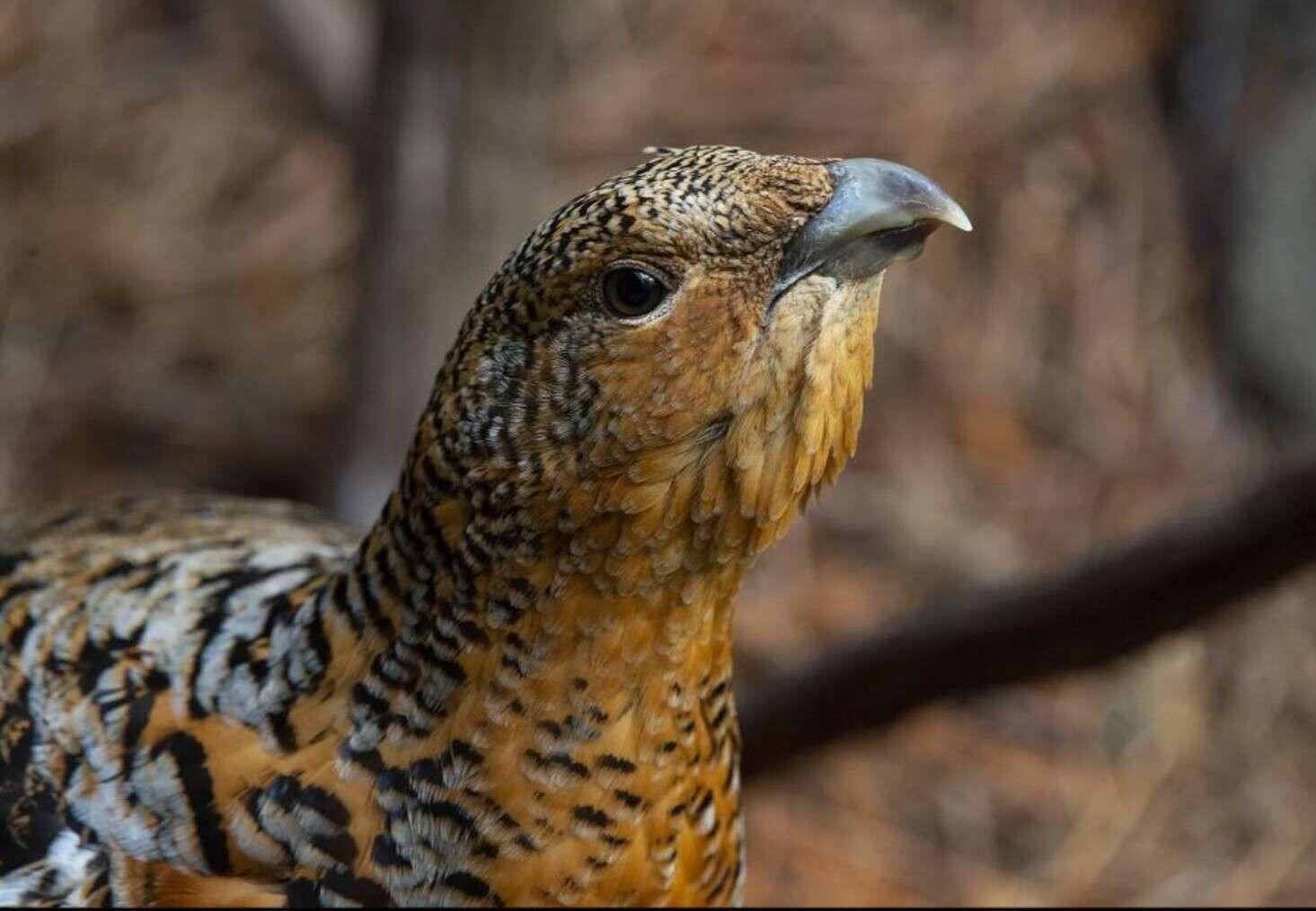
I have heard from Vitec regarding the iodine concentration in their Durvillaea potatorum. Their analysis suggests 200mg/kg, which seems to put their 1% of feed reccomendation in the right ball park. I will increase the dose to 18g until I hear back from Laucke Mills.
Having begun deploying more saturated fat and less seeds, I immediately notice more zoomies.
Current Code:
1700g Gamebird Finisher (.22)[.03]
15g Flax Seeds (.155)[.422]
5g Hemp Seeds (.30)[.50]
15g Dehydrated Pilchards (.709)[.043]
10g Dehydrated Grass-Fed Beef Liver (.621)[.179]
25g Paprika (.141)[.129]
1.3g Dehydrated Bull Kelp/Durvillaea potatorum (.1)[0]
19g Grass-Fed Butter (.006)[.814]
10g Coconut Oil (0)[1]
Watch their droppings with this recipe. If they look wetter and/or different in colour and it persists, try reducing the rice, replacing with peas, and adjusting the fat to hold at 5%.
Something like this (~22% Protein):
-- 1.5kg Laucke Gamebird Starter
-- 665g Yellow Peas (Decorticated, Cooked, and Dehydrated)
-- 650g White Rice
-- 45g Flax Seeds
-- 30g Paprika
-- 15g Dehydrated Durvillaea potatorum (Bull Kelp)
-- 10g Hemp Seeds
-- 4.5g Iodised Salt
-- 30g Dehydrated Pilchards
-- 10g Dehydrated Grass-Fed Beef Liver
-- 20g Grass-Fed Butter
-- 10g Coconut Oil
Also important to mention: the Yellow Peas are decorticated.
This recipe also includes 10g of Dehydrated Bull Kelp (Durvillaea potatorum), which appears to have disappeared from the list temporarily! You could possibly double this dose.

1kg dry will last 10 birds about 6 days.
Here is a more comprehensive and up-to-date presentation of nutritional requirements for poultry. Some of the values in that Table are a bit skint. You can definitely send some things harder.
https://www.tandfonline.com/doi/full/10.1080/01652176.2020.1857887#d1e389
Here's the lentils and peas note. It appears I linked the phytochemicals note twice, using different note IDs . . .
Hard to give an accurate ball park figure for food-bird-egg-day stuff because of nutrient and bird size variability, but I'll have a go:
1kg dry feed (you could work backwards to wet)
10 birds
6 days
55 eggs
11–13g per egg
:)
I think a good leaping-off point might be to look at Table 1 in this article, which was adapted from an earlier article. You could also look around for other papers to cross-reference and perhaps challenge these stipulations, particularly more recent papers.
I would then use https://tools.myfooddata.com/ and investigate each individual plant you are considering—you might find several of them, or at least a decent proxy.
Clam shells sound like a great solution for calcium! :)

That's amazing. What a feast (you might be)! Haha.
Sounds dreamy! Certainly seems doable. Having a solid animal protein source through winter would seem to be prudent to me. I presume it will be cold and the worms will be less available in winter? What about other insects? Will you be hunting and fishing or raising beasts? If there is a way to have some animal protein and animal fat on hand, you would be ticking a lot of boxes like fat soluble vitamins, B12, lysine, methionine, etc.
My covey love dandelion greens, so that might be a cool addition that grows itself. Haha. Is growing lentils an option? They are quite performant on the protein and micronutrients front. Peas come in at second best too. You might even get away with these as the major protein source for winter as the hens will stop laying for a while. But then if you do do that, you will need to be mindful of fat. You could send sunflower seeds at them I suppose, but that is a lot of polyunsaturated fat, too much for my liking. But it could get you through winter. As long as you are hitting 4–5% fat, and 16–24% protein (higher end if plant-based) then they should be groovy in winter.
You could also think about plants that are accumulators of iodine. Quail need iodine and salt . . . Salt source?
If they are getting sun, they should be sweet on the D3 front.
You will want to think about calcium too. I am blessed to have tiny snail shells everywhere here. And cuttle bone within walking distance. They will need a little extra on top of their egg shells and whatever they can get from greens.
So yeah, high calcium greens that accumulate iodine but that are not high in oxalic acid would be useful!
Perhaps you could tick a couple of boxes at once by rearing insects with calcium-rich shells.

Oh yeah, for the liver I find a beast and dehydrate its liver. Dogs tend to be very interested in the dehydrator on this day. Haha.
I juat look around for the quality and price I like. This is where I am currently sourcing them from:
Yellow Peas — Supermarket.
Raw White Rice — Supermarket.
Paprika — Spanish stuff from an Indian shop.
Dehydrated Pilchards — I buy a block (for bait) from the petrol/gas station and dehydrate them. Western Australian pilchards.
Flax Seeds — Supermarket.
Grass-Fed Butter —Supermarket, from New Zealand.
Coconut Oil — Supermarket.
Dehydrated Bull Kelp — vitec.com.au
B.V.M Probiotic Powder — Lots of places online have it.
Iodised Salt — Supermarket.
Other herbs and spices —Indian shop or Supermarket.
Onion powder—peel from onions from the Market or the Garden.
Olive Leaves — Garden.
The Japanese quail and the Coturnix quail are the same lovely creature. They are easy to care for—20 mins or so per day would do it, providing you aren't mixing your own feed or rearing young. You will probably want to spend more time with them anyway as they are fun and cute to hang out with. They are amazing egg layers. They send about 300 per year. And they are TASTY. Pretty yummy meat birds too, if you end up with too many roosters. The roosters also make very cool crowing sounds which bring a smile to my face. Highly recommend these birds. Very beautiful looking. Hardy too.
Glad to have been found! And yes, I am mixing my own feed—it is lots of fun.
Here is the current recipe:

I take:
Boron Citrate @ 20mg (Top end of appropriate dose, 10mg is fine, but I am trying to lower sex hormone binding globulin levels in order to free-up more testosterone.)
Magnesium Glycinate @ 133–266mg (vibing the dose)
Lake Deborah Magnesium Bittern @ 98.5mg (new addition)
D3 @ 5000IU (2000IU is probably fine for me in summer but I am sending 5000IU anyway this year).
Creatine Monohydrate @ 5g
L-Glutamine @ 10g
*Fish Oil @ 3–8 capsules, depending on amount of fish eaten that day.
*Cod Liver Oil @ 5mL
*I am basically aiming for 3g combined EPA & DHA.
I put psyllium in things to help me hit 50g of fibre per day.
I send a good whack of ground flax seeds at meals that do not have an omega 3:6 of 1.
B Complex with methylcobalamin and calcium L-methylfolate.
Olive Leaf Extract @ 80+mg of oleuropein, but currently making tincture so do not know the dose anymore.
Cycled/Sporadic:
Tribulus terrestris @ 15g root & 15g fruit, extracted.
Ashwaganda @ 3g
Astragalus Root @ 10g
Maca @ 3g
Ground Fenugreek Seeds @ 10g
N-Acetyl Cysteine @ 1g
An immunological mushroom of some kind: mainly Reishi of late as I have some around.
Taken*