
In Italy, politicians and TV networks suddenly seem terrified that data might pass through the satellites of the villain of the moment. Then, they label as terrorists or pedophiles those who use alternative means like bitcoin to protect their privacy. Is control only convenient when it suits the government control machine?
1. Network Address Translation (NAT):
• Many devices are behind NAT, where the router or firewall does not forward inbound traffic to the node.
2. Firewalls:
• Some nodes are configured with firewalls that block incoming connections for security or privacy reasons.
3. Tor or VPN Use:
• Nodes using the Tor network or VPNs often keep their IP addresses private, making them unreachable to the broader network.
4. Configuration Settings:
• Bitcoin Core and other implementations can be configured to disable incoming connections, limiting the node to outbound communication only.
5. Dynamic IPs or Private Subnets:
• Nodes with frequently changing IP addresses or those operating in private subnets may not be discoverable by others.
How Unreachable Nodes Contribute:
Unreachable nodes still download and verify blocks and transactions, contributing to the network’s decentralization and security by:
• Validating the blockchain independently.
• Relaying transactions and blocks to the reachable nodes they connect to.
However, they do not directly contribute to the propagation of new transactions or blocks beyond their connected peers.
Detecting Unreachable Nodes:
Detecting these nodes is difficult because they don’t publicly announce their presence. However, researchers estimate their numbers based on indirect observations, such as:
• Outbound traffic patterns.
• Passive monitoring techniques like the Passive Announcement Listening (PAL) method.

According to Bitnodes, there are approximately 20,663 reachable Bitcoin nodes. 
Research from 2021 using the Passive Announcement Listening (PAL) method estimated about 31,000 unreachable peers active per day at the end of 2020. 
Combining these figures suggests that the Bitcoin network consists of approximately 51,663 full nodes, with unreachable nodes constituting a significant portion.
In the context of Bitcoin full nodes, “unreachable” refers to nodes that are part of the Bitcoin network but do not accept incoming connections from other peers. These nodes can still actively participate in the network by initiating outbound connections to other reachable nodes, but they remain hidden for various reasons. Here’s a breakdown:
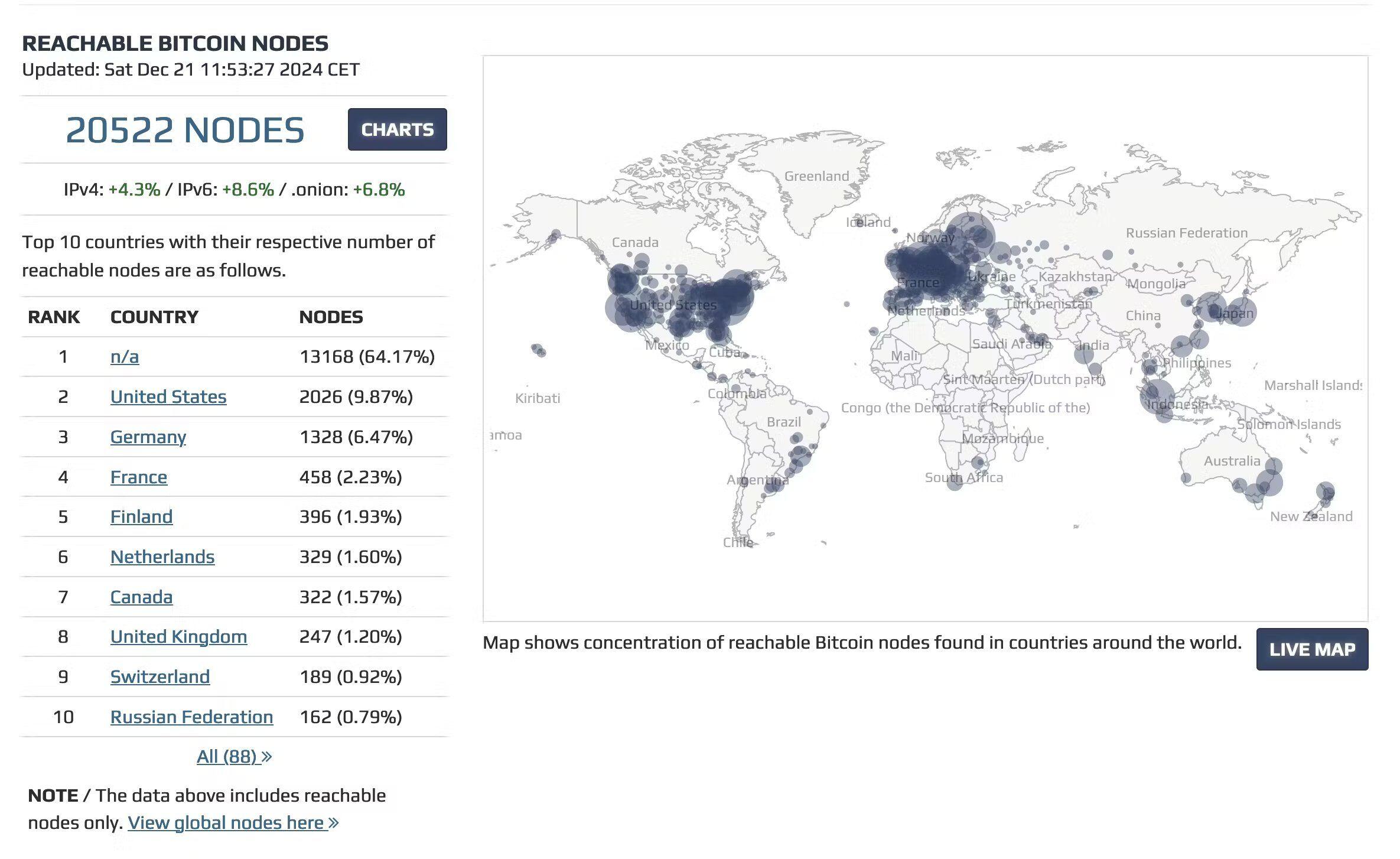
I’d like to point out that probably we are seeing just the ones that do not use TOR or other VPNs , and these are the modalities usually advised when you install certain nodes os like mynode. So in my opinion you need to take this number (20.000) and multiply at least by 5 to have a number closer to reality
To me it looks the contrary, you being paranoid and quite a conspiracy theorist. Don’t think too much and sleep better. And especially try to respect people that lost relatives in the period you indirectly mention

I don’t understand the sense of this comment. No-one comes to judge your fears


Anyone helps me as well? 🤣
Many 🇻🇪 Venezuelan have turned to Bitcoin as a way to skirt authoritarian controls and safeguard their personal wealth.
Bitcoin has been a “lifeline” that bypassed government-imposed exchange rates and helped many. It has evolved from a humanitarian tool to a vital means of resistance. ✊
nostr:npub1zhqcda52mrvcc0vkwegwsp5xtpk6l6x5kqx85f06tu9lw5h6xx0scch0dw


I am with you man , what a pain in the bass
⛏️Mining bitcoin
is the new 🟧
‘Running bitcoin’ 🏃♂️
#bitaxe #halfinney #hashtotheprople #opensource #solosatoshi

#bitcoin total transaction value in 2023

Romantic ⛱️🏝️☀️ combination between astonishing sea spot and football ⚽️



Ahah 😝 interesting to know more about



Is it the cyberpunk netflix inspired anime ?