



Oh boy. So it’s not that bad…to be more specific, if you think of most crypto outside of bitcoin as one big casino…you now own the casino. The gamblers at the table are the shit coins (hence, alt coins on the Solana network). So it’s very unlikely it’s going to zero and it will probably make you some money over the next alt coin bull run if there is one.
For long term store of wealth (your families hard earned energy) consider bitcoin and gold. Learn about money…read nostr:nprofile1qqsw4v882mfjhq9u63j08kzyhqzqxqc8tgf740p4nxnk9jdv02u37ncxzszx8's book Broken Money.
Nadia, you are a crypto queen in my world..thanks for an easy to understand explanation
It's time to reread crypoeconomics...
https://voskuil.org/cryptoeconomics/
(My audio book is freely available as a podcast!)
Something i definitely need to read..thanks for sharing
What is in-between the conscious and subconscious state of existence that whispers two truths of the day
Fml 🤦🏽♂️ only started in the crypto world a few weeks ago and Solana was mainly what I was hearing about in a a platform that shall not be named
I got 63 sats..i am richhhh
Please send help 😵💫
I've just created a Cashu wallet, connected it to Primal, connected it to Amethyst and now I can't stop zapping. There's no more wallet to be opened when you want to zap, it's drained automatically and directly now
The whole process took about 2 minutes and THEY ALL FORGOT TO KYC ME!!!
nostr:nprofile1qqs9pk20ctv9srrg9vr354p03v0rrgsqkpggh2u45va77zz4mu5p6ccpzemhxue69uhk2er9dchxummnw3ezumrpdejz7qgkwaehxw309a5xjum59ehx7um5wghxcctwvshszrnhwden5te0dehhxtnvdakz7qrxnfk nostr:nprofile1qqsyvrp9u6p0mfur9dfdru3d853tx9mdjuhkphxuxgfwmryja7zsvhqpzamhxue69uhhv6t5daezumn0wd68yvfwvdhk6tcpz9mhxue69uhkummnw3ezuamfdejj7qgwwaehxw309ahx7uewd3hkctcscpyug nostr:nprofile1qqs9xtvrphl7p8qnua0gk9zusft33lqjkqqr7cwkr6g8wusu0lle8jcpp3mhxue69uhkyunz9e5k7qg4waehxw309ajkgetw9ehx7um5wghxcctwvsqs6amnwvaz7tmwdaejumr0ds2g5zx8 what have you done 😱
Thanks nostr:nprofile1qqsgqke57uygxl0m8elstq26c4mq2erz3dvdtgxwswwvhdh0xcs04scpzdmhxue69uhhqatjwpkx2urpvuhx2ue0qy08wumn8ghj7un9d3shjtnrv9eh2ctvvde8jur5duhxgct5v5hsz9rhwden5te0dehhxarj9ehz6arf9ekk2tcvmjv0r for the inspiration 👍
YOLO



Now that the general population has learnt to operate machines and are making a living, the industrial class are taking the benefits, all while the technocrats (middle class) are working to overthrow the industrial class.
With every transition of power between the classes, a great depression and poverty is born. Do technocrats care about making sure that a the generation population do not suffer great depression from their innovations?
Insufficient funds to perform zaps 😩


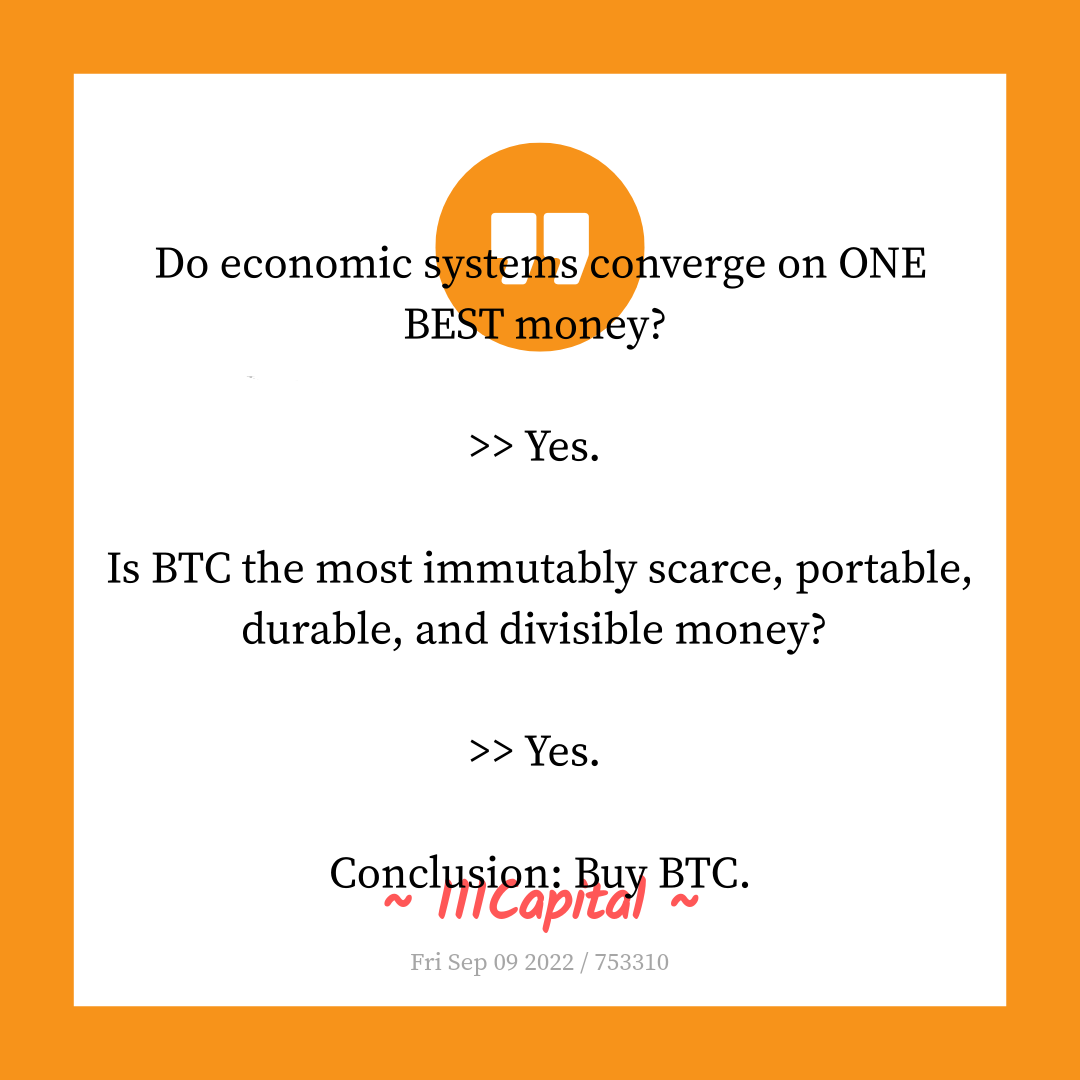
Do economic systems converge on ONE BEST money?
>> Yes.
Is BTC the most immutably scarce, portable, durable, and divisible money?
>> Yes.
Conclusion: Buy BTC.
- nostr:npub1z5ds93lv6uky7n4676txw7aqp9qdcyhs00qdsmy96s4k6qd8rvaqnzmqhw
#BitcoinTwitter
Hmm

Do economic systems converge on ONE BEST money?
>> Yes.
Is BTC the most immutably scarce, portable, durable, and divisible money?
>> Yes.
Conclusion: Buy BTC.
- nostr:npub1z5ds93lv6uky7n4676txw7aqp9qdcyhs00qdsmy96s4k6qd8rvaqnzmqhw
#BitcoinTwitter
lnurl1dp68gurn8ghj7urjd9kkzmpwdejhgtewwajkcmpdddhx7amw9akxuatjd3cz7cnvw4jkxct5xgcqwnat6m