Lol 😂 
How is it possible without understanding geometry, math, physics and engineering?
Built in the village of Abhaneri in Rajasthan, India 1 is over 1,000 years old and is 100 meters deep with 13 floors and 3,500 symmetrically thin steps!
One of the largest and wonderful step-wells in the whole world is Chand Baori. 
How is it possible without understanding geometry, math, physics and engineering?
Built in the village of Abhaneri in Rajasthan, India 1 is over 1,000 years old and is 100 meters deep with 13 floors and 3,500 symmetrically thin steps!
One of the largest and wonderful step-wells in the whole world is Chand Baori. 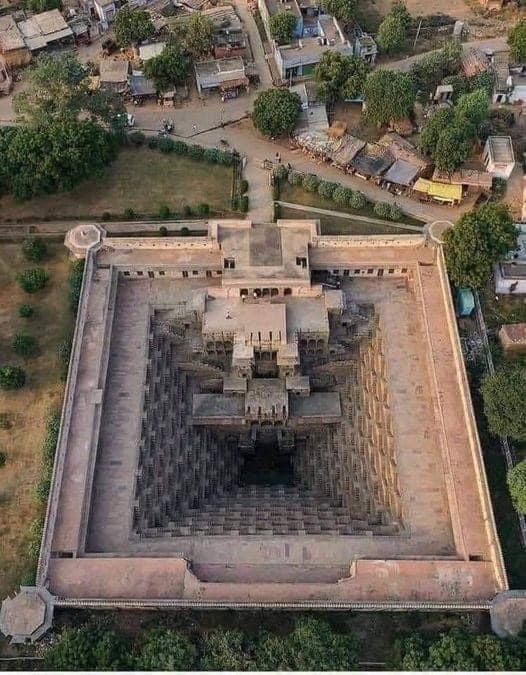
Powerful nostr:note1kn3w45d7uq90pnm959gfns9q6lf6tmukny449qmdxg7exeuv3aqqt785a0


Beef Lo Mein
Ingredients:
For the Beef:
1 lb beef sirloin, thinly sliced
2 tablespoons soy sauce
1 tablespoon cornstarch
1 tablespoon vegetable oil
For the Lo Mein:
8 oz lo mein noodles or spaghetti
2 tablespoons vegetable oil
1 onion, thinly sliced
2 cloves garlic, minced
1 cup sliced carrots
1 cup sliced bell peppers (red, green, or yellow)
1 cup broccoli florets
1 cup snow peas
1/4 cup soy sauce
2 tablespoons oyster sauce
1 teaspoon sesame oil
1/4 cup beef broth
1 tablespoon cornstarch mixed with 1 tablespoon water (slurry)
Green onions, chopped (for garnish)
Sesame seeds (optional, for garnish)
Instructions:
Preparing the Beef:
Marinate the Beef:
In a bowl, combine the soy sauce and cornstarch.
Add the thinly sliced beef and toss to coat evenly.
Let the beef marinate for about 15 minutes.
Cook the Beef:
In a large skillet or wok, heat 1 tablespoon of vegetable oil over medium-high heat.
Add the marinated beef and stir-fry until browned and cooked through, about 5-7 minutes.
Remove the beef from the skillet and set aside.
Preparing the Lo Mein:
Cook the Noodles:
Cook the lo mein noodles or spaghetti according to package instructions. Drain and set aside.
Sauté the Vegetables:
In the same skillet or wok, add the remaining 2 tablespoons of vegetable oil.
Add the sliced onion and minced garlic, and sauté until fragrant, about 1-2 minutes.
Add the sliced carrots, bell peppers, broccoli florets, and snow peas. Stir-fry for about 5 minutes until the vegetables are tender-crisp.
Combine Ingredients:
Return the cooked beef to the skillet with the vegetables.
Add the cooked noodles to the skillet and toss to combine.
Make the Sauce:
In a small bowl, mix together the soy sauce, oyster sauce, sesame oil, and beef broth.
Pour the sauce over the beef, vegetables, and noodles, stirring to coat everything evenly.
Add the cornstarch slurry to the skillet and stir continuously until the sauce thickens, about 2-3 minutes.
Serving:
Serve the beef lo mein hot, garnished with chopped green onions and sesame seeds if desired. 
Richat's structure, the 'eye of the Sahara'.
The Richat structure, is a singular geological structure located in the Sahara desert in Mauritania, near Uadane.
The structure, with a diameter of almost 50 km, has attracted attention since the first space missions because it forms a rare ox's eye in the monotonous stretch of the desert.
Over the years and research, scientists have concluded that Richat’s structure is but a section of an anticlinic dome that has eroded over millions of years. 
Sculptor’s limestone trial piece depicting an owl-hieroglyph, in elaborately detailed raised relief, 15 cm high. Ptolemaic Egypt. (Collection: British Museum EA38276) 
⚡️📸 Forget Nemo, this is The Carrot! 🐟🤯
Hackett, 42, recently landed a goldfish so enormous it's being called a "monster" by onlookers.
This aquatic behemoth, nicknamed "The Carrot" for its vibrant orange color, was caught at Bluewater Lakes in France's Champagne region.
The 20-year-old female, actually a type of carp called a koi, weighed a whopping 67.4 pounds, according to the fishery's Facebook page.
Apparently, The Carrot has been a resident of the lake for roughly 15 years, and a challenge for anglers ever since. This slippery giant has managed to evade capture by most fishermen, much to their frustration (and her amusement, we can only imagine!).
Bluewater Lakes, known for carp fishing, originally introduced The Carrot "to offer something different" for their customers to catch. Her bright orange color stands out compared to the typical pale or brown tones of most large carp.
The Guardian reports that The Carrot is believed to be the second-biggest fish of its kind ever caught. Talk about a whopper of a tale!
📸: Bluewater Lake 
The medieval castle of Falkenstein in the Austrian region of Carinthia.
Built in 1164,it belonged to the feudal Falkenstein family. 
Statue of Ramesses II in the entrance hall of the Grand Egyptian Museum... 
Did you know that La Carretera Caracoles, also known as Paso de los Libertadores, is one of the most emblematic and challenging routes in South America. This road connects Chile to Argentina, crossing the majestic Andes Mountains.
Main features:
1.Location: The road is located in the region of Valparaíso, Chile, and crosses the province of Mendoza, Argentina.
2.Journey: The route climbs from the Aconcagua river valley in Chile to the Christ the Redeemer tunnel, located at a height of approximately 3,200 meters above sea level. 3.Designer: It is known for its sharp and steep curves, similar to snails, from which it gets its name. The road has numerous zigzag curves that are a challenge for both drivers and vehicles.
4.Weather conditions: During winter, the road can be extremely dangerous due to snowfall and severe weather conditions, which often leads to severe weather conditions.
5.Importance: It is a crucial route for trade and tourism between Chile and Argentina, and is frequently used by trucks and tourists who want to cross the mountain range.
6. Tourist attractions: Along the route it is possible to observe impressive landscapes of the mountain range, as well as points of interest such as the Laguna del Inca and the Portillo ski center.
La Carretera Caracoles is a spectacular and challenging road that offers a unique driving experience through one of the most impressive landscapes in the Andes. Its complex design and location in a region with extreme weather conditions make it one of the most famous and photographed routes in South America. 
Shocking Catch in the Caribbean: Fishermen Catch Giant Octopus❗️ In an event that has left both residents and tourists speechless, a group of local fishermen managed to catch a giant octopus during a routine fishing day. The impressive cephalopod, whose size exceeds two metres in length, was caught near the coast of one of the smallest islands in the archipelago. Fishermen, still surprised by the find, reported feeling unusual resistance in their nets and were taken a big surprise upon discovering the magnitude of their catch. The news spread quickly, attracting curious and marine biologists interested in studying the specimen. 🤔 This event highlights the rich biodiversity of the Caribbean Sea and generates expectations about future discoveries in the region. For now, the giant octopus has become the center of attention, awakening both admiration and fascination with the wonders hidden in the deep sea. 😟 
Carved wood skeleton rocking chair made in Russia in the 19th Century! 
Gunkanjima Island - Nagasaki, Japan .
Once the most densely populated place in the world, this island is now a ghost town.
FEW PLACES IN THE WORLD have a history as odd, or as poignant as Gunkanjima’s.
The tiny, fortress-like island lies just off the coast of Nagasaki. The island is ringed by a seawall, covered in tightly packed buildings, and entirely abandoned - a ghost town that has been completely uninhabited for more than forty years. In the early 1900s, Gunkanjima was developed by the Mitsubishi Corporation, which believed - correctly - that the island was sitting on a rich submarine coal deposit.
For almost the next hundred years, the mine grew deeper and longer, stretching out under the seabed to harvest the coal that was powering Japan’s industrial expansion.
By 1941, the island, less than one square kilometer in area, was producing 400,000 tonnes of coal per year.
And many of those working slavishly in the undersea mine were forced laborers from Korea.
Even more remarkable than the mine was the city that had grown up around it.
To accommodate the miners, ten-story apartment complexes were built up on the tiny rock - a high-rise maze linked together by courtyards, corridors, and stairs. There were schools, restaurants, and gaming houses, all encircled by the protective seawall.
The island became known as “Midori nashi Shima,” the island without green.
Amazingly, by the mid-1950s, it housed almost six thousand people, giving it the highest population density the world has ever known. And then the coal ran out.
Mitsubishi closed the mine, everyone left, and this island city was abandoned, left to revert back to nature.
The apartments began to crumble, and for the first time, in the barren courtyards, green things started to grow. Broken glass and old newspapers blew over the streets. The sea-breeze whistled through the windows.
Now, fifty years later, the island is exactly as it was just after Mitsubishi left. A ghost town in the middle of the sea. 
**The Grand Staircase of the St. Pancras Renaissance Hotel, London.**
In May 1865, the Midland Railway Company (MRC) initiated a competition to build a 150-bed hotel adjacent to St. Pancras Station.
The hotel opened in stages between 1873 and 1876.
The Grand Staircase is perhaps the most famous of the hotel’s features. A dividing staircase was nothing new in Victorian gothic architecture; town halls and museums contained similar staircases. But the size and beauty of the Grand Staircase set it apart from others of the time. By today’s standards the staircase is wide indeed; by contemporary standards it was designed to be wide enough to allow two ladies in bustles to pass each other. Rather than its size, however, what really sets the Grand Staircase apart are its decorative features. To take just one example, nineteenth-century architects usually concealed wrought iron balusters from view. However, Scott hired one of his favourite suppliers, Skidmore of Coventry, to install prominent details into wrought iron balusters so that the railings can be seen from any of the three stories which lead to the celestial vaulted ceiling. 
Lake Mohonk is a glacial lake, fed from sky water, not from nearby streams. It stretches a half-mile long, and is 61 feet at its deepest.
Surrounded by lush forests and dramatic cliffs, this picturesque lake offers a tranquil escape for nature lovers. 🌲🌺 Visitors can enjoy activities such as hiking, boating, and swimming, or simply relax and take in the stunning views. 🥾 
Abandoned House 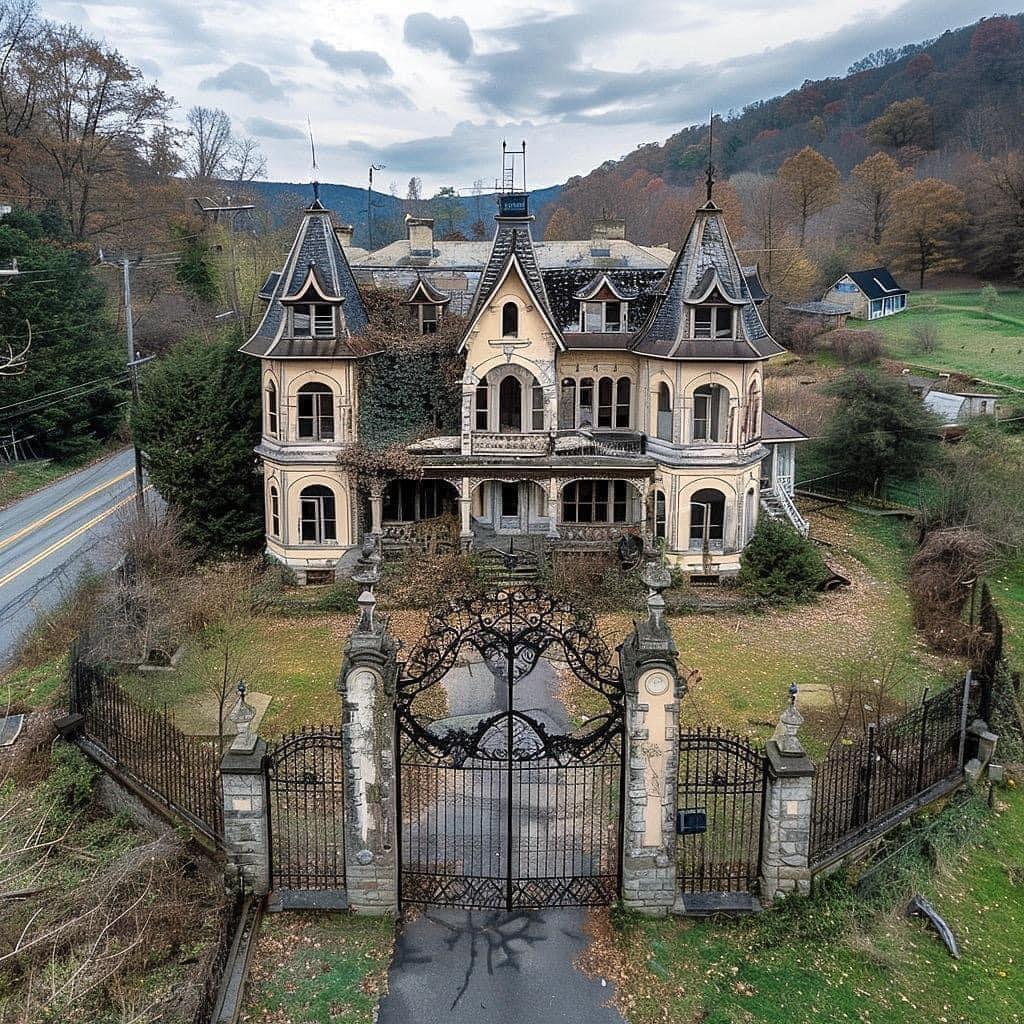
Embrace the breathtaking journey along a scenic road in Alberta, Canada 🇨🇦. The majestic snow-capped peaks rise dramatically against the clear blue sky, guiding your path through lush green forests and undulating hills. This awe-inspiring route invites you to experience the unparalleled beauty and grandeur of Alberta's natural landscapes. 
Ancient Egyptian spoons dating back to 1500 - 2000 BC