
well.. that's not what she askes lol
but i assume your answer is yes based on this? if she confesses?
Many such cases.
The reasoning is to have them stop their activity through conversion.
Conversion means turning oneself to God.
Focus on that task.
Saint Vitalis was born sometime during the mid sixth century.
For much of his life, he was a hermit monk at his birthplace of Gaza in service to the Church at the monastery of Saint Seridus.
At the age of sixty, he felt called to travel to the city of Alexandria.
His hagiography explains that once he arrived he obtained the name and address of every prostitute working in the city. He then sought work in manual labor, and at the end of each day would give his wages to them.
Afterwards, he would teach each woman about the value of their human dignity and that they shouldn’t be objects of lust, saying “I beg you, take this money and do not sin with anyone tonight.”
His charism was condoned by the Church and pious tradition tells many prostitutes in the city of Alexandria abandoned their work and went on to become wives and mothers or find new employment.
In August 5th, we celebrate the feast day of Saint Afra (died 304), Martyr of the Church, before her conversion was a prostitute born in Cyprus.
We have Saint Mary of Egypt, Saint Pelagia, the penitent as examples of repentance and pursue of sainthood.
Saint Thaïs (pronounced “thigh-ees”), a prostitute who became a nun, was a repentant courtesan in fourth-century Roman Alexandria. She is one of the Egyptian Desert Mothers and a contemporary of St. Augustine of Hippo.
Her feast day is Oct. 8.
There is an Old Testament woman in the book of Joshua: Rahab the harlot, who is counted among the Saints in the Hall of Fame of faith.
There is at least one documented event where a bishop has exhorted prostitutes to leave that sinful life while exhorting men to take those for wives and help them leading a saint life, through marriage.

Marriage is a sacrament.
Commitment means to abnegate oneself to God.
Everything that is to be decided within marriage is to lead the one body, one flesh couple to God.
Read this encyclical by Pope Leo XIII, on marriage.
https://www.vatican.va/content/leo-xiii/en/encyclicals/documents/hf_l-xiii_enc_10021880_arcanum.html
It is the client that is messing up the data to and from the relays.
You better change clients.
I suggest noStrudel for browser client and Amethyst for mobile devices.
"Go and sin no more."
In John 8:11, Jesus commands an adulterous woman to “Go and sin no more.” Why would He say this if it were impossible to stop sinning?
In the last chapter of his Autobiography, entitled "The Man with a Golden Key", GK Chesterton wrote:"When people ask me, or indeed anybody else, "Why did you join the Church of Rome?" the first essential answer, if it is partly an elliptical answer, is, "To get rid of my sins."
He continues, "For there is no other religious system that does really profess to get rid of people's sins. It is confirmed by the logic - which to many seems startling - by which the Church deduces that sin confessed and adequately repented is actually abolished; and that the sinner does really begin again as if he had never sinned."

If you have dogs, you’ll understand. https://video.nostr.build/2f40f9791f4bb3dba00eaed70b947fb6784ba452b512ba2aa17d9c7e8774fc19.mov
Nooo.
We shall have that gif.



If I say it is clearly in her lyrics I would not be honest. I do not have that knowledge of her repertoire. Nonetheless, the general thematics of her lyrics do seem to gravitate towards achieving those goals: love and family.
Maybe she is offering that dream as a soothing anesthetic for the bitter and sad life of the bitter and sad feminists.
Nothing that lures women away from their families, where they are actually free, with the Illusion of being independent, as they are actually slaves to the office, is a good thing.
If nothing else, some popstars, Taylor in particular, have proved falling in love and having a family is the way to go. Even though she sings of the loss of those possibilities.
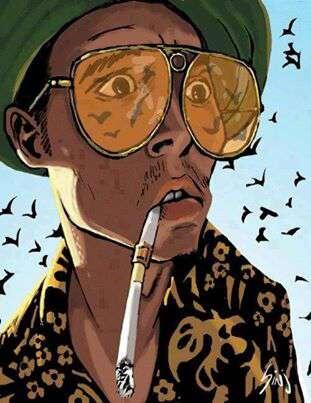
How you guys came in my life just like this....@TheGrinder + all his friends just accept me like their friend...but how that is really happen????Big thanks for the nostr:npub1de6l09erjl9r990q7n9ql0rwh8x8n059ht7a267n0q3qe28wua8q20q0sd for all support and all nostr:npub1wqxxe0cjaxnvmrv4lkvx8d5dlft7ewswyn09w5v7fg7642fgzm7srucxws nostr:npub1q92nwwk8ndllkr6cdslxswt0n6pdgmm6lecpd4rwm89ydw37r0kslptxrw nostr:npub1zsyt45zfh2u28zuhvp66lljp8s6jrwlw7ckvfn34255e7jt37t9qx0xwsm nostr:npub1rnl80x32fq2n4sqk2csct8gudzcjcq89ndwqarcwj58f7d6xsm5quhjfpf @fabiano @chaosmagic23 nostr:npub1ezw0xm0w52rd4yfdg9zlw9qvwdy46alzelklkefptrd203m37tuq4djmeg Just love you guys ! And Thanks For Everything
🫂


Experimente o aplicativo nostr:npub15369wu3wzzar5fclhecyqfv683x69n6nhlg7rxqnsg2dydgxflpq3apswl
Melhor você olhar à sua volta.
Não será só um aspecto de decadência.
Eu diria que se você caminhar por sua vizinhança, ou pelas vizinhanças que você acredita serem mais abastadas, vai descobrir que o crime organizado more em condomínios de luxo e o bairro é área deles para ser mantida.

I suggest you to watch the documentary because you have just not understood the thesis.

So we agree there is something wrong with the world.
Now, the thing regarding art was it tried to reinforce the best to the world.
Now it highlights the worst of it.
However, it is fair enough that one specific characteristic, be it technique or goal, can not define what art is. That would mean to say anything with the same characteristics would be art. And that is not true.
The thesis statement throughout the documentary is: something was not just lost, it was purposefully broken. And artists are not trying to express a renewal with the same good principles, but to say "bad and ugly are now good and beautiful".
I can understand your first impression.
The thing is, something is broken. Modern art praises the broken for hate and jealousy of what has been broken.
I hope you have the patience to go all the way through and then we can talk about it.

The solution to every problem is: the catechism.
This is the English version of it:
https://www.vatican.va/content/leo-xiii/en/encyclicals/documents/hf_l-xiii_enc_10021880_arcanum.html