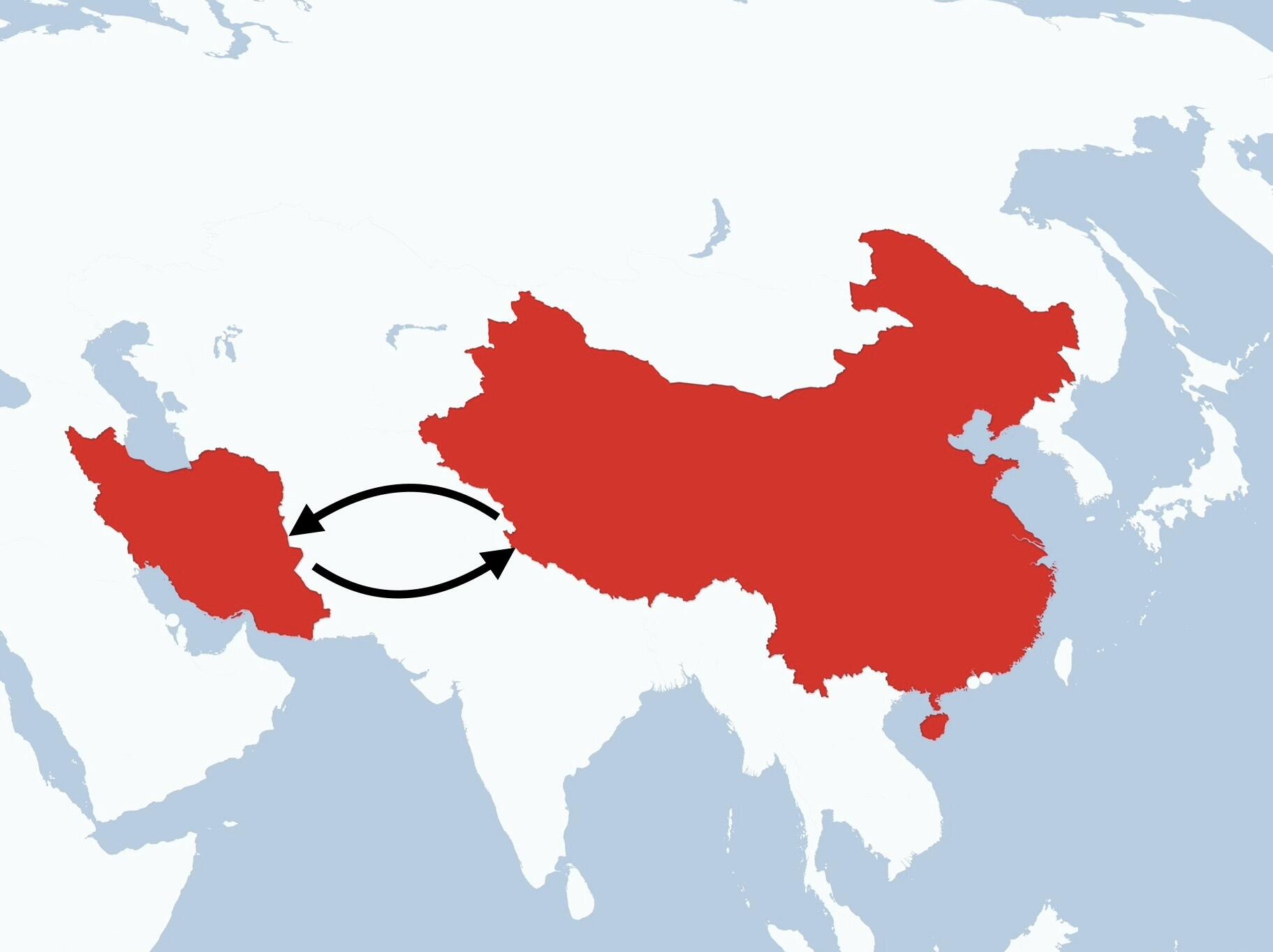
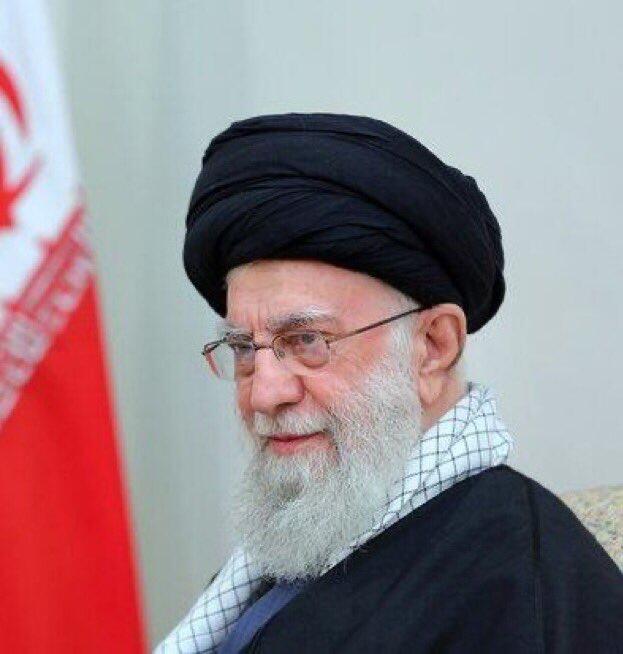
According to Reuters, a senior Iranian official has revealed that Supreme Leader Ayatollah Ali Khamenei has issued strict directives to Iran’s negotiating team, outlining non-negotiable red lines. These include a refusal to dismantle uranium enrichment centrifuges, no reductions in enriched uranium stockpiles beyond the levels agreed to in the 2015 nuclear deal, and no full suspension of enrichment activities. Additionally, Khamenei has ruled out any negotiations over Iran’s ballistic missile program, which Tehran continues to assert is unrelated to nuclear talks.
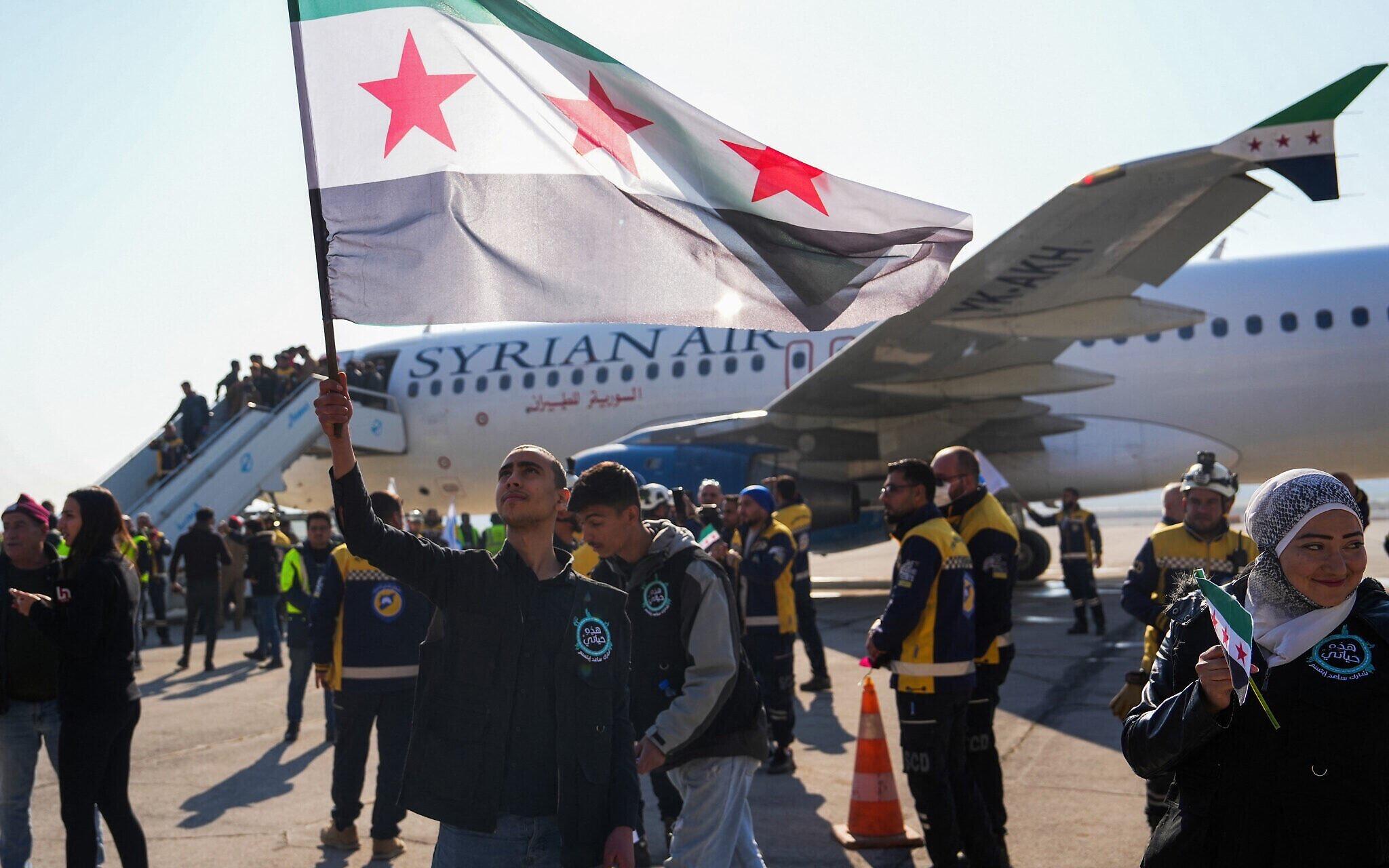
For the first time since the Assad regime’s collapse last December, Syrian Air has officially announced the resumption of direct commercial flights between Damascus and the Emirati cities of Dubai and Sharjah, starting Sunday, April 20. The move follows last week’s visit by Syrian President Ahmad al-Sharaa to the UAE, after which the Emirati General Civil Aviation Authority (GCAA) approved the reestablishment of air links between the two countries. However, no UAE-based carriers have yet announced plans to operate flights to Damascus.
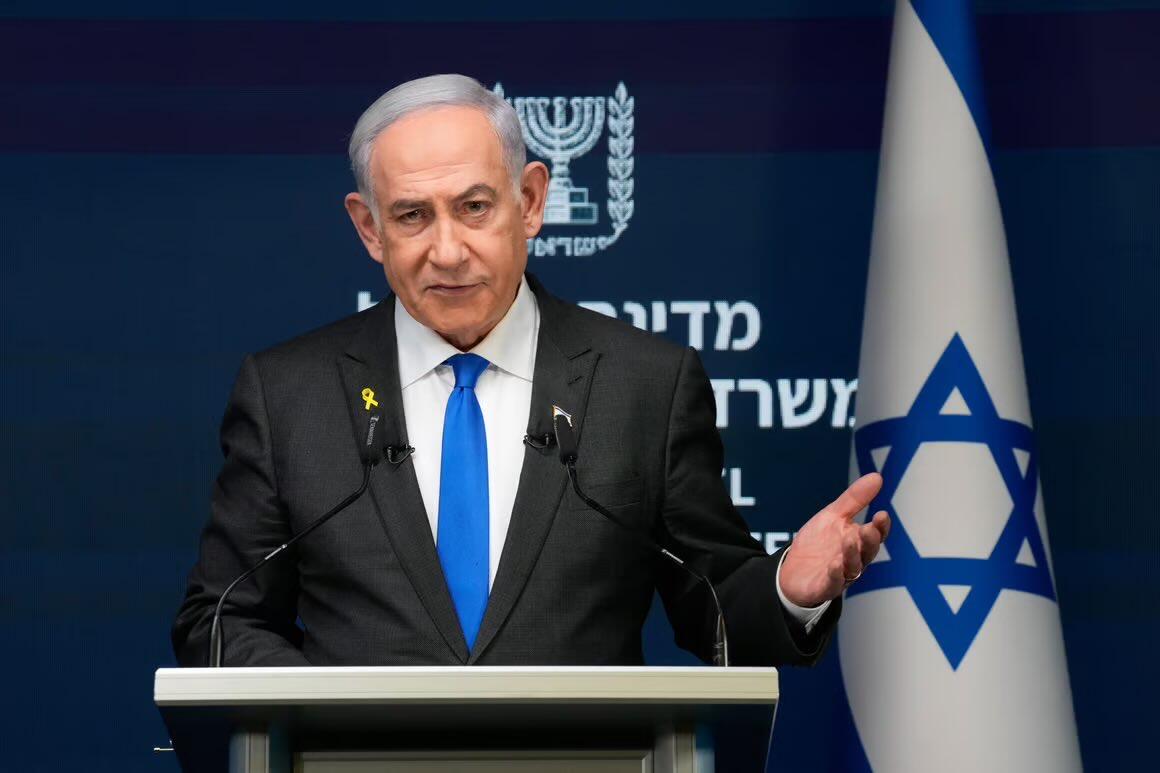
Israeli Prime Minister Benjamin Netanyahu is expected to deliver a rare public statement at the conclusion of Shabbat tomorrow, with reports indicating he will address the ongoing hostage situation and rising tensions with Iran. The announcement comes amid claims that U.S. President Trump persuaded Israel to hold off on planned strikes against Iranian nuclear sites next month, as U.S.-Iran negotiations are set to resume tomorrow in Rome.
U.S. Begins Troop Drawdown in Northeastern Syria
Following Israeli media reports earlier this week suggesting a potential U.S. withdrawal from Syria, The New York Times now confirms that the U.S. has begun a phased drawdown of forces in the country. The process, which began Thursday, includes the redeployment of 600 American troops from northeastern Syria and the closure of three out of eight military bases in Kurdish-controlled territory.
The bases being shut down—Mission Support Site (MSS) Green Village, MSS Euphrates, and a smaller outpost near Deir ez-Zor—are being transferred to the Syrian Democratic Forces (SDF), who now operate under the authority of the Syrian government.
Currently, around 2,000 U.S. troops are stationed in the region. After the initial 60-day reduction period, military officials will reassess whether to proceed with further cuts. Ground commanders have reportedly recommended maintaining at least 500 personnel in the country.
Despite these recommendations, President Trump remains skeptical about keeping U.S. troops in Syria long-term. The current reductions are based on operational assessments and have received approval from both the Pentagon and U.S. Central Command (CENTCOM). The Trump administration is also preparing a comprehensive policy review, with some officials suggesting a full withdrawal from Syria could occur by 2026.
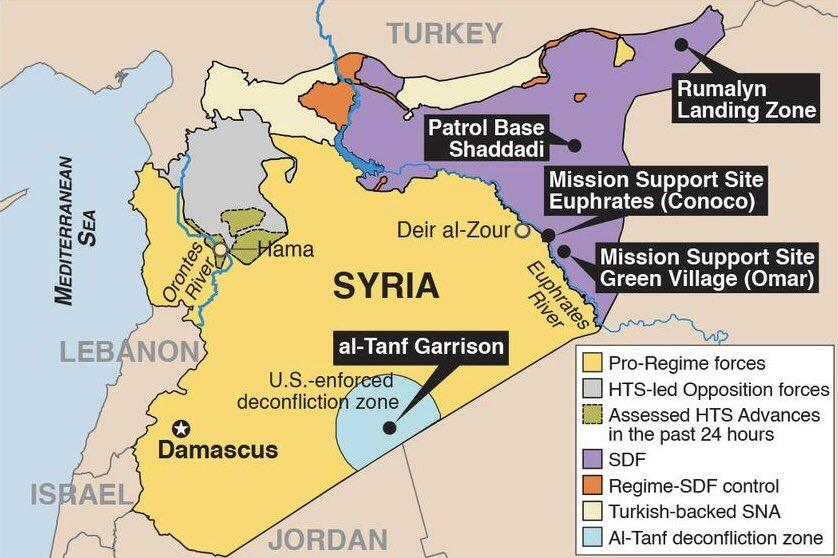
U.S. Forces Begin Major Drawdown in Syria
This morning, multiple sightings of U.S. convoys carrying equipment have been reported, marking the beginning of a significant withdrawal of American troops from Syria. The first group of the 600 personnel set to depart is now handing over control of bases and outposts to the Syrian Democratic Forces (SDF), who operate under the authority of Syrian President Ahmed al-Sharaa.
https://video.nostr.build/f031bc0c967ef7bdd2d68e5d9e782adf1f93f395f2db6a42e05e8dd48af55e90.mp4
https://video.nostr.build/2da981c8dc6bd594bb183f2ece282659c8165ffaaf449b0259bd798674e7171f.mp4
Two Chinese Coast Guard vessels attacked a small Filipino supply transport ship. The incident took place at Scarborough Shoal, just 125 nautical miles off the Philippine coast—well within its Exclusive Economic Zone. Such attacks have become increasingly frequent and aggressive, as Beijing claims sovereignty over the entire South China Sea, including the Exclusive Economic Zones of the Philippines, Vietnam, Brunei, and parts of Malaysia.
https://video.nostr.build/b22126c647c7b0ef4413c1e1747a856b94e09c050d8a6818977f6807e82adbaf.mp4
Houthis Target French Frigate in the Red Sea
A French Navy FREMM multi-mission frigate successfully intercepted a Houthi drone in the Red Sea, according to a joint statement from the French General Staff and EUNAVFOR ASPIDES. The drone was brought down at close range using the ship’s 76mm main gun.
While details remain limited and the vessel’s name wasn’t disclosed, only two French FREMM frigates—FS Alsace (D656) and FS Languedoc (D653)—are currently operating in the region.
The incident occurred under the umbrella of EUNAVFOR ASPIDES, the EU-led naval task force coordinating with U.S. and coalition forces to protect commercial shipping lanes from ongoing Houthi attacks.
https://video.nostr.build/6682d670fbfccb6933fc973a0ce39b57ca7c950698a99b25f1ee74a183b1edcb.mp4
The Israel Defense Force has confirmed the interception of a ballistic missile fired earlier by the Iranian-backed Houthis in Yemen at Central Israel.
https://video.nostr.build/3242ddf84305b44b9a9415d8b8418386742b152a8b690714103ce73f64016fa7.mp4
Houthis Reportedly Using Chinese Satellite Imagery for Targeting in the Red Sea
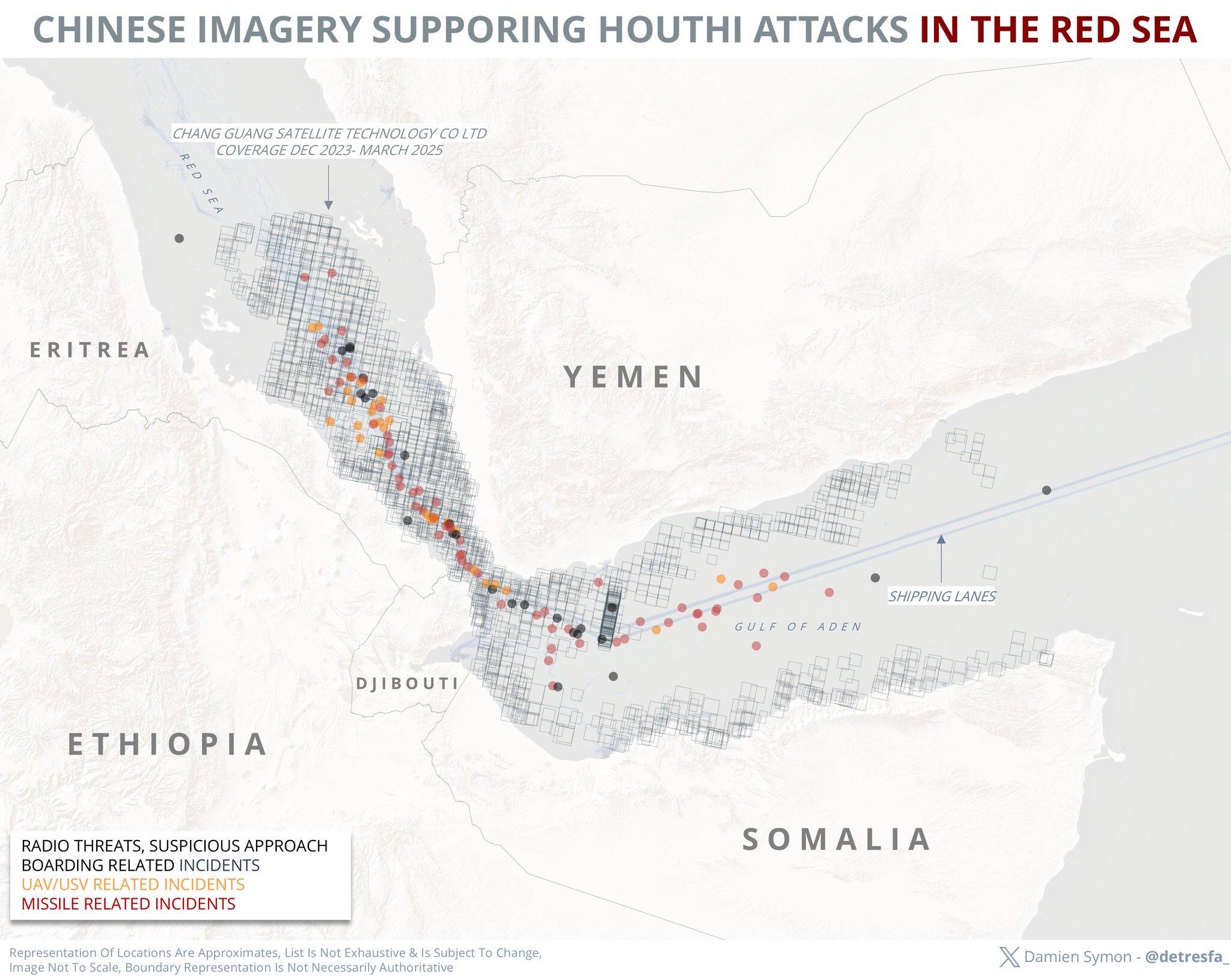
According to a recent Financial Times report, Chinese satellite company Chang Guang Satellite Technology Co. Ltd. (CGSTL) has been supplying Yemen’s Houthi forces with satellite imagery of commercial and naval vessels in the Red Sea. U.S. officials told the FT that the Trump administration has raised concerns with Chinese counterparts “on numerous occasions,” making Beijing aware of CGSTL’s involvement. With no meaningful response from China, U.S. officials now believe the Chinese government is at least offering “tacit support” for the satellite firm’s cooperation with the Houthis.
When contacted by the Financial Times, the Chinese embassy in Washington claimed no knowledge of the matter.
While any satellite firm operating in China is inherently linked to the government, CGSTL’s extensive connections with both provincial authorities and the People’s Liberation Army (PLA) are well documented. A quick look at the company’s website reveals photos with government officials and services with titles such as “Research on Decision-Making Assistance…,” indicating broader state cooperation.
This comes amid a pattern of Chinese-made missile components, drone parts, and other military equipment previously intercepted en route to Houthi-held regions in Yemen.

Media reports suggest that a Chinese satellite firm is providing the Houthis with imagery to help target ships in the Red Sea. The image below shows the satellite coverage area of the company overlaid with reported incidents in the region since December 2023 (*note: incident dates are not synchronized with satellite passes).
CENTCOM Launches Strikes on Houthi Fuel Infrastructure in Yemen
U.S. Central Command (CENTCOM) has confirmed a series of airstrikes on the Ras Isa Fuel Port, located in Yemen’s Hodeidah region and under Houthi control. The operation aimed to disrupt the group’s ability to import, store, and distribute fuel — a critical component of their logistics network.
In a pointed warning to Tehran, CENTCOM emphasized the broader implications:
“The Houthis, their Iranian patrons, and anyone facilitating their terrorist operations should understand clearly — the world will not tolerate the illegal smuggling of fuel and weapons to a terrorist group.”
https://video.nostr.build/7060999d3cd8908ca178e961f7248b24124224927ddf374f7bb7cf6009115e06.mp4
Hamas Rejects Israeli 45-Day Ceasefire Proposal
Hamas has turned down an Israeli offer proposing a 45-day ceasefire in exchange for the release of 10 Israeli hostages. The group dismissed the deal, stating:
“We will not accept partial agreements that serve Netanyahu’s political agenda.”
Conflicting Early Reports
Initial reports were unclear, with some outlets quoting senior Hamas figure Khalil al-Hayya as saying the group was open to releasing all hostages if Israel agreed to a full and permanent withdrawal from the Gaza Strip and released all Palestinian prisoners. However, no such comprehensive agreement has been accepted by Hamas.
As of now, no ceasefire or long-term agreement has been reached, and the proposal has been formally rejected.
https://video.nostr.build/fdf965d56ea22b7d7f3c02846356e54c4148fe764f8aee7f9cf5e589ae5948d4.mp4
U.S.-Ukraine Minerals Deal Set for Signing Next Thursday:
During a joint press conference with Italian Prime Minister Giorgia Meloni, U.S. President Donald J. Trump responded to claims by Ukrainian President Volodymyr Zelensky, who had suggested a renewed minerals agreement could be signed as early as today. Initially unaware of the timing, President Trump confirmed with Treasury Secretary Scott Bessent and clarified that the deal is now scheduled to be signed next Thursday.
https://video.nostr.build/b76848cfef4f741eed5b35b123f5e320831a7f2cce2f778aafc265f9ed3ea6e2.mp4
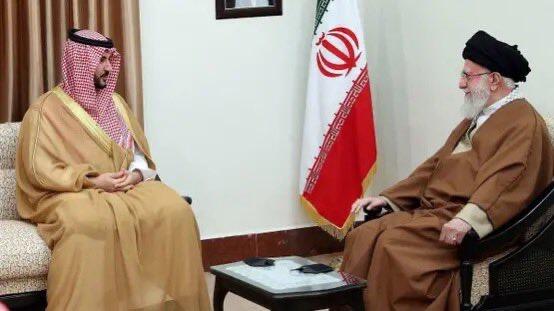
Saudi Defense Minister Prince Khalid bin Salman Al Saud arrived in Tehran earlier today, where he reportedly met with Iran’s Supreme Leader Ali Khamenei and delivered a letter from King Salman. The talks are said to have focused on the ongoing U.S.-Iran nuclear negotiations and rising tensions across the broader Middle East.
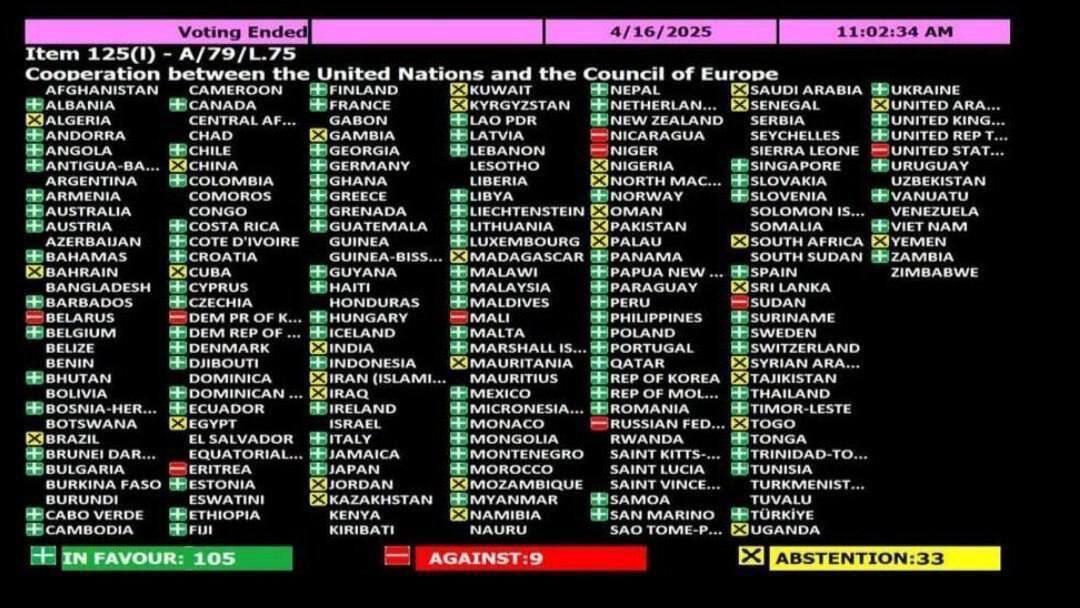
The United States cast a “No” vote yesterday on a United Nations resolution promoting U.N. cooperation with the Council of Europe and denouncing Russian aggression in Ukraine. In doing so, the U.S. aligned itself with Russia and several of its allies or influence-aligned nations, including Belarus, Eritrea, Mali, Nicaragua, Niger, North Korea, and Sudan.
Top U.S. Officials Meet Macron in Paris for Talks on Ukraine and Iran
U.S. Secretary of State Marco Rubio and White House Special Envoy to the Middle East Steve Witkoff are currently in Paris for high-level discussions with French President Emmanuel Macron and Foreign Minister Jean-Noel Barrot at the Élysée Palace. The talks focus on strengthening Euro-American coordination, particularly in response to the ongoing war in Ukraine.
President Macron is expected to push for greater alignment between the U.S. and Europe not only on the Russo-Ukrainian conflict but also on broader Middle East challenges. European officials — especially from the E3 bloc — have voiced frustration over being excluded from current U.S.-led negotiations with Iran. With a second round of nuclear talks scheduled for this Saturday in Rome, Macron is also expected to advocate for a unified transatlantic strategy addressing both Iran and the conflict in Gaza.
https://video.nostr.build/f0bc9522cf844b1973d3bd8ce9f7b54a3db7ba1426fdb95a90763788a993216e.mp4


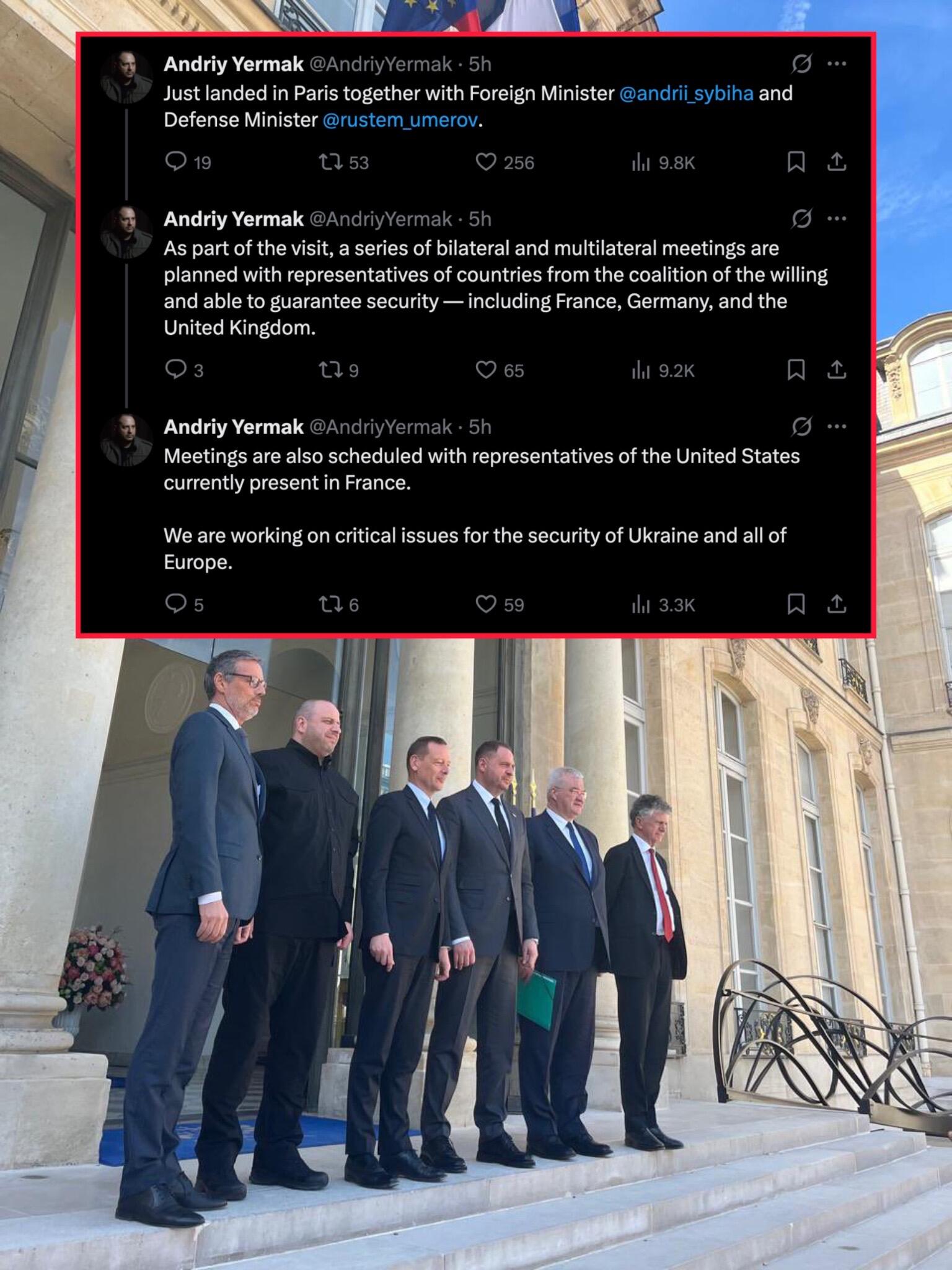
Ukrainian Delegation Joins Macron’s Paris Talks, Set to Meet U.S. Officials
In a surprise development, a high-level Ukrainian delegation has arrived in Paris to participate in ongoing multilateral discussions hosted by French President Emmanuel Macron. The delegation — which includes Ukraine’s foreign minister, defense minister, and the head of the presidential office — confirmed their attendance earlier today.
As part of their visit, the Ukrainian officials are scheduled to hold talks with two senior members of the U.S. delegation present in Paris: Secretary of State Marco Rubio and White House Special Envoy to the Middle East Steve Witkoff.
U.S. Targets Chinese Teapot Refinery in Latest Sanctions Over Iranian Oil
The U.S. Treasury Department’s Office of Foreign Assets Control (OFAC) has imposed a new round of sanctions targeting several entities and vessels linked to China, Hong Kong, Panama, and the Marshall Islands. The move comes as part of Washington’s efforts to disrupt Iran’s so-called “shadow fleet” — a network facilitating clandestine oil shipments.
Among the sanctioned entities is Shandong Shengxing Chemical Co., Ltd., a privately owned Chinese “teapot” refinery accused of purchasing more than $1 billion worth of Iranian crude oil. Its inclusion highlights the growing scrutiny on smaller, independent players in China’s energy sector.
Background: What Are Teapot Refineries?
Teapot refineries are small, privately operated facilities in China that function under looser oversight than major state-run giants like Sinopec, CNPC, and CNOOC. These independent refineries typically receive smaller import quotas and are often accused of underreporting output, masking financial data, and leveraging alternative funding methods to bypass regulatory scrutiny. Their agility and lack of transparency make them attractive partners for sanctioned oil producers, including Iran, seeking discreet channels to sell crude.