Avatar
james
ba4a39eeb087135245e2bc2267da2724a94a07443752b88ba0c3533ddf9b4c6b
Interested in the similarities between alchemy and bitcoin.

If you buy one would you share your experience? This would be interesting and helpful.

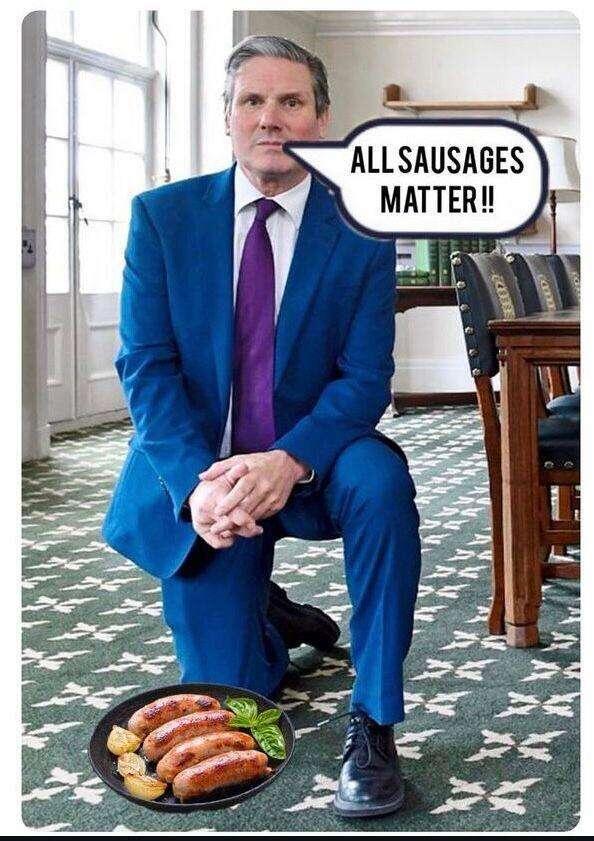
#freethesausages

Can I introduce Rory Sutherland to Nostr's marketing team.

https://youtu.be/f_pwzw601-k?si=AwrNSL2WhoC4HhOX

It is the experience of the thought that makes a difference which requires a time element of reflection.

nostr:note1dfzc8xlf7unptk6falgmx89lq7tgsj028pvplpasqxkrk4qx3yesmczm2m

Light and Shade

#photography

BBC has for many many years told people what they should think only now it's more obvious.

You can read the BBC to find out what a select group of wealthy individuals want to general population to think.

nostr:npub1melv683fw6n2mvhl5h6dhqd8mqfv3wmxnz4qph83ua4dk4006ezsrt5c24

nostr:npub1wmr34t36fy03m8hvgl96zl3znndyzyaqhwmwdtshwmtkg03fetaqhjg240

From another perspective.

A strick adherence to decentralisation only will lead to greater and greater fragmentation and the system will loose energy. To survive, the dev community of nostr must be able to accept some form of centralising function and hold this in tension with their natural resistance.

@fiatjaf = Tim in this scenario.

nostr:npub1sg6plzptd64u62a878hep2kev88swjh3tw00gjsfl8f237lmu63q0uf63m and Opensats must bring about the formation of such a centralising function, not in the form of a corporation but in the form of the IETF if they wish this project to survive.

War is always bad for the economy.

You can see this clearly if you ignore all the money, the pieces of paper with dead presidents inked on them, and the bits in the computers. Money can psychologically manipulate people, but fundamentally money is just an accounting system. You can always look strictly at the real economy, real goods and services, and see whether things are improving or degrading.

War directs people away from production and towards destruction. People who could be growing carrots or building iPhones instead build bombs that are one-time use, and destroy not only the materials and effort that went into building them, but also the target. In aggregate war causes people to produce less and destroy more.

Henry Hazlitt's "Economics in One Lesson" Chapter II "The Broken Window" explains how this can be true while at the same time there can be the appearance of being good for the economy.

"A young hoodlum, say, heaves a brick through the window of a baker's shop. The shopkeeper runs out furious, but the boy is gone. A crowd gathers, and begins to stare with quiet satisfaction at the gaping hole in the window and the shattered glass over the bread an pies. After a while the crowd feels the need for philosophic reflection. And several of its members are almost certain to remind each other or the baker that, after all, the misfortune has its bright side. It will make business for some glazier. As they begin to think of this they elaborate upon it. How much does a new plate glass window cost? Two hundred and fifty dollars? That will be quite a sum. After all, if windows were never broken, what would happen to the glass business? Then, of course, the thing is endless. The glazier will have $250 more to spend with other merchants, and this in turn will have $250 more to spend with still other merchants, and so ad infinitum. The smashed window will go on providing money and employment in every-widing circles. The logical conclusion from all this would be, if the crowd drew it, that the little hoodlum who threw the brick, far from being a public menace, was a public benefactor.

Now let us take another look. The crowd is at least right in its first conclusion. This little act of vandalism will in the first instance mean more business for some glazier. The glazer will be no more unhappy to learn of the incident than the undertaker to learn of a death. But the shopkeeper will be out $250 that he was planning to spend for a new suit. Because he has had to replace a window, he will have to go without the suit (or some equivalent need or luxury). Instead of having a window and $250 he now has merely a window. Or, as he was planning to buy the suit that very afternoon, instead of having both a window and a suit he must be content with the window and no suit. If we think of him as a part of the community, the community has lost a new suit that might otherwise have come into being, and is just that much poorer.

The glazier's gain of business, in short, is merely the tailor's loss of business. No new "employment" has been added. The people in the crowd were thinking only of two parties to the transaction, the baker and the glazier. They had forgotten the potential third party involved, the tailor. They forgot him precisely because he will not now enter the scene. They will see the new window in the next day or two. They will never see the extra suit, precisely because it will never be made. They see only what is immediately visible to the eye."

-Henry Hazlitt, Economics in One Lesson

There is a tipping point in national economies when the only two options are either a mass impoverishment of your whole population or war.

Germany in the late 1930's and some say China now. I'm not sure on the later but certainly feels like the whole world is in a proxy war in some form between the US and China for hegemony.

For China to avoid impoverishment it needs to take a share of US global wealth extraction, which naturally the US is not going to yield.

For what it's worth, wealthy nations, and their citizens, do not openly acknowledge how they became wealthy.

Replying to Avatar mike

GM

A painting by Daniele Oppi

https://it.wikipedia.org/wiki/Daniele_Oppi

I am deeply fascinated by it. I don't know if I like it. Yet I often see new things or interprets existing things in new ways.

Fascination can often be more captivating than beauty.
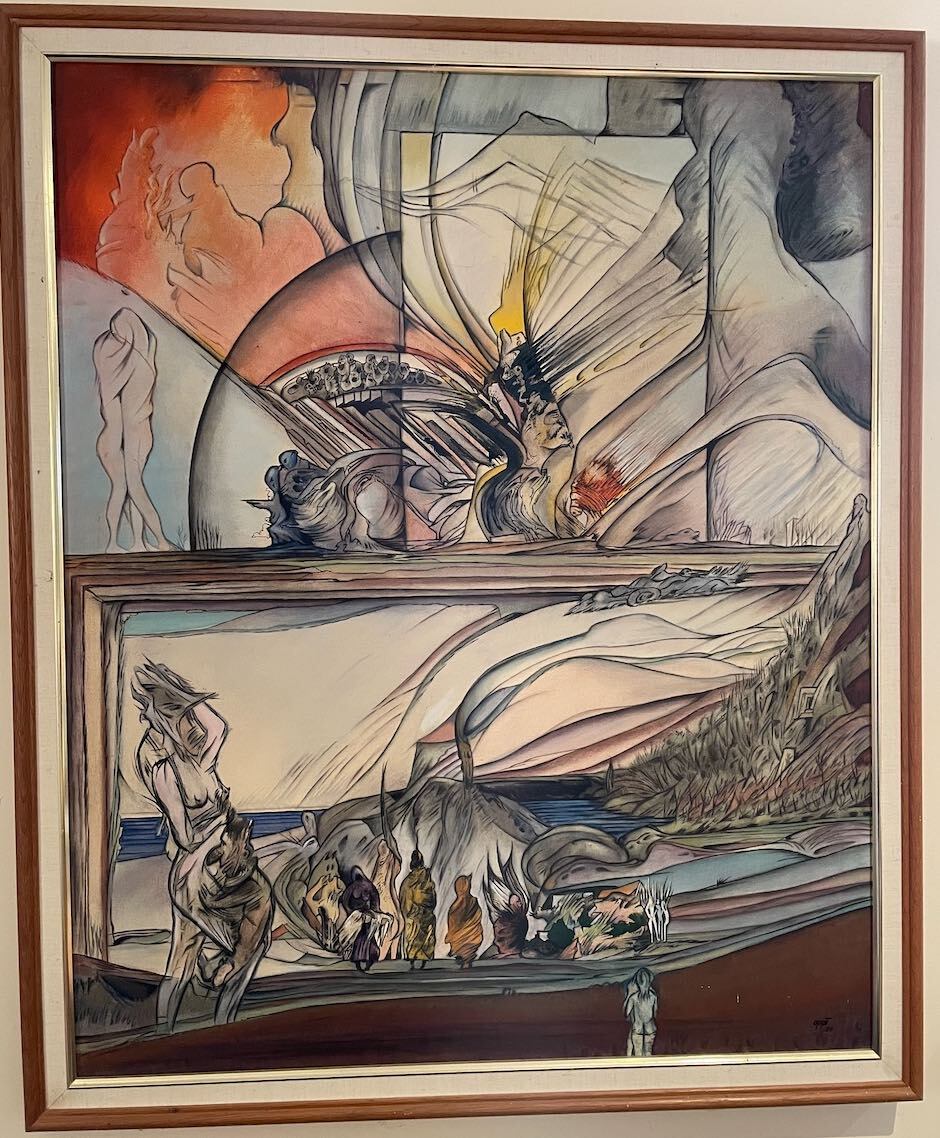
There is you, you as observer, the artist representing themselves and the artist representing something beyond themselves to discover here.