
Hi, Later, we will consider developing a PWA version.
If you want to learn more about the double ratchet algorithm, this explanatory video is excellent.
https://youtu.be/7uEeE3TUqmU?si=Sf9ekYhGi2xWFFBV nostr:note1ffgsgvkltl96wzwe6lakv2ntjfkq2u48msx57mrvnnhtyde5s2js8antlr
Another explanation video
If you want to learn more about the double ratchet algorithm, this explanatory video is excellent.
https://youtu.be/7uEeE3TUqmU?si=Sf9ekYhGi2xWFFBV nostr:note1ffgsgvkltl96wzwe6lakv2ntjfkq2u48msx57mrvnnhtyde5s2js8antlr

Good question.
Simplex chat also use signal protocol to achieve end to end encryption.
https://github.com/simplex-chat/simplex-chat/blob/stable/PRIVACY.md
"Simplex chat is the first messenger without user IDs. " This is its most distinctive feature.
“To deliver messages, instead of user IDs used by all other platforms, SimpleX uses temporary anonymous pairwise identifiers of message queues, separate for each of your connections — there are no long term identifiers.”
In my view, Keychat's method of changing the sending and receiving addresses for almost every message is more beneficial for metadata privacy.
I think the number of Simple Chat relays is fewer than the number of Nostr relays. Moreover, the Simplex Chat team has not aimed to integrate with Bitcoin in any way. Could it be said that Simplex Chat does not yet have a viable economic model? 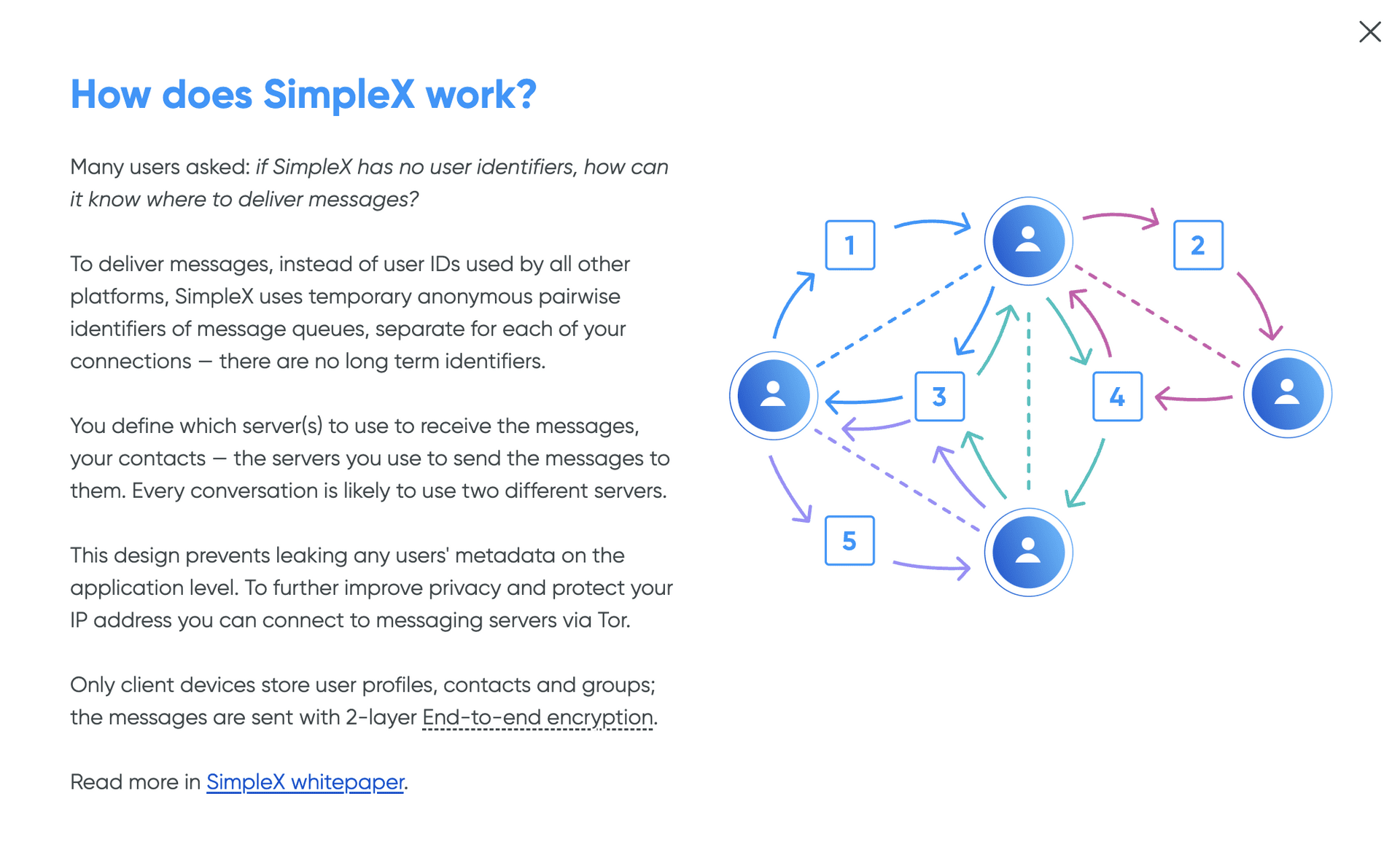
It is done automatically. Just like encryption key updating automatically.
This image will help you understand the following note. 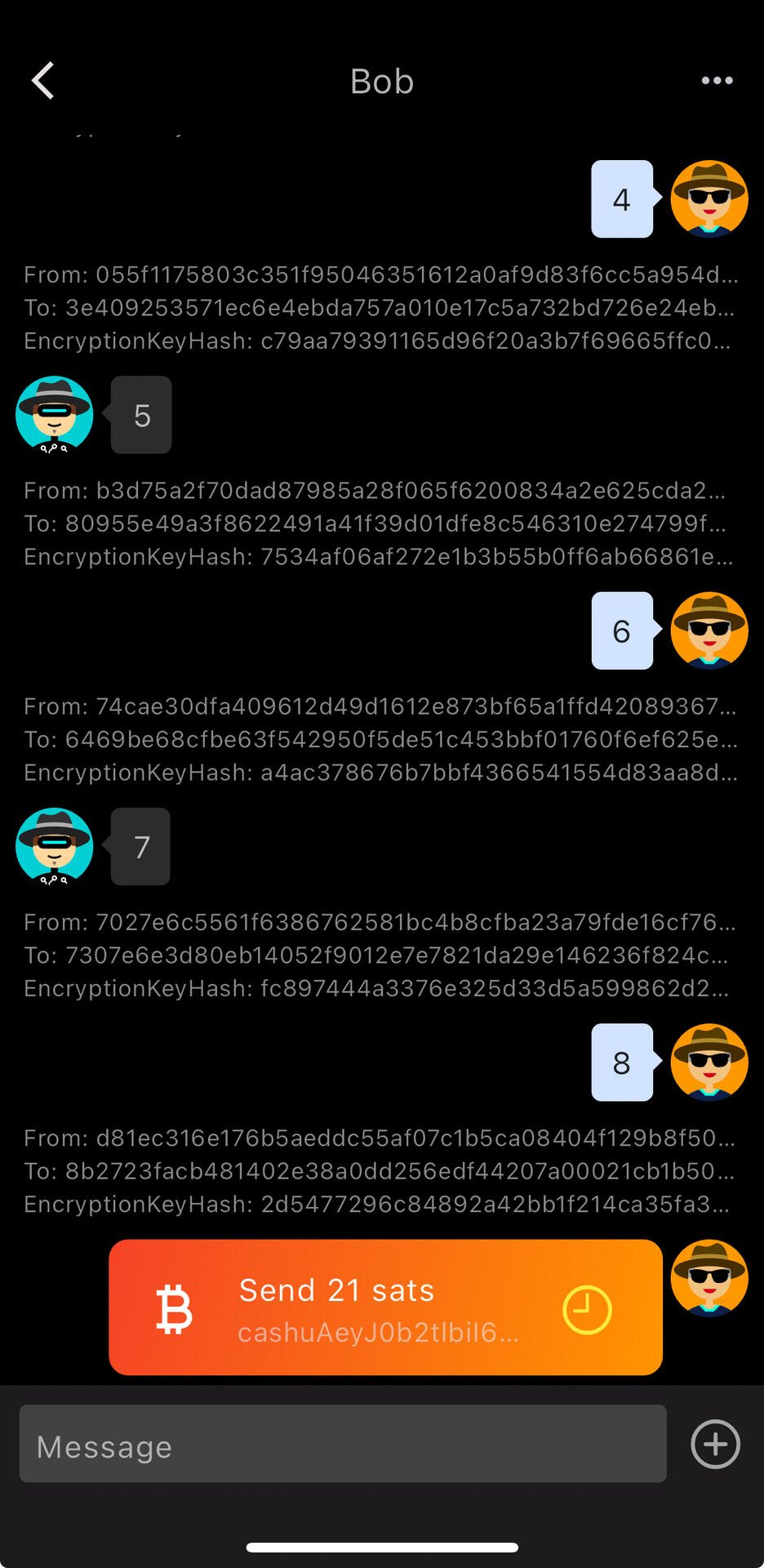 nostr:note1zkkxvfetp5entw9aq3s3jn2e0s5p3kurz0zudprz8ygtaagek64shahcv2

Wait. We will release code and android apk.

Let's imagine that Alice and Bob are good friends. Alice is traveling in the Americas, and Bob is traveling in Europe, each visiting a new place every day. They have agreed to send each other a letter daily, sharing their travel experiences. Therefore, their sending and receiving addresses are constantly changing.
Similarly, in Keychat, the sending and receiving addresses of messages keep changing just like Alice and Bob's addresses.

Damus relay doesn’t add collect ecash stamp function. So it is free.
Bitcoin and other cryptocurrencies can trace their roots to this earlier, privacy-focussed payment system for the internet.”
About forty years ago, cryptographer David Chaum invented ecash. Ecash is a currency privacy protocol, not a currency itself. However, the fiat banking system did not adopt ecash, leaving the ecash protocol without a viable currency to operate on. But with the advent of Bitcoin, the most open currency, the concept of ecash has been revitalized on Bitcoin. For example, https://cashu.space/
Bitcoin doesn't need ecash. Ecash needs Bitcoin.
https://bitcoinmagazine.com/culture/genesis-files-how-david-chaums-ecash-spawned-cypherpunk-dream

Keychat message’s rawdata 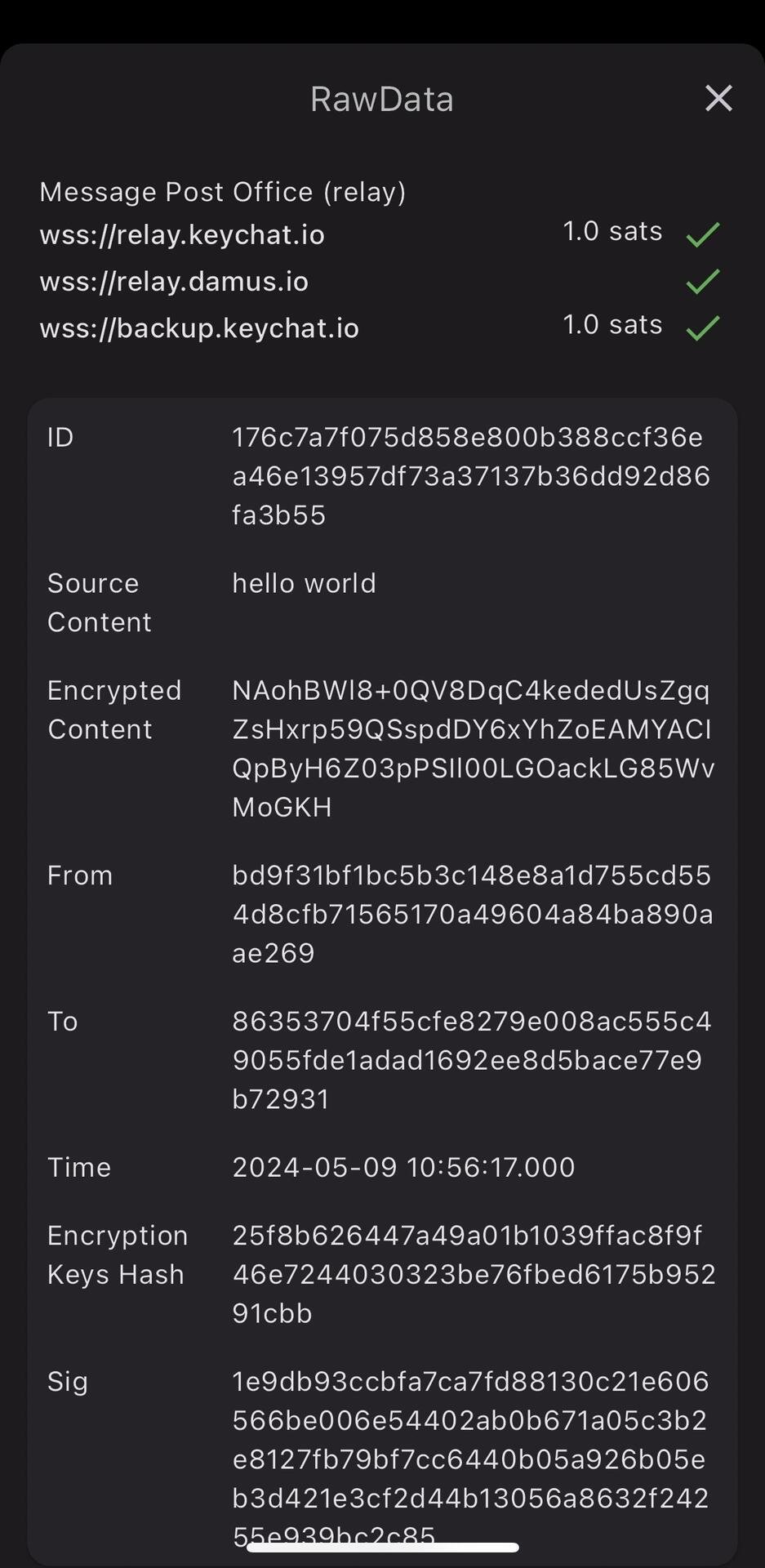
When we use the term DM, private notes are just an ancillary feature of an application similar to Twitter.
When we use the term chat app, private notes become the core feature.  nostr:note1ccua776njq25zed0x5c4ldl3vvnv2w3pafsr5tynhq8u9uxeys3q74nqq0



No yet. We will release code first.
BTW Keychat primarily reuses libsignal.

When designing Keychat, we considered the following disadvantages of the Signal App.
1、Signal App requires phone number registration. Users do not have their own self-sovereign ID.
2、Signal App users can only use Signal's servers, with no option to use third-party or self-hosted servers.
3、Signal App integrates a shitcoin called MobileCoin.
4、Signal App relies on donations and loans from billionaires, making it difficult to sustain.
Keychat proposed corresponding improvements for these disadvantages.
1、Keychat only requires generating a Nostr key. Users have their own self-sovereign ID.
2、Keychat users can freely choose which relay to use or run their own relay.
3、Keychat aligns with Bitcoin.
4、Keychat's economic model with Bitcoin ecash stamps is more reliable and sustainable.
5、Keychat offers better metadata privacy because it allows continuous changing of receiving addresses, sending addresses, and relays.
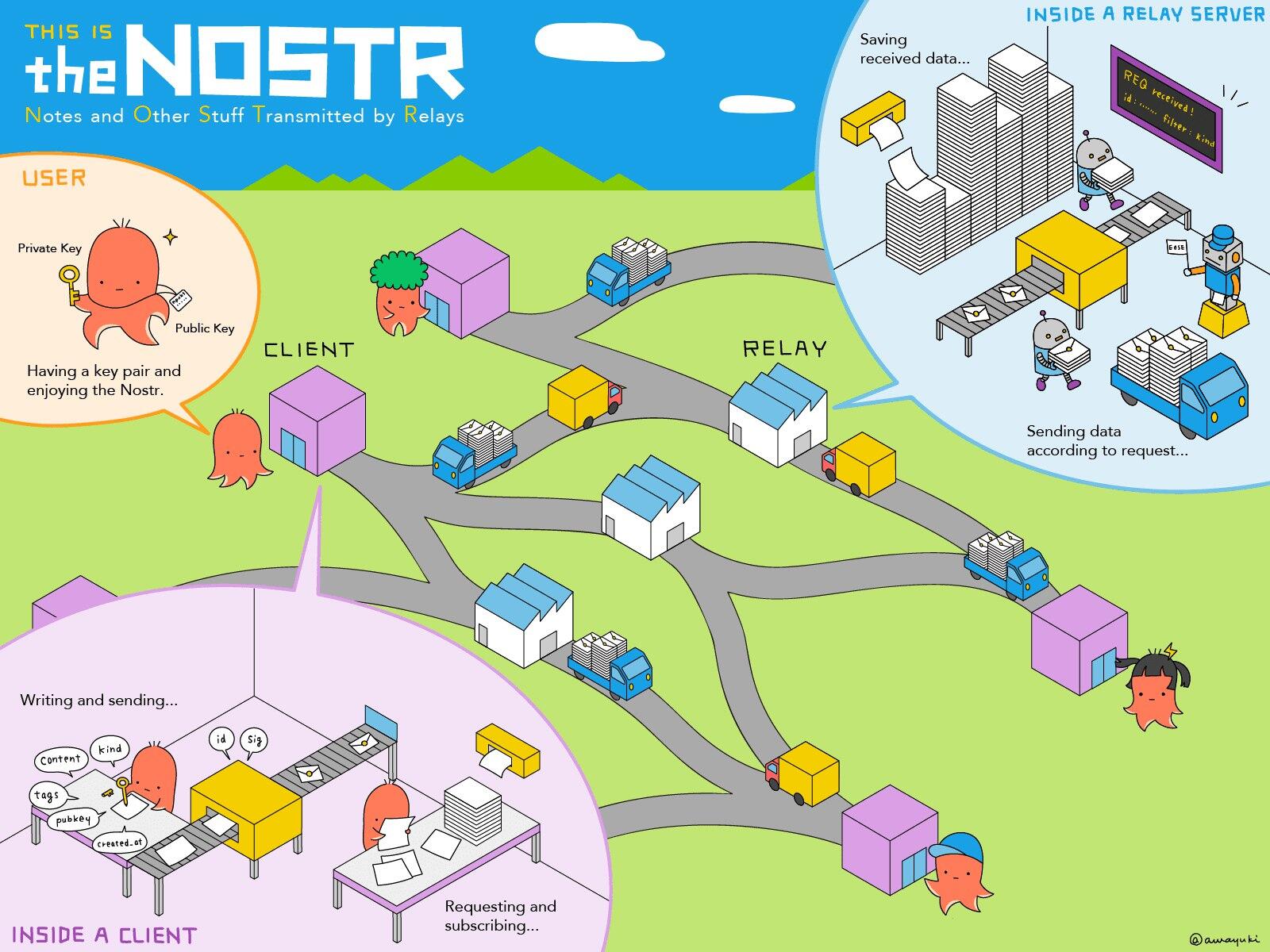
The diagram illustrating how Nostr works also uses metaphors like post office and letter. Isn’t it just missing a small stamp?
Many Nostr users know that the Signal protocol is a very secure end-to-end encryption protocol, recommended by Snowden. However, many people do not know why the Signal protocol is secure. In fact, the design of the Signal protocol has a historical basis and is very intuitive and simple.
End-to-end encryption protocols have gone through three key stages: the PGP (Pretty Good Privacy) protocol of the 1990s, the OTR (Off The Record) protocol of the 2000s, and the Signal protocol of the 201x.
PGP achieved end-to-end encryption through public key encryption. But if a private key leaks, all [past and future] messages can be decrypted. No [forward secrecy] and [backward secrecy].
[[In the PGP protocol, the identity key and the encryption key are the same; it serves as both the identity and is used to encrypt messages.]] [[As an identity key, it is a long-term key, and the longer it is used, the greater the likelihood of private key exposure.]]
The OTR protocol solves the problem of PGP. Its approach is simple: [[it separate the identity key from the encryption key and generates a unique encryption key for each conversation, which is deleted after use.]]
The Signal protocol inherited ideas from the OTR protocol. It mainly consists of two parts: the X3DH protocol, which is responsible for the initial key agreement, and the Double Ratchet Algorithm, which is responsible for deriving encryption keys. [[The Signal protocol derives a new encryption key for each message, which is deleted after use.]] It achieved better forward and backward secrecy.
BTW, the Signal protocol is not equivalent to the Signal app. WhatsApp also uses the Signal protocol for end-to-end encryption. The Signal protocol is only responsible for the end-to-end encryption of messages, meaning only the communicating parties can decrypt the content, not even the server administrators.
Information and value are compressed into the same message, and both are sent out simultaneously; this is a very exciting thing. nostr:note1te6qfvlelcazh4auesdaukz0v8zuk0nr3eqsquq5lmtsnr28r9hq5zv2w6
The current Nostr DM (NIP4) integrates four capabilities into a single Nostr key—it serves as an ID, an encryption key, a receiving address, and a sending address.
In Keychat, the ID, encryption key, receiving address, sending address are separated, allowing the encryption key , the receiving and sending addresses to be updated continually. This achieves better encryption security (forward secrecy and backward secrecy) and metadata privacy.