



No, I am not. I just used Damus. I haven’t even gotten Nostr on the computer yet.
High Energy Consumption – Bitcoin’s Proof-of-Work (PoW) consensus mechanism requires miners to solve complex mathematical puzzles to validate transactions and secure the network. This process demands significant computational power, leading to enormous energy consumption. Some estimates suggest Bitcoin mining consumes more electricity than some small countries, raising concerns about its carbon footprint.
2. Environmental Impact – Since much of Bitcoin mining relies on fossil fuels, particularly in regions like China (before the crackdown) and Kazakhstan, it contributes significantly to carbon emissions. While some mining operations use renewable energy, the overall environmental impact remains a concern, making Bitcoin less attractive in an era focused on sustainability.
3. Scalability Issues – Bitcoin’s network can only handle about 7 transactions per second (TPS), which is far lower than traditional payment systems like Visa. This limitation makes it inefficient for widespread adoption as a global payment system, leading to higher fees and slower transaction times as network congestion increases.
4. Centralization of Mining Power – Mining has become highly specialized, dominated by large mining farms and pools with access to cheap electricity and advanced hardware. This centralization contradicts Bitcoin’s original vision of decentralization and makes the network vulnerable to manipulation by a few powerful entities.
5. Regulatory and Economic Concerns – Governments worldwide are increasingly scrutinizing Bitcoin due to concerns about money laundering, tax evasion, and financial stability. If strict regulations or outright bans were imposed, Bitcoin’s viability as a mainstream financial asset could be threatened.
6. Dependence on Speculation – Unlike traditional assets, Bitcoin’s value is highly volatile and primarily driven by speculation rather than intrinsic utility. If investor sentiment shifts, Bitcoin could face dramatic price declines, affecting its long-term sustainability as a store of value.
### Is the Signum Network Blockchain Safe?
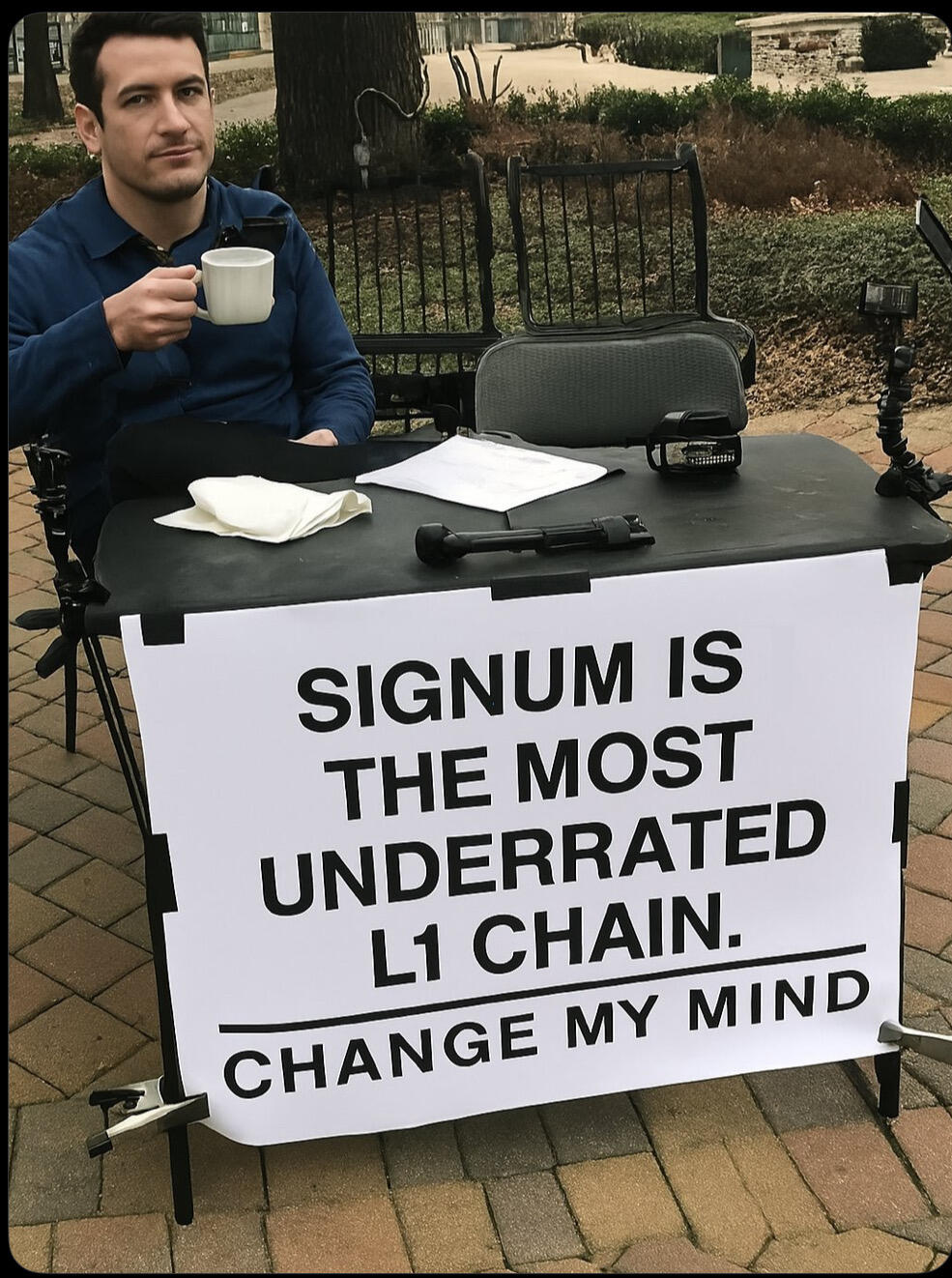
The Signum network blockchain appears to be a secure platform based on its design, features, and history. Below is an assessment of its safety, focusing on key aspects that contribute to its security.
#### Consensus Mechanism: Proof-of-Commitment (PoC+)
Signum uses a unique consensus mechanism called **Proof-of-Commitment (PoC+)**, an evolution of Proof of Capacity (PoC). Unlike traditional Proof of Work (PoW) blockchains like Bitcoin, which rely on computational power, PoC+ secures the network using available disk space and an optional stake of Signa (Signum’s native cryptocurrency). This approach makes it:
- **Energy-efficient**: It avoids the heavy computational demands of PoW.
- **Secure**: Attackers would need to control a significant amount of disk space across the network to compromise it, which is costly and difficult to achieve.
- **Decentralized**: The use of disk space allows users with modest hardware to participate, reducing the risk of centralization and enhancing network resilience.
#### Account Security and Encryption
Signum prioritizes user account security with:
- **Military-grade encryption**: Accounts are protected with strong encryption, making it harder for attackers to access user data or funds.
- **Public key enforcement**: The network identified a past vulnerability where accounts without public keys were at risk. It responded by restricting transactions to such accounts, ensuring that users who activate public keys benefit from enhanced encryption and protection.
#### Response to Security Threats
The Signum network has shown it can handle security incidents effectively:
- In a reported case, attackers stole funds from accounts lacking public keys. The network quickly froze the attackers’ accounts and introduced measures to prevent similar attacks in the future.
- This responsiveness indicates that Signum is actively maintained and capable of adapting to threats, a critical factor in blockchain safety.
#### Decentralization and Node Accessibility
Signum promotes decentralization, which strengthens its security:
- **Low hardware requirements**: Nodes can run on devices as simple as a Raspberry Pi or smartphone, making it easy for more people to participate.
- **Incentives for participation**: Users running nodes can earn fee cash-back on transactions, encouraging a broad and distributed network of nodes.
- A decentralized network is harder to attack because no single point of failure exists, enhancing overall safety.
#### Smart Contracts and Data Management
Signum supports **self-executing smart contracts**, which automate processes and reduce certain risks tied to manual intervention. It also offers:
- **Encrypted or plain text messages**: Users can secure communications or data on the blockchain.
- **Customizable data shortcuts**: This provides flexibility and privacy for users.
While smart contracts introduce their own security considerations (e.g., coding errors), Signum’s implementation appears robust, though users should ensure contracts are well-tested.
#### Maturity and Community Support
Signum evolved from Burstcoin, which launched in 2014, giving it a long history in the blockchain space:
- **Tested over time**: Years of operation have allowed the network to identify and address vulnerabilities.
- **Active support**: A core development team and a large, engaged community back the platform, ensuring ongoing improvements and maintenance.
#### Potential Risks and User Responsibility
No blockchain is entirely risk-free, and Signum is no exception:
- **Account security**: Users must secure their private keys and enable public keys to maximize protection.
- **Unique consensus risks**: While PoC+ is innovative, its reliance on disk space could theoretically introduce different attack vectors compared to PoW or Proof of Stake (PoS). However, no major exploits tied to this have been widely reported.
- **Lack of third-party audits**: There’s no mention of independent security audits in the available information, which could provide additional assurance.
#### Conclusion
The Signum network blockchain is **safe** based on its innovative PoC+ consensus, strong encryption, decentralized structure, and proactive response to threats. Its long history and active community further support its reliability. However, users should take standard precautions—such as securing their accounts with public keys and safeguarding private keys—to ensure their safety on the network. While no blockchain can guarantee absolute security, Signum’s features and track record make it a robust and trustworthy platform.
Is the Signum Network Blockchain Safe? A Deep Dive! by Kim's Workspace
Discover the future of blockchain with Signum! In this video, we delve into how Signum prioritizes enhanced security and efficiency through its innovative Proof-of-Commitment+ (PoC+) consensus mechanism. Learn how this system mitigates energy consumption issues by allowing users to commit hard drive space as collateral, boosting transaction validation and rewards. We also explore Signum's robust account security measures, including public-key cryptography, encryption, and two-factor authentication. Plus, find out how Signum's decentralized approach enhances security and prevents censorship. Join us for a deep dive into Signum's proactive security strategies and dedication to a transparent, fair, and eco-friendly blockchain network.
#Blockchain #Signum #Cryptocurrency #BlockchainSecurity #Decentralization #EcoFriendlyCrypto
If you enjoyed this video, please like and share it!

nostr:npub1xtscya34g58tk0z605fvr788k263gsu6cy9x0mhnm87echrgufzsevkk5s love the Translate link!🙏💎👀


Sounds like the great white north.


I believe SIGNA coin is on the Signum network….



And if information was late or transferred or whatever or can be, it will be exploited that’s a given

And by the way, I am a boomer a boob tube boomer

I don’t know how to take this saying…. those who can do those who can’t teach.have you ever heard that before?
I’d like to say that to Ross…..
Musk said he was in the Oval Office on Tuesday as Trump signed a pardon for Ross William Ulbricht, founder of the dark web marketplace SilkRoad.

Yup…..
Musk said he was in the Oval Office on Tuesday as Trump signed a pardon for Ross William Ulbricht, founder of the dark web marketplace SilkRoad.