
Parenting isn't easy. Some times you learn valuable lessons to go on raising your children better than you did yesterday.
This latest post describes one of those nights....

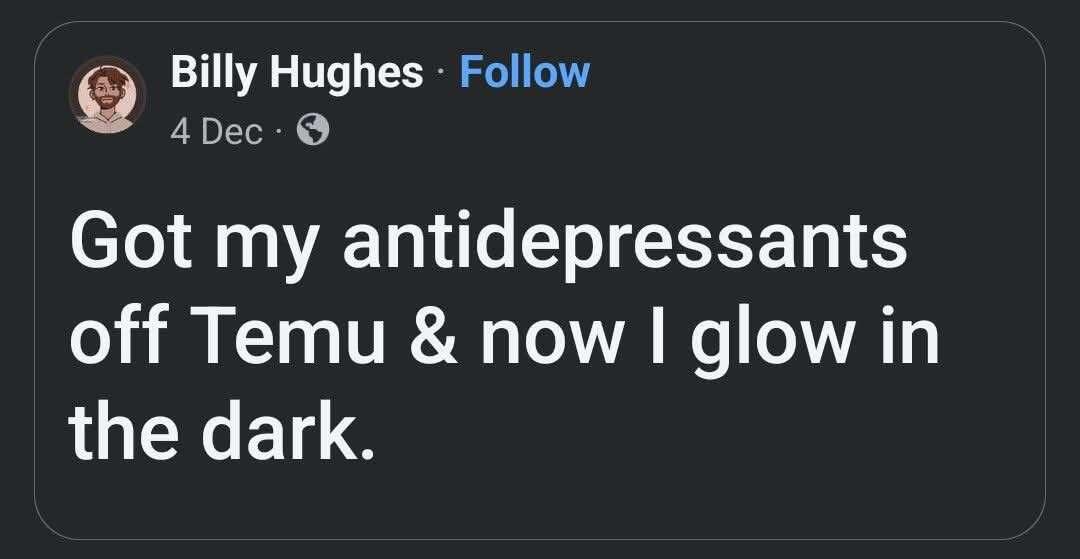
I hate Temu man. Everytime I log on it turns into a retail casino.
You won 100% off everything! Have you considered buying this? Or this? Send this link to 100000000 friends and you get everything free.
Literal scum of the internet.... But its cheap doe.
It's that time of year when we return where it all began. The hustle and grind of the past twelve months has built to a fever pitch, and whatever we’ve achieved — or failed to — clings to us like a weight on our shoulders as we step onto the doorsteps of home.
It’s a time of reunions, of seeing faces that knew us before careers, titles, and responsibilities etched lines into our brows. Eyes linger a moment too long, quietly assessing:
“Have they changed?”
“Have they succeeded?”
“How much weight have they gained — or lost?”
And then come the words — warm, congratulatory, or otherwise. “You look amazing!” they’ll gush, or worse, the silence of unspoken judgment.
Later, with old friends, the comparisons begin. It’s subtle, unspoken, but there. This year, as I stood in front of my best friend’s meticulously polished Porsche SUV, a gift to his wife, the voice in my head wasn’t congratulating him. It was whispering something else: envy.
#HomefortheHolidays


Meme coins will loose you more money than you'll gain. Unless you're a beast.
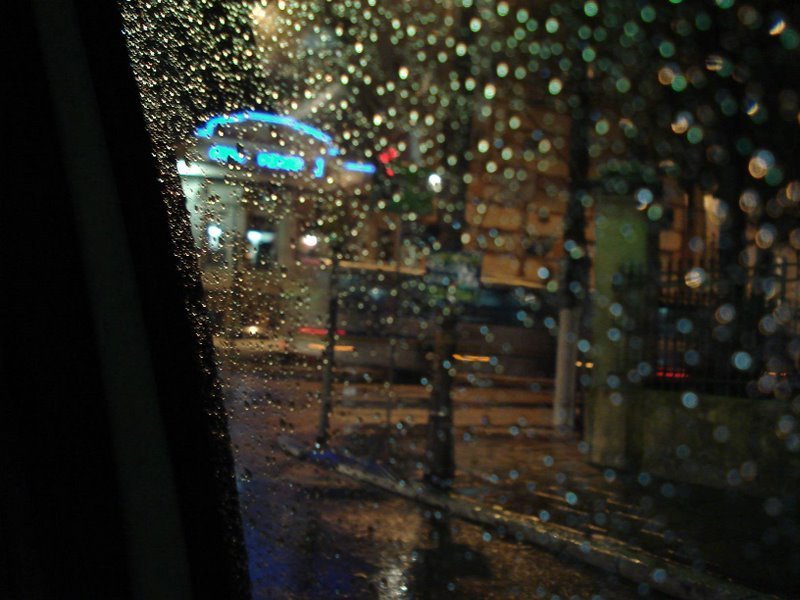
Rain has brought a respite in the cold. Thick humidity making hair frizz again like it should around these parts.
#DecemberinFlorida #MomentsOfBeauty #SmallMoments #Life #love

A few weeks ago, I sat down with Chad ([full podcast](https://creators.spotify.com/pod/show/proofofhealth/episodes/1-How-Muay-Thai-Fighting-Saved-My-Life---Chad-Mane-e2pnbmp)), a seasoned Muay Thai fighter with over a decade of experience, to talk about life inside and outside the ring. Chad’s story is raw, intense, and unfiltered—a journey of struggle, discipline, and transformation. His insights left me reflecting on how combat sports, especially Muay Thai, can teach us profound lessons about resilience, focus, and the human spirit.
### **The Fight Beyond the Ring**
What struck me most was how Muay Thai isn’t just a sport for Chad—it’s a way of life. He began his journey as a teenager, struggling with family issues and uncertainty about his future. A chance meeting led him to Thailand, where he trained intensely and fought his first bout just 28 days later. Chad told me, “Muay Thai saved my life,” and I could feel the weight behind those words.
For Chad, the ring became a space to confront not just opponents but his own fears and insecurities. The process of training—the relentless hill sprints, countless kicks, and sparring sessions—taught him how to face challenges head-on. Fighting wasn’t about aggression; it was about finding strength in adversity.
---
### **The Beauty in the Brutality**
One of the most fascinating things Chad shared was his perspective on pain and sacrifice. During his career, he’s endured broken ribs, countless stitches, and even fought with a broken nose for eight years before getting it fixed. “Pain is the best teacher,” he said, explaining how injuries forced him to adapt and improve.
What I found most compelling was how this physical suffering seemed to heighten his appreciation for life. Chad described moments after brutal training sessions when even a sunset or a simple breeze felt extraordinary. It’s as if the harshness of the ring makes the world outside it feel brighter, sharper, and more alive. “When you’re ready to die in the ring,” he said, “you start seeing life differently.”
---
### **The Mental Battle**
Chad emphasized the mental aspect of fighting, something I hadn’t fully appreciated before. He talked about the mindset required to step into the ring: the inner dialogue where you convince yourself you’re ready to endure pain and push beyond limits. “You can play football or tennis, but you can’t play Muay Thai,” he said, driving home the seriousness of the sport.
Before a fight, Chad uses visualization to prepare himself for the intensity of combat. He doesn’t shy away from the danger but instead leans into it, fully accepting the risks. This mindset, he believes, is what separates good fighters from great ones.
---
### **Lessons for Life**
While most of us won’t step into a Muay Thai ring, Chad’s experiences offer valuable lessons that apply to all areas of life:
- **Discipline Creates Freedom**: The structure of relentless training gave Chad a sense of purpose and control over his life.
- **Face Your Fears**: Whether it’s an elbow to the face or a difficult decision in life, avoidance only makes things worse.
- **Surround Yourself with the Right People**: Chad stressed the importance of training with people who push you to be better. “Energy matters,” he said, and I couldn’t agree more.
---
### **Final Thoughts**
Chad’s story reminded me why I wanted to take on my own Muay Thai journey. It’s not just about fighting; it’s about testing yourself in ways that reveal who you really are. For Chad, the ring isn’t just a place to compete—it’s a place to grow, to learn, and to become a better version of himself.
After our conversation, I realized that the lessons of Muay Thai go beyond the gym. Whether you’re training for a fight or tackling challenges in everyday life, the principles of resilience, discipline, and self-reflection are universal.
If you’re curious to learn more about Chad’s journey, I highly recommend watching the [documentary](https://youtu.be/GPug-MuCKKY) we worked on together. It’s a glimpse into the raw, unforgiving world of Muay Thai—and the unshakable spirit of those who live it.
Stay Healthy - Max
"It’s as if the harshness of the ring makes the world outside it feel brighter, sharper, and more alive" - to think this is what life once was for every human.
Brutish by our modern standards, but how many of our ancestors lived whole lives, embracing the world around them? Enjoying the breeze, as you said.
Today, we have to step into the ring or intentionally seek difficulty to obtain what was once just part of living.
I’ve been working so hard to instill habits and rigid structure to ensure my children would become the best little humans around. I realize now, Ive only been drizzling my grey habits, dull routines, and logic over their still-vibrant canvas of the world.
#IWasntRight #betterMe

The Dutch primatologist Frans de Waal coined the term "veneer theory" in his book "Our Inner Ape" in 2005. The veneer theory posits that human moral behavior is merely a thin veneer over an inherently unpleasant nature. This viewpoint can be traced back to Thomas Henry Huxley, an anthropologist and biologist who was a contemporary of Darwin. However, de Waal criticized the idea because humanity is far more cooperative than predicted by simple anthropological or economic models. However, it is possible to question how thick this "civilizing veneer" really is.
During the COVID-19 pandemic, some people [discriminated against the unvaccinated](https://osf.io/preprints/psyarxiv/t2g45) , while others wished them a [quick and painful death](https://x.com/goddeketal/status/1706294004847984856?s=20) . In the United States, about 30 percent of those who voted for the Democratic Party wanted to take [their children away](https://www.rasmussenreports.com/public_content/politics/partner_surveys/jan_2022/covid_19_democratic_voters_support_harsh_measures_against_unvaccinated) . Professors wanted to [imprison them](https://archive.ph/M3O13) . This was despite the fact that the vaccines did not prevent infection or reduce transmission very much (if at all).
> There is an idea that evil actions often stem from ordinary people blindly following orders or societal norms.
The war between Israel and Hamas revealed a desire to collectively punish all residents of the Gaza Strip. For example, as many as 70 percent of Jewish Israelis say they want to [ban social media posts expressing sympathy for civilians](https://www.pewresearch.org/short-reads/2024/08/26/many-israelis-say-social-media-content-about-the-israel-hamas-war-should-be-censored/) (""[There are no civilians](https://www.nbcnews.com/tech/social-media/israel-posts-video-saying-are-no-innocent-civilians-gaza-rcna157111) ."") On the other side of the conflict, there is a desire to punish Israeli citizens and Jews around the world for Israel's actions in the conflict, as shown by the [storming of an airport](https://www.epochtimes.se/Flygplats-i-Dagestan-stangs-efter-stormning) in Russian Dagestan.
As a result of Russia's invasion of Ukraine, the alienation of ethnic Russians has become fashionable. Even Swedish defense policy pundits now found it appropriate to dehumanize Russians by calling them "orcs" (evil and warlike creatures with sharp teeth taken from J.R.R. Tolkien's stories). Others wanted to [deny all Russian citizens entry](https://www.svt.se/nyheter/utrikes/manniskorattsaktivist-att-neka-ryska-m) . Recently, the software project Linux has removed [Russian programmers](https://arstechnica.com/information-technology/2024/10/russian-coders-removed-from-linux-maintainers-list-due-to-sanction-concerns/) simply because they are Russian. Similar rhetoric can be found on the other side.
All three of the above examples constitute a form of collective punishment, which is contrary to both the [UN Declaration of Human Rights and the Geneva Convention](https://fn.se/wp-content/uploads/2016/07/Allmanforklaringomdemanskligarattigheterna.pdf) . Yet few react.
The author Hannah Arendt coined the term "the banality of evil" when she studied Nazi war criminals. The term refers to the idea that evil actions often stem from ordinary people blindly following orders or societal norms without critical scrutiny. She argued that individual responsibility and critical thinking were of paramount importance.
In an iconic photo from the 1930s, a large crowd is shown with everyone doing the Hitler salute. Everyone except one. The man, believed to be [August Landmesser](https://sv.wikipedia.org/wiki/August_Landmesser) , openly showed his refusal with crossed arms and a stern expression.
Imagine yourself in his shoes, standing among thousands of people who are raising their arms. Would you have the courage to stand still and quietly while everyone around you shouts their support? Or would you, like so many others, let yourself be swept along with the current and follow the crowd? Somewhere in there, you might have the answer to how thick this "civilizing veneer" really is.
---
*Cover image: Picture of people giving a Nazi salute, with an unidentified person (possibly August Landmesser or Gustav Wegert) refusing to do so, Wikimedia Commons*
We all present a more polished version of ourselves in public, carefully curating an image we've worked hard to project. Meanwhile, the voice in our heads mediates between our primal instincts and the persona we strive to continue showing the world.

Two weeks ago, on a saturday night, my wife and I decided to go to a festival at our local park, not knowing what kind of festival it was. After dinner we looked at each other in that “what are we going to do tonight” kind of way, I’m sure you know it well, if you’re married too. Little did we know that we were going to head to a massive religious Team Jesus festival. We’re talking 5-10,000 sitting on the grass drinking mate and eating Asado (Argentinian Barbecue) while listening to religious preachers, gospel music, and, to my surprise, a Calvin Harris like DJ dropping beats. The only difference being- I didn’t meet this DJ in the summer, I met him that Saturday night, sitting on the park grass.
If I could go back a decade to tell a 19 year old me: “In 10 years from now, you are going to go out on a saturday night, spontaneously with your wife, to a religious festival featuring gospel music and religious preachers, AND, you are going to be perfectly fine with it. That same 19 year old atheist me, would roll his eyes in disbelief and laugh me out the room. As a kid, brought up in a very non religious Denmark, to whom the yearly church visit for the Christmas mass, was my idea of hell on earth, it seems unfathomable that I’m now a 29 year old man with a fairly close relationship to God. Whatever that even means. How did I end up here?
### **My Atheist Life and Upbringing**
I am rebellious by nature. I absolutely despise the notion of anyone dictating how I have to live my life, telling me what I have to think. Having to console the Bible for the answer to all my dilemmas still, to this day, seems ridiculous to me. I mean, who swears by any book to such a degree that they would blindly turn to it, for consultation on every issue in their life? I used to be one of those annoying atheists who completely dismisses the existence of anything, but their own mind and consciousness. I used to say things like: “Religion is a tool for brainwashing, manipulation and the cause of all evil in the world” and “Religion creates wars not inner peace.” Uhh, and my personal favourite atheist line: “If a God really does exist, then why is there so much evil in this world?”
I’m sure you’ve heard these lines rattled off before– or maybe you, yourself spew such sentences, from time to time? Well let me tell you, they are all very convincing one-liner arguments, to a rebellious young man like me. So how did I come to “see the light" as they say?
### **What is God?**
Over the past decade of travelling the world I have come to realisation, that God isn’t this construct of the Bible or the Quran or whatever flavour of holy script you subscribe to. You know, this all-seeing creator of life itself, who judges every single decision I make.
God, to me, is this inexplicable energy between me and the universe at large. God is this ever present energy which we all feel, but can’t quite put our finger on. It’s the energy that drives me to create, everyday– the energy that made me sit down to write this. It just feels right, like a calling– like I must write this story. That same energy made you read this. God is me. God is you. God is in everything and everyone you see around you. We are all mere images of God because we all create life where there previously was none. And we do it every single day, 24/7, all day every day.
Have you ever experienced the feeling that someone you’d never met showed up in your life, for a brief moment, to deliver you a message, a piece of advice or a nudge in the right direction? As if someone had sent them specifically to you? As if someone was listening to your thoughts? Let me tell you– I have had many such experiences in my life.
### **When I Met God**
Let me give you an example. The year is 2018. It is early April. I’m sitting in a hostel patio in Buenos Aires, a cigarette in one hand and a one litre Quilmes beer in the other. I’m in disarray–split in my mind and with seemingly no goal to pursue.
I had been travelling for about a year. I had originally set out, with the goal of finding somewhere in South America, where I’d like to live for a few years, while becoming fluent at Spanish. But during my travels I had lost sight of my originally stated goal. I had instead come to think that I would go back to Denmark and study photojournalism. I had even bought a ticket back to Denmark. That’s why I was in Buenos Aires, to catch my flight back to Denmark in a couple of days. I know, what the hell was I thinking?...
A few months earlier during Carnival 2018 in La Paz, Bolivia, I had met the most interesting, gorgeous local Bolivian girl. She had showed me around La Paz everyday for the two weeks I was there. We talked for hours on end, at cafes, restaurants, and, at night, in bars or at viewpoints across the city. I would walk her home every night, or that is to say–as close as she would let me get to her door. She didn’t want her family to see us together–not yet.
After I left La Paz to keep on travelling, we stayed in contact. We would text each other at least every other day. She was clearly interested, so was I.
As I sat in this hostel patio in Buenos Aires, I got to know Marco, a Venezuelan man in his 40's, who had recently escaped the horror show that is Maduro’s Venezuela, in search of a better life in Argentina. One night, over many beers and plenty of cigarettes, I layed out my situation to Marco. I told him, I was in disarray– that I didn’t know what to do? Should I give up my original plan of living in South America and learning Spanish, to go home and study? What about the girl? I couldn’t take my mind off of her.
Marco lit a cigarette, leaned forward, and looked me in the eyes. It was at this moment he said exactly what I had been thinking all the previous days. He said ”Son, isn’t it obvious what you have to do? I see you texting this girl everyday. She is interested, and so are you. You said you planned to stay and live in South America. If you are serious about that plan, then get your ass on the next bus back to Bolivia and figure out how you can live there”.
[Leave a comment](https://pilgartexplores.substack.com/p/how-travelling-brought-me-closer/comments)
### **I am God. You are God**
It felt as if Marco had been sent to that hostel, all the way from Venezuela, just for me. To tell me what I needed to hear and stear me back on track–towards my stated plan. The plan I had told the universe, or God, when I had left Denmark. Marco was an extension of God, presenting himself in my life for 5 days that April in Buenos Aires. The next day I went to Recreo, the central bus station in Buenos Aires. I ordered a ticket for the next bus to Bolivia. A few days later I arrived back in La Paz, as a surprise to the girl.
For the whole trip, I thought about what to say to her when I saw her again. I told her: “You are going to be my girlfriend” she smiled and said “Lets see about that”.
We have been together ever since. She is now my wife. She is an extension of God in my life, just as I am an extension of God in hers.
Marco is one of many examples of where a person I hadn’t known previously has carried an important lesson for me. Most of the time the lessons are good, sometimes they are hard lessons. What all the lessons have in common is: they are always lessons that have presented themselves to me, through that inexplicable energy between me and the universe at large. Lessons born out of my own stated will to God.
I am God. You are God. We are all God. We all create our own lives.
^ Not a test, those are seriously demoralizing comments from above.
I love this little glimpse of your life and your path toward God.
Your feelings of God remind me of a book I think you might like, Conversations With God by Neale Donald Walsch. He talks a great deal about the fact that we are all small instances of God.

What’s the Cost of Our Obsession with Progress?
We’re all on a hamster wheel of ambition, chasing goals that society has defined for us—but at what cost?
Some things I touch on in my latest blog post:
🛞 The relentless pursuit of progress: Are we truly moving forward or just running in circles?
📚 How "progress" unconsciously shapes our personal and societal goals.
🛠 The duality of progress: incredible innovations vs. the erosion of culture and ecology.
🦋 Joe Rogan’s “human cocoon”: Are we evolving into something unrecognizable?
This isn’t a critique of progress—it’s a call to rethink its grip on our lives and ask where we’re headed. Can we balance ambition with sustainability and cultural ethics?
👉 Read the full blog and join the conversation: https://primal.net/e/naddr1qvzqqqr4gupzp3padh3au336rew4pzfx78s050p3dw7pmhurgr2ktdcwwxn9svtfqqa9wefdwfjj6stvdsk57cnnv4ehxety94mkjarg94g8ymm8wfjhxuedg9hxgt2fw3ej6sm0wd6xjmn8946hxtfjvsuhsdnju045ml

#Progress #CulturalCritique #Society #Philosophy #Technology #AI #Sustainability #MentalHealth
What made it possible for bluesky to acquire so many users and why hasn't nostr been able to have that same attraction?
We pride ourselves on being sophisticated animals—clever toolmakers and relentless innovators. It’s this ingenuity, we believe, that sets us apart from the rest of the animal kingdom. We clothe ourselves, build machines to save time and energy, and yet, somehow, we remain deaf to the relentless squeaking of a far more profound wheel.
Not the wheels of our cars or the gears driving the machines that sustain modern life, but a wheel few of us see or acknowledge. The wheel that, for all our intelligence, makes us no different from a hamster running endlessly in its cage.
The hamster’s wheel is innocent—it spins for exercise, for a fleeting distraction. Ours, however, is far more sinister, propelling us in a ceaseless race toward ambitions we barely understand.
The hamster wouldn’t even have a wheel to run on, were it not for us—the inventors of its cage.
What does that say about the wheels we’ve built for our selves?

Very cool global protest happening right now. #makeamazonpay https://video.nostr.build/0b11f494a68673706e40acfa34be51339b8262b153abf343b14e6f1f00b74582.mp4
I love quick and reliable shipping as much as the next guy. But their business practices from the way they treat their vendors to their employees and even management at that, can only persist for so long.

if today is not just but a tomorrow with bitcoin is, is that not a progression toward justice in your view?
Most of us here have been drawn to nostr because of Bitcoin and the main draw of Bitcoin it seems, is the underlying hope for economic progress.
As we sit with our families today (in the USA) many of us may be tempted to orange pill friends and family but before you do consider what your thoughts on progress are.
What constitutes progress for you? How may your friends and family have conflicting schools of thought around the concept of progress?

covid time machine

best thanksgiving I ever had, I had a food coma watching ratatouille when it came out on dvd... damn that was a while back

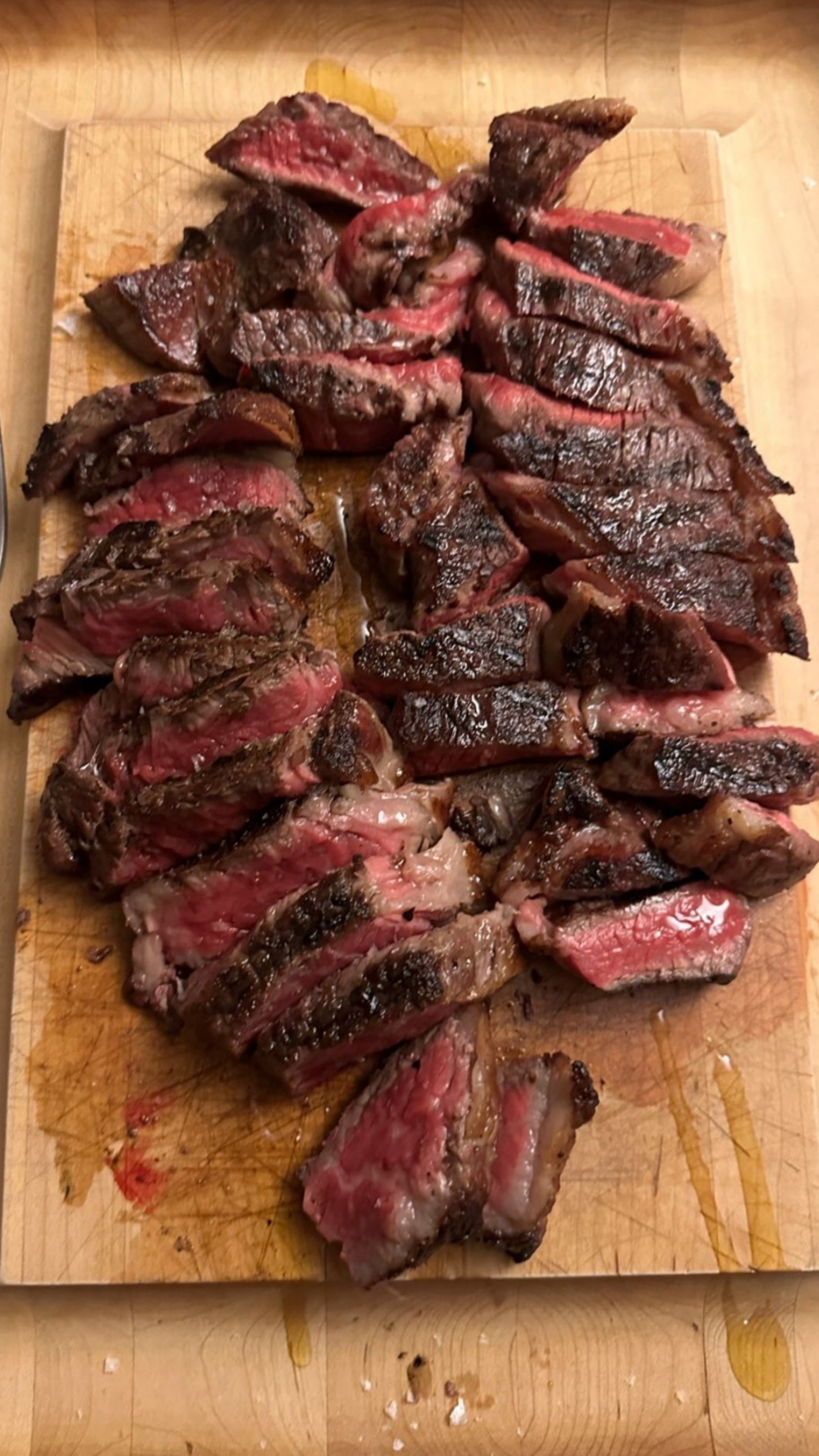

sheesh that looks scrumpdilliumptous