
Today is Bitcoin Pizza Day! But the photo below is not! What do you mean?
Confused?
In short, the photo below is from the second #BitcoinPizzaDay, or Lightning Pizza Day, since the photo was taken on February 25, 2018, when Laszlo negotiated and paid for pizzas with bitcoins again, but this time, using the Lightning network and paid 649,000 sats.
2010: 10,000 BTCs
2018: 0.00649 BTCs
2025: ?
And today, how much will our pizza cost?
#BTC #Bitcoin


Shouldn't we be debating changing from 8 decimal places to 9?

📰 News Alert...
🔖 Title: South American Fintech Embraces Bitcoin Strategy for Growth
🗓️ Published: 2025-05-16T22:32:09+03:00
📄 Summary: A fintech company in South America is boldly mimicking the strategy employed by MicroStrategy, focusing on acquiring Bitcoin as a core part of its financial strategy. This proactive approach has already led to a notable increase in its stock value, demonstrating the growing interest in cryptocurrency as a vehicle for sustainable business growth. As traditional financial models are being challenged, this fintech's move reflects a broader trend towards digital assets in the region.
🔗
https://decrypt.co/320510/brazilian-fintechs-shares-rocket-following-bitcoin-buying-strategy
🗞️ Source: Mathew Di Salvo
💓 #Fintech #Bitcoin #CryptoGrowth
Meliuz!
They own 320 BTCs!

No…
Deck: 10 ^67
Atoms in Universe: 10^80

Have you ever shuffled a deck of cards? If so, you’ve likely held a unique sequence—a combination of cards that’s never existed before in the universe’s history and probably never will again.
Let’s dive into entropy, improbability, and, naturally, #Bitcoin.
A standard 52-card deck can be arranged in 52! ways. That’s:
80,658,175,170,943,878,571,660,636,856,403,766,975,289,505,440,883,277,824,000,000,000,000
or roughly 8x10⁶⁷ possible shuffles. Hard to grasp?
Consider this:
⏱️ ~4.3x10¹⁷ seconds have elapsed since the Big Bang.
🧑🧑🧒🧒 ~100 billion humans have ever lived.
If every person shuffled a deck every second since the universe began, we’d still likely never see the same order twice.
Each thorough shuffle creates something entirely new. That’s the wonder of entropy.
So, how does this connect to Bitcoin?
This same improbability is what makes #Bitcoin secure.
When you create a Bitcoin wallet with a 24-word seed phrase, you’re selecting one out of:
115,792,089,237,316,195,423,570,985,008,687,907,853,269,984,665,640,564,039,457,584,007,913,129,639,936
possibilities, or ~1.1579x10⁷⁷. That’s exponentially larger than the deck’s shuffles.
To crack your wallet, someone would need to guess that exact sequence.
💪 Brute force? Useless.
🖥️ Supercomputers? Nope.
⏳ Time? Not enough.
It’s like picking one specific grain of sand from the entire universe… twice.
Bitcoin’s security doesn’t come from secrecy—it’s protected by being one choice among near-infinite possibilities.
Isn’t that elegant?
And get this: you can generate that level of security with something as simple as a six-sided die or, yes, a deck of cards.
If this doesn’t spark awe for the math behind #Bitcoin and its brilliant design, reread it. You’ll probably want to stack more satoshis.
Happy Sunday! 👋
https://video.nostr.build/8ede63e21dcfa23b84a47a81313e28e8a1ed06520748d41c467a631d02f79fad.mp4
https://video.nostr.build/fd467ac353ecbee524b35258439994548460091d7c84bb3f154f9b36e8b971bb.mp4
https://video.nostr.build/98428dbe5811d720752f15b39d838643fc9b522ee05f5949a97bd2b999cd23fe.mp4
Estimated atoms in observable universe: 10^80…
Exactly 14 years ago, Satoshi Nakamoto made his second greatest contribution to the world.
He disappeared!
On April 26, he sent his last message.
An email to Gavin Andresen in which he once again said he was dedicating himself to new projects and asked the community to start referring to Bitcoin as an open-source project developed by the community, and not by a mysterious figure.
#bitcoin
#BTC
#nostr

#btc
#bitcoin


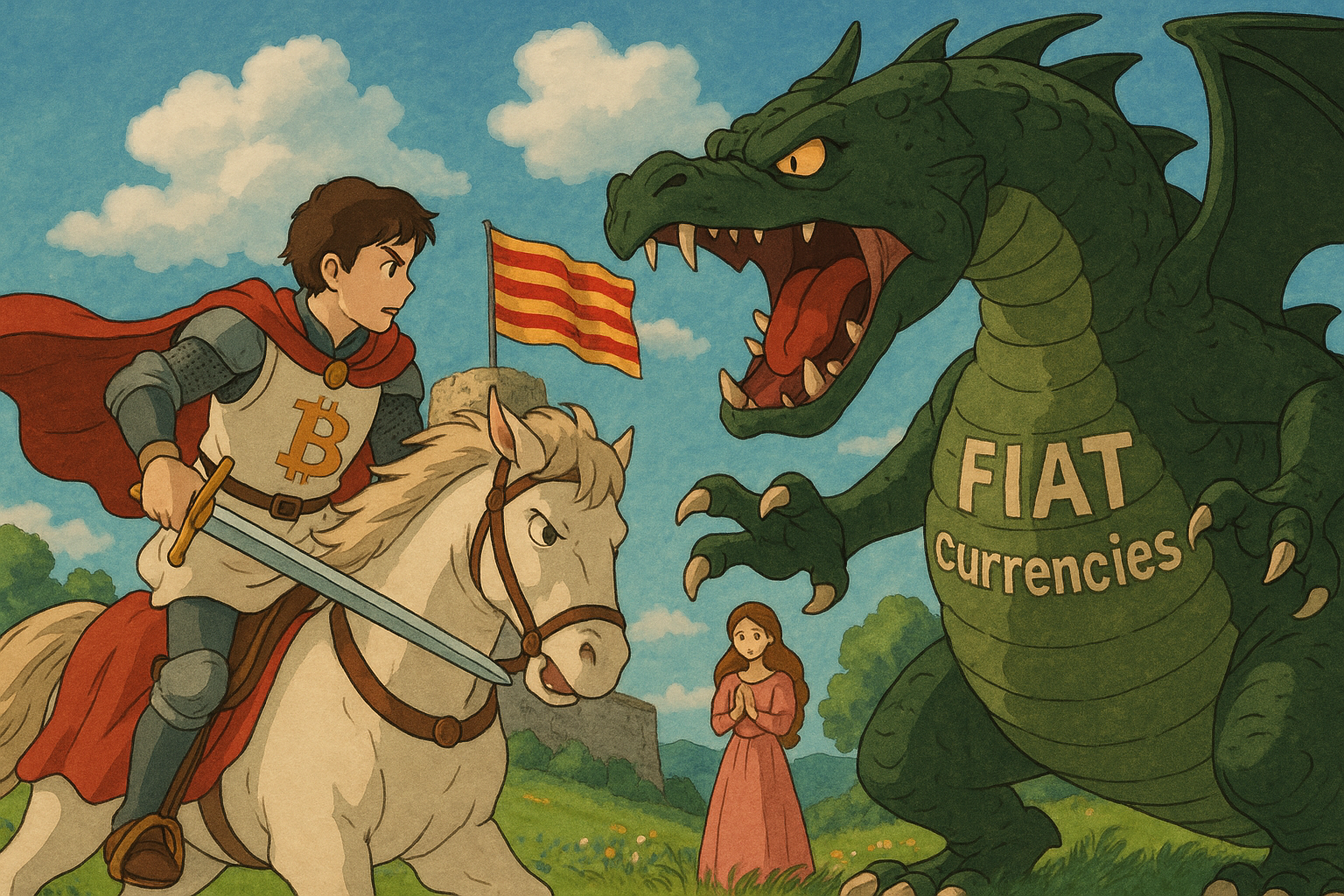
I'll write these down! I can send you a copy of my book! It's free!
Let me know!



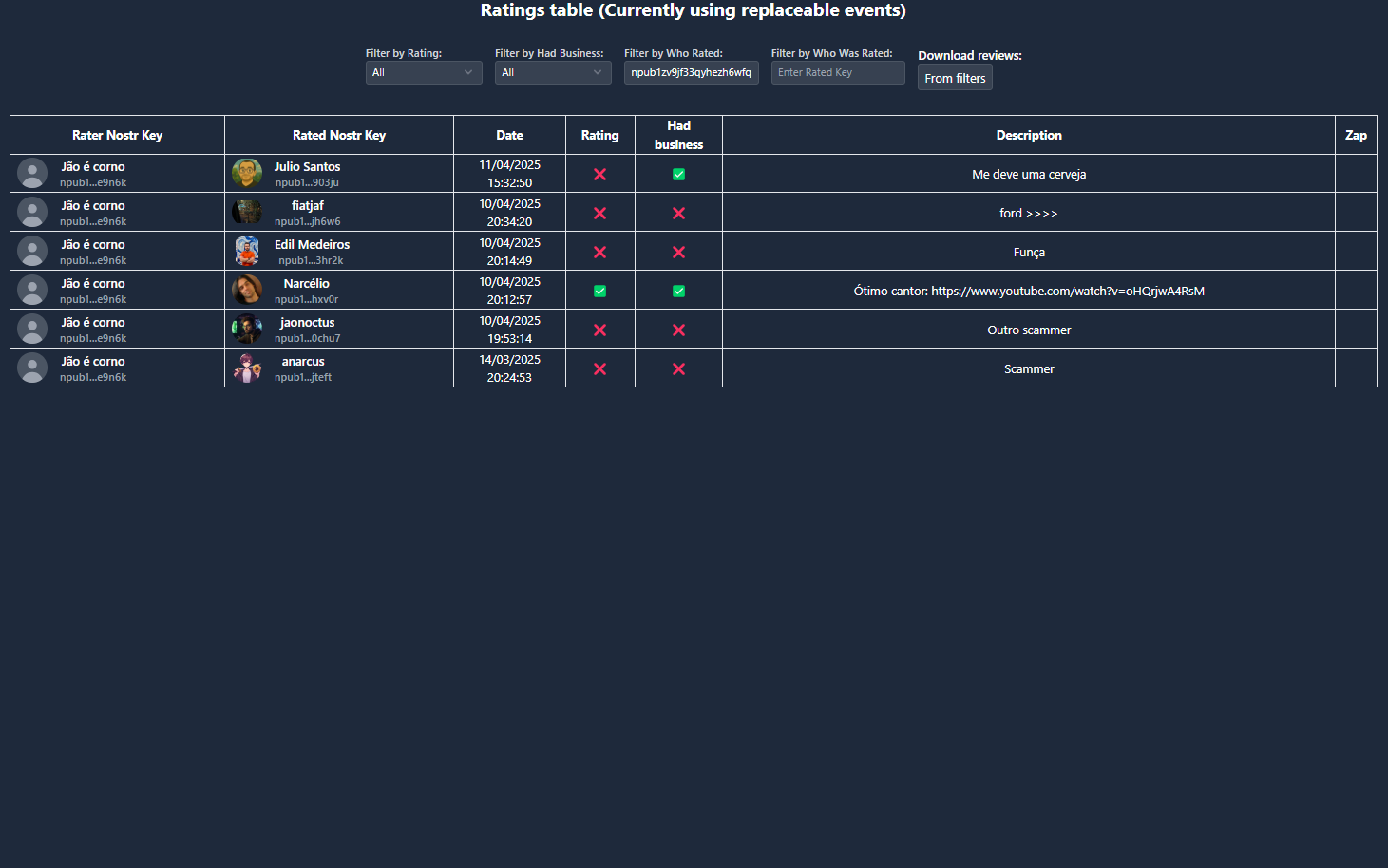
Pagou a cerveja dele?
Artigo na Exame onde faço uma analogia entre a desvalorização contínua da nossa moeda e a expansão do universo!
Seria Bitcoin o buraco de minhoca do sistema Fiat?
https://exame.com/future-of-money/o-buraco-de-minhoca-do-sistema-fiduciario/
#bitcoin
#btc
#nostr


What if there is a bug in Bitcoin's code? Well, exactly 12 years ago, a bug was discovered!
At the end of March 11, 2013, a Bitcoin miner running version 0.8 created a large block (at height 225,430) that was incompatible with earlier versions of Bitcoin.
This caused a fork in the Bitcoin network and resulted in two separate blockchains. In the early hours of the following day, the developer community identified the problem: on February 19th of that same year, version 0.8 of the code had been released.
This version included a change in the database system that allowed a greater volume of transactions in each block, which the previous version 0.7 did not support. With the recent increase in transaction volume on the Bitcoin network, some blocks exceeded this limit and were rejected by nodes running version 0.7 but accepted by version 0.8, creating two incompatible blockchains.
Pieter Wuille announced that after discussions, the community recognized that the least risky path was to continue with the old chain.
The correction plan included several actions: miners needed to stop using version 0.8 and return to version 0.7, and nodes that had updated to the latest version needed to revert to the previous version.
Another recommendation was for merchants to stop accepting Bitcoin payments temporarily to avoid the risk of accepting transactions on the new chain, which would be discarded if the plan succeeded.
The plan worked, and 24 blocks later, the old chain had become the longest chain again.
#bitcoin
#nostr
#btc
