
🚀 **Upcoming Space Launch** 🚀
🌌 **Mission Name**: Eris-1 | Maiden Flight
🗓️ **Launch Date**: 2025-07-15T21:30:00Z
🚀 **Rocket**: Eris-1
📖 **Details**: Maiden flight of Gilmour Space's orbital launch vehicle Eris.
#SpaceLaunch #RocketScience
🚀 **Upcoming Space Launch** 🚀
🌌 **Mission Name**: Falcon 9 Block 5 | Starlink Group 15-2
🗓️ **Launch Date**: 2025-07-14T02:27:00Z
🚀 **Rocket**: Falcon 9
📖 **Details**: A batch of satellites for the Starlink mega-constellation - SpaceX's project for space-based Internet communication system.
#SpaceLaunch #RocketScience
📸 **Mars Photo**
🌌 **Sol 3721**
📷 Camera: MAST
Guarda la foto: 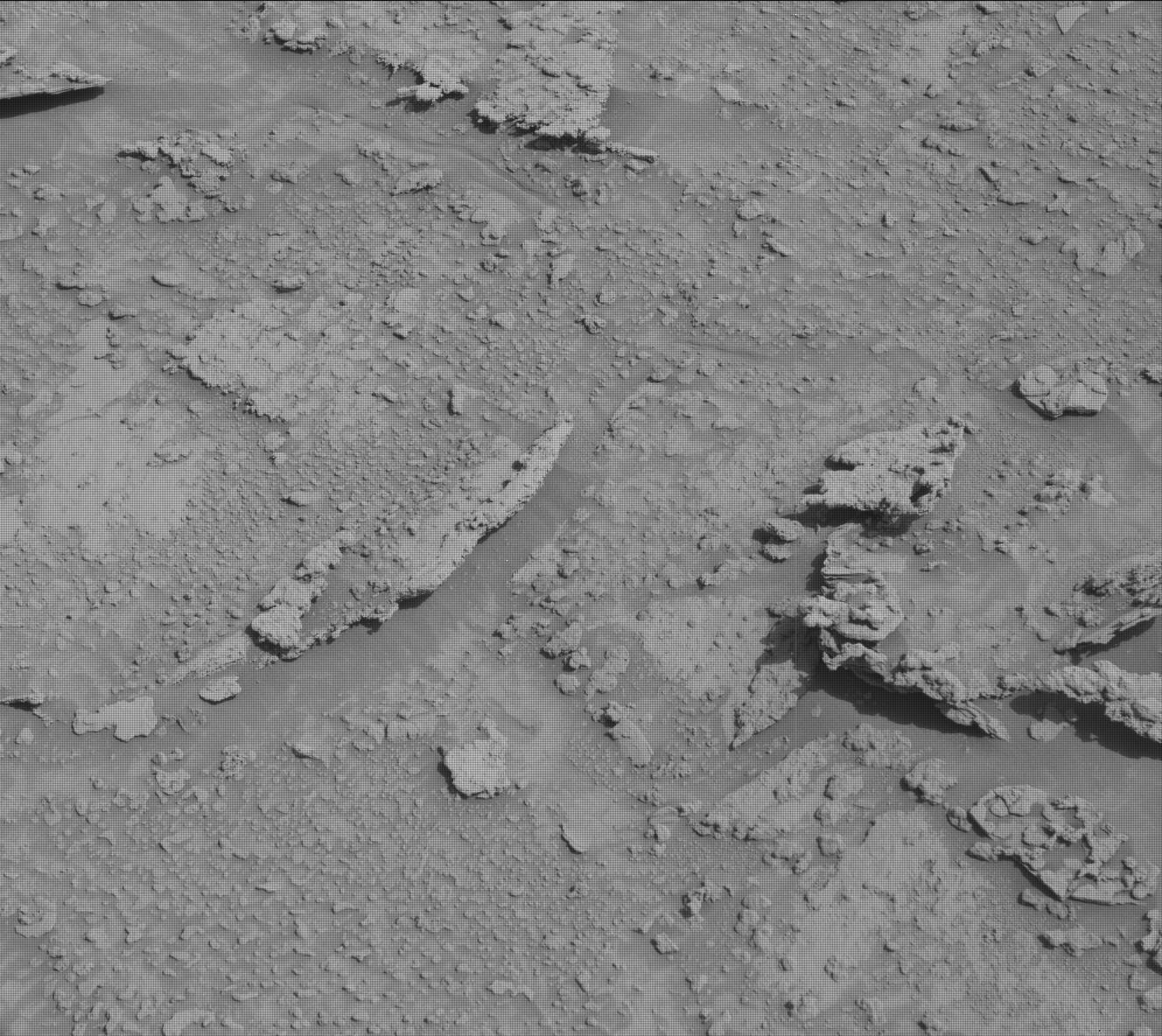
#Mars #Space #NASA
🚀 **Upcoming Space Launch** 🚀
🌌 **Mission Name**: Falcon 9 Block 5 | Dror-1? ("Commercial GTO 1")
🗓️ **Launch Date**: 2025-07-13T04:31:00Z
🚀 **Rocket**: Falcon 9
📖 **Details**: Note: Payload identity is uncertain and to be confirmed, based on FCC documentation. SpaceX identifies the mission as "Commercial GTO 1".
Dror-1 is a geostationary communication satellite built and developed by Israel Aerospace Industries (IAI). It is intended to meet the satellite communication needs of Israel for the next 15 years. Dror-1 is comprised primarily of local Israeli technologies developed at IAI, including an advanced digital communication payload and “smartphone in space” capabilities, to provide communication agility throughout the satellite’s lifetime in space.
#SpaceLaunch #RocketScience
Latest Space Breaking News: A young giant planet orbits one star, while a planet-forming disk exists around same-aged companion star
Link: https://phys.org/news/2025-07-young-giant-planet-orbits-star.html
Summary: A team of international researchers led by Tomas Stolker in the Netherlands has imaged a young gas giant exoplanet near a 12-million-year-old star. The planet is orbiting a star whose planet formation has finished, while a same-aged companion star in this double star system still has a planet-forming disk.
🚀 **Upcoming Space Launch** 🚀
🌌 **Mission Name**: Falcon 9 Block 5 | Project Kuiper (Falcon 9 #1)
🗓️ **Launch Date**: 2025-07-16T06:05:00Z
🚀 **Rocket**: Falcon 9
📖 **Details**: First of a three launches contract for Amazon's Kuiper low Earth orbit satellite internet constellation.
#SpaceLaunch #RocketScience
🚀 **Upcoming Space Launch** 🚀
🌌 **Mission Name**: Eris-1 | Maiden Flight
🗓️ **Launch Date**: 2025-07-15T21:30:00Z
🚀 **Rocket**: Eris-1
📖 **Details**: Maiden flight of Gilmour Space's orbital launch vehicle Eris.
#SpaceLaunch #RocketScience
🚀 **Upcoming Space Launch** 🚀
🌌 **Mission Name**: Falcon 9 Block 5 | Starlink Group 15-2
🗓️ **Launch Date**: 2025-07-14T02:27:00Z
🚀 **Rocket**: Falcon 9
📖 **Details**: A batch of satellites for the Starlink mega-constellation - SpaceX's project for space-based Internet communication system.
#SpaceLaunch #RocketScience
🚀 **Upcoming Space Launch** 🚀
🌌 **Mission Name**: Falcon 9 Block 5 | Dror-1? ("Commercial GTO 1")
🗓️ **Launch Date**: 2025-07-13T04:31:00Z
🚀 **Rocket**: Falcon 9
📖 **Details**: Note: Payload identity is uncertain and to be confirmed, based on FCC documentation. SpaceX identifies the mission as "Commercial GTO 1".
Dror-1 is a geostationary communication satellite built and developed by Israel Aerospace Industries (IAI). It is intended to meet the satellite communication needs of Israel for the next 15 years. Dror-1 is comprised primarily of local Israeli technologies developed at IAI, including an advanced digital communication payload and “smartphone in space” capabilities, to provide communication agility throughout the satellite’s lifetime in space.
#SpaceLaunch #RocketScience
🚀 **Upcoming Space Launch** 🚀
🌌 **Mission Name**: Falcon 9 Block 5 | Starlink Group 10-28
🗓️ **Launch Date**: 2025-07-08T08:21:00Z
🚀 **Rocket**: Falcon 9
📖 **Details**: A batch of 28 satellites for the Starlink mega-constellation - SpaceX's project for space-based Internet communication system.
#SpaceLaunch #RocketScience
Dangerous Asteroids Near Earth:
- 509073 (2005 UM5) (Size: 422.7075246174 meters)
- (2016 BX80) (Size: 416.9077599521 meters)
- (2016 CY135) (Size: 74.8238376074 meters)
- (2018 AB12) (Size: 78.3501764334 meters)
- (2018 OQ) (Size: 25.9441817907 meters)
- (2019 JM) (Size: 23.6613750114 meters)
- (2019 NW5) (Size: 108.1533506775 meters)
- (2020 GZ2) (Size: 15.6329154409 meters)
- (2022 QZ21) (Size: 76.214916608 meters)
- (2022 WB5) (Size: 44.0595420444 meters)
- (2023 HD4) (Size: 36.8162863142 meters)
- (2025 BN2) (Size: 47.2106498806 meters)
- 804841 (2016 BX80) (Size: 418.8321187375 meters)
NASA Astronomy Picture of the Day (2025-07-09): A Beautiful Trifid

The beautiful Trifid Nebula is a cosmic study in contrasts. Also known as M20, it lies about 5,000 light-years away toward the nebula rich constellation Sagittarius. A star forming region in the plane of our galaxy, the Trifid does illustrate three different types of astronomical nebulae; red emission nebulae dominated by light from hydrogen atoms, blue reflection nebulae produced by dust reflecting starlight, and dark nebulae where dense dust clouds appear in silhouette. But, the red emission region roughly separated into three parts by obscuring dust lanes is what lends the Trifid its popular name. Pillars and jets sculpted by newborn stars, above and right of the emission nebula's center, appear in famous Hubble Space Telescope close-up images of the region. The Trifid Nebula is about 40 light-years across. Too faint to be seen by the unaided eye, in this deep telescopic view it almost covers the area of a full moon on planet Earth's sky.
🚀 **Upcoming Space Launch** 🚀
🌌 **Mission Name**: Falcon 9 Block 5 | Project Kuiper (Falcon 9 #1)
🗓️ **Launch Date**: 2025-07-16T06:05:00Z
🚀 **Rocket**: Falcon 9
📖 **Details**: First of a three launches contract for Amazon's Kuiper low Earth orbit satellite internet constellation.
#SpaceLaunch #RocketScience
🚀 **Upcoming Space Launch** 🚀
🌌 **Mission Name**: Eris-1 | Maiden Flight
🗓️ **Launch Date**: 2025-07-15T21:30:00Z
🚀 **Rocket**: Eris-1
📖 **Details**: Maiden flight of Gilmour Space's orbital launch vehicle Eris.
#SpaceLaunch #RocketScience
🚀 **Upcoming Space Launch** 🚀
🌌 **Mission Name**: Falcon 9 Block 5 | Starlink Group 15-2
🗓️ **Launch Date**: 2025-07-14T02:27:00Z
🚀 **Rocket**: Falcon 9
📖 **Details**: A batch of satellites for the Starlink mega-constellation - SpaceX's project for space-based Internet communication system.
#SpaceLaunch #RocketScience
🚀 **Upcoming Space Launch** 🚀
🌌 **Mission Name**: Falcon 9 Block 5 | Dror-1? ("Commercial GTO 1")
🗓️ **Launch Date**: 2025-07-13T04:31:00Z
🚀 **Rocket**: Falcon 9
📖 **Details**: Note: Payload identity is uncertain and to be confirmed, based on FCC documentation. SpaceX identifies the mission as "Commercial GTO 1".
Dror-1 is a geostationary communication satellite built and developed by Israel Aerospace Industries (IAI). It is intended to meet the satellite communication needs of Israel for the next 15 years. Dror-1 is comprised primarily of local Israeli technologies developed at IAI, including an advanced digital communication payload and “smartphone in space” capabilities, to provide communication agility throughout the satellite’s lifetime in space.
#SpaceLaunch #RocketScience
🚀 **Upcoming Space Launch** 🚀
🌌 **Mission Name**: Falcon 9 Block 5 | Starlink Group 10-28
🗓️ **Launch Date**: 2025-07-08T08:21:00Z
🚀 **Rocket**: Falcon 9
📖 **Details**: A batch of 28 satellites for the Starlink mega-constellation - SpaceX's project for space-based Internet communication system.
#SpaceLaunch #RocketScience
🚀 **Upcoming Space Launch** 🚀
🌌 **Mission Name**: Falcon 9 Block 5 | Project Kuiper (Falcon 9 #1)
🗓️ **Launch Date**: 2025-07-16T06:05:00Z
🚀 **Rocket**: Falcon 9
📖 **Details**: First of a three launches contract for Amazon's Kuiper low Earth orbit satellite internet constellation.
#SpaceLaunch #RocketScience
🚀 **Upcoming Space Launch** 🚀
🌌 **Mission Name**: Eris-1 | Maiden Flight
🗓️ **Launch Date**: 2025-07-15T21:30:00Z
🚀 **Rocket**: Eris-1
📖 **Details**: Maiden flight of Gilmour Space's orbital launch vehicle Eris.
#SpaceLaunch #RocketScience
📸 **Mars Photo**
🌌 **Sol 3720**
📷 Camera: MAST
Guarda la foto: 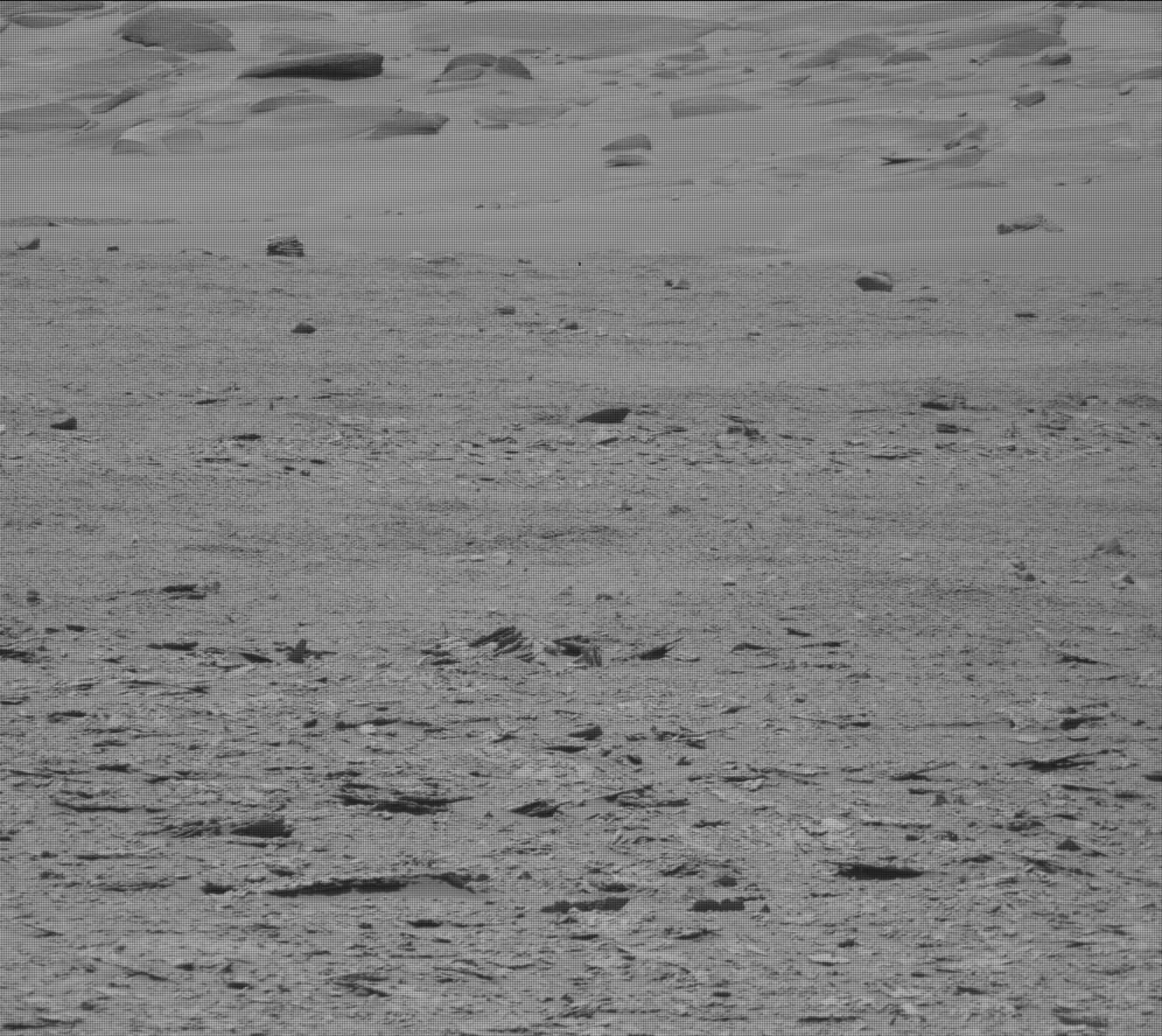
#Mars #Space #NASA
🚀 **Upcoming Space Launch** 🚀
🌌 **Mission Name**: Falcon 9 Block 5 | Dror-1? ("Commercial GTO 1")
🗓️ **Launch Date**: 2025-07-13T04:31:00Z
🚀 **Rocket**: Falcon 9
📖 **Details**: Note: Payload identity is uncertain and to be confirmed, based on FCC documentation. SpaceX identifies the mission as "Commercial GTO 1".
Dror-1 is a geostationary communication satellite built and developed by Israel Aerospace Industries (IAI). It is intended to meet the satellite communication needs of Israel for the next 15 years. Dror-1 is comprised primarily of local Israeli technologies developed at IAI, including an advanced digital communication payload and “smartphone in space” capabilities, to provide communication agility throughout the satellite’s lifetime in space.
#SpaceLaunch #RocketScience
Latest Space Breaking News: Webb telescope reveals long-lived dust shells around multiple Wolf-Rayet stars
Link: https://phys.org/news/2025-07-webb-telescope-reveals-shells-multiple.html
Summary: Cosmic dust does far more than float through space. It's the raw material from which stars, planets and possibly even life emerge. Yet astronomers have long puzzled over where this vast amount of dust comes from and what it's made of.
Latest Space News: How your smartphone is powered by debris from a nova star explosion
Link: https://www.space.com/astronomy/how-your-smartphone-is-powered-by-debris-from-a-nova-star-explosion
Summary: The discovery could explain why younger stars seem to have more lithium than the Big Bang theory says they should have.
🚀 **Upcoming Space Launch** 🚀
🌌 **Mission Name**: Falcon 9 Block 5 | Starlink Group 17-3
🗓️ **Launch Date**: 2025-07-17T02:08:00Z
🚀 **Rocket**: Falcon 9
📖 **Details**: A batch of satellites for the Starlink mega-constellation - SpaceX's project for space-based Internet communication system.
#SpaceLaunch #RocketScience
🚀 **Upcoming Space Launch** 🚀
🌌 **Mission Name**: Falcon 9 Block 5 | Project Kuiper (Falcon 9 #1)
🗓️ **Launch Date**: 2025-07-16T06:05:00Z
🚀 **Rocket**: Falcon 9
📖 **Details**: First of a three launches contract for Amazon's Kuiper low Earth orbit satellite internet constellation.
#SpaceLaunch #RocketScience
🚀 **Upcoming Space Launch** 🚀
🌌 **Mission Name**: Eris-1 | Maiden Flight
🗓️ **Launch Date**: 2025-07-15T21:30:00Z
🚀 **Rocket**: Eris-1
📖 **Details**: Maiden flight of Gilmour Space's orbital launch vehicle Eris.
#SpaceLaunch #RocketScience
🚀 **Upcoming Space Launch** 🚀
🌌 **Mission Name**: Falcon 9 Block 5 | Starlink Group 15-2
🗓️ **Launch Date**: 2025-07-14T02:27:00Z
🚀 **Rocket**: Falcon 9
📖 **Details**: A batch of satellites for the Starlink mega-constellation - SpaceX's project for space-based Internet communication system.
#SpaceLaunch #RocketScience
🚀 **Upcoming Space Launch** 🚀
🌌 **Mission Name**: Falcon 9 Block 5 | Starlink Group 10-28
🗓️ **Launch Date**: 2025-07-08T08:21:00Z
🚀 **Rocket**: Falcon 9
📖 **Details**: A batch of 28 satellites for the Starlink mega-constellation - SpaceX's project for space-based Internet communication system.
#SpaceLaunch #RocketScience
❓ **Space Question of the Day**
Which space mission inspires you the most and why?
#SpacePoll #Engagement
🚀 **Upcoming Space Launch** 🚀
🌌 **Mission Name**: GSLV Mk II | NISAR (NASA-ISRO Synthetic Aperture Radar)
🗓️ **Launch Date**: 2025-07-30T11:30:00Z
🚀 **Rocket**: GSLV Mk II
📖 **Details**: The NASA-ISRO Synthetic Aperture Radar, or NISAR satellite, will use advanced radar imaging to map the elevation of Earth's land and ice masses 4 to 6 times a month at resolutions of 5 to 10 meters. It is designed to observe and measure some of the planet's most complex natural processes, including ecosystem disturbances, ice-sheet collapse, and natural hazards such as earthquakes, tsunamis, volcanoes and landslides.
Under the terms of the agreement, NASA will provide the mission's L band synthetic aperture radar (SAR), a high-rate telecommunication subsystem for scientific data, GPS receivers, a solid-state recorder, and a payload data subsystem. ISRO will provide the satellite bus, an S band synthetic aperture radar, the launch vehicle, and associated launch services.
#SpaceLaunch #RocketScience
📸 **Mars Photo**
🌌 **Sol 3717**
📷 Camera: MAST
Guarda la foto: 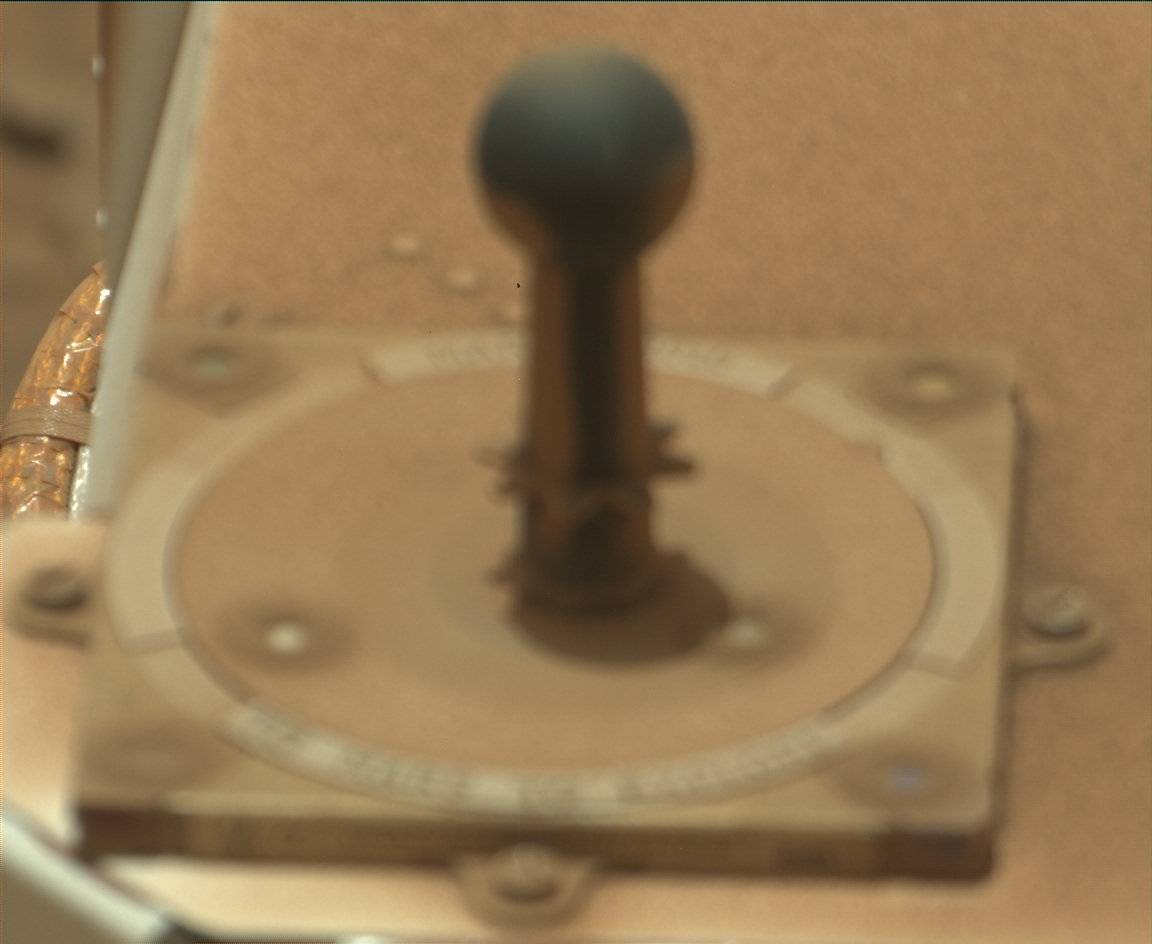
#Mars #Space #NASA
🚀 **Upcoming Space Launch** 🚀
🌌 **Mission Name**: Vega-C | CO3D & MicroCarb
🗓️ **Launch Date**: 2025-07-26T02:03:00Z
🚀 **Rocket**: Vega-C
📖 **Details**: CO3D is a CNES-Airbus Defence & Space constellation of four small satellites designed to map the globe in 3D from low Earth to serve public and private sector needs. Microcarb is a small satellite designed to map sources and sinks of carbon dioxide (CO2)—the most important greenhouse gas — on a global scale.
#SpaceLaunch #RocketScience
🚀 **Upcoming Space Launch** 🚀
🌌 **Mission Name**: Soyuz 2.1b/Fregat-M | Ionosfera-M 3 & 4
🗓️ **Launch Date**: 2025-07-25T05:54:00Z
🚀 **Rocket**: Soyuz 2.1b/Fregat-M
📖 **Details**: Ionosfera is a constellation of four ionospheric and magnetospheric research satellites developed by for Roscosmos for the project Ionozond.
The satellites will operate on circular sun-synchronous orbits (SSO), at altitude of about 800 km and located in two orbital planes of two satellites each.
The following science instruments are carried on the satellites:
* SPER/1 Plasma and energy radiation spectrometer
* SG/1 Gamma-ray spectrometer
* GALS/1 Galactic cosmic ray spectrometer / 1
* LAERTES On-board Ionosonde
* NBK/2 Low-frequency wave complex
* ESEP Ionospheric plasma energy spectrometer
* Ozonometer-TM Ozonometer
* MayaK On-board radio transmitters
* PES GPS-GLONASS device
#SpaceLaunch #RocketScience
🚀 **Upcoming Space Launch** 🚀
🌌 **Mission Name**: Eris-1 | Maiden Flight
🗓️ **Launch Date**: 2025-07-15T21:30:00Z
🚀 **Rocket**: Eris-1
📖 **Details**: Maiden flight of Gilmour Space's orbital launch vehicle Eris.
#SpaceLaunch #RocketScience
🚀 **Upcoming Space Launch** 🚀
🌌 **Mission Name**: Falcon 9 Block 5 | Starlink Group 10-28
🗓️ **Launch Date**: 2025-07-08T08:21:00Z
🚀 **Rocket**: Falcon 9
📖 **Details**: A batch of 28 satellites for the Starlink mega-constellation - SpaceX's project for space-based Internet communication system.
#SpaceLaunch #RocketScience
🚀 **Upcoming Space Launch** 🚀
🌌 **Mission Name**: GSLV Mk II | NISAR (NASA-ISRO Synthetic Aperture Radar)
🗓️ **Launch Date**: 2025-07-30T11:30:00Z
🚀 **Rocket**: GSLV Mk II
📖 **Details**: The NASA-ISRO Synthetic Aperture Radar, or NISAR satellite, will use advanced radar imaging to map the elevation of Earth's land and ice masses 4 to 6 times a month at resolutions of 5 to 10 meters. It is designed to observe and measure some of the planet's most complex natural processes, including ecosystem disturbances, ice-sheet collapse, and natural hazards such as earthquakes, tsunamis, volcanoes and landslides.
Under the terms of the agreement, NASA will provide the mission's L band synthetic aperture radar (SAR), a high-rate telecommunication subsystem for scientific data, GPS receivers, a solid-state recorder, and a payload data subsystem. ISRO will provide the satellite bus, an S band synthetic aperture radar, the launch vehicle, and associated launch services.
#SpaceLaunch #RocketScience