


On "Government-as-a-Service" I'm sure I heard or read that term somewhere, but don't recall where. I read a book by Spencer Heath called 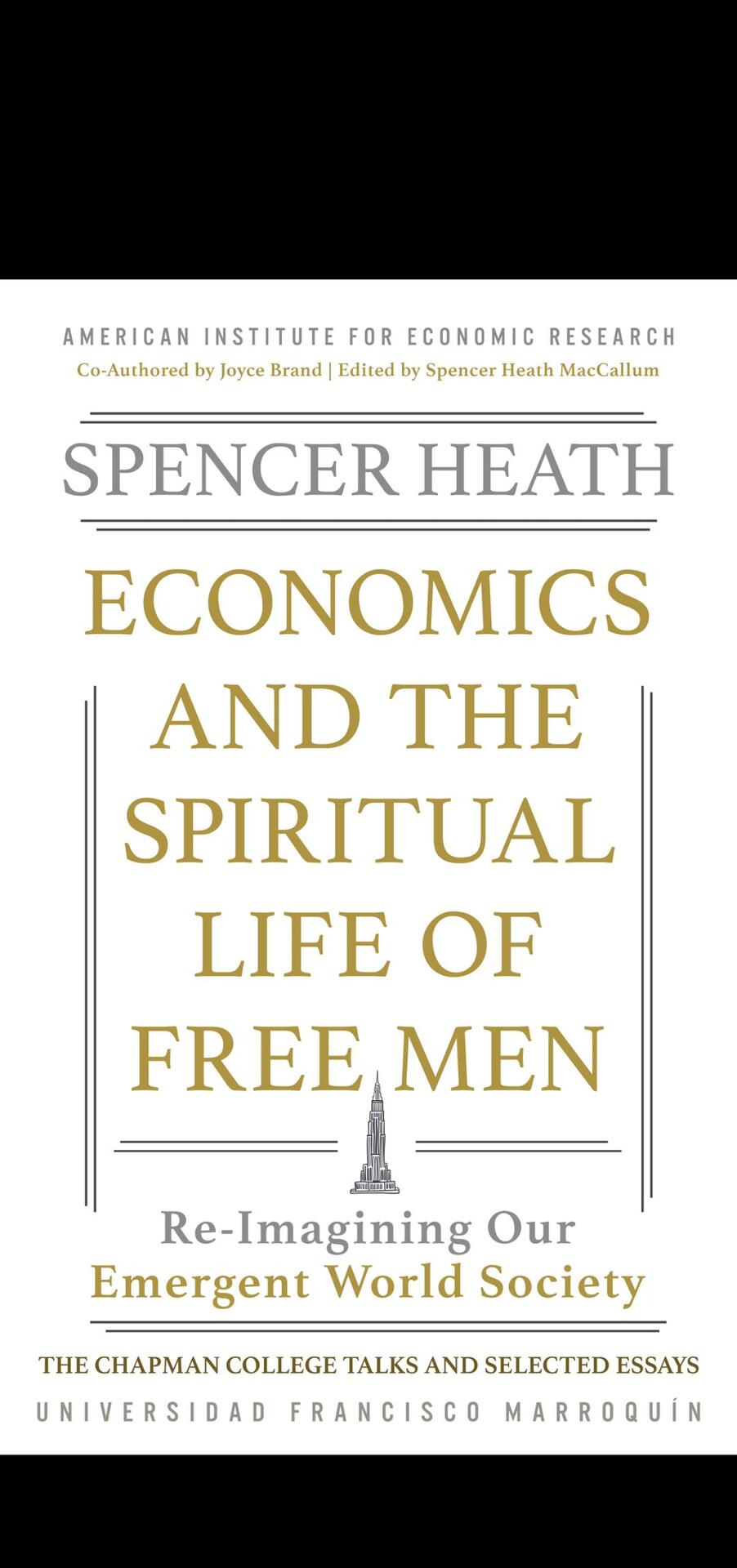
that advocated this idea, although I don't believe it used that term. One quote from it states that the author foresaw "the emergence of a general public-services industry producing and administering public community services of all kinds voluntarily and contractually, for-profit, without recourse to taxation" (p. 15)
And again: "Based on his observations of our incomplete yet rapidly evolving society, Heath predicted that we would outgrow government as we know it in favor of the voluntary, contractual provision of all public services in the foreseeable future. With the demise of taxation, he foresaw world peace..." (p. 16).
One more: "We have the golden rule, which is commanded of us, that we should love one another by serving one another and doing it impersonally—in ways that take in everybody. And we have the iron rule, which puts some men in authority over others. It makes those others slaves to some degree through chattel slavery, tax slavery, tribute slavery, regulation, or whatever kinds of slavery are imposed by external authority upon the would-be free spirits of men" (p. 43).
The Free Private Cities project is actively working to establish places to live around the world along these lines, independent of governments, where residents pay for their protection services contractually and voluntarily.

I'll share some of my highlights from Haller's book that might address your comments too:
He speaks of "a universal law, a common rule, to direct the use of this liberty ...But what, then, is the object or content of this law? It is what the voice of nature, or the word of God, inner sentiment, and the belief and judgment of all men continue to teach us. It is summed up in two words: Avoid evil, do good. Harm nobody, but make yourself useful wherever you can; don’t invade the goods, possessions, and rights of others; but increase them according to your ability. The first of these commandments is called the law of justice; the second, the law of love or benevolence" (pp. 522, 525).
"perfect liberty, which consists in not being subject to coercion by the will of others, and that comprises the essential characteristic of every sovereign prince" (p. 355).
"No man has the right to encroach upon what belongs to another, deprive him of his life or fortune; use violence to hamper the exercise of his free will, or interfere with innocent and morally neutral action. Other than those duties incumbent upon all men, he cannot require any more from another than what is authorized by the nature of the relation or contract, whether formal or tacit, that exists between them" (p. 430).
"the original founders of the State had no right to subject their posterity to the yoke of perpetual dependence" (p. 171).

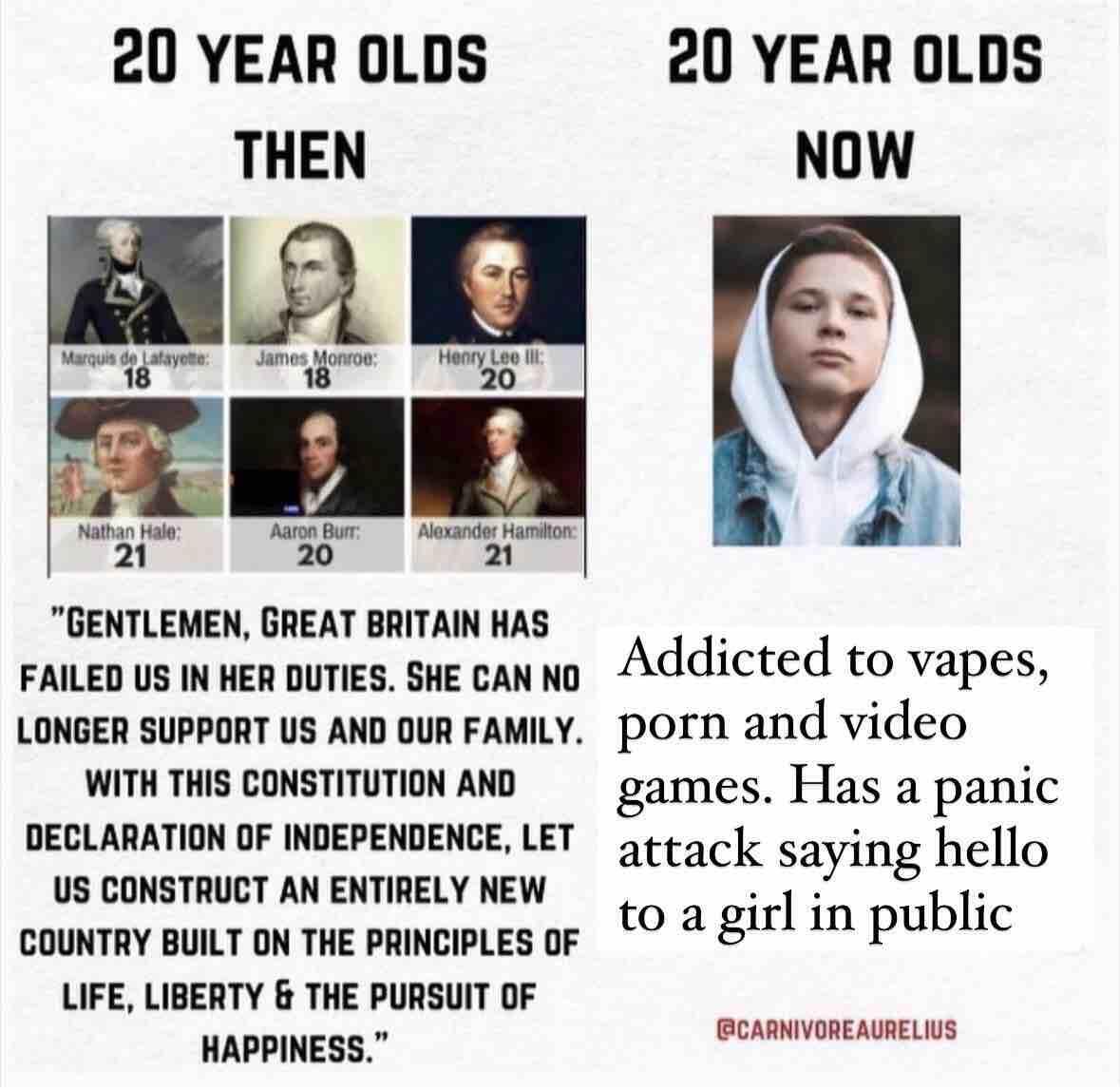
Something must have been wrong if their Constitution led to 20 year-olds being like this today...



I've thought the same thing, but then they might have to figure out who to install as her vice-president, and whether that person could be approved by Congress
"Elevating" Harris to president now requires removing Biden, meaning they force him to resign, or they off him (God forbid), or invoke the 25th Amendment to remove him (but then who is veep?)


Workers from a village in Nepal doing hard work the smart way https://video.nostr.build/a5f76cd79d16e3ef9262584d44d4f7e97a95330b701a19e4a66bab0c0fa5e3e3.mp4
Drop buckets, not bombs 😄
What could a natural law, private law society look like? This, I think, would be a better vision for America 2.0, or 3.0, or whatever version we're on. Move away from the failed "democratic-republics" that ultimately transform into total states, and toward true "self-government," or at least governance that you actually really choose. Government-as-a-Service.

"While offline hardware wallets can theoretically be more secure, the associated expense and increased complexity limits their use cases, so Proton Wallet aims to be the most secure, always-accessible Bitcoin wallet."
Hoppe's whole speech is good, in my opinion, but here's another excerpt that gives a flavor of what Haller was describing:
"A prince’s direct rule extends only to his own property, just as in the case of every other person and his property, and as we will see shortly, it is only in regard to this “self-administration” of one’s own property that there exists somewhat of a difference between a prince and everyone else. In any case, as a private law subject, a prince does not rule over other people and their property, however, (p. 479) – except insofar as these have voluntarily attached themselves to the prince and entered into some sort of social relationship with him to better satisfy this need or that. Hence, in distinct contrast to the modern state, a prince may not unilaterally pass legislative decrees or impose taxes on other people and their property (p. 450, Fn. 8). Rather, whatever dependencies or servitudes there may exist vis-à-vis a prince they vary from one dependent to another, and in any case they are all voluntarily accepted and may be dissolved once they are no longer deemed mutually beneficial. – And Haller adds some illuminating terminological observations to further clarify this status of a prince as a mere private law subject (see p. 480, Fn. 14): The most appropriate way to refer to the status of a prince, king, etc., then, is to identify him simply as the head of a particular household, such as the head of the house of Bourbon, or the house of Habsburg, Hohenzollern or Wittelsbach, etc., for instance. Less appropriate, and already slightly misleading is it to refer to them instead as the king of France, and the kings of Austria, Prussia or Bavaria, because this insinuates, falsely, that they are something like the owners of all of France, Austria, etc.. And entirely misguided is it to call them the government of France, Austria, Prussia and Bavaria, as if they were merely the employees of the French, Austrian, Prussian or Bavarian population."

(I responded to you yesterday but I just now saw that it didn't go through, apparently. My Internet connection went offline when I wrote it, but even still, I thought Amethyst would save it as a draft 😕)
I think Haller would say that individual liberties and voluntary association were previously and would be better protected under a natural, private law society than under the modern democratic states we live under today as a result of the Enlightenment, so-called.
Here is an excerpt from a speech by Hans-Hermann Hoppe (from which I first learned about Haller) that I think gives an excellent summary of Haller's views:
"To begin with, it is noted that there exists no record whatsoever that anything resembling a contract as imagined by social contract theorists has ever been concluded anywhere. And Haller immediately cuts to the heart of the matter as to why this is so and why any such contract is inconceivable. In the state of nature, he writes (p. 322), everyone, for his protection and security, could rely on his own powers and means of self-defense or he could choose someone more powerful than himself, and equipped with more or better means of protection, and attach himself at mutually agreed upon terms to such a person as his vassal or servant; and he could terminate and leave any such association and return to defensive self-sufficiency or attach himself to another presumably better protector. Why, then, Haller wonders, would anyone consider it an improvement, if he could no longer choose his own protector and mode of protection but such a decision were made instead by others, i.e. “the people?” How is that supposed to be freedom?!"

I think it will be better to live in a world where AI is widely deployed so that smaller actors can check the power of larger bad actors.
"In my lifetime, the United States has overthrown or attempted to overthrow more than 50 governments, mostly democracies. It has interfered in democratic elections in 30 countries. It has dropped bombs on the people of 30 countries, most of them poor and defenceless. It has attempted to murder the leaders of 50 countries. It has fought to suppress liberation movements in 20 countries."
–John Pilger
https://consortiumnews.com/2022/09/07/john-pilger-silencing-the-lambs-how-propaganda-works/


Saw a woman wearing a t-shirt that reads:
"Have the day you deserve." 😶


The truth is some people don't want a world without rulers. Many people are sheep and don't want the responsibility true freedom requires. But as I realized from reading Karl Ludwig von Haller (@note1x8lxmn70uda9qd847ajetclz5esswsg0asgfkxg66se8ymnwp22shk5a0y) there are some leaders who just arise naturally and people follow them voluntarily, and I think that's fine, so long as it's voluntary, and not imposed or maintained through force or fraud.
#anarchy #voluntarism
"My wrath will not be poured out on Jerusalem through Shishak. However, they will become his servants so that they may recognize the difference between serving Me and serving the kingdoms of other lands.”
–יהוָ֣ה
as quoted in The Holy Bible, 2 Chronicles 12:7-8