
Do you also own those of people who reply to you? Seems like that would be important too, to keep track of the conversations.
Do you keep more on your relay? I’d be interested how large it becomes. Apparently setting up #Mastodon servers takes up a lot of space - if I remember correctly an article I read earlier in the year by #[1]
Here is the #Wired story from 1997 of how the first computer social network The Well was destroyed by deleting of posts
https://www.wired.com/1997/05/ff-well/
A key passage:
> On July 5, 1992, he logged on and executed a mass scribble over the next three days. The mass scribbling tool had been written a few years earlier by Andy Beals in a burst of anger at The Well. Mass scribble allowed you to easily erase all your comments in a topic, no matter when they were written. This time, while Mandel erased only his own postings, he cast a wider net across The Well, far beyond his earlier targets of the Weird and Future conferences. This time, he went from conference to conference and deleted nearly everything he had posted in each one.
I'd argue the opposite, if you don’t mind.
The worst part of #blocking on #Twitter was that people would have a conversation with you in a thread and then when they did not like what was said would block you, removing all the context of the conversation, and also of all previous conversations.
That was a tactic loved by #trolls.
So it was clear that blocking should never have applied to existing Tweets.
Furthermore deleting should not have been allowed on Tweets a short time after they were posted or certainly commented on. Once you have engaged in a conversation your posts are no longer yours to remove. This problem was known to people from the earliest social network, the Well, which was destroyed by deleing of posts.
#Nostr gets that right. The longer you wait to delete the less likely it will work.
I am sorry to say, but #𝕏 is clearly a big improvement since Elon took over: longer tweets, markup, identity verification, financial support, all have improved the platform a lot.
The main problem remains the one that bothered me since the beginning was that it is centralised. #nostr is going the right direction.
The worst part of blocking on #Twitter was that people would have a conversation with you in a thread and then when they did not like what was said would block you, removing all the context of the conversation, and also of all previous conversations.
So it was clear that blocking should never have applied to existing Tweets.
Furthermore deleting should not have been allowed on Tweets a short time after they were posted or certainly commented on. Once you have engaged in a conversation your posts are no longer yours to remove.
#Nostr gets that right. The longer you wait to delete the less likely it will work.
#𝕏 is clearly a big improvement since Elon took over: longer tweets, markup, identity verification, financial support, all have improved the platform a lot.
The main problem remains the one that bothered me since the beginning was that it is centralised.
Is it just me who sees my #𝕏 logo scratched on my iPhone? Or is this well known? (could also be an Elon joke) #Twitter
nostr:note1cz7w8qrahwqar7d3e4ltuklz5rjly2kwlhpnr0d8yh75hy7afckswx38n8
#tiktok #censors for quietly listening to the rant of one of their #woke fellows :-)
https://twitter.com/Riley_Gaines_/status/1692622826409198005
Philosopher of media Hans-Georg Moeller covers Baudrillard’s response to an earlier philosophy of media revolution. Instead of revolution mass media gives us the #hyperreal or the simulation.
Does that analysis cover a medium like #nostr?
Let me know what you think.
Here is why both #nostr and #mastodon need #markdown support. Here I am trying to show code snippets without but they get interpreted very differently on different clients.
(If you can add mathjax support for the mathsotodon.xyz folks)
This note nostr:note13f89879p6g49995w4dafsrf5w93gsxmn5m2rnm2arlvljm60lhvsc33ckp
shows on #primal like this:
https://void.cat/d/3DQd4z4M7SZx1kMPCurau4.webp
and on #mastodon like this

and again differently on other #nostr clients.
In the Primal UI the URLs for the RDF get interpreted as URLs and some preview is shown, but that is not the case with other viewers.
I meant to link to the #Mastodon instance
for the #math folk.
I know they would like #mathjax support as GitHub now has, and you can see some example for the says logic:
https://github.com/co-operating-systems/PhD/blob/main/Logic/ABLP.md#deepak-gargs-2009-bl-logic
Here is why both #nostr and #mastodon need #markdown support. Here I am trying to show code snippets without but they get interpreted very differently on different clients.
(If you can add mathjax support for the mathsotodon.xyz folks)
This note nostr:note13f89879p6g49995w4dafsrf5w93gsxmn5m2rnm2arlvljm60lhvsc33ckp
shows on #primal like this:
https://void.cat/d/3DQd4z4M7SZx1kMPCurau4.webp
and on #mastodon like this
and again differently on other #nostr clients.
In the Primal UI the URLs for the RDF get interpreted as URLs and some preview is shown, but that is not the case with other viewers.
#Solid should learn from both #Mastodon #ActivityPub and #nostr.
Here are initial thoughts:
1. Linking WebIDs to nostr keys could easily be done with an owl:sameAs statement
<https://bblfish.net/people/henry/card#me> owl:sameAs
btw. What do #nostr folks recommend: did:key or did:jwk: or something else ???
2. The same could be done with redirecting if one loses one’s personal domain
old:WebID owl:sameAs new:WebID .
And a statement such as
new:WebId webid:deprecates “https://bblfish.net/people/henry/card#me”^^xsd:anyUri .
3. The major innovation of #nostr is the use of keys and the signing of all content. That should be integrated into #solidproject.
(Should headers be added for each signed content? for example? A header like
Author: did:key: …
Signature: …. <- using just released Signing HTTP Messages RFC? https://lists.w3.org/Archives/Public/ietf-http-wg/2023JulSep/0124.html
Interestingly that gives a reason for having server signatures that don’t sign the URL!
4. Another innovation is using the lightning network: Solid should integrate that.
Nostr makes a very good case that it works and is fun as one zaps people’s posts (note Apple asked apps to remove that feature!)
A Quick look at the protocol, and I wonder:
1. does one need sockets for posting content? Could that not just be a POST to a solid container?
2. Nip 01 comes with a simple query mechanism. My main problem is that these are not restful. If it returned just URLs for new content, that could be sent quickly down the wire. Even better with SPDY (still looking for a #scala implementation)
But an even lower cost search could be #LDES (Linked Data Event Streams https://joinup.ec.europa.eu/collection/semic-support-centre/linked-data-event-streams-ldes ), which is just like RSS but with a tree structure and non changing
3. Also, the format is unnecessarily not extensible.
Still #nostr is a very good demonstration of what solid hyper apps are meant to be.
My father, 83, just returned from 2 weeks of singing camp in Romania.
He enjoyed the lessons but was nauseated by the repetitive serving of chicken, so he invited me and my mother to the restaurant.
My mother ordered a chicken, to my father's dismay.
In any case, this is what led me to mention that #chicken were descendants of #dinosaurs.
As my statement was doubted, I opened the #ChatGPT app on the iPhone and started voice dictation, which GPT does exceedingly well, btw.
From that question we went on to questions about when the dinosaurs were around, how old the earth was, when life started, how many cells we have in our bodies, etc… That made for a very interesting conversation. See for yourself:
https://chat.openai.com/share/4039167f-281e-4e31-8cec-af8eaa5b2fba

I noticed the YouTube video does not have a picture for Nostur 1.5.0 (155)
and I could not load the below screenshot from Photo.app or drag and drop it into the app on macos...
(I also tried to compile it, but it looks like I need a developer certificate or something)

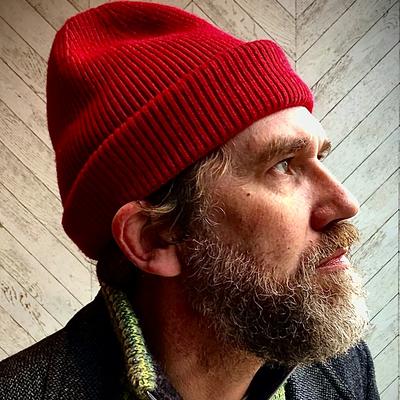
Updated my logo to the BabelFish from the 2005 Hitch Hikers Guide to the Galaxy film. It’s all explained here:
A great intro to #nostr from Feb 2023: "Nostr and the Decentralized Future of Social Media Is Here" with nostr:npub1az9xj85cmxv8e9j9y80lvqp97crsqdu2fpu3srwthd99qfu9qsgstam8y8, nostr:npub1xtscya34g58tk0z605fvr788k263gsu6cy9x0mhnm87echrgufzsevkk5s, nostr:npub16cyt2ykk2um3amexrgjldfn2p6ls2euc4jyqc4vpft4vvlaupjqqllu878, and nostr:npub1zywedmndxjrcm9d0hljsk8uqaqf9d4mxya4c5gzdudrps5jkyshqe2s58k
https://www.youtube.com/watch?v=pi2JbHWd_BM
Very helpful. They tell how the continual censorship on Mastodon lead them to create #Nostr. (I had exactly the same experience recently, which is why I am here). They talk about the #protocol, the user interfaces, the #philosophy, the #lightening network, etc...
Following up on the conversation on a decentralised future with nostr, here is a structure that will be needed by the web and #nostr longer term. Technically it is not difficult to setup. It is philosophically tricky as it requires what recently deceased French philosopher #BernardStiegler, bank robber, and student of Derrida, called an organological view of society.
nostr:note144985wkjvdxdqa9f9axgjhhfrtr3c3dw4855phqhkvguxxt3lnessjndtu
I am finding #Nostur very useful now that I understand what’s going on here on #nostr.
Having many clients to choose from is really good.
So how can one address the problems of child pornography and other
illegal content without creating a #unipolar world with one global lawgiver,
one moral code, one police, ... How does one allow freedom of expression without
censorship? (After all, how could one have secrecy for the army or police but not for everyone else in a knowledge society?) There is no thought without diversity, since one needs a proponent and an opponent to think. We think with others, and so do nations in a #Multipolar world.
These questions were asked in a very intelligent conversation between
nostr:npub1az9xj85cmxv8e9j9y80lvqp97crsqdu2fpu3srwthd99qfu9qsgstam8y8, nostr:npub1xtscya34g58tk0z605fvr788k263gsu6cy9x0mhnm87echrgufzsevkk5s, nostr:npub16cyt2ykk2um3amexrgjldfn2p6ls2euc4jyqc4vpft4vvlaupjqqllu878, and nostr:npub1zywedmndxjrcm9d0hljsk8uqaqf9d4mxya4c5gzdudrps5jkyshqe2s58k recorded at "Nostr and the Decentralized Future of Social Media Is Here" [1]
One could add the question: how will people know that they are talking to a real person, perhaps a specialist on a particular topic, rather than a thief or an AI bot using deep fake tech trying to scam them?
But how do we also allow anonymity to exist so that whistle-blowers such as nostr:npub1sn0wdenkukak0d9dfczzeacvhkrgz92ak56egt7vdgzn8pv2wfqqhrjdv9 can inform citizens of abuse of power?
This is the problem that the #WebOfNations is designed to help solve. It's an opt-in system that allows players that wish to do so to tie themselves or more precisely, their keys or WebIDs, to a national legal framework so that they can signal that their actions are guided by a country's laws, for which they can be held accountable in court, and for which they pay taxes. Why would they do that? Countries are long-term agents that need to think in the time-frame of generations, and this long-term game makes short-term selfish behavior irrational (This is a game theoretic result explained in Nozick's "The Nature of Rationality") As a result, certain types of long term thinking, require the guarantees of states to be possible.

A #WoN would allow users and proxies to filter content by legally responsible players without stopping pure anonymous content to flow. Being legally responsible is not a guarantee of good behavior, or else law courts and prisons would not exist. But it does create an incentive for good behavior because it creates a means of redress. It would also allow one to create highly restrictive filters for children while keeping it as open as adults feel they can take.
This would also allow one to have two types of filters: my known peer-to-peer (p2p) social network, family, or business relations, and the wider world that goes through the social p2p networks of states. This does not exclude non-state actors either. It does not require one to have a legal trust anchor. I guess the mafia will want their mafia network of trust too, though their problem is that, not being open, they may not want that network to be visible or even ever to be traceable, which is why such technology may not be that useful to them.
[2] see pdf or HTML at https://co-operating.systems/2020/06/01/
Dame Wendy Hall quotes the Times arguing that the UK Online Safety Bill is poorly thought through.
It risks making it impossible for ministers to communicate securely, create problems in #Ukraine, etc., etc... all for the laudable attempt to stop child porn. So how should one solve child porn and other problems there or on #nostr? I'll point to some ideas next.