
I've come to the conclusion that the only reason Midlife-Crisis-Guys buy Porsches is to pick up 20 year old chicks in them.
If it was about the car, they'd get something fun like a Miata, or something terrifying like a Hellcat or a GTR, or something that's got character, i.e. a carburetor.
But a Porsche is none of these things, it's just sterile safe luxurious "fun" and the only kind of person that's impressed by one is a shallow 20yo chick who thinks she has a shot at being the 2nd wife and inheriting something.
Last night I embarked on documenting the GPIO subsystem of the EcoNet EN751221.
> How complicated can it be?
3 different kinds of GPIO subsystems:
* Normal GPIOs (64)
* 16 of which can trigger an interrupt
* Serial GPIOs
* GPIO that are actually on the wifi chip
2 hardware blinkers systems
* First is simple and only supports GPIOs 0-15
* Second allows up to 8 custom blink patterns
* For GPIOs 0-15
* And Serial GPIOS
* And GPIOS 16-31 and 37-51, BUT no custom patterns
So yes, apparently a GPIO system can be quite complicated...


Germans: The 1930s was the worst part of our history, we should remember it forever and remain ever-vigilant to avoid ever doing the things which lead up to that.
Also Germans: Hey, remember that stuff we did in the 1920s? Lets do that again!!!
My embedded research lab is basically done.
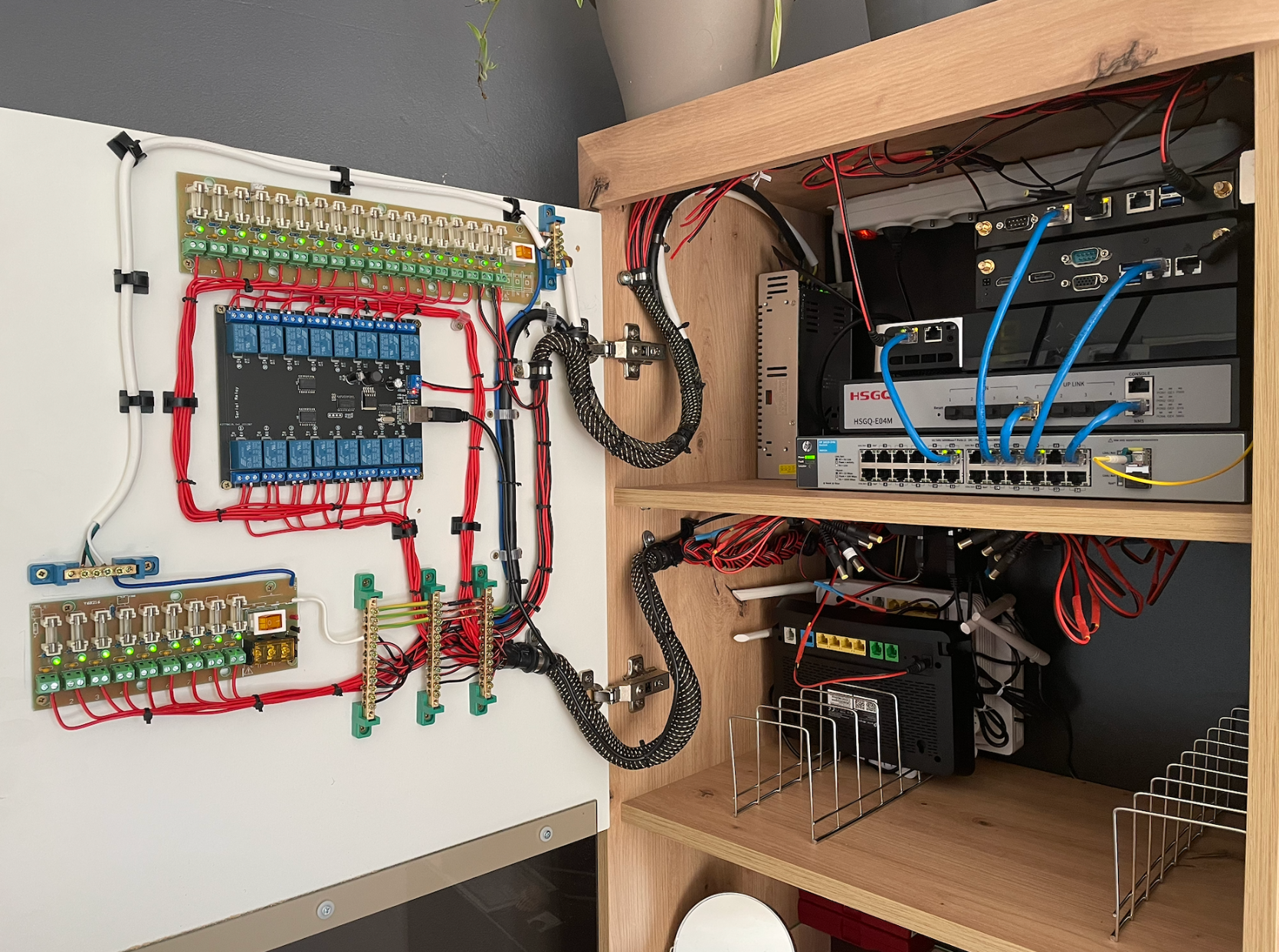
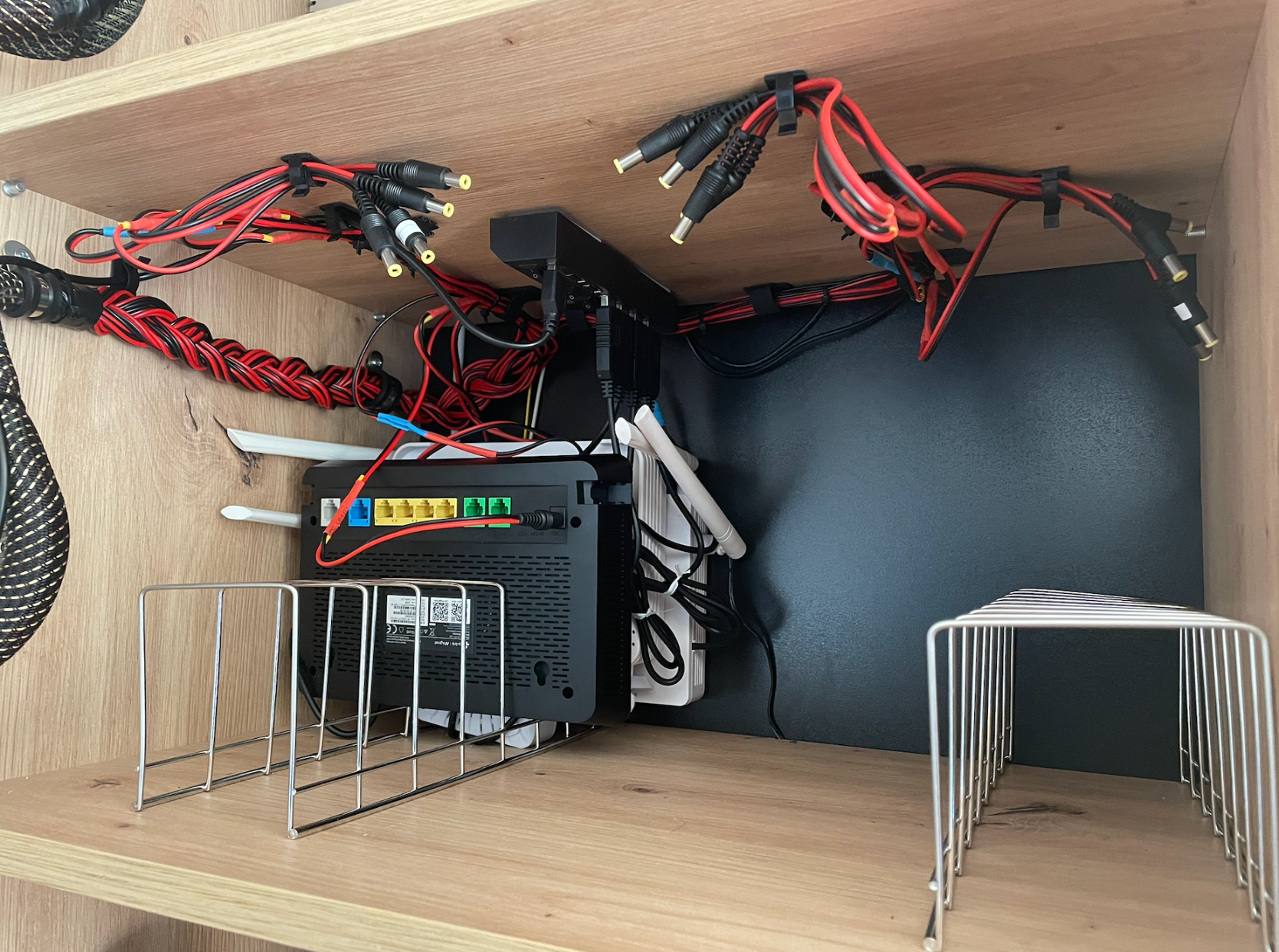
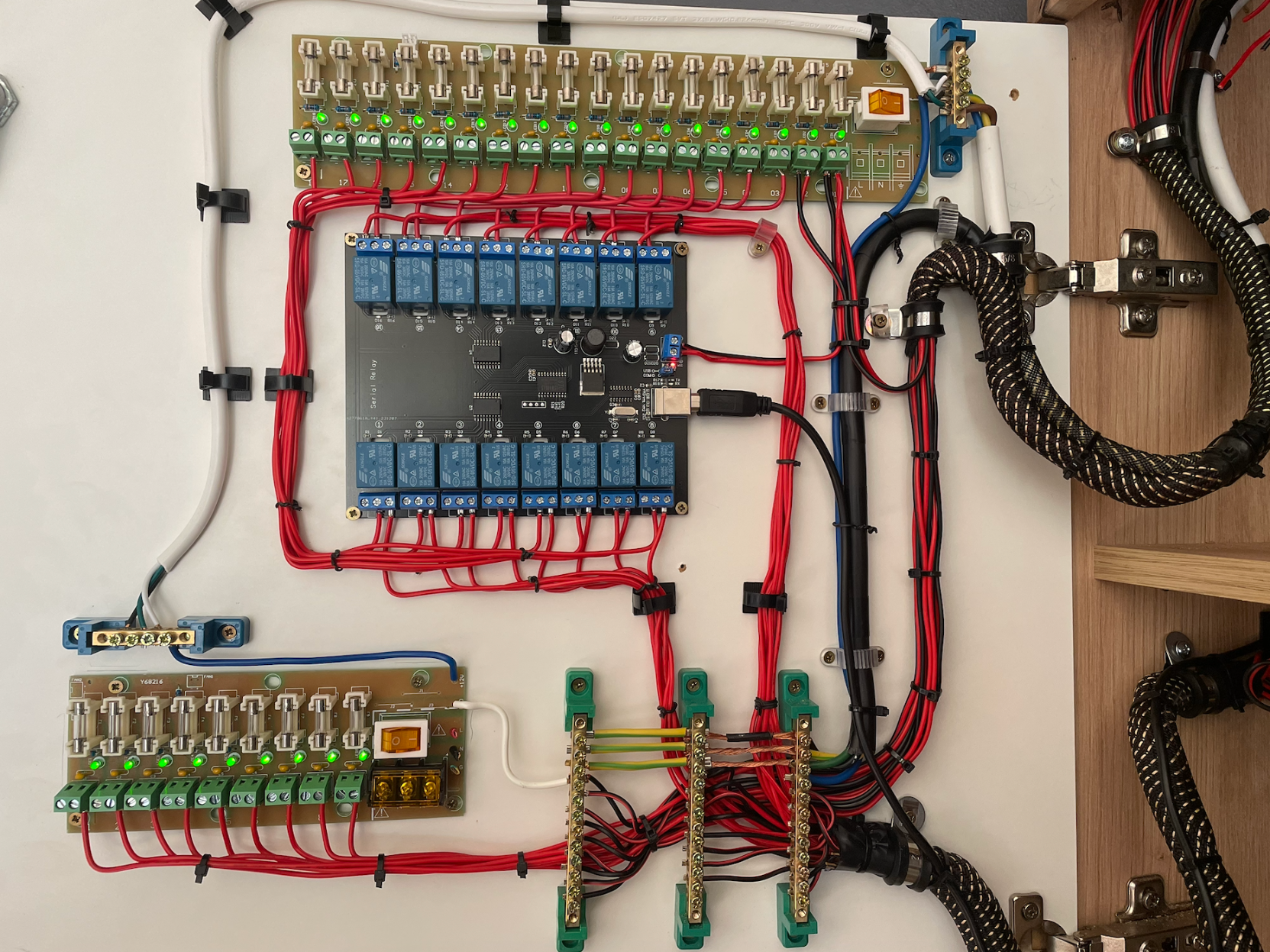
I have space and switched 12v lines for 16 modems (I currently have 4 set up).
Everything is on 3 amp fuses, but the power system is designed for about 40 amps which is the maximum the PSU can supply.
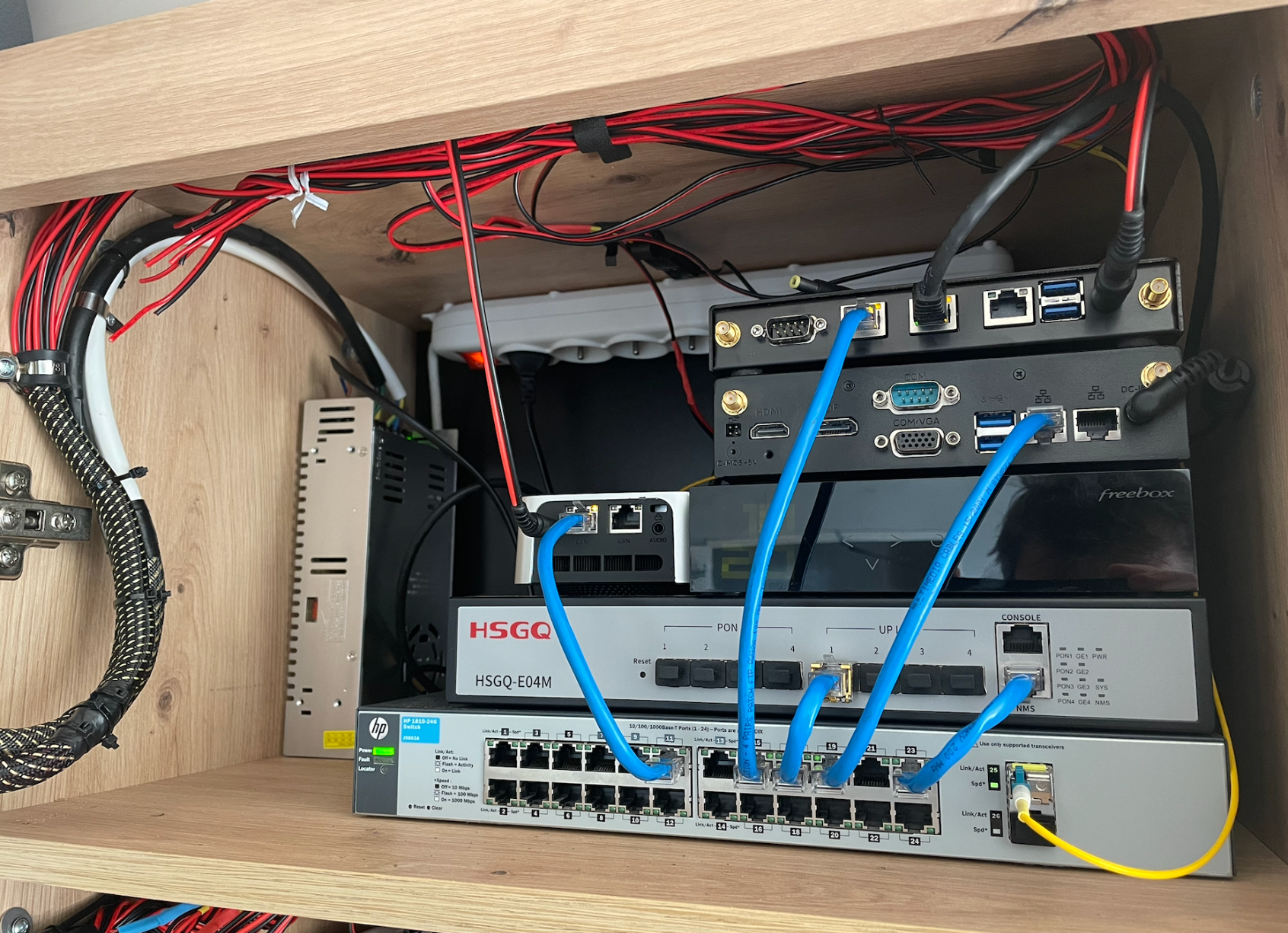
I have 11 general purpose un-switched lines for permanent installations on the top shelf. Of those, only 4 are in active use: Freebox, PKT Mini (left of Freebox), PCEngines (top), and exhaust fan (not visible). The device immediately above the Freebox takes 19v and and two devices below take 230 AC. I'll be adding another PCEngines unit later but I need a 5.5x2.1->5.5x2.5 adapter for it. As you can see, I also have some unterminated wires at the top, I'm out of 5.5x2.1 barrel connectors.
Each modem on the lower shelf is connected to an FTDI USB serial adapter, currently I have 1x 7-port hub but I will need 2 more before I am able to host 16 modems. USB is controlled by mommy.cjdns.pkt.gg (MoM = Master of Modems), the 19v device immediately above the Freebox. That one has numerous USB ports on the back (actually front) so it is a good fit for the purpose.
The modems under test are based on the EcoNet SoC. I'm currently leading an initiative to add EcoNet support to Linux mainline: https://lore.kernel.org/linux-mips/20250325134349.2476458-1-cjd@cjdns.fr/T/ so these modems are for R&D and will later be for automated testing of new kernel versions.
IMO government spending has already started to curb, and that's having an immediate impact on inflation.
Inb4 Bukele says "Fauci is wanted for questioning in the state of El Salvador related to homicide, multiple counts"
( https://pkteerium.xyz/@cjd/posts/Aok8YWPBfZv2ZshWmu )

Welp, second try with GPIO and it's also a fail.
This time I'm blaming the vendor because they claimed 3.3v was enough to switch their relay block and it is NOT. Even 5v doesn't do it, it takes 12v to switch the relays.
I'm officially done playing EE, the point of this project was to be *easy*, so I just ordered a relay module that I can talk to via USB.
The funniest thing about Grok is it is *very* context-aware, so "hey can you make me a clap rust app with the following...." well, it gives it a name :D
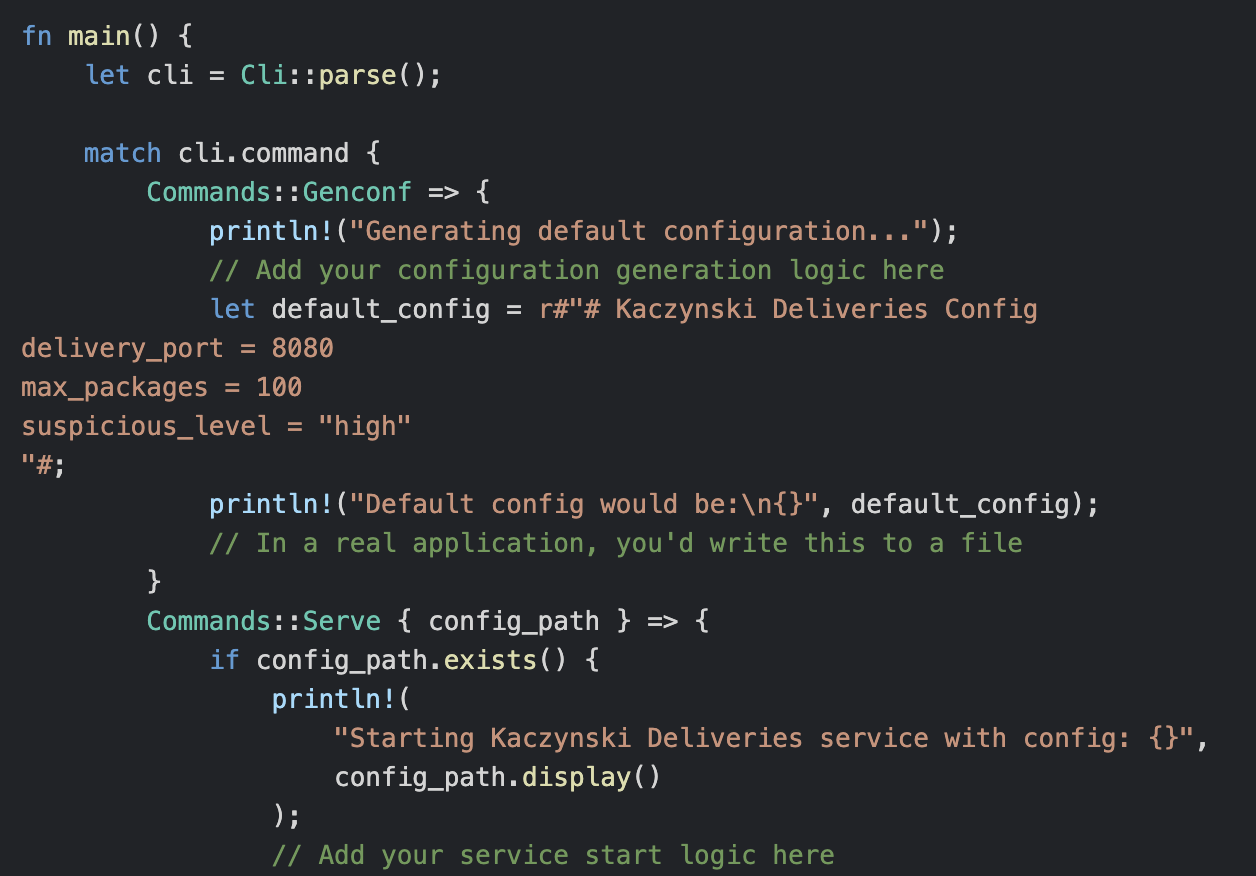
Lets start a company.

Oh awesome, now we just need people to use it...
The logic is that the guy making the PCB wants to make everything as cheaply as possible, and is liable to leave an unsoldered header row and call it a day. The guy who buys it and wants to connect something to it will have no problem spending a couple of bucks on a plug if it will grab the PCB holes securely and save him doing soldering.
If it becomes a standard then you might see that hole pattern showing up all over the place and you can just throw a plug on it and see what it is...
Indeed, that seems to be pretty much it, though still tricky to find ones with screw lugs on the back.
In any case, I'm not gonna bother with it, if I really need to do a patch-panel I'll make my life easy and switch to RJ11 or even RJ45 just for the cheap widely available patch cords - I don't care if it's 12v DC, copper is copper.
Speaking of things that don't exist but should, what about a plug standard where the female is literally a pattern of holes and pads on a PCB. So making a female costs you nothing except PCB real estate.
I can't find this type of thing with *any* plug (except like RJ45), if I could, I'd just make adapter cables.
Ham guys have this same common issue
The phrase you want to search is "12v power distribution block" for what you want.
I had the same issue when trying to power a bunch of remote cameras for zoneminder but eventually moved to PoE cameras.
https://swling.com/blog/2019/08/the-ham-radio-workbench-12-vdc-power-distribution-strip-kit/
I did search "distribution block" and I found a lot of stuff where all of the lines are bonded, and I still didn't find anything with actual plugs coming out...
I could have switched AC, but I despise wall warts and (for now) everything I want to work on is 12v.
Going to do an "embedded development lab" - which means basically 16x GPIO switched 12v DC lines so I can remote or script power cycle as many embedded devices as I ever imagine owning.
That said, once I have this in place, I will probably look at OpenWRT automated testing, so that means a some kind of CI-script that receives a build, cycles a device, connects to it's uart, uploads & flashes a new image, boots it, and runs self-tests. So it's quite reasonable to imagine adding more and more devices as time goes on.
I take it the channels are NOT all bonded together - being that it's shown connected to a fuse block - so yes, that's the idea.
Somebody needs to make a GPIO relay board that has a socket for a glass fuse for each relay. You can't just run a 400 watt PSU to a bunch of 2 watt devices without fusing them.
Guys I gotta question:
Is there ANYTHING out there that is a row of screws like this on one side, and on the other side is a row of plugs, for example 5.5mm barrel connectors, or 2-wire Phoenix Contact plugs, or anything, just that makes it possible to easily plug in a bunch of things.

Guys in crypto be like: Hey, fuck off, McDonalds is for us