UK Government To Test Digital ID on Veterans by 2025, Amid Plans for Wider Use
Judges Sound Off on Google’s “Serious and Disturbing” Evidence Hiding in Landmark Antitrust Cases
https://reclaimthenet.org/judges-google-evidence-hiding-antitrust
Biden-Harris Backs UN Pro-Censorship and Anti-Privacy Plan, but Senate Approval Remains a Challenge
A License to Censor? The Fierce Fight Over the GEC’s Renewal
https://reclaimthenet.org/a-license-to-censor-the-fierce-fight-over-the-gecs-renewal
Australia finally admits it. To ban under 16s from social media, everyone will have to have a digital ID to use platforms.
https://video.nostr.build/ccac5599370e5c55150db0f71075e3fd59f0148f8c607df90c26aecfad3f110f.mp4
Brookings, the Big Tech think tank funded by Amazon, Google, Meta, and more, has released a post-mortem on Kamala Harris's failed presidential run—claiming that what really helped Trump wasn’t Biden-Harris’s own failures on issues like inflation and immigration, but "disinformation."
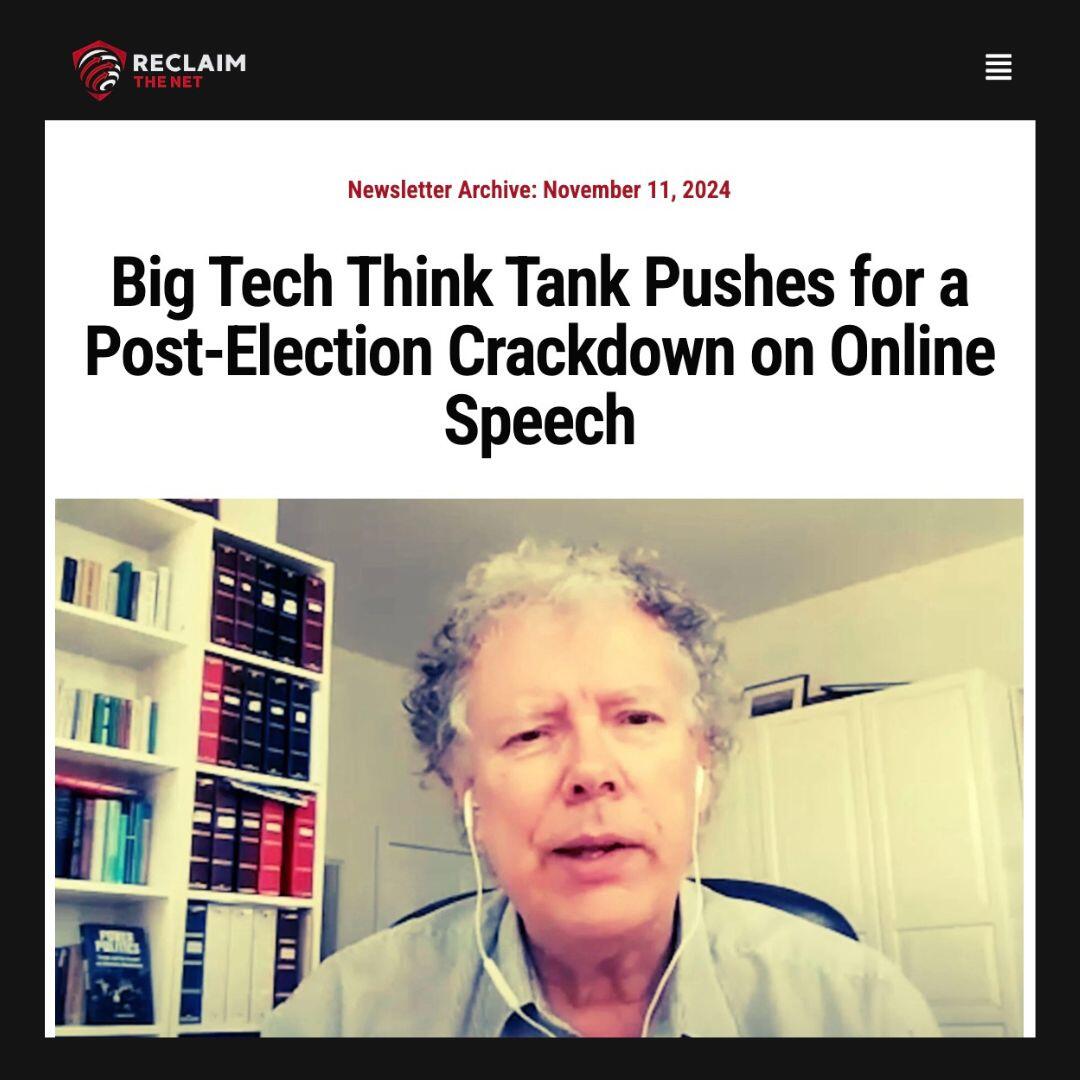
Australia’s pushing toward a digital ID under the guise of “age verification.” New legislation would force social media to verify users' ages, banning kids under 16 from having accounts. PM Albanese calls it a “gift” to parents, but the tech doesn’t exist to do this without tracking identities—and privacy risks for all users are huge.
Platforms like TikTok and YouTube would be responsible for enforcing these digital ID checks, with oversight by Australia’s eSafety Commissioner. They’re selling it as “protecting kids,” but this looks more like a first step toward mandatory digital ID, with massive implications for privacy and surveillance.
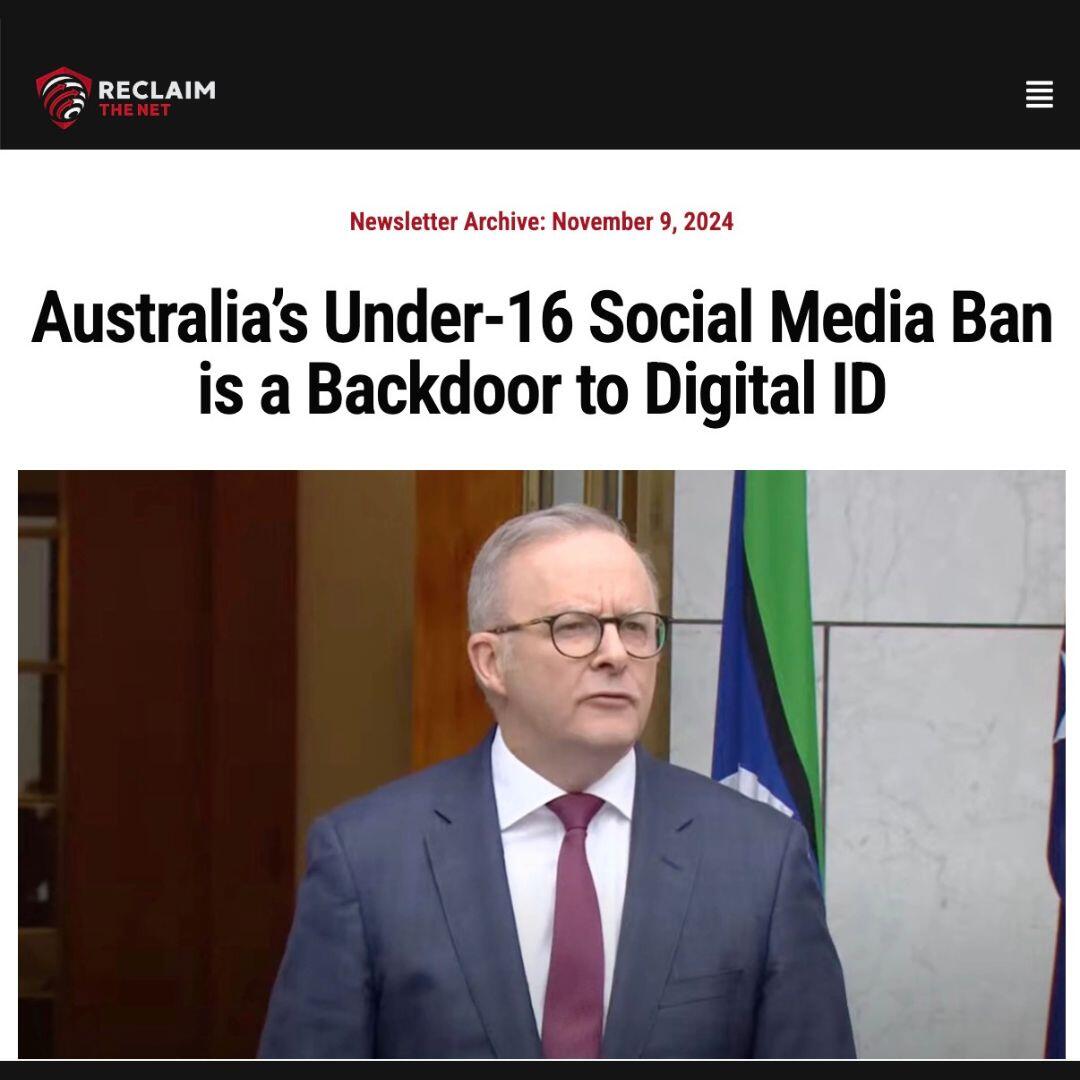
VP-elect JD Vance suggests the US rethink NATO support if the EU pushes censorship on American social media companies. Citing EU pressure on Elon Musk to block Trump from X and a secret censorship deal that Musk rejected, Vance argues NATO should respect free speech, calling it “insane” to back allies who don’t.
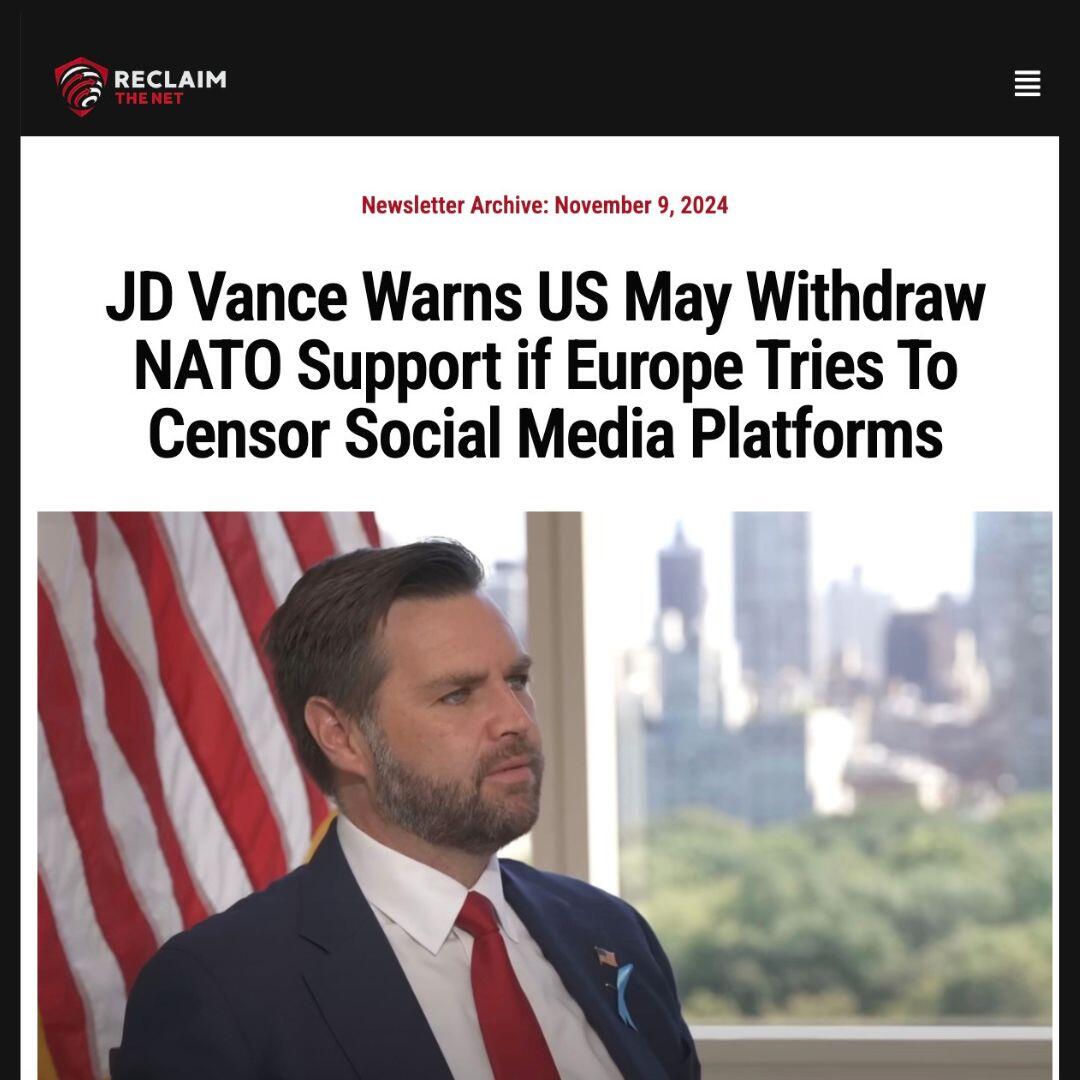
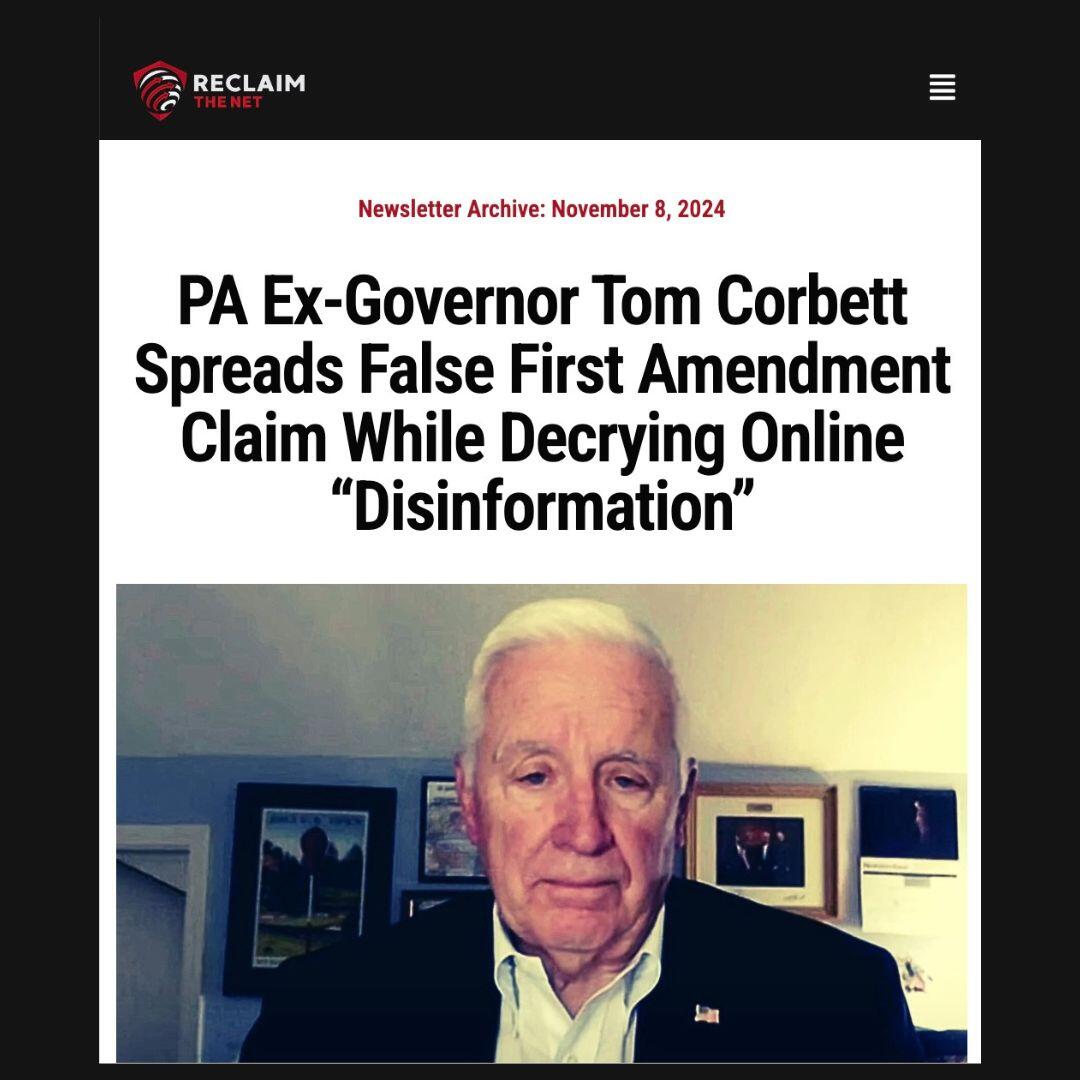
Former PA governor Tom Corbett, now with Keep Our Republic, voiced concerns on election day about “dangerous online disinformation,” calling for more social media regulation. He invoked the outdated “fire in a crowded theater” analogy — falsely suggesting such speech isn’t protected — to justify tighter control, blaming social media for polarization and violence. While urging skepticism toward online speech, he didn’t extend the same caution to mainstream media.
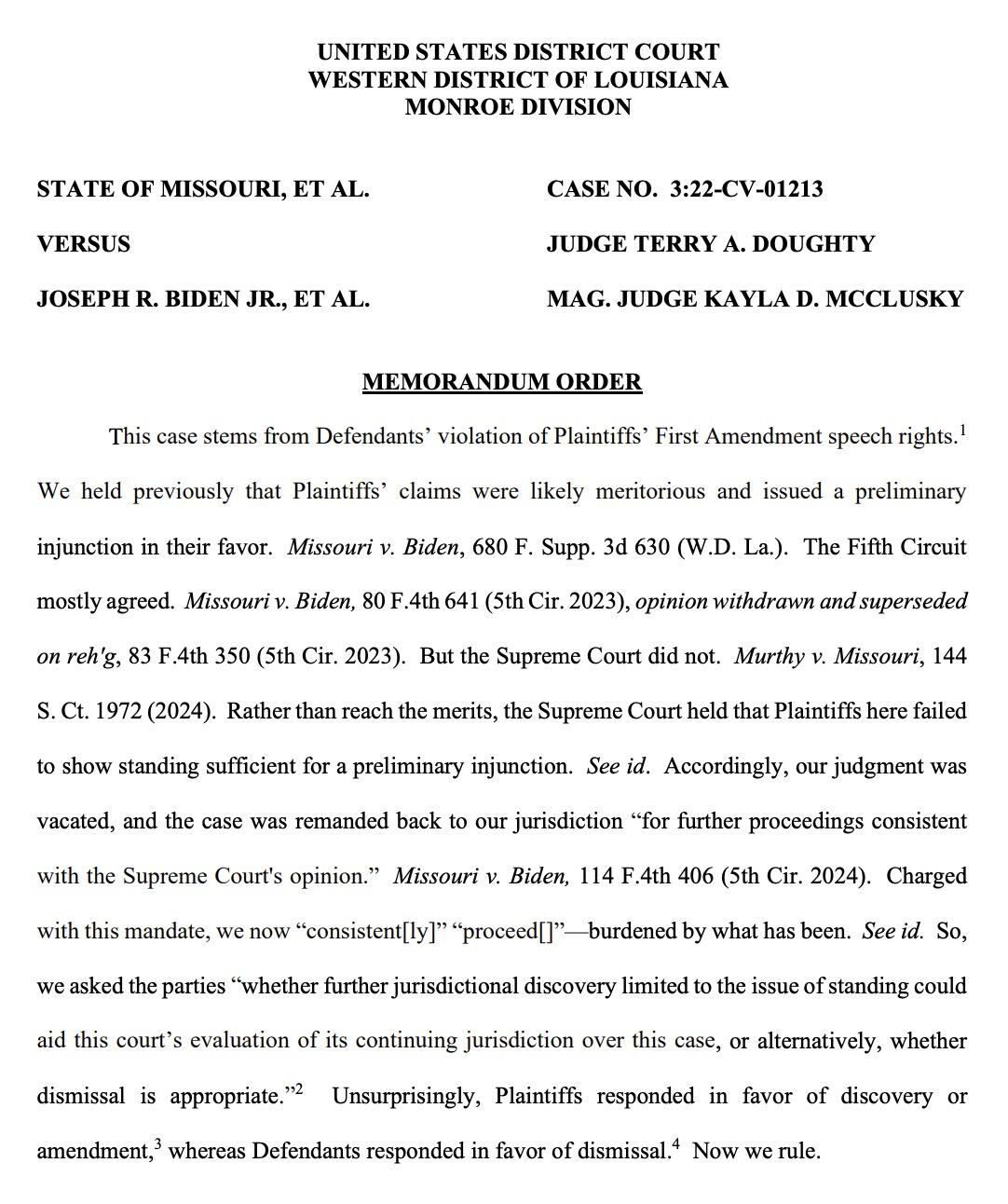
🚨 New free speech win: A Louisiana court just expanded discovery in Missouri v. Biden, allowing deeper investigation into federal pressure on social media to censor speech.
“We now consistently proceed — burdened by what has been,” wrote US District Judge Terry A. Doughty
The UN just advanced a sweeping global censorship agenda, adopting resolutions to fight “hate speech” and “disinformation” by partnering with media and expanding surveillance through bank-linked digital IDs, all under its “Our Common Agenda.” Key supporters, including the UK, EU, and Pakistan, urged Big Tech to join this crackdown, with Italy calling for AI to police misinformation. Only Argentina warned of the slippery slope, noting how “hate speech” laws could stifle free debate.
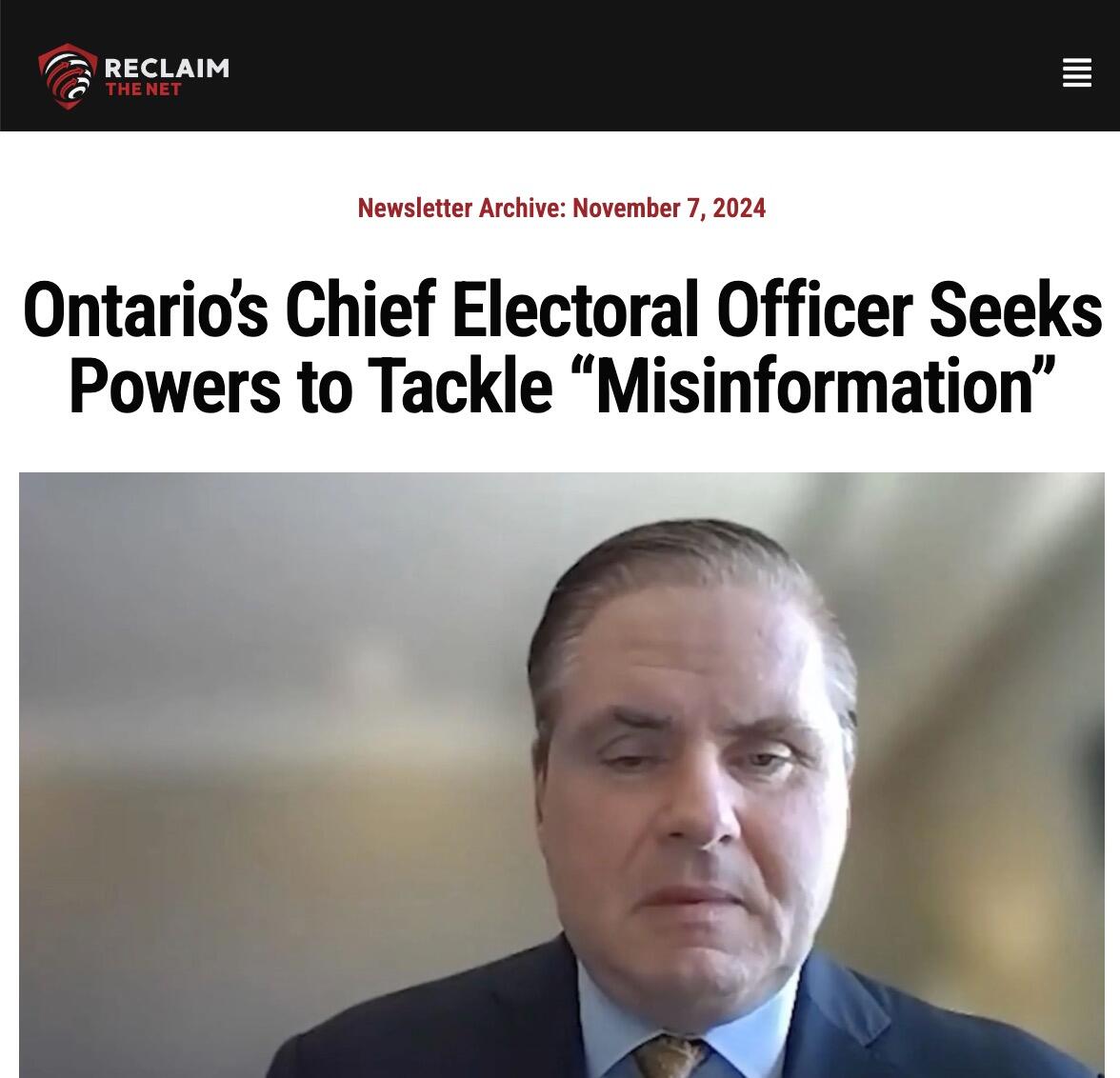
Ontario’s Chief Electoral Officer, Greg Essensa, wants sweeping new powers to control "misinformation" in elections. In his recent report, Essensa pushed for aggressive censorship tools: fast-track takedowns of content labeled as "false," fines as high as $100,000 for companies, and labeling mandates for automated ads.
Essensa's justification? AI-driven misinformation. He claims AI is “accelerating” the spread of false information—never mind that we’ve had deceptive campaign tactics forever. But instead of addressing the known causes of fraud or classic spam, he argues that new tech like AI somehow makes misinformation more dangerous, faster, and unstoppable. His stance is that fact-checking can't keep up, so he needs the power to censor quickly and heavily.
Behind the curtain, though, it’s clear: Essensa’s proposals are a play to curb free expression in the name of "safety." Just like in the US, Canadian officials are now framing unregulated speech as a looming AI threat, pushing for stronger control over the conversation.
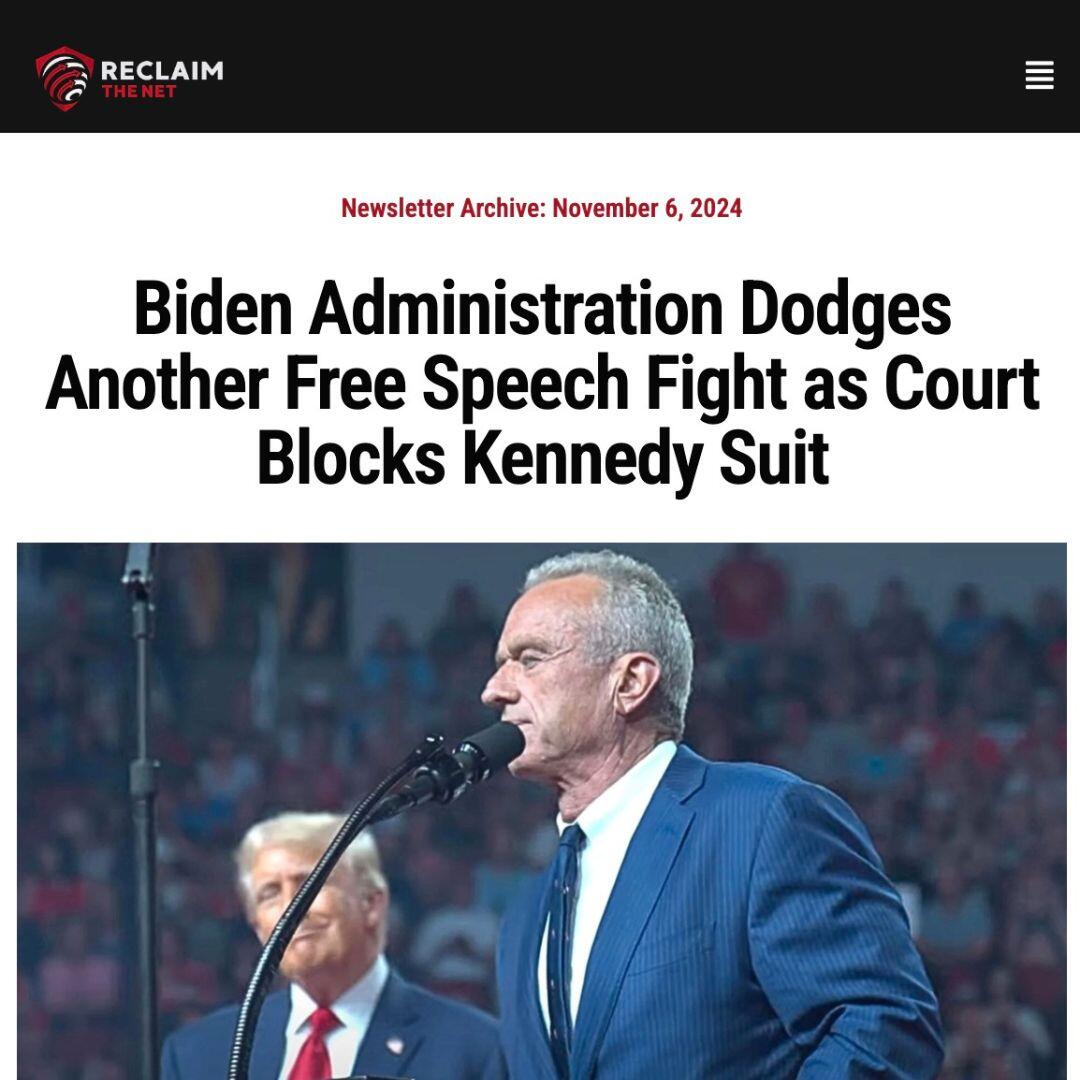
The Biden administration is on its way out but the effects of censorship continue. A critical free speech case, Kennedy v. Biden, just hit a major setback as the Fifth Circuit ruled that the Children's Health Defense, RFK Jr., and other plaintiffs lack "standing" — meaning they supposedly can't prove they were directly harmed by the government’s influence over social media censorship.
Here’s the story: CHD and RFK Jr. showed that Biden officials used pressure tactics on Big Tech to silence discussions on topics like Covid origins and vaccines — topics that, they argue, should have been open for public debate. This censorship push, they say, is unconstitutional, yet the appeals court dismissed their case before it could even reach trial.
This ruling overturns an earlier decision by the Western District of Louisiana, which had backed the plaintiffs’ right to proceed. CHD’s deplatforming was dismissed as insufficient harm, despite the very real impact censorship has on their mission to inform the public.
CHD’s legal team argues that new evidence shows ongoing, improper government interference with social media companies’ moderation practices. They're considering next steps, as this ruling shows just how high the bar remains for holding the government accountable when it comes to speech suppression.
Kennedy v. Biden may be stalled, but the stakes for free expression—and the fight for accountability—continue to climb.
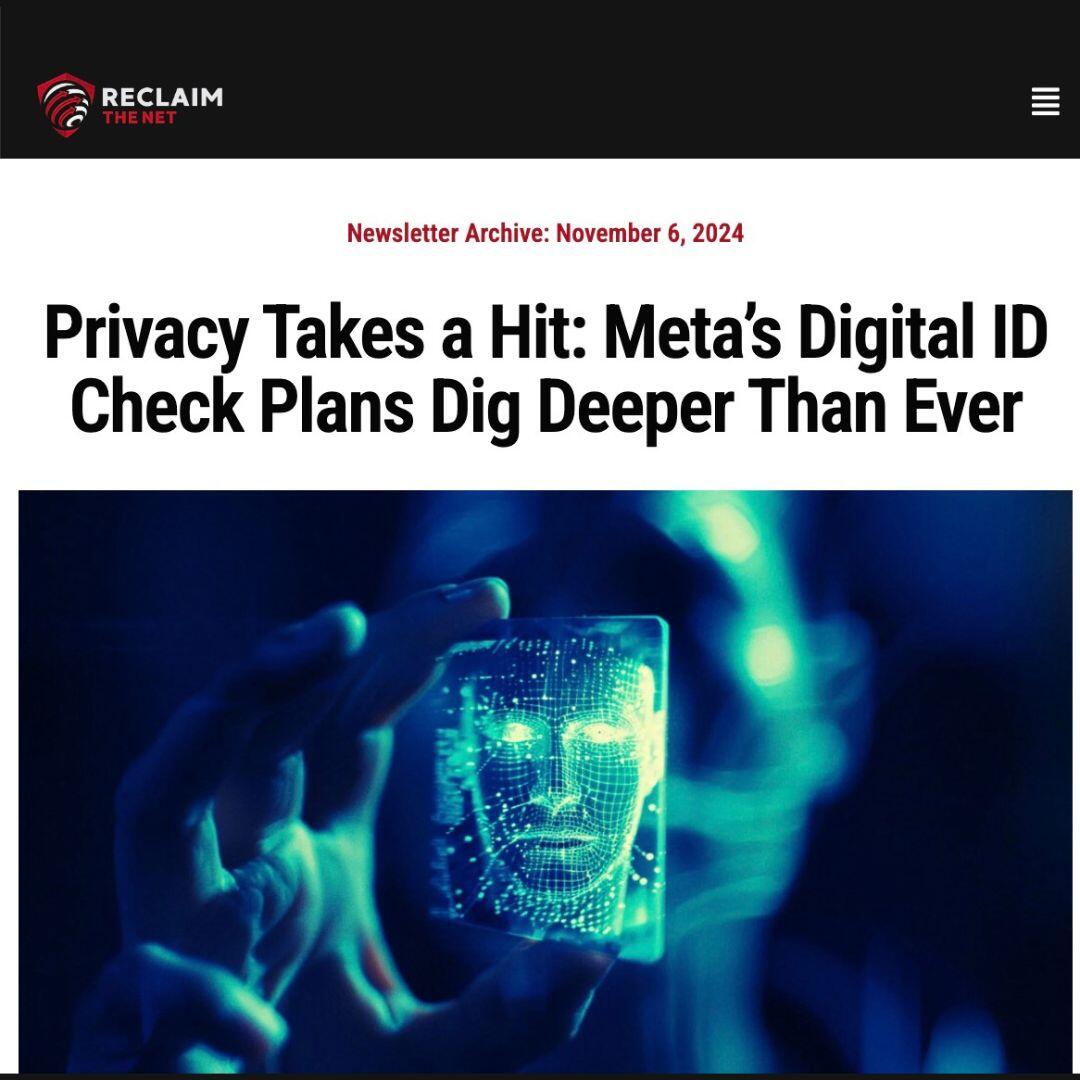
Meta’s latest push for age verification on Instagram and Facebook is a data privacy minefield masquerading as a safety measure. Instead of straight-up IDs, Meta now claims it can "guess" user age through an AI “adult classifier,” scouring your profile, follower lists, and even "happy birthday" messages to decide if you’re over 18. Sounds vague? That’s because it is. The algorithm is proprietary—meaning, closed-source and hidden from public scrutiny. Billions of users are being subjected to this age-estimation experiment with zero transparency on its accuracy or methods.
And here’s the bigger issue: if the AI isn’t sure about your age, Meta still wants government-issued ID proof. Users will be asked for ID or a video selfie, analyzed by a third-party biometrics firm.
So, while Meta postures about privacy and keeping young users safe, it’s paving the way for invasive surveillance practices on a massive scale. It’s not just another restriction; it’s a quiet step toward normalizing biometric mass monitoring.
Inside “EU Going Dark” The EU’s Push to End Private Messaging
https://reclaimthenet.org/inside-eu-going-dark-the-eus-push-to-end-private-messaging
Memes Under Siege: China’s Crackdown on Online Youth Dissent
https://reclaimthenet.org/memes-under-siege-chinas-crackdown-on-online-youth-dissent
“We’re Screwed Without It” Elon Musk Defends His Free Speech Twitter Takeover on Joe Rogan’s Podcast
https://reclaimthenet.org/musk-defends-his-free-speech-twitter-takeover-on-rogans-podcast
UN’s Latest on “Misinformation” and “Hate” – Will Tech Bow to Pressure?
https://reclaimthenet.org/uns-latest-on-misinformation-and-hate-will-tech-bow-to-pressure
Google’s Interactive Polling Station Map Ignites Claims of Pro-Harris Bias as Voters Head to the Polls
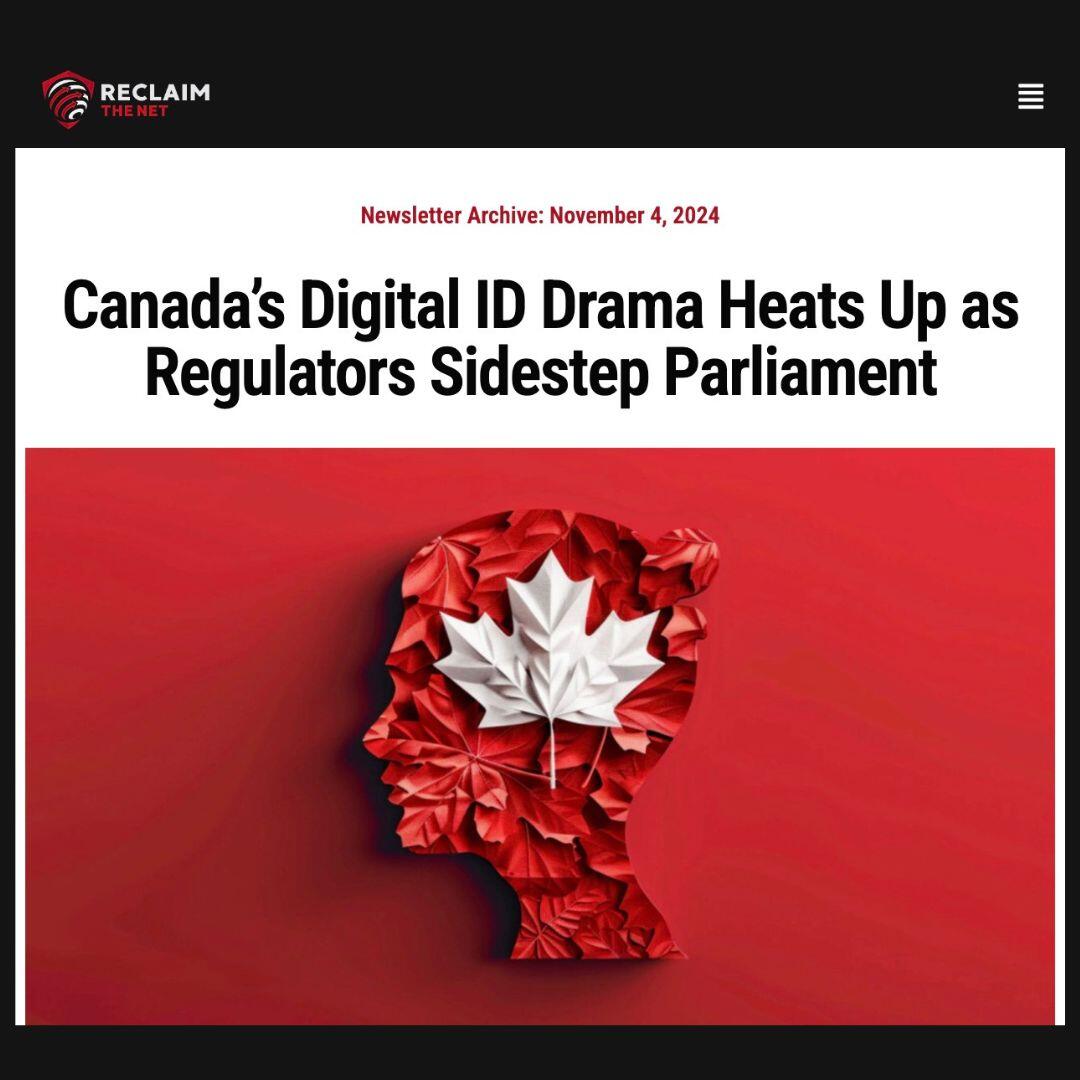
Canadian regulators are charging forward with a national digital ID—without involving Parliament. No debate, no oversight. Just government agencies deciding what "ID" means in the digital age, aiming to bypass MPs who’ve questioned this plan before.
Shared Services Canada (SSC), the government’s IT hub, says it’s just like other forms of ID, similar to a social security number. But critics argue digital IDs are fundamentally different. The risks go way beyond typical ID systems, introducing the possibility of broad surveillance and control, especially when personal data sits in centralized databases vulnerable to security breaches or potential government overreach.
And let’s be real—people are not forgetting recent history. The phrase “segregation and discrimination” is surfacing again, echoing the backlash against Covid vaccine passports. The memory of how vaccine-hesitant citizens were treated lingers, fueling skepticism that this ID system could become another tool for control.
Proponents (think Bill Gates, Tony Blair, the EU, WEF) pitch digital ID as empowering, equitable, and efficient. But Canadians are wondering: Empowering for who? Equality for who? Because to many, this feels like a digital Trojan horse.