
**Astronomy Picture of the Day**
04 August 2023
**Moonrays of August**
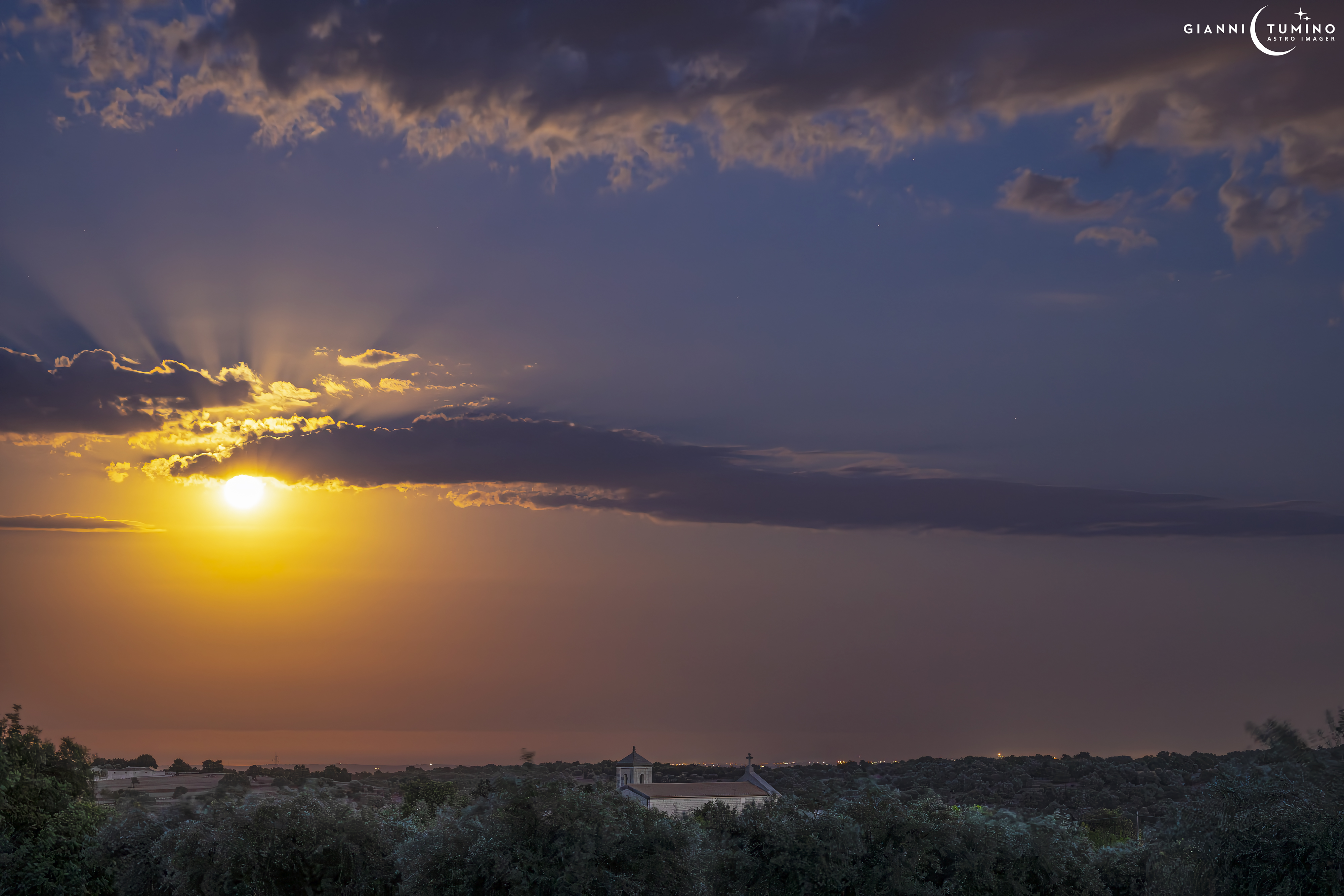
Image Credit & Copyright: Gianni Tumino
A Full Moon rose as the Sun set on August 1. Near perigee, the closest point in its almost moonthly orbit, the brighter than average lunar disk illuminated night skies around planet Earth as the second supermoon of 2023. Seen here above Ragusa, Sicily, cloud banks cast diverging shadows through the supermoonlit skies, creating dramatic lunar crepuscular rays. The next Full Moon in 2023 will also shine on an August night. Rising as the Sun sets on August 30/31, this second Full Moon in a month is known as a Blue Moon. Blue moons occur only once every 2 or 3 years because lunar phases take almost a calendar month (29.5 days) to go through a complete cycle. But August's Blue Moon will also be near perigee, the third supermoon in 2023.
#APOD #SpaceResearch #RocketScience #Astrotheory #PlanetaryScience
**Astronomy Picture of the Day**
03 August 2023
**The Falcon and the Redstone**
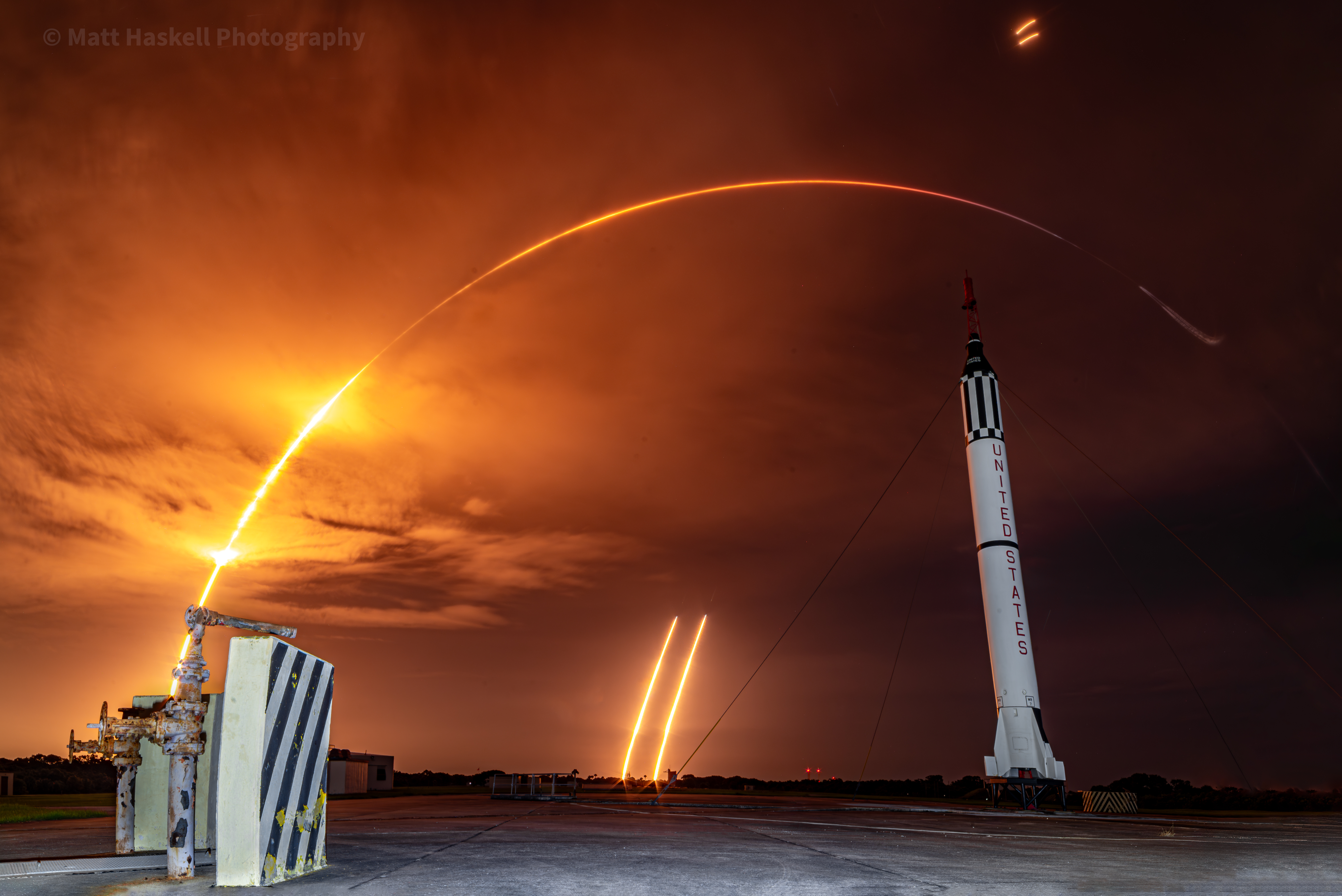
Image Credit & Copyright: Launch Complex 5
In a photo from the early hours of July 29 (UTC), a Redstone rocket and Mercury capsule are on display at Cape Canaveral Launch Complex 5. Beyond the Redstone, the 8 minute long exposure has captured the arcing launch streak of a SpaceX Falcon Heavy rocket. The Falcon's heavy communications satellite payload, at a record setting 9 metric tons, is bound for geosynchronous orbit some 22,000 miles above planet Earth. The historic launch of a Redstone rocket carried astronaut Alan Shepard on a suborbital spaceflight in May 1961 to an altitude of about 116 miles. Near the top of the frame, this Falcon rocket's two reusable side boosters separate and execute brief entry burns. They returned to land side by side at Canaveral's Landing Zone 1 and 2 in the distance.
#APOD #NASA #AstronomyLovers #Exploration #Astrophysics
**Astronomy Picture of the Day**
02 August 2023
**M82: Galaxy with a Supergalactic Wind**

*Image creditor details unavailable via API. Visit linked page below for full info.*
Why is the Cigar Galaxy billowing red smoke? M82, as this starburst galaxy is also known, was stirred up by a recent pass near large spiral galaxy M81. This doesn't fully explain the source of the red-glowing outwardly expanding gas and dust, however. Evidence indicates that this gas and dust is being driven out by the combined emerging particle winds of many stars, together creating a galactic superwind. The dust particles are thought to originate in M82's interstellar medium and are actually similar in size to particles in cigar smoke. The featured photographic mosaic highlights a specific color of red light strongly emitted by ionized hydrogen gas, showing detailed filaments of this gas and dust. The filaments extend for over 10,000 light years. The 12-million light-year distant Cigar Galaxy is the brightest galaxy in the sky in infrared light and can be seen in visible light with a small telescope towards the constellation of the Great Bear (Ursa Major). APOD in world languages: Arabic, Bulgarian, Catalan, Chinese (Beijing), Chinese (Taiwan), Croatian, Czech, Dutch, French, German, Hebrew, Indonesian, Japanese, Montenegrin, Polish, Russian, Serbian, Slovenian, Spanish, Taiwanese, Turkish, and Ukrainian
#APOD #Astrozone #Astrozone #Astrochemistry #Astrospace
**Astronomy Picture of the Day**
01 August 2023
**Monster Solar Prominence**
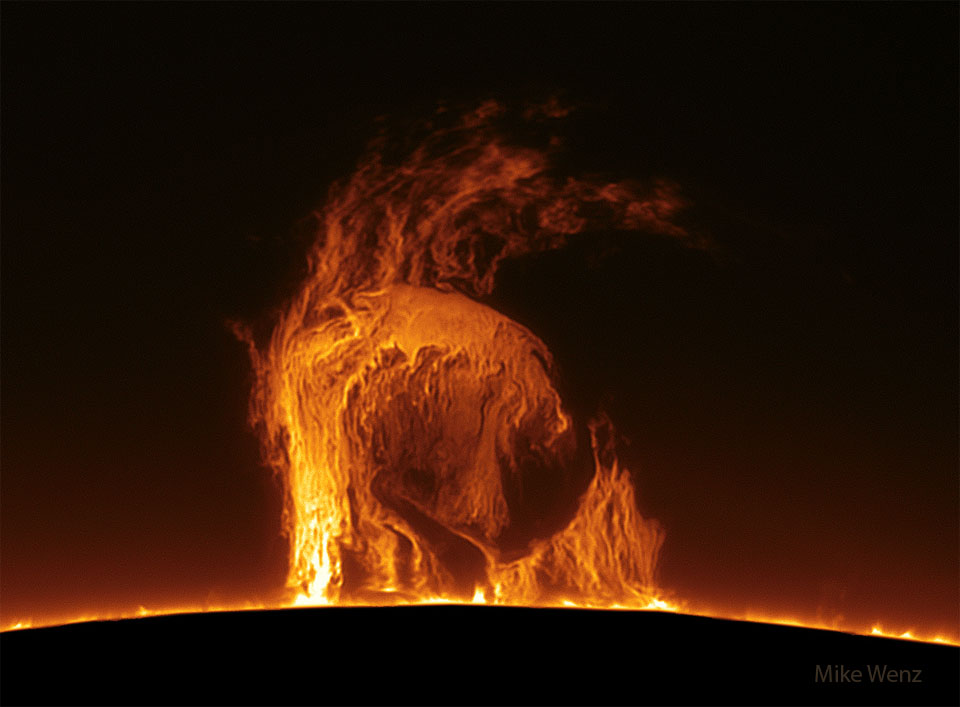
Image Credit & Copyright:
Mike
Wenz
The monsters that live on the Sun are not like us. They are larger than the Earth and made of gas hotter than in any teapot. They have no eyes, but at times, many tentacles. They float. Usually, they slowly change shape and just fade back onto the Sun over about a month. Sometimes, though, they suddenly explode and unleash energetic particles into the Solar System that can attack the Earth. Pictured is a huge solar prominence imaged almost two weeks ago in the light of hydrogen. Captured by a small telescope in Gilbert, Arizona, USA, the monsteresque plume of gas was held aloft by the ever-present but ever-changing magnetic field near the surface of the Sun. Our active Sun continues to show an unusually high number of prominences, filaments, sunspots, and large active regions as solar maximum approaches in 2025.
#APOD #SpaceInnovation #Astronomy #BlackHoleDiscovery #SpaceWeather
**Astronomy Picture of the Day**
31 July 2023
**Phobos over Mars**
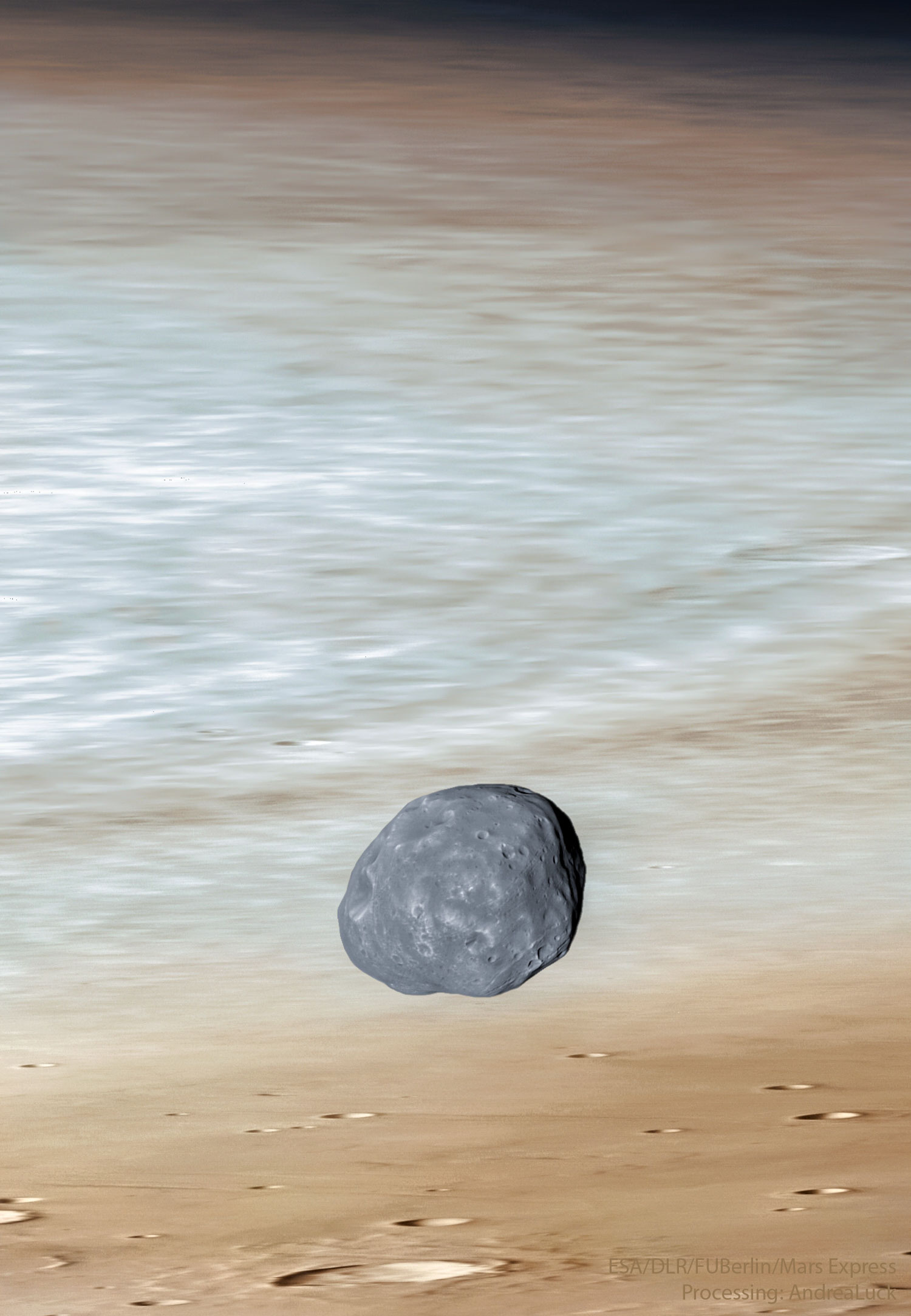
*Image creditor details unavailable via API. Visit linked page below for full info.*
Why is Phobos so dark? Phobos, the largest and innermost of the two Martian moons, is the darkest moon in the entire Solar System. Its unusual orbit and color indicate that it may be a captured asteroid composed of a mixture of ice and dark rock. The featured assigned-color picture of Phobos near the edge of Mars was captured in late 2021 by ESA's robot spacecraft Mars Express, currently orbiting Mars. Phobos is a heavily cratered and barren moon, with its largest crater located on the far side. From images like this, Phobos has been determined to be covered by perhaps a meter of loose dust. Phobos orbits so close to Mars that from some places it would appear to rise and set twice a day, while from other places it would not be visible at all. Phobos' orbit around Mars is continually decaying -- it will likely break up with pieces crashing to the Martian surface in about 50 million years. Your Sky Surprise: What picture did APOD feature on your birthday? (post 1995)
#APOD #SpaceAdventures #AstronomyFacts #SpaceExploration #SpaceResearch
**Astronomy Picture of the Day**
30 July 2023
**Spiral Aurora over Icelandic Divide**
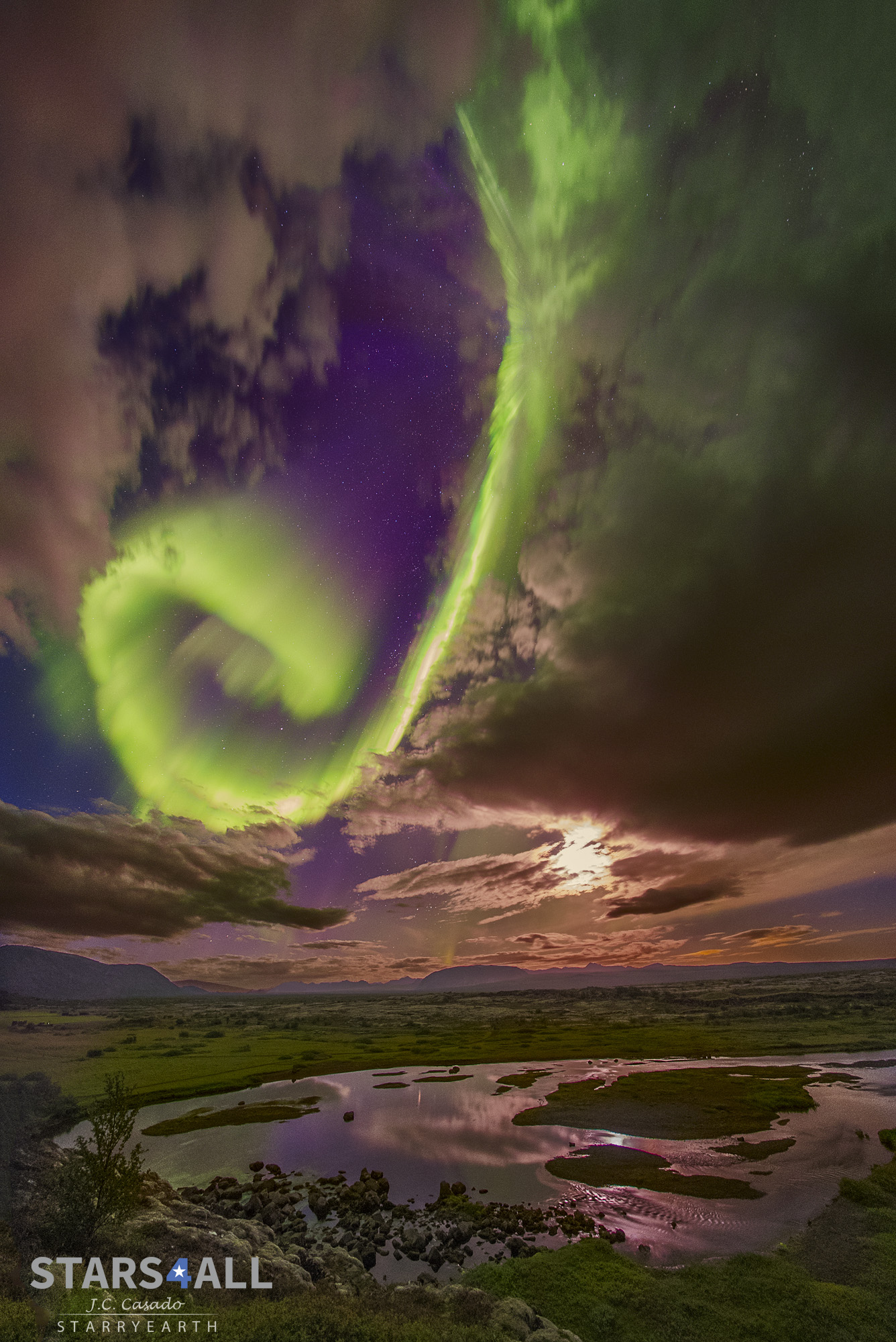
Image Credit & Copyright: Juan Carlos Casado
Admire the beauty but fear the beast. The beauty is the aurora overhead, here taking the form of a great green spiral, seen between picturesque clouds with the bright Moon to the side and stars in the background. The beast is the wave of charged particles that creates the aurora but might, one day, impair civilization. In 1859, following notable auroras seen all across the globe, a pulse of charged particles from a coronal mass ejection (CME) associated with a solar flare impacted Earth's magnetosphere so forcefully that it created the Carrington Event. This assault from the Sun compressed the Earth's magnetic field so violently that it created high currents and sparks along telegraph wires, shocking many telegraph operators. Were a Carrington-class event to impact the Earth today, speculation holds that damage might occur to global power grids and electronics on a scale never yet experienced. The featured aurora was imaged in 2016 over Thingvallavatn Lake in Iceland, a lake that partly fills a fault that divides Earth's large Eurasian and North American tectonic plates. Almost Hyperspace: Random APOD Generator
#APOD #MilkyWay #Exoplanets #Astrophysics #GalacticAdventures
**Astronomy Picture of the Day**
29 July 2023
**Apollo 11: Catching Some Sun**
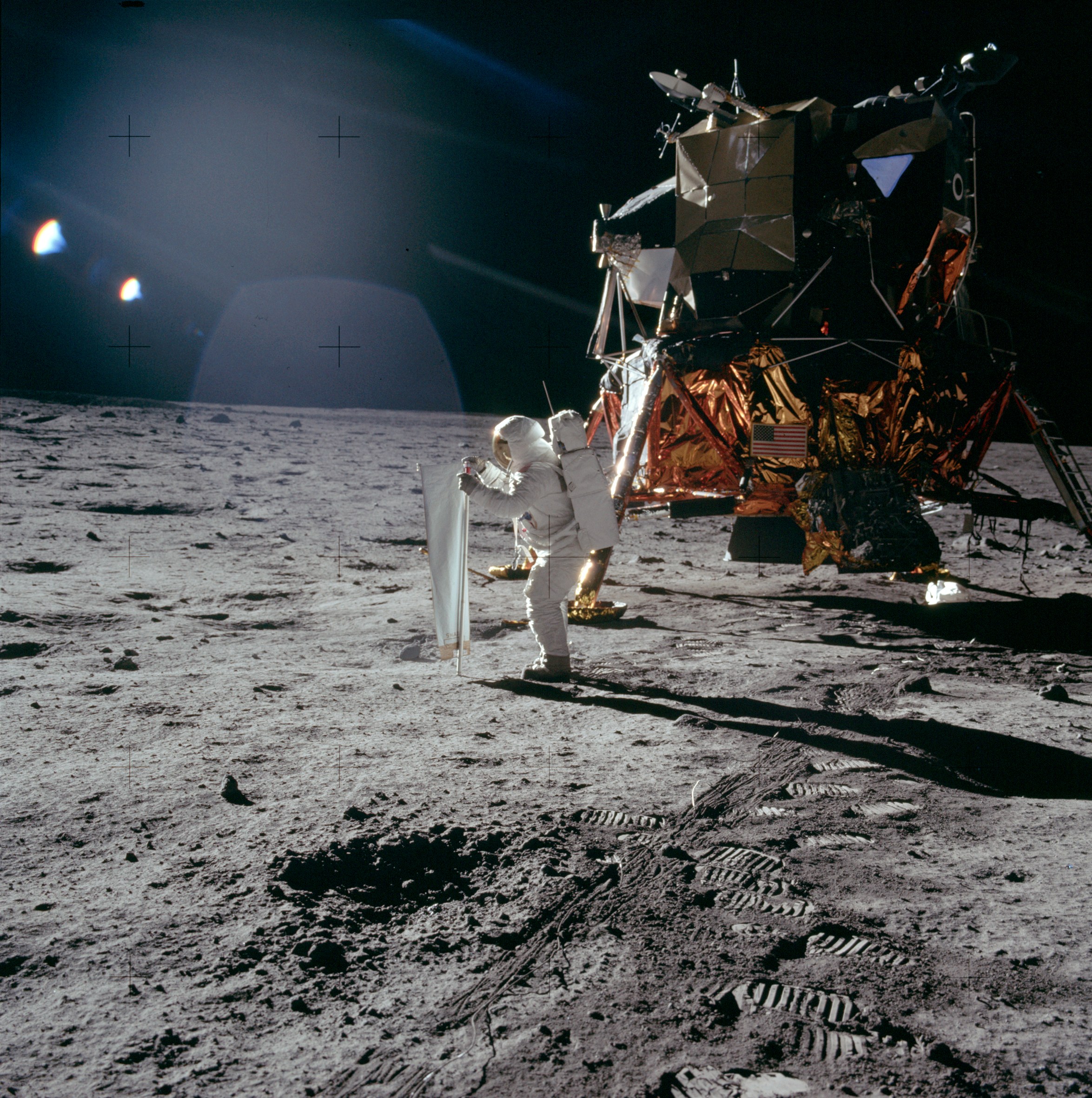
*Image creditor details unavailable via API. Visit linked page below for full info.*
Bright sunlight glints as long dark shadows mark this image of the surface of the Moon. It was taken fifty-four years ago, July 20, 1969, by Apollo 11 astronaut Neil Armstrong, the first to walk on the lunar surface. Pictured is the mission's lunar module, the Eagle, and spacesuited lunar module pilot Buzz Aldrin. Aldrin is unfurling a long sheet of foil also known as the Solar Wind Composition Experiment. Exposed facing the Sun, the foil trapped particles streaming outward in the solar wind, catching a sample of material from the Sun itself. Along with moon rocks and lunar soil samples, the solar wind collector was returned for analysis in earthbound laboratories.
#APOD #AstronomyLovers #SpaceFacts #Meteorology #NASAInspires
**Astronomy Picture of the Day**
28 July 2023
**Young Stars, Stellar Jets**
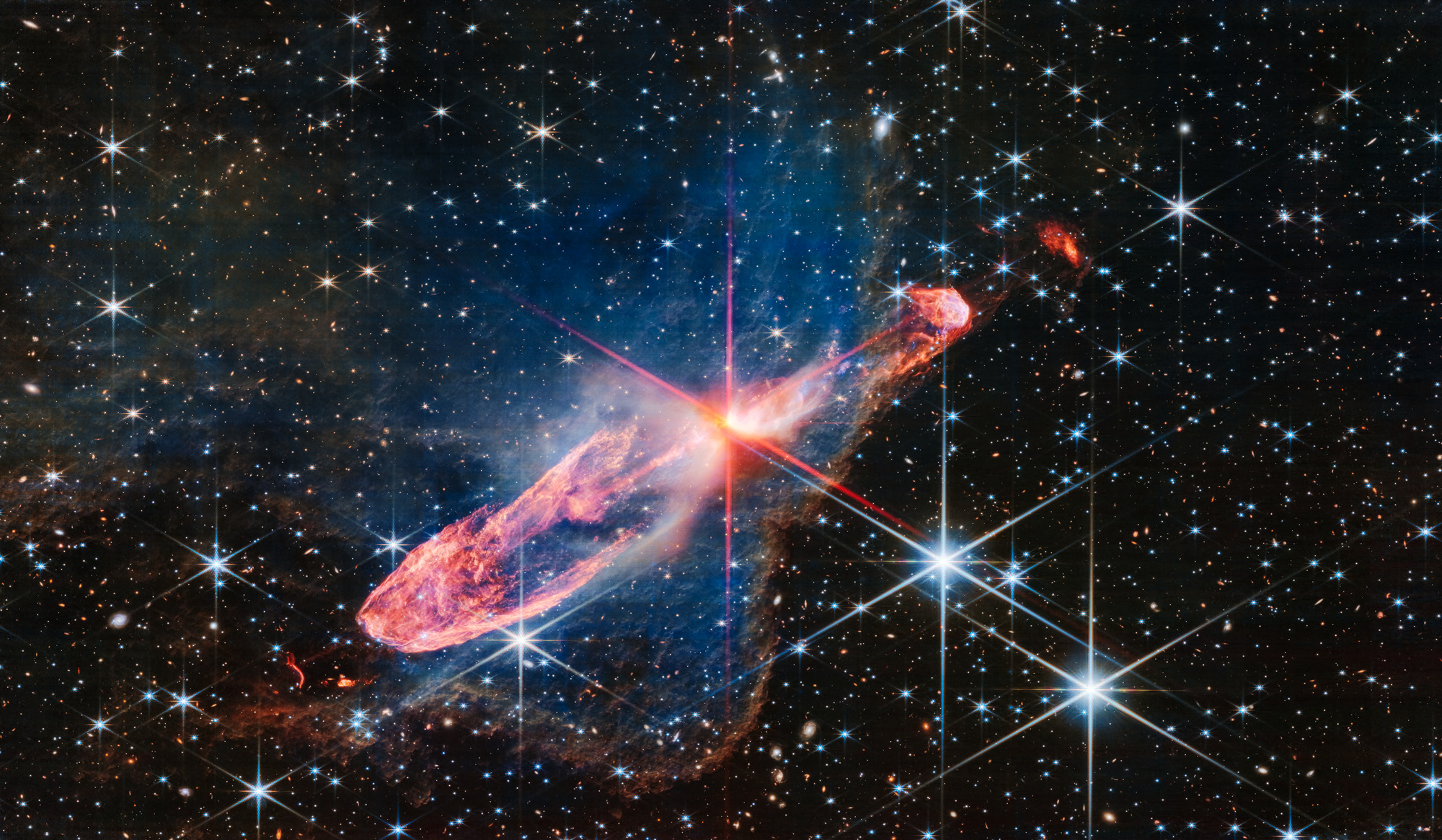
*Image creditor details unavailable via API. Visit linked page below for full info.*
High-speed outflows of molecular gas from a pair of actively forming young stars shine in infrared light, revealing themselves in this NIRcam image from the James Webb Space Telescope. Cataloged as HH (Herbig-Haro) 46/47, the young stars are lodged within a dark nebula that is largely opaque when viewed in visible light. The pair lie at the center of the prominent reddish diffraction spikes in the NIRcam image. Their energetic stellar jets extend for nearly a light-year, burrowing into the dark interstellar material. A tantalizing object to explore with Webb's infrared capabilities, this young star system is relatively nearby, located only some 1,140 light-years distant in the nautical constellation Vela.
#APOD #Astrophysics #Cosmology #SpaceTech #GalacticAdventures
**Astronomy Picture of the Day**
27 July 2023
**Galaxies in the River**
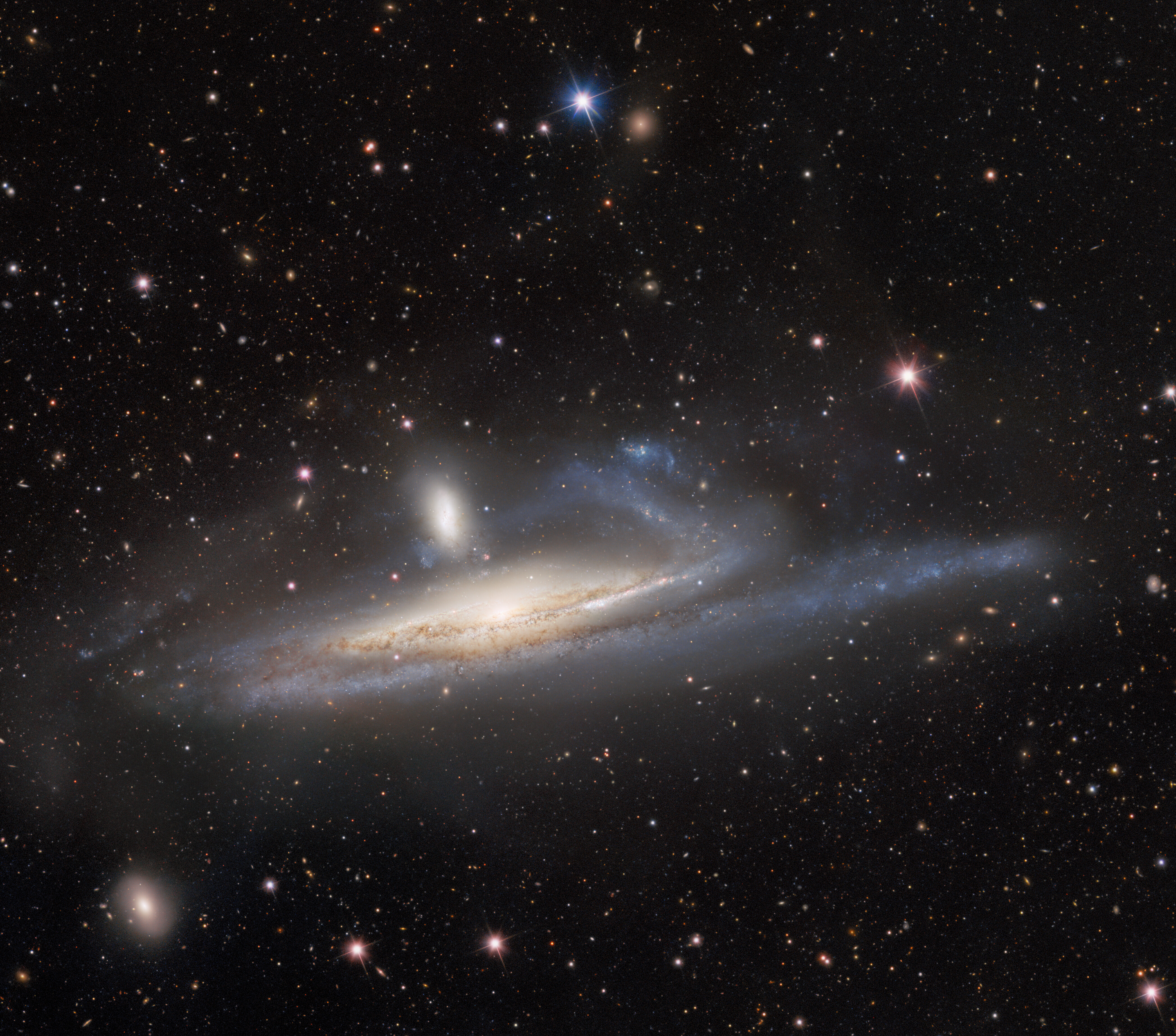
*Image creditor details unavailable via API. Visit linked page below for full info.*
Large galaxies grow by eating small ones. Even our own galaxy engages in a sort of galactic cannibalism, absorbing small galaxies that are too close and are captured by the Milky Way's gravity. In fact, the practice is common in the universe and illustrated by this striking pair of interacting galaxies from the banks of the southern constellation Eridanus, The River. Located over 50 million light years away, the large, distorted spiral NGC 1532 is seen locked in a gravitational struggle with dwarf galaxy NGC 1531, a struggle the smaller galaxy will eventually lose. Seen nearly edge-on, spiral NGC 1532 spans about 100,000 light-years. The merging galaxies are captured in this sharp image from the Dark Energy Camera mounted on the National Science Foundation’s Blanco 4-meter Telescope at Cerro Tololo Inter-American Observatory in Chile. The NGC 1532/1531 pair is thought to be similar to the well-studied system of face-on spiral and small companion known as M51.
#APOD #Astrozone #NASA #Astrophysics #PlanetaryExploration
**Astronomy Picture of the Day**
26 July 2023
**IC 4628: The Prawn Nebula**
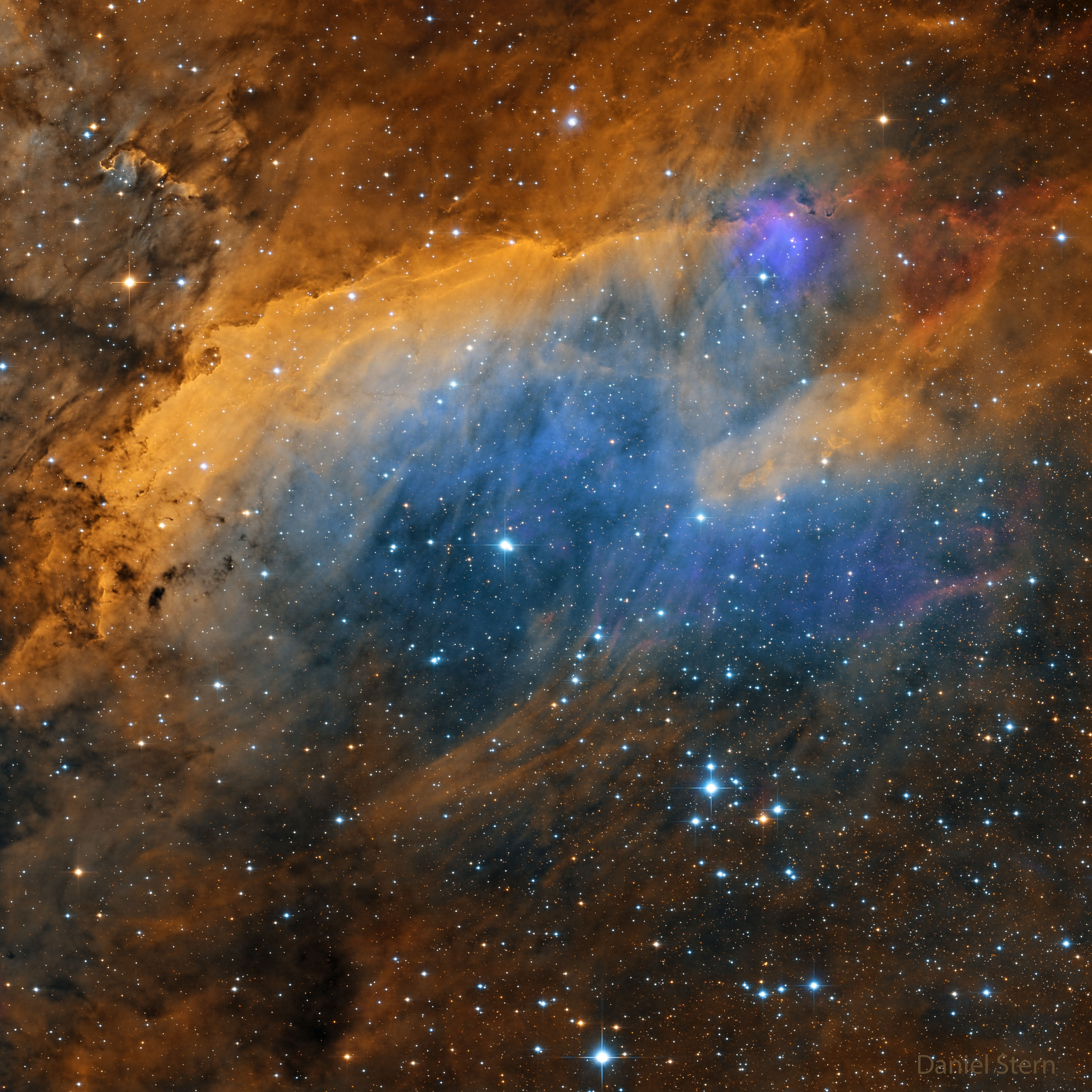
Image Credit & Copyright:
Daniel Stern
South of Antares, in the tail of the nebula-rich constellation Scorpius, lies emission nebula IC 4628. Nearby hot, massive stars, millions of years young, irradiate the nebula with invisible ultraviolet light, stripping electrons from atoms. The electrons eventually recombine with the atoms to produce the visible nebular glow, dominated by the red emission of hydrogen. At an estimated distance of 6,000 light-years, the region shown is about 250 light-years across, spanning over three full moons on the sky. The nebula is also cataloged as Gum 56 for Australian astronomer Colin Stanley Gum, but seafood-loving deep sky-enthusiasts might know this cosmic cloud as the Prawn Nebula. The graceful color image is a new astronomical composition taken over several nights in April from Rio Hurtado, Chile.
#APOD #Astrodata #Astrogeology #SpaceStation #BlackHoles
**Astronomy Picture of the Day**
25 July 2023
**The Eagle Nebula with X-ray Hot Stars**
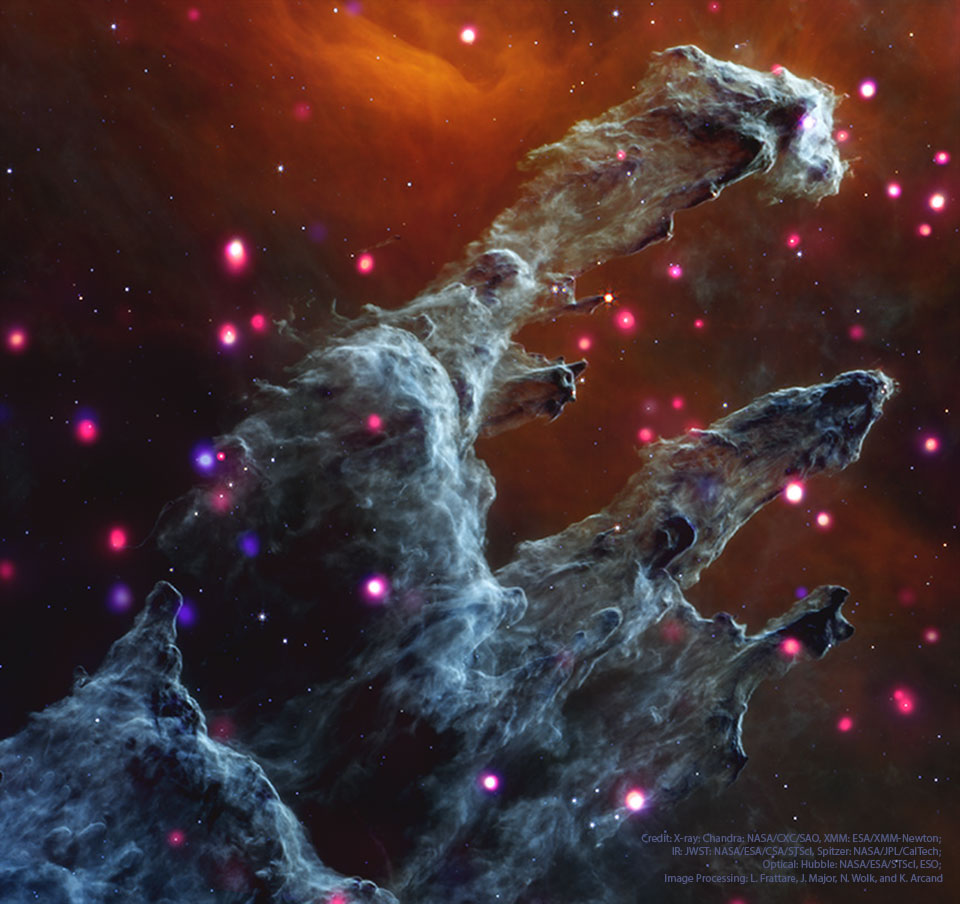
*Image creditor details unavailable via API. Visit linked page below for full info.*
What do the famous Eagle Nebula star pillars look like in X-ray light? To find out, NASA's orbiting Chandra X-ray Observatory peered in and through these interstellar mountains of star formation. It was found that in M16 the dust pillars themselves do not emit many X-rays, but a lot of small-but-bright X-ray sources became evident. These sources are shown as bright dots on the featured image which is a composite of exposures from Chandra (X-rays), XMM (X-rays), JWST (infrared), Spitzer (infrared), Hubble (visible), and the VLT (visible). What stars produce these X-rays remains a topic of research, but some are hypothesized to be hot, recently-formed, low-mass stars, while others are thought to be hot, older, high-mass stars. These X-ray hot stars are scattered around the frame -- the previously identified Evaporating Gaseous Globules (EGGS) seen in visible light are not currently hot enough to emit X-rays.
#APOD #Astronomy #Research #RocketLaunch #Meteorology
**Astronomy Picture of the Day**
24 July 2023
**Chemicals Glow as a Meteor Disintegrates**
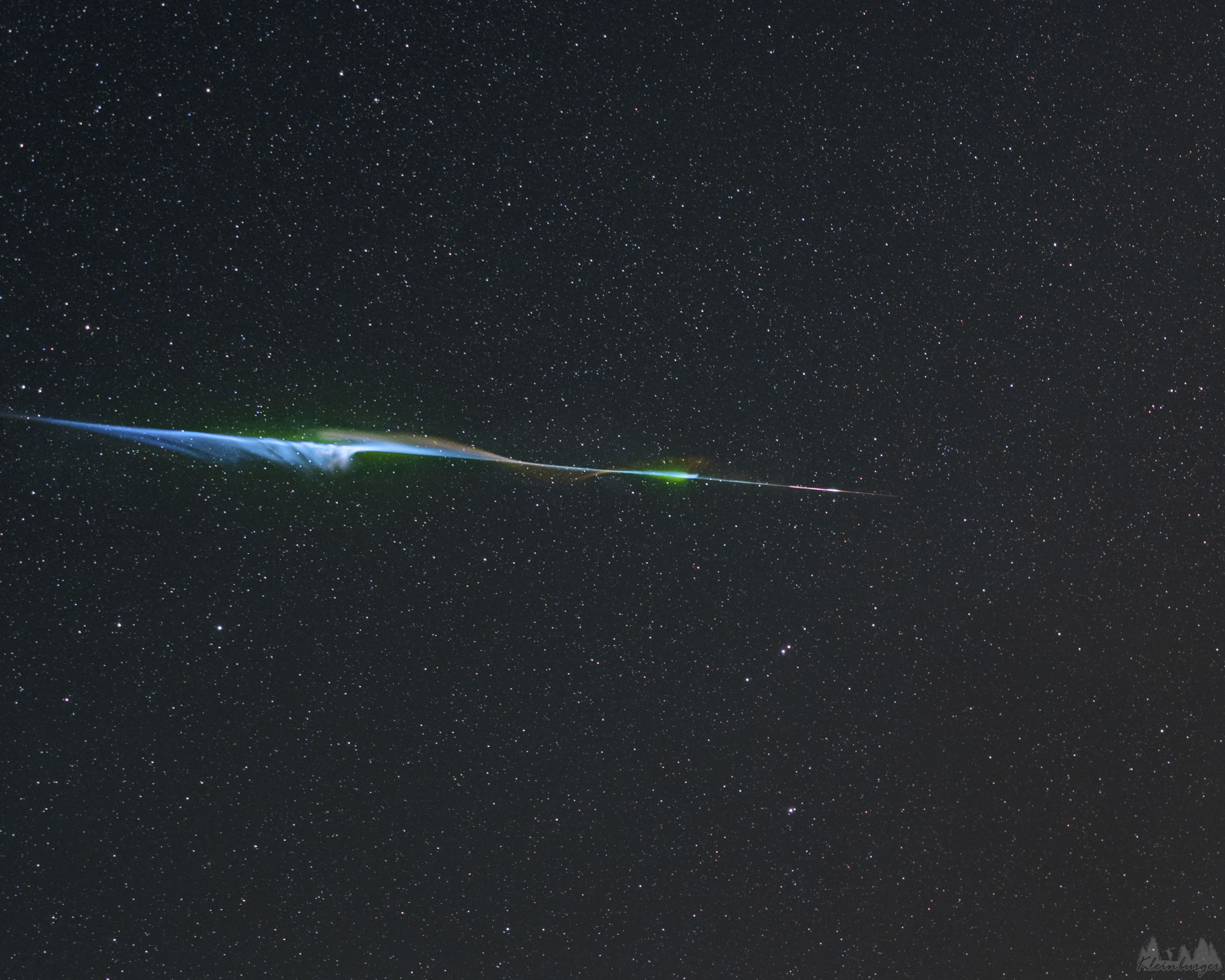
Image Credit & Copyright:
Michael Kleinburger
Meteors can be colorful. While the human eye usually cannot discern many colors, cameras often can. Pictured here is a fireball, a disintegrating meteor that was not only one of the brightest the photographer has ever seen, but colorful. The meteor was captured by chance in mid-July with a camera set up on Hochkar Mountain in Austria to photograph the central band of our Milky Way galaxy. The radiant grit, likely cast off by a comet or asteroid long ago, had the misfortune to enter Earth's atmosphere. Colors in meteors usually originate from ionized chemical elements released as the meteor disintegrates, with blue-green typically originating from magnesium, calcium radiating violet, and nickel glowing green. Red, however, typically originates from energized nitrogen and oxygen in the Earth's atmosphere. This bright meteoric fireball was gone in a flash -- less than a second -- but it left a wind-blown ionization trail that remained visible for almost a minute.
#APOD #Astronomy #GalaxyExploration #SpaceStation #MilkyWay
**Astronomy Picture of the Day**
23 July 2023
**The Antikythera Mechanism**

*Image creditor details unavailable via API. Visit linked page below for full info.*
It does what? No one knew that 2,000 years ago, the technology existed to build such a device. The Antikythera mechanism, pictured, is now widely regarded as the first computer. Found at the bottom of the sea aboard a decaying Greek ship, its complexity prompted decades of study, and even today some of its functions likely remain unknown. X-ray images of the device, however, have confirmed that a main function of its numerous clock-like wheels and gears is to create a portable, hand-cranked, Earth-centered, orrery of the sky, predicting future star and planet locations as well as lunar and solar eclipses. The corroded core of the Antikythera mechanism's largest gear is featured, spanning about 13 centimeters, while the entire mechanism was 33 centimeters high, making it similar in size to a large book. Recently, modern computer modeling of missing components is allowing for the creation of a more complete replica of this surprising ancient machine.
#APOD #Cosmological #PlanetaryExploration #SpaceDiscovery #Astroeducation
**Astronomy Picture of the Day**
22 July 2023
**Apollo 11: Armstrong's Lunar Selfie**
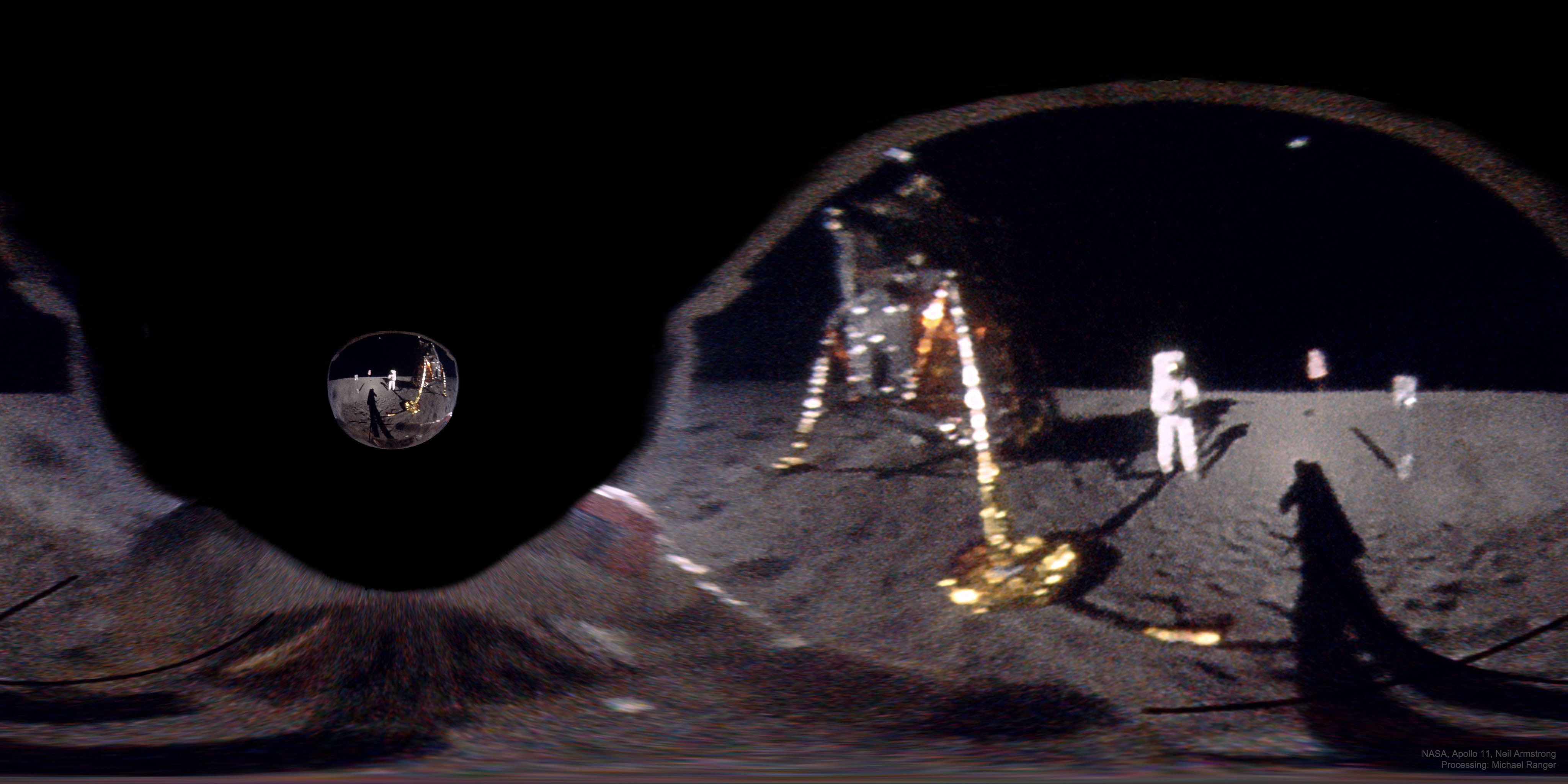
*Image creditor details unavailable via API. Visit linked page below for full info.*
A photograph of Buzz Aldrin standing on the Moon taken by Neil Armstrong, was digitally reversed to create this lunar selfie. Captured in July 1969 following the Apollo 11 moon landing, Armstrong's original photograph recorded not only the magnificent desolation of an unfamiliar world, but Armstrong himself reflected in Aldrin's curved visor. In the unwrapped image, the spherical distortion of the reflection in Aldrin's helmet has been reversed. The transformed view features Armstrong himself from Aldrin's perspective. Since Armstrong took the original picture, today the image represents a fifty-four year old lunar selfie. Aldrin's visor reflection in the original image appears here on the left. Bright (but distorted) planet Earth hangs in the lunar sky above Armstrong's figure, toward the upper right. A foil-wrapped leg of the Eagle lander and Aldrin's long shadow stretching across the lunar surface are prominently visible. In 2024 NASA's Artemis II mission will return humans to the Moon.
#APOD #MilkyWay #Astrozone #Astrophysics #PlanetaryExploration


**Astronomy Picture of the Day**
21 July 2023
**Galactic Cirrus: Mandel Wilson 9**
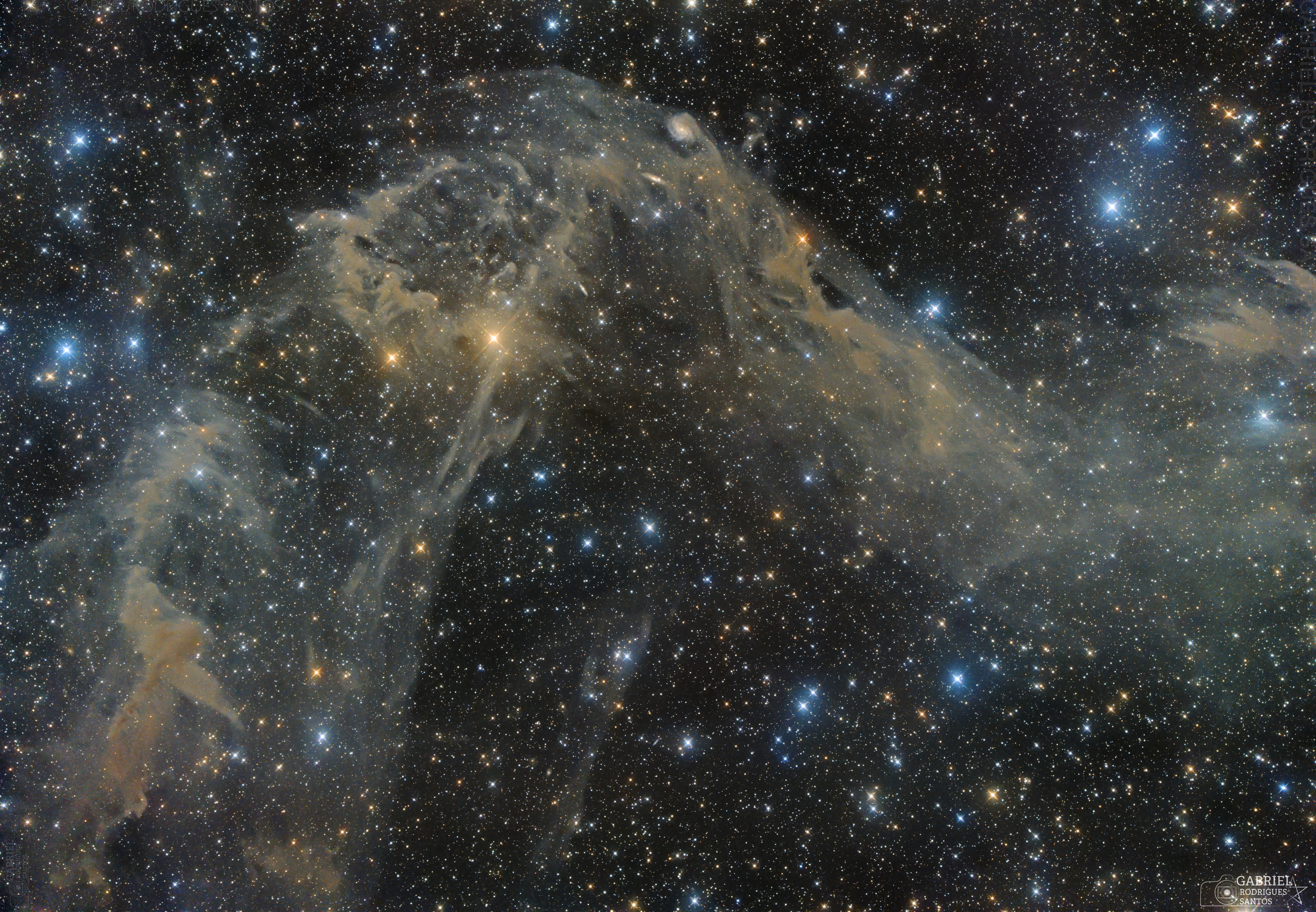
Image Credit & Copyright: Gabriel Rodrigues Santos
The combined light of stars along the Milky Way are reflected by these cosmic dust clouds that soar 300 light-years or so above the plane of our galaxy. Known to some as integrated flux nebulae and commonly found at high galactic latitudes, the dusty galactic cirrus clouds are faint. But they can be traced over large regions of the sky toward the North and South Galactic poles. Along with the reflection of starlight, studies indicate the dust clouds produce a faint reddish luminescence as interstellar dust grains convert invisible ultraviolet radiation to visible red light. Also capturing nearby Milky Way stars and distant background galaxies, this remarkably deep, wide-field image explores a complex of faint galactic cirrus known as Mandel Wilson 9. It spans over three degrees across planet Earth's skies toward the far southern constellation Apus.
#APOD #SpaceMission #Astrophysics #RocketLaunch #BlackHoleDiscovery
**Astronomy Picture of the Day**
20 July 2023
**M64: The Black Eye Galaxy Close Up**
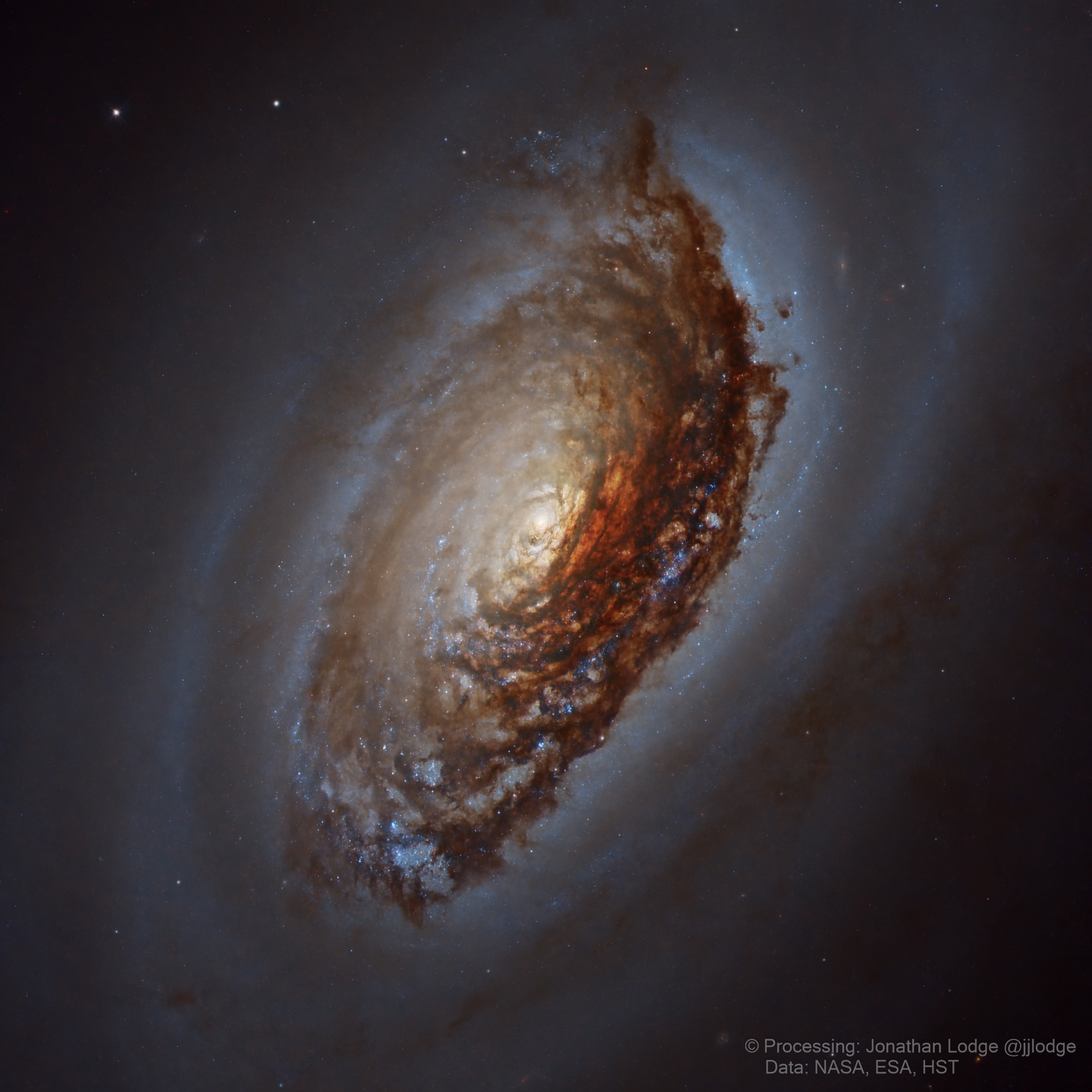
*Image creditor details unavailable via API. Visit linked page below for full info.*
This magnificent spiral galaxy is Messier 64, often called the Black Eye Galaxy or the Sleeping Beauty Galaxy for its dark-lidded appearance in telescopic views. The spiral's central region, about 7,400 light-years across, is pictured in this reprocessed image from the Hubble Space Telescope. M64 lies some 17 million light-years distant in the otherwise well-groomed northern constellation Coma Berenices. The enormous dust clouds partially obscuring M64's central region are laced with young, blue star clusters and the reddish glow of hydrogen associated with star forming regions. But imposing clouds of dust are not this galaxy's only peculiar feature. Observations show that M64 is actually composed of two concentric, counter-rotating systems. While all the stars in M64 rotate in the same direction as the interstellar gas in the galaxy's central region, gas in the outer regions, extending to about 40,000 light-years, rotates in the opposite direction. The dusty eye and bizarre rotation are likely the result of a billion year old merger of two different galaxies.
#APOD #Astrotheory #SpaceResearch #SpaceMissions #PlanetaryScience
**Astronomy Picture of the Day**
19 July 2023
**Chandrayaan-3 Launches to the Moon**
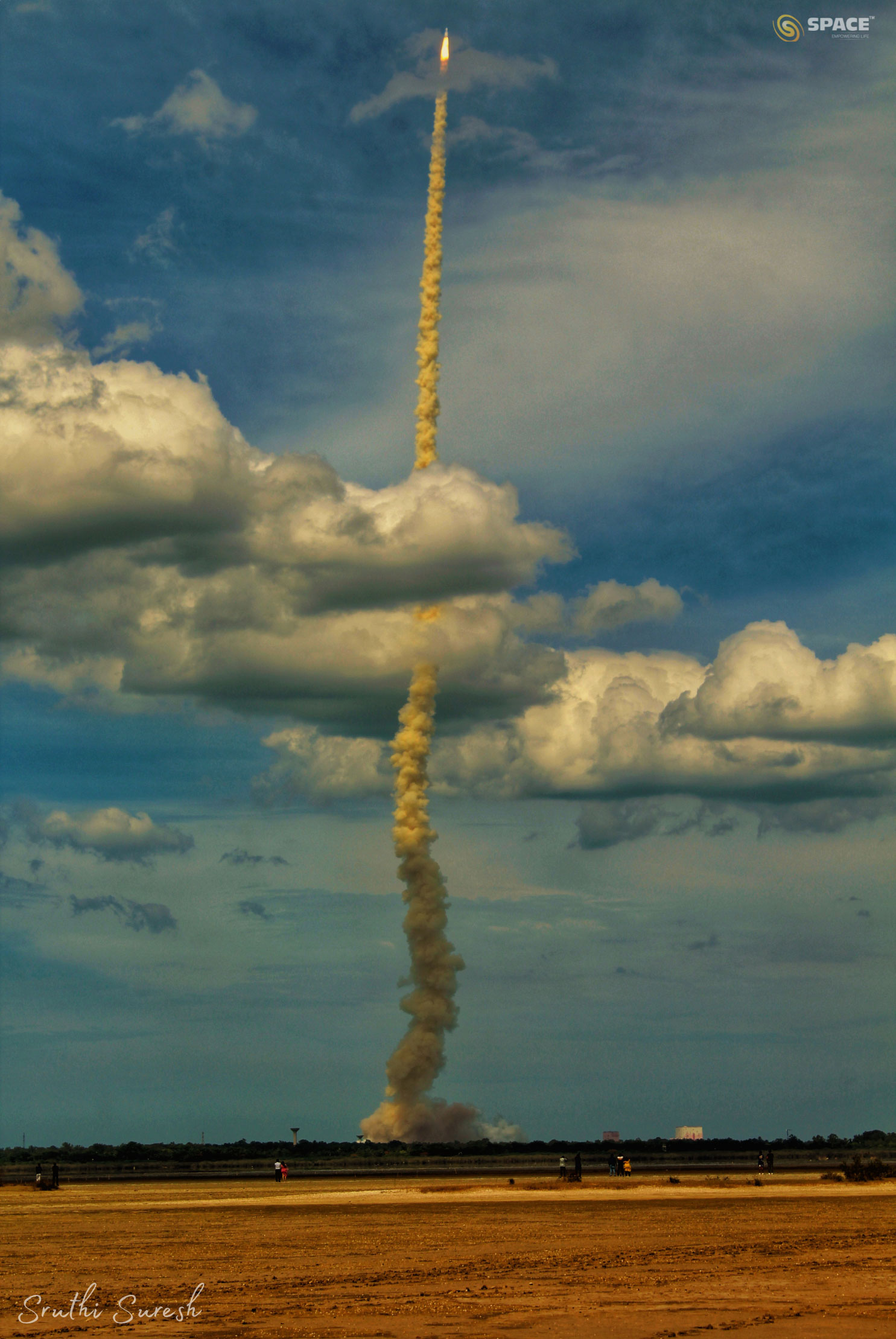
Image Credit & Copyright:
Sruthi Suresh
(Space Group)
Birds don't fly this high. Airplanes don't go this fast. The Statue of Liberty weighs less. No species other than human can even comprehend what is going on, nor could any human just a millennium ago. The launch of a rocket bound for space is an event that inspires awe and challenges description. Pictured here last week, the Indian Space Research Organization's LVM3 rocket blasted off from the Satish Dhawan Space Centre on Sriharikota Island, India. From a standing start, the 600,000+ kilogram rocket ship lifted the massive Chandrayaan-3 off the Earth. The Chandrayaan-3 mission is scheduled to reach the Moon in late August and land a robotic rover near the lunar South Pole. Rockets bound for space are now launched from somewhere on Earth every few days.
#APOD #Planets #Universe #Astrophoto #Astrochemistry
**Astronomy Picture of the Day**
18 July 2023
**Milky Way above La Palma Observatory**
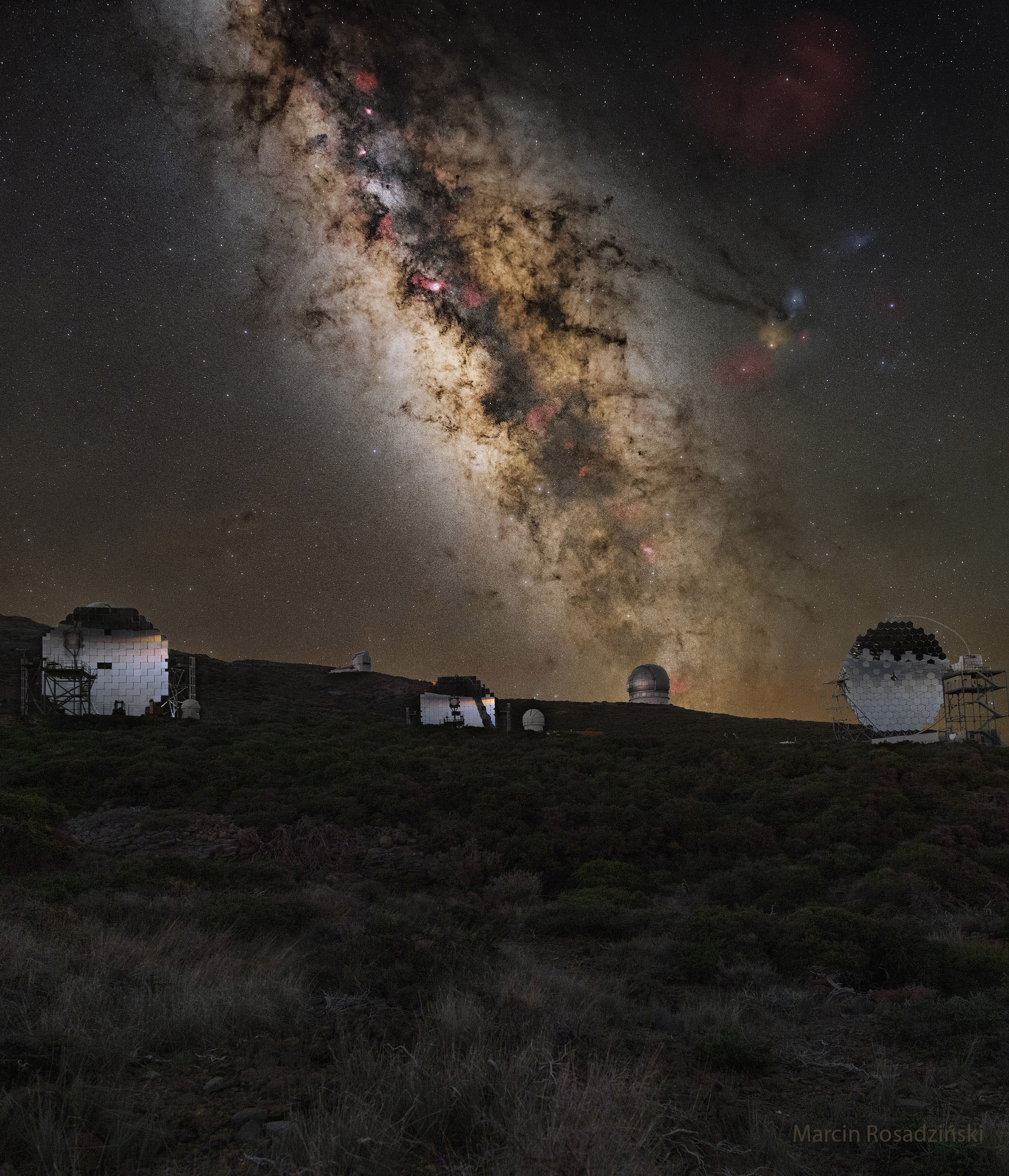
Image Credit & Copyright:
Marcin Rosadziński
What's happening in the night sky? To help find out, telescopes all over the globe will be pointing into deep space. Investigations will include trying to understand the early universe, finding and tracking Earth-menacing asteroids, searching for planets that might contain extra-terrestrial life, and monitoring stars to help better understand our Sun. The featured composite includes foreground and background images taken in April from a mountaintop on La Palma island in the Canary Islands of Spain. Pictured, several telescopes from the Roque de los Muchachos Observatory are shown in front of a dark night sky. Telescopes in the foreground include, left to right, Magic 1, Galileo, Magic 2, Gran Canarian, and LST. Sky highlights in the background include the central band of our Milky Way Galaxy, the constellations of Sagittarius, Ophiuchus and Scorpius, the red-glowing Eagle and Lagoon Nebulas, and the stars Alrami and Antares. Due to observatories like this, humanity has understood more about our night sky in the past 100 years than ever before in all of human history.
#APOD #Astrobiology #Galaxy #Astroknowledge #AstronomyLovers
**Astronomy Picture of the Day**
17 July 2023
**Shells and Arcs around Star CW Leonis**
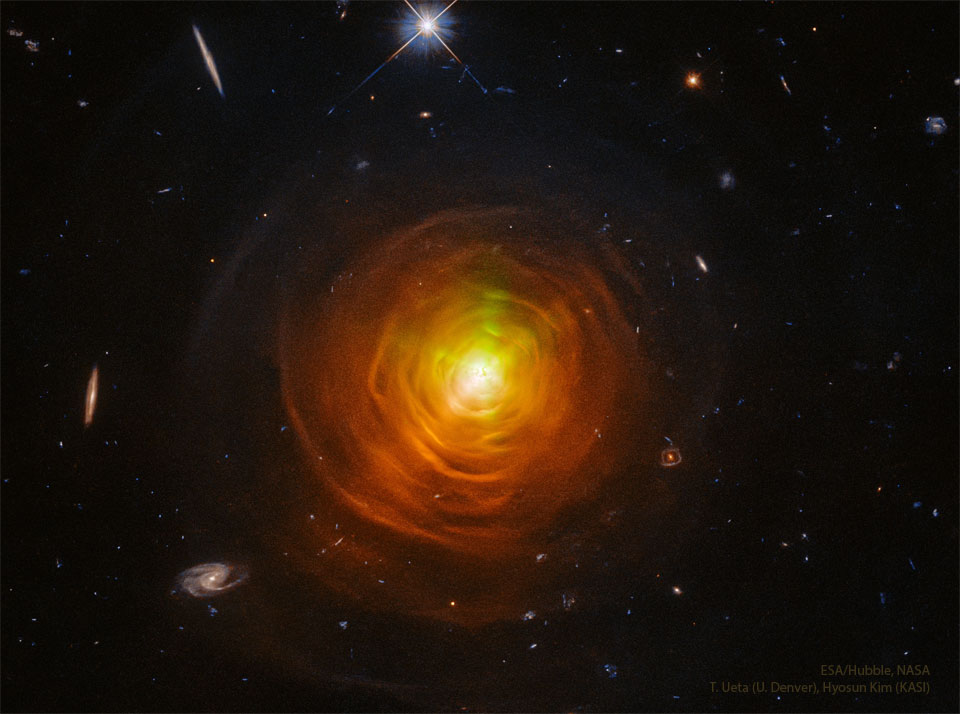
*Image creditor details unavailable via API. Visit linked page below for full info.*
What's happening around this star? No one is sure. CW Leonis is the closest carbon star, a star that appears orange because of atmospheric carbon dispersed from interior nuclear fusion. But CW Leonis also appears engulfed in a gaseous carbon-rich nebula. What causes the nebula's complexity is unknown, but its geometry of shells and arcs are surely intriguing. The featured image by the Hubble Space Telescope details this complexity. The low surface gravity of carbon stars enhances their ability to expel carbon and carbon compounds into space. Some of this carbon ends up forming dark dust that is commonly seen in the nebulas of young star-forming regions and the disks of galaxies. Humans and all Earth-based life are carbon-based, and at least some of our carbon was likely once circulating in the atmospheres of near-death stars like carbon stars.
#APOD #Stargazing #Astronomy #Universe #PlanetExploration