Avatar
tlindi
efc19139d25c06d59347b9f1a9a52f011efc68980b1dcb09c5eb1c62a370b6a8
This nostr npub key may have been compromized. So If any day this account seems "odd" hacker is using it - do not trust, verify.
Replying to Avatar Ahi

https://btcmap.org/merchant/node:7775492731#comments

Fuck yeah! The northernmost place accepting bitcoin. 400 km north of arctic circle.

General store and a gas station. Did my part in replacing the petro dollar.

https://btcmap.org/merchant/node:7775492731#comments

Fuck yeah! The northernmost place accepting bitcoin. 400 km north of arctic circle.

General store and a gas station. Did my part in replacing the petro dollar.

Still see it on 14th Oct 25

Replying to Avatar Sirius

My post from normie social media, translated from Finnish by Grok:

The foundation of well-being is economic growth, that is, value creation. This includes intangible forms as well: doing things better with the same resources as before. I also count value creation that GDP as a metric fails to capture or even measures in the wrong direction: all activities valuable to oneself or others that do not involve monetary exchange.

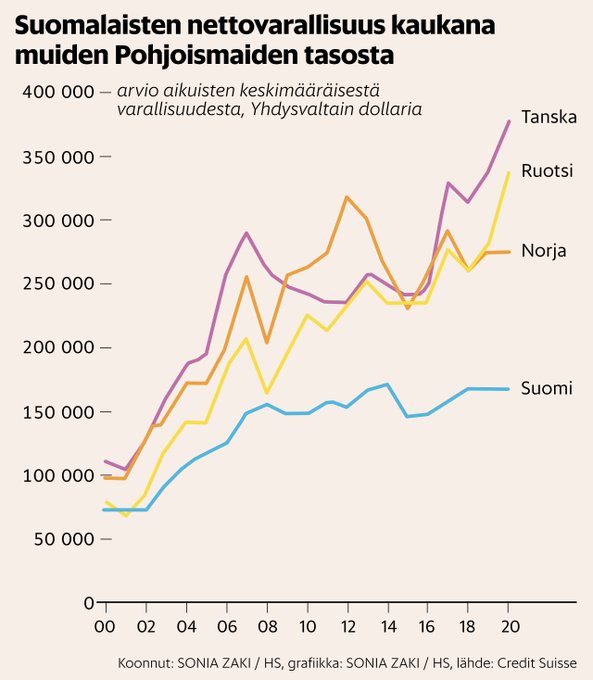
In public discourse, it is sometimes forgotten that the economy does not ultimately grow through consumption but by increasing production, even if the formula called GDP might temporarily show growth. Production grows through investments and work. Due to regulation and taxation, Finland is not an attractive country for these. Hence, zero growth for the past 18 years.

In Finland, there is a vast class dependent on public sector jobs, the tax-funded "third sector," and other income transfers, which is why the situation is unlikely to change.

Follow the money: as a group, those dependent on income transfers will never vote against their own wallets, even when it would be in their long-term interest. Public spending will continue to grow regardless of the government's composition because politicians, following their voters, lack sufficient incentive for cuts.

"Income transfers" is actually a euphemism for taking money from someone else through a unilateral decision, without offering something in return that they would voluntarily pay for. However, it is so tempting that moral and utilitarian justifications for it are always easy to rationalize.

The SDP will likely win the next elections, but will anything change? All Finnish parties are different versions of the SDP, defending the position of established interest groups with slightly different emphases. Well, perhaps we’ll get an exit tax, taxation of "unrealized capital gains," or other factors that work against the interests of productive people and investments.

On a personal level, the clearest solution is to leave the country, but for social and cultural reasons, this may be difficult for many. Finland still has many valuable things: nice people, beautiful nature, heavy metal music, and at least for now, a culture of trust.

Alongside the free flow of information enabled by the internet, Plan B, or Bitcoin, is perhaps the only light in the darkness. Bitcoin enables a parallel economic system where people can create value for each other, engage in trade, and save without someone skimming off the top through taxation or money printing, which makes many good endeavors unprofitable and thus undone.

Now we just need to "orange pill" people, that is, spread the Bitcoin gospel at the grassroots level quickly enough, especially among the youth. If getting wealthy through work and saving feels impossible, let alone starting a family or buying a home, it’s no wonder people fall into hopelessness or bitterness toward the "rich." Bitcoin fixes this.

Bitcoin needs to be accepted as a payment method in as many shops and services as possible so that it becomes easier to offer it as payment between individuals or accept it as salary.

Perhaps gradually, as an individual or even a company, one could break free from banks and centralized payment systems. This would be a welcome change to the current trend, where state and commercial actors increasingly monitor all financial transactions, communications, and other aspects of our digital lives.

At its worst, payment systems have been used as tools for social control even in Western countries, such as against protesters in Canada. Centralized payment systems are also more vulnerable to disruptions and service outages than decentralized ones. With the Cashu protocol, Bitcoin payments can be made between trusted parties even without an internet connection.

As the group of Bitcoin owners grows large enough, it starts to gain societal significance. According to one study, 11% of Finns and 24% of young people own cryptocurrencies, and the number is growing rapidly.

In the United States, political campaigning targeting crypto owners has been prominently visible, and Europe is following suit in this regard. Gradually, so many significant economic and political actors are getting involved that snowball-like growth seems likely.

The total market value of mined gold is still ten times larger than that of Bitcoin. It’s not hard to see Bitcoin surpassing gold: it’s easier to store and transfer. Unlike gold, there is only a very limited number of new Bitcoins left to mine, and there is no supply elasticity.

If investment wealth starts flowing from real estate and securities into Bitcoin, its value could increase a hundredfold or more.

Based on game theory, a rational actor would obviously go immediately to, for example, coinmotion dot com, buy even a little Bitcoin, and consider monthly savings. This is not a paid advertisement or investment advice, but a universal truth.

Why my replies are not shown?-(

Replying to Avatar Sirius

My post from normie social media, translated from Finnish by Grok:

The foundation of well-being is economic growth, that is, value creation. This includes intangible forms as well: doing things better with the same resources as before. I also count value creation that GDP as a metric fails to capture or even measures in the wrong direction: all activities valuable to oneself or others that do not involve monetary exchange.

In public discourse, it is sometimes forgotten that the economy does not ultimately grow through consumption but by increasing production, even if the formula called GDP might temporarily show growth. Production grows through investments and work. Due to regulation and taxation, Finland is not an attractive country for these. Hence, zero growth for the past 18 years.

In Finland, there is a vast class dependent on public sector jobs, the tax-funded "third sector," and other income transfers, which is why the situation is unlikely to change.

Follow the money: as a group, those dependent on income transfers will never vote against their own wallets, even when it would be in their long-term interest. Public spending will continue to grow regardless of the government's composition because politicians, following their voters, lack sufficient incentive for cuts.

"Income transfers" is actually a euphemism for taking money from someone else through a unilateral decision, without offering something in return that they would voluntarily pay for. However, it is so tempting that moral and utilitarian justifications for it are always easy to rationalize.

The SDP will likely win the next elections, but will anything change? All Finnish parties are different versions of the SDP, defending the position of established interest groups with slightly different emphases. Well, perhaps we’ll get an exit tax, taxation of "unrealized capital gains," or other factors that work against the interests of productive people and investments.

On a personal level, the clearest solution is to leave the country, but for social and cultural reasons, this may be difficult for many. Finland still has many valuable things: nice people, beautiful nature, heavy metal music, and at least for now, a culture of trust.

Alongside the free flow of information enabled by the internet, Plan B, or Bitcoin, is perhaps the only light in the darkness. Bitcoin enables a parallel economic system where people can create value for each other, engage in trade, and save without someone skimming off the top through taxation or money printing, which makes many good endeavors unprofitable and thus undone.

Now we just need to "orange pill" people, that is, spread the Bitcoin gospel at the grassroots level quickly enough, especially among the youth. If getting wealthy through work and saving feels impossible, let alone starting a family or buying a home, it’s no wonder people fall into hopelessness or bitterness toward the "rich." Bitcoin fixes this.

Bitcoin needs to be accepted as a payment method in as many shops and services as possible so that it becomes easier to offer it as payment between individuals or accept it as salary.

Perhaps gradually, as an individual or even a company, one could break free from banks and centralized payment systems. This would be a welcome change to the current trend, where state and commercial actors increasingly monitor all financial transactions, communications, and other aspects of our digital lives.

At its worst, payment systems have been used as tools for social control even in Western countries, such as against protesters in Canada. Centralized payment systems are also more vulnerable to disruptions and service outages than decentralized ones. With the Cashu protocol, Bitcoin payments can be made between trusted parties even without an internet connection.

As the group of Bitcoin owners grows large enough, it starts to gain societal significance. According to one study, 11% of Finns and 24% of young people own cryptocurrencies, and the number is growing rapidly.

In the United States, political campaigning targeting crypto owners has been prominently visible, and Europe is following suit in this regard. Gradually, so many significant economic and political actors are getting involved that snowball-like growth seems likely.

The total market value of mined gold is still ten times larger than that of Bitcoin. It’s not hard to see Bitcoin surpassing gold: it’s easier to store and transfer. Unlike gold, there is only a very limited number of new Bitcoins left to mine, and there is no supply elasticity.

If investment wealth starts flowing from real estate and securities into Bitcoin, its value could increase a hundredfold or more.

Based on game theory, a rational actor would obviously go immediately to, for example, coinmotion dot com, buy even a little Bitcoin, and consider monthly savings. This is not a paid advertisement or investment advice, but a universal truth.

Replying to Avatar Sirius

My post from normie social media, translated from Finnish by Grok:

The foundation of well-being is economic growth, that is, value creation. This includes intangible forms as well: doing things better with the same resources as before. I also count value creation that GDP as a metric fails to capture or even measures in the wrong direction: all activities valuable to oneself or others that do not involve monetary exchange.

In public discourse, it is sometimes forgotten that the economy does not ultimately grow through consumption but by increasing production, even if the formula called GDP might temporarily show growth. Production grows through investments and work. Due to regulation and taxation, Finland is not an attractive country for these. Hence, zero growth for the past 18 years.

In Finland, there is a vast class dependent on public sector jobs, the tax-funded "third sector," and other income transfers, which is why the situation is unlikely to change.

Follow the money: as a group, those dependent on income transfers will never vote against their own wallets, even when it would be in their long-term interest. Public spending will continue to grow regardless of the government's composition because politicians, following their voters, lack sufficient incentive for cuts.

"Income transfers" is actually a euphemism for taking money from someone else through a unilateral decision, without offering something in return that they would voluntarily pay for. However, it is so tempting that moral and utilitarian justifications for it are always easy to rationalize.

The SDP will likely win the next elections, but will anything change? All Finnish parties are different versions of the SDP, defending the position of established interest groups with slightly different emphases. Well, perhaps we’ll get an exit tax, taxation of "unrealized capital gains," or other factors that work against the interests of productive people and investments.

On a personal level, the clearest solution is to leave the country, but for social and cultural reasons, this may be difficult for many. Finland still has many valuable things: nice people, beautiful nature, heavy metal music, and at least for now, a culture of trust.

Alongside the free flow of information enabled by the internet, Plan B, or Bitcoin, is perhaps the only light in the darkness. Bitcoin enables a parallel economic system where people can create value for each other, engage in trade, and save without someone skimming off the top through taxation or money printing, which makes many good endeavors unprofitable and thus undone.

Now we just need to "orange pill" people, that is, spread the Bitcoin gospel at the grassroots level quickly enough, especially among the youth. If getting wealthy through work and saving feels impossible, let alone starting a family or buying a home, it’s no wonder people fall into hopelessness or bitterness toward the "rich." Bitcoin fixes this.

Bitcoin needs to be accepted as a payment method in as many shops and services as possible so that it becomes easier to offer it as payment between individuals or accept it as salary.

Perhaps gradually, as an individual or even a company, one could break free from banks and centralized payment systems. This would be a welcome change to the current trend, where state and commercial actors increasingly monitor all financial transactions, communications, and other aspects of our digital lives.

At its worst, payment systems have been used as tools for social control even in Western countries, such as against protesters in Canada. Centralized payment systems are also more vulnerable to disruptions and service outages than decentralized ones. With the Cashu protocol, Bitcoin payments can be made between trusted parties even without an internet connection.

As the group of Bitcoin owners grows large enough, it starts to gain societal significance. According to one study, 11% of Finns and 24% of young people own cryptocurrencies, and the number is growing rapidly.

In the United States, political campaigning targeting crypto owners has been prominently visible, and Europe is following suit in this regard. Gradually, so many significant economic and political actors are getting involved that snowball-like growth seems likely.

The total market value of mined gold is still ten times larger than that of Bitcoin. It’s not hard to see Bitcoin surpassing gold: it’s easier to store and transfer. Unlike gold, there is only a very limited number of new Bitcoins left to mine, and there is no supply elasticity.

If investment wealth starts flowing from real estate and securities into Bitcoin, its value could increase a hundredfold or more.

Based on game theory, a rational actor would obviously go immediately to, for example, coinmotion dot com, buy even a little Bitcoin, and consider monthly savings. This is not a paid advertisement or investment advice, but a universal truth.

Replying to Avatar Sirius

My post from normie social media, translated from Finnish by Grok:

The foundation of well-being is economic growth, that is, value creation. This includes intangible forms as well: doing things better with the same resources as before. I also count value creation that GDP as a metric fails to capture or even measures in the wrong direction: all activities valuable to oneself or others that do not involve monetary exchange.

In public discourse, it is sometimes forgotten that the economy does not ultimately grow through consumption but by increasing production, even if the formula called GDP might temporarily show growth. Production grows through investments and work. Due to regulation and taxation, Finland is not an attractive country for these. Hence, zero growth for the past 18 years.

In Finland, there is a vast class dependent on public sector jobs, the tax-funded "third sector," and other income transfers, which is why the situation is unlikely to change.

Follow the money: as a group, those dependent on income transfers will never vote against their own wallets, even when it would be in their long-term interest. Public spending will continue to grow regardless of the government's composition because politicians, following their voters, lack sufficient incentive for cuts.

"Income transfers" is actually a euphemism for taking money from someone else through a unilateral decision, without offering something in return that they would voluntarily pay for. However, it is so tempting that moral and utilitarian justifications for it are always easy to rationalize.

The SDP will likely win the next elections, but will anything change? All Finnish parties are different versions of the SDP, defending the position of established interest groups with slightly different emphases. Well, perhaps we’ll get an exit tax, taxation of "unrealized capital gains," or other factors that work against the interests of productive people and investments.

On a personal level, the clearest solution is to leave the country, but for social and cultural reasons, this may be difficult for many. Finland still has many valuable things: nice people, beautiful nature, heavy metal music, and at least for now, a culture of trust.

Alongside the free flow of information enabled by the internet, Plan B, or Bitcoin, is perhaps the only light in the darkness. Bitcoin enables a parallel economic system where people can create value for each other, engage in trade, and save without someone skimming off the top through taxation or money printing, which makes many good endeavors unprofitable and thus undone.

Now we just need to "orange pill" people, that is, spread the Bitcoin gospel at the grassroots level quickly enough, especially among the youth. If getting wealthy through work and saving feels impossible, let alone starting a family or buying a home, it’s no wonder people fall into hopelessness or bitterness toward the "rich." Bitcoin fixes this.

Bitcoin needs to be accepted as a payment method in as many shops and services as possible so that it becomes easier to offer it as payment between individuals or accept it as salary.

Perhaps gradually, as an individual or even a company, one could break free from banks and centralized payment systems. This would be a welcome change to the current trend, where state and commercial actors increasingly monitor all financial transactions, communications, and other aspects of our digital lives.

At its worst, payment systems have been used as tools for social control even in Western countries, such as against protesters in Canada. Centralized payment systems are also more vulnerable to disruptions and service outages than decentralized ones. With the Cashu protocol, Bitcoin payments can be made between trusted parties even without an internet connection.

As the group of Bitcoin owners grows large enough, it starts to gain societal significance. According to one study, 11% of Finns and 24% of young people own cryptocurrencies, and the number is growing rapidly.

In the United States, political campaigning targeting crypto owners has been prominently visible, and Europe is following suit in this regard. Gradually, so many significant economic and political actors are getting involved that snowball-like growth seems likely.

The total market value of mined gold is still ten times larger than that of Bitcoin. It’s not hard to see Bitcoin surpassing gold: it’s easier to store and transfer. Unlike gold, there is only a very limited number of new Bitcoins left to mine, and there is no supply elasticity.

If investment wealth starts flowing from real estate and securities into Bitcoin, its value could increase a hundredfold or more.

Based on game theory, a rational actor would obviously go immediately to, for example, coinmotion dot com, buy even a little Bitcoin, and consider monthly savings. This is not a paid advertisement or investment advice, but a universal truth.

Replying to Avatar Ahi

https://btcmap.org/merchant/node:7775492731#comments

Fuck yeah! The northernmost place accepting bitcoin. 400 km north of arctic circle.

General store and a gas station. Did my part in replacing the petro dollar.

https://btcmap.org/merchant/node:7775492731#comments

Fuck yeah! The northernmost place accepting bitcoin. 400 km north of arctic circle.

General store and a gas station. Did my part in replacing the petro dollar.

You are telling on nostr what people should and should not publish - mush communism you I from hear!

Why on earth I'd give you any email to link it to my node address?!?

Must be your business idea, cause it's 125% retard :-/

..and that all was due one of my copy-paste mistakes. Payments found, but still configuration of Ocean payouts to phoenixd is impossible for me to get working. Allways getting:

"error decoding lightning_bolt12"

Configured nostr:npub1qtvl2em0llpnnllffhat8zltugwwz97x79gfmxfz4qk52n6zpk3qq87dze payouts to nostr:npub148qm45zettnf6ekgkatnyfadunxwjpu8sy88mjdsgwc5f202d93qmejra7 (phoenixd on Linux) they leave Ocean, but don't arrive to me. Many support requests sent to many directions XD

Help appreciated!

Would be there interrest to test phoenixd drag-n-drop installer?

https://github.com/tlindi/mynode-phoenixd

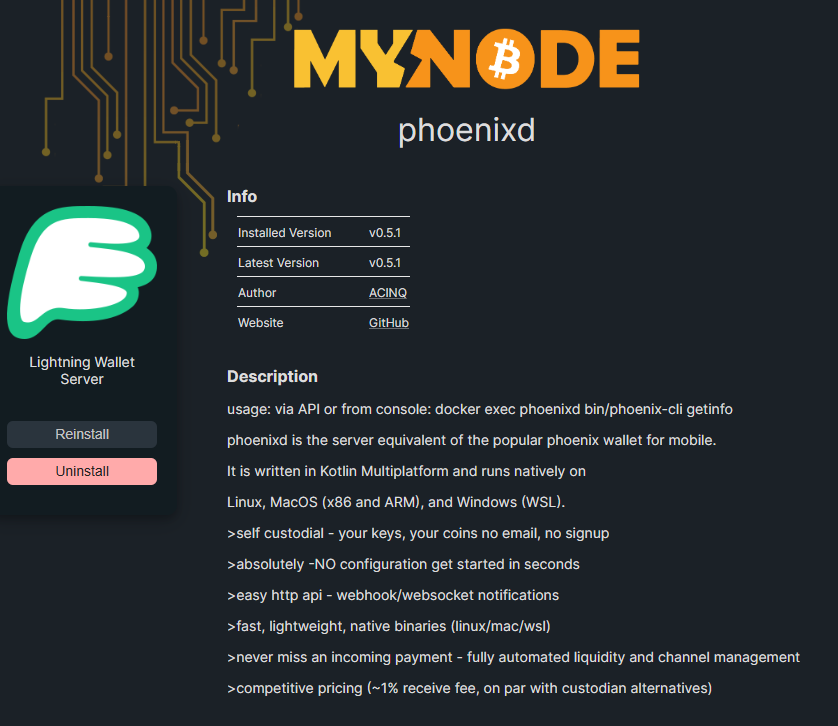
I decided it would be nice to have phoenixd as MyNodeBTC Community App

You can use it from console or connect pWallet2,0 or AlbyHub to it.

It looks like this:
![MyNodeBTC-phoenixd](https://m.stacker.news/88092)

originally posted at https://stacker.news/items/951013